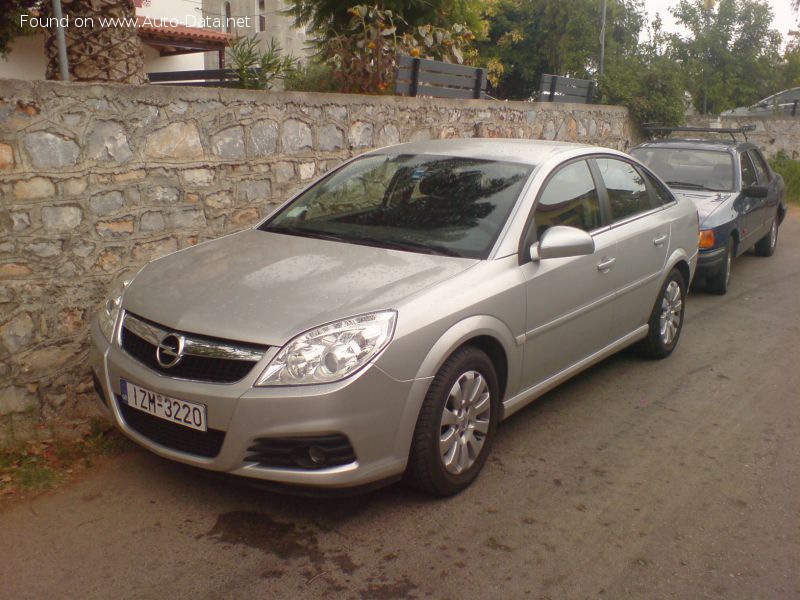
The Opel Vectra C CC (facelift 2005) 1.8i 16V (140 Hp) represents a significant iteration of a core model within General Motors’ European portfolio, specifically designed for the discerning European market. As a mid-size family car, the Vectra C, launched in 2002, was Opel’s answer to popular D-segment competitors, offering a blend of practicality, comfort, and driving dynamics. The “CC” designation typically refers to a five-door hatchback or ‘Combi Coupé’ body style, emphasizing its blend of sedan-like aesthetics with hatchback versatility. The 2005 facelift introduced a refreshed exterior design, updated interior trim, and crucial mechanical refinements, ensuring the Vectra remained competitive in a challenging segment. This particular variant, powered by a 1.8-liter 16-valve gasoline engine producing 140 horsepower, was positioned as a sensible yet capable option for families and fleet buyers alike, balancing performance with reasonable running costs. Its production run from November 2005 to August 2008 marked the final years of the Vectra C generation before its eventual replacement by the Insignia.
Opel Vectra C CC (facelift 2005): A European Mainstay
Market Positioning and Evolution
The Opel Vectra, known as the Vauxhall Vectra in the United Kingdom and Holden Vectra in Australia and New Zealand, has historically been a cornerstone of the European D-segment since its introduction in 1988. The third-generation Vectra C, launched in 2002, was built on GM’s Epsilon platform, a versatile architecture that also underpinned models like the Saab 9-3 and Cadillac BLS. This platform offered a robust foundation for improved ride quality, handling, and safety compared to its predecessors. The 2005 facelift was a critical mid-cycle refresh, designed to inject new life into the model line. Exterior changes included a revised front fascia with a more prominent grille and updated headlamps, giving it a more assertive and contemporary look that aligned with Opel’s evolving design language. Interior enhancements focused on material quality, ergonomics, and infotainment options, aiming to elevate the cabin experience and address feedback from earlier models. The five-door hatchback, or CC (Combi Coupé), body style was particularly popular in Europe for its practicality, offering a large, flexible cargo area without the perceived bulk of a traditional station wagon. This configuration made the Vectra C CC a strong contender against rivals such as the Ford Mondeo, Volkswagen Passat, and Renault Laguna, appealing to a broad demographic from urban commuters to families needing ample space for luggage and passengers.
Engine and Performance
Powertrain Dynamics of the Opel Vectra C CC (facelift 2005) 1.8i 16V (140 Hp)
At the heart of this particular Opel Vectra C CC variant is the Z18XER engine, a 1.8-liter, naturally aspirated, inline four-cylinder gasoline unit featuring a DOHC (Double Overhead Camshaft) valvetrain with 16 valves (four per cylinder). This robust engine delivers a respectable 140 horsepower at 6300 revolutions per minute (rpm), making it one of the more potent non-turbocharged options in the Vectra C lineup. Torque output stands at 129.07 pound-feet (175 Nm) available at 3800 rpm, providing a broad powerband that contributes to flexible daily driving. With an engine displacement of 109.6 cubic inches (1796 cm3), a cylinder bore of 3.17 inches (80.5 mm), and a piston stroke of 3.47 inches (88.2 mm), the engine operates with a compression ratio of 10.5:1, indicative of its efficiency-focused design. Fuel is supplied via a multi-port manifold injection system, a proven and reliable method for precise fuel delivery. This powertrain architecture drives the front wheels through a five-speed manual transmission, a configuration chosen for its direct engagement and efficiency. The vehicle’s performance figures reflect a balanced approach: an acceleration time from 0 to 60 mph in 10.2 seconds and a top speed of 130.49 mph (210 km/h). While not a performance leader, these figures are entirely adequate for highway cruising and confident overtaking maneuvers in its segment. Fuel economy was a significant consideration for European buyers, and the 1.8i 16V delivered commendable figures for its era: 23.8 US mpg (9.9 l/100 km) in urban conditions, an impressive 42 US mpg (5.6 l/100 km) on the extra-urban cycle, and a combined average of 32.7 US mpg (7.2 l/100 km). With a fuel tank capacity of 16.11 US gallons (61 l), the Vectra C CC offered a practical driving range, further enhancing its appeal as a long-distance cruiser.
Design and Features
Exterior and Interior Design
The Opel Vectra C CC (facelift 2005) embodies a design philosophy that balances executive presence with everyday practicality. Its hatchback body type, often referred to as a ‘Combi Coupé’ by Opel, successfully merges the sleek profile of a sedan with the enhanced utility of a hatchback. Measuring 181.54 inches (4611 mm) in length, 70.79 inches (1798 mm) in width (80.16 inches or 2036 mm including mirrors), and 57.48 inches (1460 mm) in height, the Vectra C CC possesses substantial road presence without being overly cumbersome for urban environments. The 106.3-inch (2700 mm) wheelbase contributes to a stable ride and generous interior space for five occupants across its five doors. The facelifted model introduced subtle yet effective styling cues, including redesigned headlights and taillights, a more assertive grille, and revised bumper treatments that gave it a fresher, more contemporary appearance. Inside, the cabin was designed with ergonomics and comfort in mind. High-quality materials, for its class, were employed, and the layout of controls was intuitive, facilitating ease of use for the driver. The five-seat configuration ensured ample head and legroom for adults, making it suitable for family use or business travel. A key highlight of the hatchback design is its cargo capacity; the trunk (boot) space offers a substantial 17.66 cubic feet (500 liters) of volume, which could be further expanded by folding the rear seats, significantly enhancing its versatility for carrying larger items or luggage.
Safety and Convenience Technologies
For a vehicle of its generation, the Opel Vectra C CC was equipped with a commendable array of safety and convenience features aimed at providing a secure and comfortable driving experience. Standard safety features included an Anti-lock Braking System (ABS), which was crucial for maintaining steering control during emergency braking maneuvers. The braking system comprised disc brakes on both the front and rear wheels, providing strong and consistent stopping power. The suspension system utilized an independent coil spring setup for both the front and rear axles. This configuration was instrumental in delivering a composed ride quality, absorbing road imperfections effectively while maintaining stable handling characteristics, which was a hallmark of the Epsilon platform. Power steering assisted in maneuverability, making parking and low-speed driving less strenuous. The drivetrain architecture, as mentioned, featured front-wheel drive, a common and efficient layout for family sedans and hatchbacks, offering predictable handling and good traction in varied conditions. The vehicle rode on 195/65 R15 tires mounted on 15-inch wheel rims, a practical choice that balanced ride comfort, grip, and replacement cost. While modern cars boast an extensive suite of active safety systems, the Vectra C CC’s features, including robust passive safety structures and essential active aids like ABS, were considered comprehensive for its time, ensuring a secure environment for its occupants. The focus on a comfortable and capable driving experience, combined with its practical design and reliable powertrain, solidified the Opel Vectra C CC’s reputation as a well-rounded and dependable choice in the competitive European mid-size segment.
Technical Specifications
| Brand | Opel |
| Model | Vectra |
| Generation | Vectra C CC (facelift 2005) |
| Type (Engine) | 1.8i 16V (140 Hp) |
| Start of production | November, 2005 year |
| End of production | August, 2008 year |
| Powertrain Architecture | Internal Combustion engine |
| Body type | Hatchback |
| Seats | 5 |
| Doors | 5 |
| Fuel consumption (economy) – urban | 9.9 l/100 km (23.8 US mpg) |
| Fuel consumption (economy) – extra urban | 5.6 l/100 km (42 US mpg) |
| Fuel consumption (economy) – combined | 7.2 l/100 km (32.7 US mpg) |
| Fuel Type | Petrol (Gasoline) |
| Acceleration 0 – 60 mph | 10.2 sec |
| Maximum speed | 210 km/h (130.49 mph) |
| Weight-to-power ratio | 9.8 kg/Hp (101.8 Hp/tonne) |
| Weight-to-torque ratio | 7.9 kg/Nm (127.3 Nm/tonne) |
| Power | 140 Hp @ 6300 rpm |
| Power per litre | 78 Hp/l |
| Torque | 175 Nm @ 3800 rpm (129.07 lb.-ft. @ 3800 rpm) |
| Engine layout | Front, Transverse |
| Engine Model/Code | Z18XER |
| Engine displacement | 1796 cm3 (109.6 cu. in.) |
| Number of cylinders | 4 |
| Engine configuration | Inline |
| Cylinder Bore | 80.5 mm (3.17 in.) |
| Piston Stroke | 88.2 mm (3.47 in.) |
| Compression ratio | 10.5:1 |
| Number of valves per cylinder | 4 |
| Fuel injection system | Multi-port manifold injection |
| Engine aspiration | Naturally aspirated engine |
| Valvetrain | DOHC |
| Engine oil capacity | 4.5 l (4.76 US qt) |
| Coolant | 6.1 l (6.45 US qt) |
| Kerb Weight | 1375 kg (3031.36 lbs.) |
| Max. weight | 1920 kg (4232.88 lbs.) |
| Max load | 545 kg (1201.52 lbs.) |
| Trunk (boot) space – maximum | 500 l (17.66 cu. ft.) |
| Fuel tank capacity | 61 l (16.11 US gal) |
| Length | 4611 mm (181.54 in.) |
| Width | 1798 mm (70.79 in.) |
| Width including mirrors | 2036 mm (80.16 in.) |
| Height | 1460 mm (57.48 in.) |
| Wheelbase | 2700 mm (106.3 in.) |
| Front track | 1536 mm (60.47 in.) |
| Rear (Back) track | 1525 mm (60.04 in.) |
| Drivetrain Architecture | The Internal combustion engine (ICE) drives the front wheels of the vehicle. |
| Drive wheel | Front wheel drive |
| Number of gears and type of gearbox | 5 gears, manual transmission |
| Front suspension | Independent coil spring |
| Rear suspension | Independent coil spring |
| Front brakes | Disc |
| Rear brakes | Disc |
| Assisting systems | ABS (Anti-lock braking system) |
| Tires size | 195/65 R15 |
| Wheel rims size | 15 |