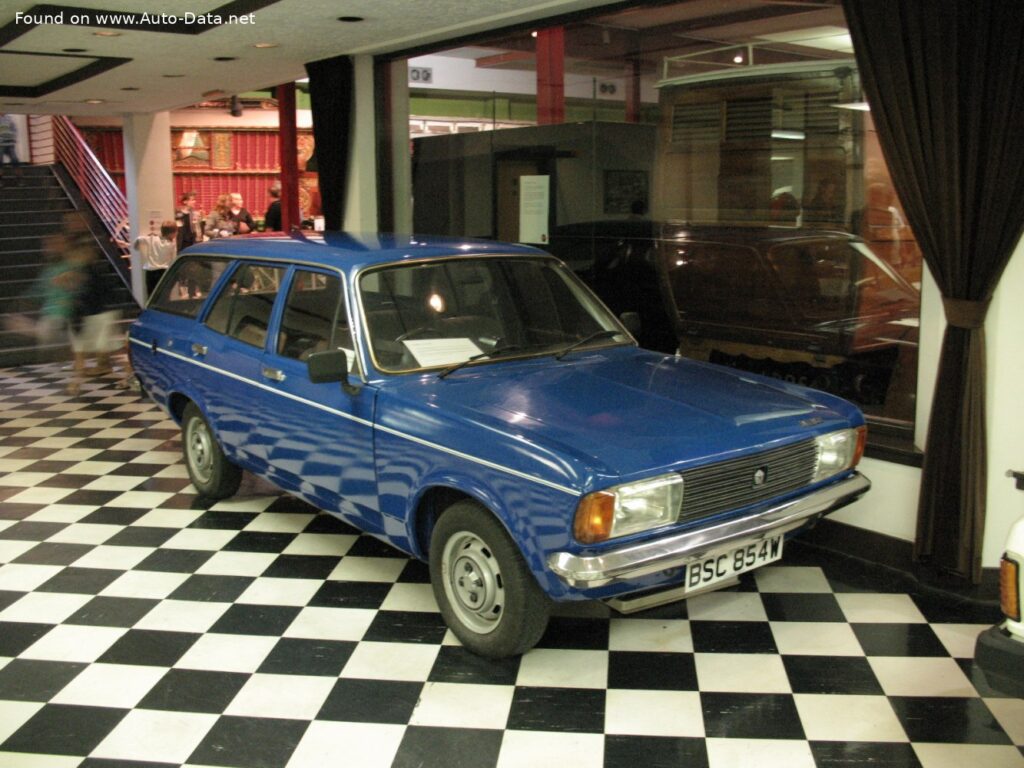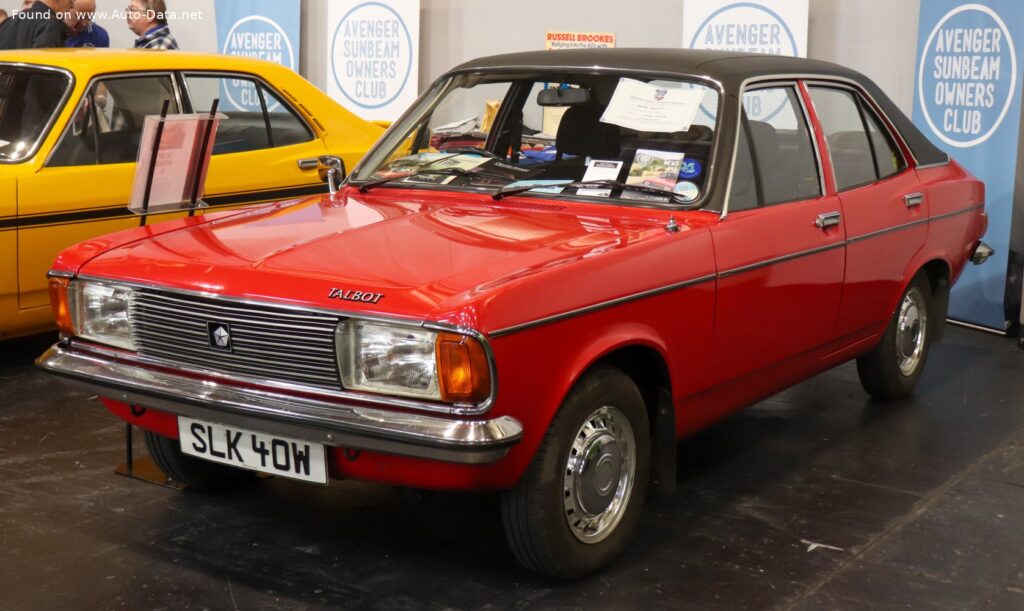
The Talbot Avenger 1.3 (60 Hp) represents a fascinating chapter in European automotive history, embodying the pragmatic design and engineering philosophies prevalent in the late 1970s and early 1980s. This particular iteration, produced between 1979 and 1981, belonged to the final generation of a model line that had seen various transformations under different brand names since its initial launch in 1970. Originally conceived by the Rootes Group in the United Kingdom as a direct competitor to popular compact family cars of its era, the Avenger endured a complex lineage through Chrysler Europe before ultimately being rebadged as a Talbot. As a vehicle primarily marketed and sold across Europe, it was never officially imported or widely available in the United States, making it a distinctive example of European automotive engineering from that period. Its role was to serve as a reliable, economical, and straightforward sedan, catering to families and individuals seeking dependable transportation without excessive frills or performance aspirations.
The Talbot Avenger: A European Mainstay
The journey of the Talbot Avenger 1.3 (60 Hp) is intertwined with the convoluted history of European automotive consolidation during the latter half of the 20th century. What began life as the Hillman Avenger in 1970 under the British Rootes Group, part of Chrysler Europe, underwent a series of identity changes before emerging as a Talbot. Chrysler’s financial difficulties in the late 1970s led to the sale of its European operations to PSA Peugeot Citroën in 1978. PSA subsequently revived the historic Talbot marque, rebadging many of the former Chrysler Europe models, including the Avenger. This rebranding placed the Avenger within a new corporate family, though its fundamental design and engineering remained largely unchanged from its Chrysler and Hillman predecessors. The 1979-1981 generation of the Talbot Avenger, therefore, represents the culmination of a decade of evolution for a platform that proved remarkably resilient and adaptable across various market demands.
In its primary European markets, the Talbot Avenger served as a quintessential small family car, competing against stalwarts like the Ford Escort, Vauxhall Viva/Cavalier, and various Fiat and Renault models. Its appeal lay in its conventional, robust engineering, straightforward mechanics, and sensible packaging. While not a trailblazer in terms of revolutionary technology or styling, its reliability and low running costs were significant selling points in an era marked by economic uncertainty and rising fuel prices. The Avenger’s enduring presence on European roads, even under multiple brand names, speaks volumes about its fundamental soundness as a practical and accessible mode of transport. For enthusiasts and historians, the Talbot Avenger stands as a testament to the complexities of corporate mergers and rebrandings that shaped the modern European automotive landscape, particularly as a final chapter for a truly British-designed vehicle under French ownership.
Engine and Performance
At the heart of the Talbot Avenger 1.3 (60 Hp) lay a modest yet dependable internal combustion engine, designed for efficiency and longevity rather than outright speed. This particular model was equipped with a 1.3-liter (approximately 79 cubic inches) naturally aspirated gasoline engine, producing a power output of 60 horsepower (Hp). For its time and market segment, this specification was entirely adequate, providing sufficient motivation for daily commuting, family trips, and general road use across Europe. The naturally aspirated design meant that the engine relied solely on atmospheric pressure to draw air into its cylinders, a common and cost-effective approach for mass-market vehicles of this era. This simplicity contributed to its reliability and ease of maintenance, characteristics highly valued by consumers.
The 60 Hp output, while seemingly low by modern standards, was delivered in a manner that suited the Avenger’s character. Torque delivery would have been relatively linear, ensuring a predictable and manageable driving experience. Paired with what was typically a manual transmission, drivers could make the most of the available power, especially in urban environments and on country roads. Acceleration, while not brisk, was sufficient for merging into traffic and maintaining highway speeds, though sustained high-speed cruising might have been a more relaxed affair. Fuel efficiency, a crucial consideration in the late 1970s and early 1980s, was also a strong point for this powertrain. The 1.3-liter engine was designed to be economical, offering reasonable mileage that helped mitigate the impact of fluctuating gasoline prices. This balance of modest power, reliable operation, and sensible fuel consumption made the Talbot Avenger 1.3 a practical and financially viable option for many European households.
Design and Features
The Talbot Avenger 1.3 (60 Hp) presented itself in a classic sedan body type, a design choice that emphasized practicality, conventional aesthetics, and interior volume. The sedan configuration, with its distinct three-box profile (engine compartment, passenger cabin, and trunk), was a ubiquitous and highly favored style in Europe during the late 1970s and early 1980s. This design offered a dedicated and secure luggage compartment, a significant advantage for families needing to transport groceries, luggage, or other items. The Avenger’s styling was characterized by clean, unpretentious lines, reflecting the functionalist design ethos of the period. It wasn’t a car designed to turn heads with radical styling but rather to blend seamlessly into the everyday automotive landscape, offering a sensible and understated presence.
Inside, the Avenger prioritized functionality and durability. The cabin would have featured robust, easy-to-clean materials, designed to withstand the rigors of daily use. Seating was typically comfortable for four adults, with adequate headroom and legroom for a car in its class. Controls were straightforward and ergonomically placed, reflecting a focus on ease of use and minimal distraction for the driver. Features, by contemporary standards, were basic but comprehensive for its segment. Expect manual window winders, a simple heating and ventilation system, and perhaps a rudimentary radio as standard or optional equipment. Safety features, typical for the era, would have included seatbelts and a sturdy body shell, but advanced driver-assistance systems were still decades away. The Avenger’s design philosophy was rooted in providing reliable, no-nonsense transportation, making it a workhorse for the average European family. Its enduring appeal to its target market lay precisely in this blend of conventional design, practical features, and a reputation for being a solid, dependable vehicle.
Technical Specifications
| Brand | Talbot |
| Model | Avenger |
| Generation | Avenger |
| Type (Engine) | 1.3 (60 Hp) |
| Start of production | 1979 year |
| End of production | 1981 year |
| Powertrain Architecture | Internal Combustion engine |
| Body type | Sedan |
| Fuel Type | Petrol (Gasoline) |
| Power | 60 Hp |
| Engine aspiration | Naturally aspirated engine |