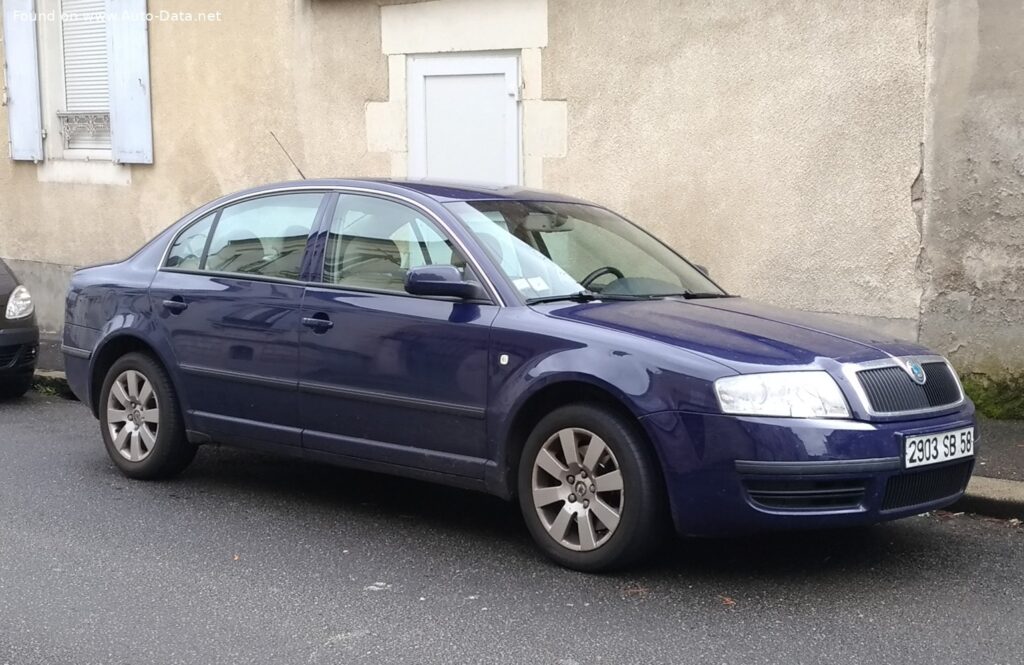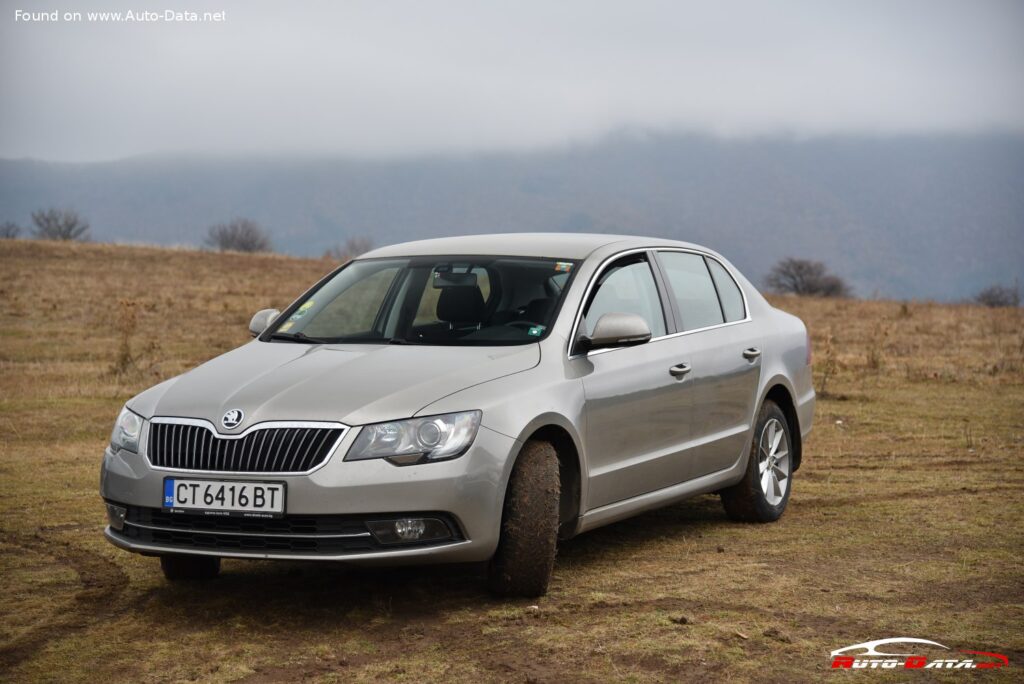
The Skoda Superb II, particularly in its facelifted 2013 iteration with the 2.0 TDI (140 Hp) DPF engine, represents a significant offering in the European and Asian D-segment (mid-size) executive car market. Produced by the Czech automaker Skoda, a subsidiary of the Volkswagen Group, this model was never officially sold in the United States, yet it embodies the brand’s commitment to providing spacious, practical, and well-engineered vehicles at a competitive price point. The {original_title} distinguished itself through its unique liftback body style, cavernous interior, and efficient diesel powertrain, catering to a demographic that valued functionality, comfort, and economy.
The Skoda Superb II (facelift 2013) 2.0 TDI (140 Hp) DPF: A Refined European Executive
First introduced in 2008, the second-generation Skoda Superb built upon the success of its predecessor, pushing the boundaries of what a Skoda could offer in terms of space, quality, and sophistication. The 2013 facelift, which commenced production in April 2013 and concluded in May 2015, brought a series of aesthetic and technological enhancements, refining its appeal without altering its fundamental strengths. The updates included a refreshed front fascia with a new grille, revised headlights, and redesigned bumpers, aligning its appearance more closely with Skoda’s evolving design language. At the rear, the taillights were restyled, incorporating LED technology in higher trims, and the boot lid was subtly reshaped. These changes aimed to give the Superb a more modern and assertive presence on the road.
One of the Superb’s most distinctive features, retained and subtly improved in the facelift, was its innovative “Twindoor” system, a dual-opening tailgate that allowed it to function as both a conventional sedan with a small boot opening or a practical liftback with a large, wide aperture. This ingenious solution underscored Skoda’s “Simply Clever” philosophy, emphasizing practical solutions to everyday challenges. While the Twindoor was a hallmark of the pre-facelift model, the 2013 update simplified its operation for improved user experience. The Skoda Superb II (facelift 2013) 2.0 TDI (140 Hp) DPF, in particular, was positioned as a sensible choice for business fleets and private buyers seeking a blend of executive comfort and cost-effective operation, a critical consideration in its primary markets where diesel powertrains are highly favored for their fuel efficiency.
Engine & Performance
At the heart of this particular Superb variant lies the robust and highly efficient 2.0-liter TDI (Turbocharged Direct Injection) diesel engine, specifically identified by the EA189 / CFFB engine code. This inline four-cylinder unit, transversely mounted at the front, was a cornerstone of the Volkswagen Group’s powertrain offerings during this era, renowned for its balance of power, torque, and fuel economy. With an engine displacement of 1968 cubic centimeters (approximately 120.09 cubic inches), it delivers a respectable 140 horsepower, translating to a power output of 71.1 horsepower per liter. This power is complemented by a substantial torque output of 320 Newton-meters (236.02 lb.-ft.), available across a broad rev range from 1750 to 2500 rpm, ensuring strong mid-range acceleration and effortless cruising.
The engine’s performance characteristics are further enhanced by its advanced fuel injection system, utilizing Commonrail technology for precise fuel delivery, and a turbocharger coupled with an intercooler to maximize air intake density, leading to improved combustion efficiency and power. A high compression ratio of 16:1 is typical for a modern diesel engine, contributing to its thermal efficiency. Power is channeled to the front wheels via a smooth and precise 6-speed manual transmission, offering engaging control for the driver while optimizing fuel consumption across various driving conditions. This powertrain architecture allows the Superb to accelerate from 0 to 60 mph in a competitive 9.5 seconds, with a maximum speed of 131.73 mph (212 km/h), making it perfectly capable for both urban commuting and sustained highway travel.
Fuel efficiency was a key selling point for the 2.0 TDI (140 Hp) DPF. The combined fuel economy is rated at an impressive 4.6 liters per 100 kilometers, which translates to approximately 51.1 US miles per gallon. Urban driving yields 42 US mpg, while extra-urban conditions can see figures as high as 58.8 US mpg. These figures, combined with a 60-liter (15.85 US gallon) fuel tank, provide an excellent driving range, reducing the frequency of fuel stops. Environmentally, the engine complies with the Euro 5 J emission standard, aided by a Diesel Particulate Filter (DPF) system that effectively reduces harmful particulate matter, contributing to cleaner air. With CO2 emissions of 119 grams per kilometer, the Superb was also an attractive option for markets with emissions-based taxation schemes.
Design & Features
The Skoda Superb II (facelift 2013) continued to champion its distinctive liftback body style, a practical choice that offered the elegant profile of a sedan with the immense cargo versatility of a hatchback. Measuring 190.28 inches (4833 mm) in length, 71.54 inches (1817 mm) in width, and 57.56 inches (1462 mm) in height, the Superb occupied a substantial footprint, especially for a vehicle in its segment. This generous exterior dimension translated directly into one of its most celebrated attributes: interior space. The wheelbase of 108.7 inches (2761 mm) provided exceptional legroom for rear passengers, often rivaling vehicles from a segment above, a feature that was particularly appreciated by executive users and families alike.
Inside, the Superb offered a comfortable and ergonomically designed cabin for five occupants. The facelift brought minor refinements to interior trim and infotainment options, enhancing the perception of quality and modernity. Despite its focus on practicality, Skoda did not compromise on essential safety and convenience features. Standard assisting systems included ABS (Anti-lock Braking System) for controlled braking, and a steering rack and pinion setup provided responsive and predictable handling. The kerb weight of 3377.48 pounds (1532 kg) contributed to a solid and stable ride quality, while the maximum load capacity of 1241.2 pounds (563 kg) underscored its utility.
The liftback design truly shone when it came to cargo capacity. The minimum trunk space was an impressive 595 liters (21.01 cubic feet), which could be expanded to a cavernous 1700 liters (60.03 cubic feet) with the rear seats folded down. This flexibility made the Superb an ideal choice for everything from daily commutes to long-distance family trips, capable of accommodating large luggage or sports equipment with ease. The thoughtful inclusion of features like a particulate filter in the engine system further highlighted Skoda’s commitment to modern automotive standards, ensuring the vehicle met contemporary environmental regulations while offering robust performance and exceptional practicality.
Technical Specifications
| Brand | Skoda |
| Model | Superb |
| Generation | Superb II (facelift 2013) |
| Type (Engine) | 2.0 TDI (140 Hp) DPF |
| Start of production | April, 2013 year |
| End of production | May, 2015 year |
| Powertrain Architecture | Internal Combustion engine |
| Body type | Liftback |
| Seats | 5 |
| Doors | 5 |
| Fuel consumption (economy) – urban | 5.6 l/100 km (42 US mpg) |
| Fuel consumption (economy) – extra urban | 4 l/100 km (58.8 US mpg) |
| Fuel consumption (economy) – combined | 4.6 l/100 km (51.1 US mpg) |
| CO2 emissions | 119 g/km |
| Fuel Type | Diesel |
| Acceleration 0 – 100 km/h | 10 sec |
| Acceleration 0 – 62 mph | 10 sec |
| Acceleration 0 – 60 mph (Calculated) | 9.5 sec |
| Maximum speed | 212 km/h (131.73 mph) |
| Emission standard | Euro 5 J |
| Weight-to-power ratio | 10.9 kg/Hp (91.4 Hp/tonne) |
| Weight-to-torque ratio | 4.8 kg/Nm (208.9 Nm/tonne) |
| Power | 140 Hp |
| Power per litre | 71.1 Hp/l |
| Torque | 320 Nm @ 1750-2500 rpm (236.02 lb.-ft. @ 1750-2500 rpm) |
| Engine layout | Front, Transverse |
| Engine Model/Code | EA189 / CFFB |
| Engine displacement | 1968 cm3 (120.09 cu. in.) |
| Number of cylinders | 4 |
| Engine configuration | Inline |
| Compression ratio | 16:1 |
| Fuel injection system | Diesel Commonrail |
| Engine aspiration | Turbocharger, Intercooler |
| Engine oil capacity | 4.3 l (4.54 US qt) |
| Coolant | 8.4 l (8.88 US qt) |
| Engine systems | Particulate filter |
| Kerb Weight | 1532 kg (3377.48 lbs.) |
| Max. weight | 2095 kg (4618.68 lbs.) |
| Max load | 563 kg (1241.2 lbs.) |
| Trunk (boot) space – minimum | 595 l (21.01 cu. ft.) |
| Trunk (boot) space – maximum | 1700 l (60.03 cu. ft.) |
| Fuel tank capacity | 60 l (15.85 US gal) |
| Length | 4833 mm (190.28 in.) |
| Width | 1817 mm (71.54 in.) |
| Height | 1462 mm (57.56 in.) |
| Wheelbase | 2761 mm (108.7 in.) |
| Front track | 1545 mm (60.83 in.) |
| Rear (Back) track | 1518 mm (59.76 in.) |
| Minimum turning circle (turning diameter) | 11.69 m (38.35 ft.) |
| Drivetrain Architecture | The Internal combustion engine (ICE) drives the front wheels of the vehicle. |
| Drive wheel | Front wheel drive |
| Number of gears and type of gearbox | 6 gears, manual transmission |
| Assisting systems | ABS (Anti-lock braking system) |
| Steering type | Steering rack and pinion |