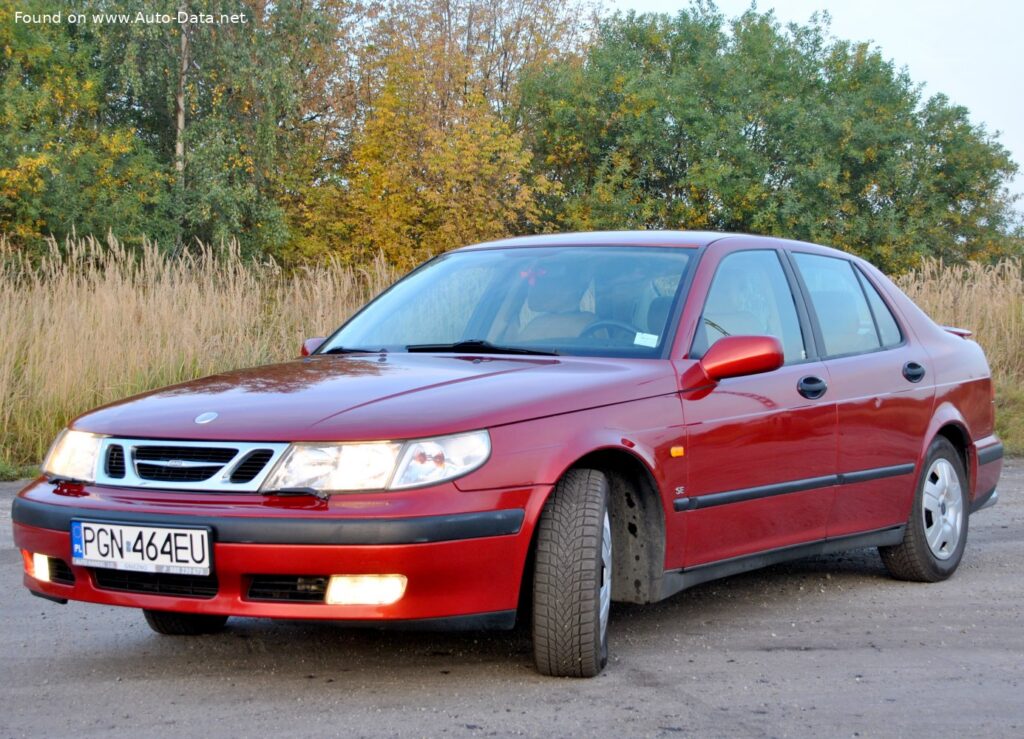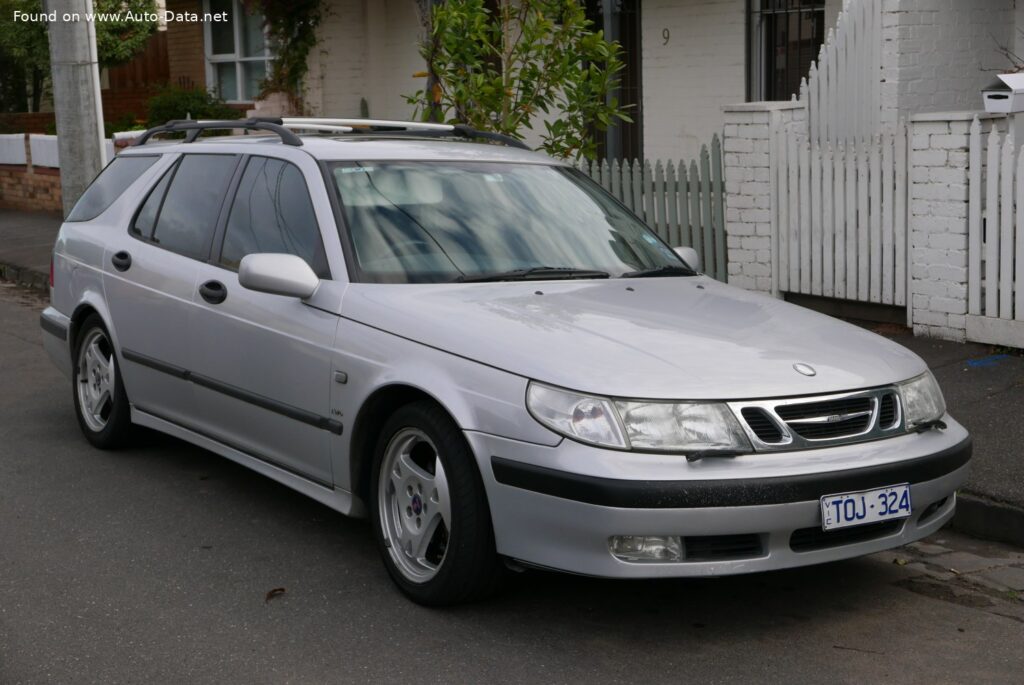
The Saab 9-5 Sport Combi 2.3 T (170 Hp) represents a compelling chapter in the history of the Swedish automaker, embodying Saab’s distinctive approach to engineering and design within the executive segment. Produced between 1998 and 2001, this particular variant of the first-generation 9-5 Sport Combi combined practical station wagon utility with the brand’s signature turbocharged performance and a driver-centric philosophy. Positioned as a direct competitor to established European luxury brands, the 9-5 offered a unique blend of safety, innovation, and a somewhat unconventional charm that appealed to a discerning clientele. While Saab vehicles, particularly wagons, found a devoted following globally, the Sport Combi was especially popular in European markets where its blend of practicality and dynamic driving characteristics resonated strongly with buyers seeking a premium alternative to conventional sedans.
The {Saab 9-5 Sport Combi 2.3 T (170 Hp)}: Engineering and Heritage
The first-generation Saab 9-5, introduced in 1997, succeeded the long-running 9000 model, carrying the torch of Saab’s executive car lineage. The Sport Combi, or estate wagon, variant quickly followed, offering enhanced versatility without compromising the brand’s core values. This era of Saab was characterized by a strong emphasis on turbocharging, safety innovations, and ergonomic design, often inspired by the company’s aviation heritage. The 9-5 Sport Combi 2.3 T (170 Hp) was a testament to this philosophy, providing a robust and reliable powertrain coupled with a spacious, well-appointed interior. Its market presence, particularly during its production run from 1998 to 2001, solidified Saab’s reputation for producing intelligent, distinctive automobiles that stood apart from the mainstream.
Powertrain and Performance Characteristics
At the heart of the Saab 9-5 Sport Combi 2.3 T (170 Hp) lies a meticulously engineered 2.3-liter (2290 cm3 or 139.74 cu. in.) turbocharged inline-four engine, designated with the internal code B235E. This powerplant delivered a respectable 170 horsepower at 5500 RPM, translating to a power-per-liter output of 74.2 HP/l. More significant, perhaps, was its torque output: a robust 280 Newton-meters (206.52 lb.-ft.) available from a remarkably low 1800 RPM. This characteristic “low-end grunt” was a hallmark of Saab’s turbocharging philosophy, providing eager acceleration and effortless highway cruising without the need to constantly wind out the engine.
The engine featured a DOHC (Double Overhead Camshaft) valvetrain with four valves per cylinder, a common and efficient design for its time, ensuring optimal airflow for combustion. Fuel delivery was handled by a multi-port manifold injection system, precisely metering gasoline into each cylinder. The turbocharger was integral to its performance, enhancing both power and efficiency. With a compression ratio of 9.3:1, the engine was designed to operate effectively with premium unleaded gasoline, optimizing performance and reducing the likelihood of pre-ignition.
Power was transferred to the front wheels via a precise 5-speed manual transmission, offering an engaging driving experience. This setup allowed the 9-5 Sport Combi to achieve a 0-60 mph acceleration time of 8.7 seconds, a competitive figure for a family-oriented wagon of its size and era. Its maximum speed was rated at 136.7 mph (220 km/h), underscoring its capabilities as a long-distance cruiser. Despite its performance, the 9-5 Sport Combi maintained reasonable fuel economy for a turbocharged vehicle of its class. Urban consumption was rated at 17.3 US mpg (13.6 l/100 km), while extra-urban driving yielded a more efficient 30.5 US mpg (7.7 l/100 km), making it a practical choice for varied driving conditions.
The vehicle’s weight-to-power ratio stood at 9 kg/Hp (110.7 Hp/tonne), and its weight-to-torque ratio was 5.5 kg/Nm (182.4 Nm/tonne), indicating a well-balanced power delivery that favored usable, real-world performance over peak horsepower figures. This emphasis on accessible torque contributed significantly to the car’s relaxed yet capable driving dynamics, a trait highly valued by Saab enthusiasts.
Design, Features, and Practicality
The Saab 9-5 Sport Combi is defined by its station wagon body type, offering a compelling blend of elegant design and exceptional practicality. Measuring 189.29 inches (4808 mm) in length, 70.55 inches (1792 mm) in width, and 58.94 inches (1497 mm) in height, the 9-5 Sport Combi presented a substantial yet refined presence on the road. Its 106.42-inch (2703 mm) wheelbase provided a stable ride and generous interior space for five occupants across its five doors.
A key attribute of the Sport Combi was its cargo capacity. With the rear seats in place, it offered a minimum trunk space of 14.66 cubic feet (415 liters), ample for daily needs. When the rear seats were folded, this expanded dramatically to an impressive 52.62 cubic feet (1490 liters), transforming the vehicle into a highly capable hauler for larger items or extended trips. The fuel tank capacity of 18.49 US gallons (70 liters) ensured a considerable driving range between fill-ups, further enhancing its touring credentials.
In terms of chassis and handling, the 9-5 Sport Combi featured a Spring Strut suspension system at both the front and rear, providing a comfortable yet controlled ride characteristic of European executive cars. Braking performance was handled by ventilated discs at the front and solid discs at the rear, complemented by an Anti-lock Braking System (ABS) as a standard assisting feature, which was a significant safety advancement for its time. Steering was managed by a hydraulic rack and pinion system, offering direct feedback and a connected feel to the road. The vehicle rode on 205/65 R15 tires mounted on 6.5J x 15-inch wheel rims, a practical size that balanced ride comfort with competent handling.
The interior design adhered to Saab’s ergonomic principles, often described as “cockpit-like,” with controls thoughtfully placed for the driver. While specific luxury features varied by trim level, the focus was always on functionality, safety, and comfort. The 9-5 generation also introduced Saab’s “Active Head Restraints” (SAHR) system, a groundbreaking safety feature designed to reduce whiplash injuries, underscoring the brand’s pioneering role in automotive safety. The overall build quality and robust construction contributed to the 9-5’s reputation for durability and long-term ownership satisfaction.
Technical Specifications: Saab 9-5 Sport Combi 2.3 T (170 Hp) (1998-2001)
| Brand | Saab |
| Model | 9-5 |
| Generation | 9-5 Sport Combi |
| Type (Engine) | 2.3 T (170 Hp) |
| Start of production | 1998 year |
| End of production | 2001 year |
| Powertrain Architecture | Internal Combustion engine |
| Body type | Station wagon (estate) |
| Seats | 5 |
| Doors | 5 |
| Fuel consumption (economy) – urban | 13.6 l/100 km (17.3 US mpg) |
| Fuel consumption (economy) – extra urban | 7.7 l/100 km (30.5 US mpg) |
| Fuel Type | Petrol (Gasoline) |
| Acceleration 0 – 60 mph | 8.7 sec |
| Maximum speed | 220 km/h (136.7 mph) |
| Weight-to-power ratio | 9 kg/Hp (110.7 Hp/tonne) |
| Weight-to-torque ratio | 5.5 kg/Nm (182.4 Nm/tonne) |
| Power | 170 Hp @ 5500 rpm |
| Power per litre | 74.2 Hp/l |
| Torque | 280 Nm @ 1800 rpm (206.52 lb.-ft. @ 1800 rpm) |
| Engine layout | Front, Transverse |
| Engine Model/Code | B235E |
| Engine displacement | 2290 cm3 (139.74 cu. in.) |
| Number of cylinders | 4 |
| Engine configuration | Inline |
| Cylinder Bore | 90 mm (3.54 in.) |
| Piston Stroke | 90 mm (3.54 in.) |
| Compression ratio | 9.3:1 |
| Number of valves per cylinder | 4 |
| Fuel injection system | Multi-port manifold injection |
| Engine aspiration | Turbocharger |
| Valvetrain | DOHC |
| Engine oil capacity | 4 l (4.23 US qt) |
| Coolant | 7.4 l (7.82 US qt) |
| Kerb Weight | 1535 kg (3384.1 lbs.) |
| Max. weight | 2150 kg (4739.94 lbs.) |
| Max load | 615 kg (1355.84 lbs.) |
| Trunk (boot) space – minimum | 415 l (14.66 cu. ft.) |
| Trunk (boot) space – maximum | 1490 l (52.62 cu. ft.) |
| Fuel tank capacity | 70 l (18.49 US gal) |
| Length | 4808 mm (189.29 in.) |
| Width | 1792 mm (70.55 in.) |
| Height | 1497 mm (58.94 in.) |
| Wheelbase | 2703 mm (106.42 in.) |
| Front track | 1522 mm (59.92 in.) |
| Rear (Back) track | 1522 mm (59.92 in.) |
| Drivetrain Architecture | The Internal combustion engine (ICE) drives the front wheels of the vehicle. |
| Drive wheel | Front wheel drive |
| Number of gears and type of gearbox | 5 gears, manual transmission |
| Front suspension | Spring Strut |
| Rear suspension | Spring Strut |
| Front brakes | Ventilated discs |
| Rear brakes | Disc |
| Assisting systems | ABS (Anti-lock braking system) |
| Steering type | Steering rack and pinion |
| Power steering | Hydraulic Steering |
| Tires size | 205/65 R15 |
| Wheel rims size | 6.5J x 15 |