
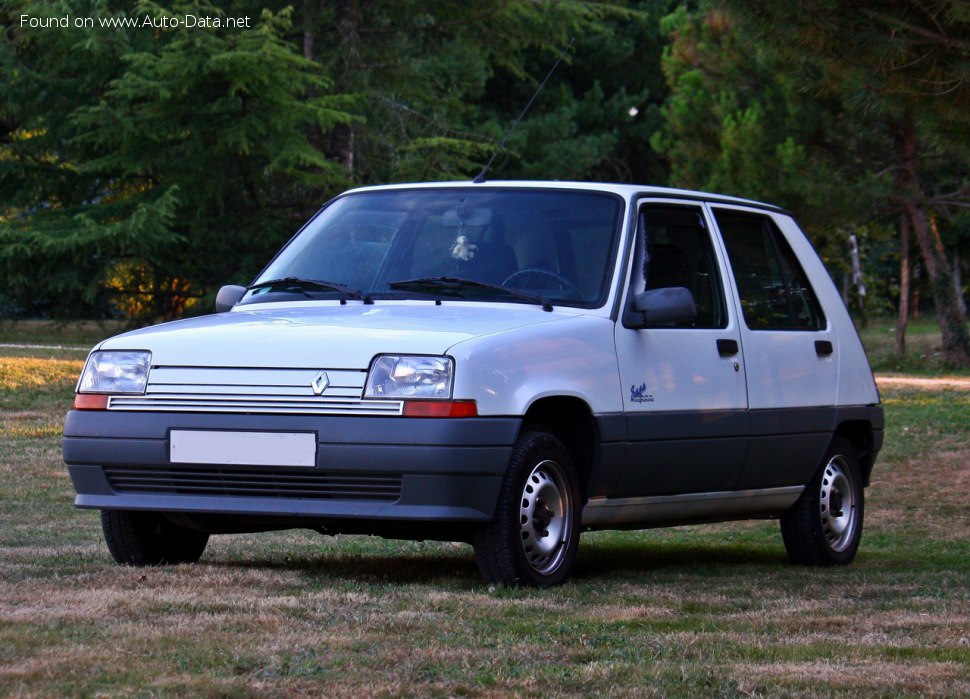
The Renault Super 5 (B/C40) 1.1 (B/C/S401) (46 Hp), produced between 1984 and 1988, represents a significant chapter in the history of the European supermini segment. As the successor to the immensely popular original Renault 5, the Super 5 was tasked with modernizing a beloved icon while retaining its core appeal of practicality, efficiency, and accessible motoring. While not widely available in the United States market, this French-engineered hatchback played a pivotal role in shaping the automotive landscape across Europe, becoming a ubiquitous sight on city streets and country roads alike. Its design ethos was centered on improved aerodynamics, enhanced interior space, and a more refined driving experience compared to its groundbreaking predecessor, all wrapped in a package that remained true to the spirit of economical personal transport.
The Genesis of the Renault Super 5
The original Renault 5, launched in 1972, was a revolutionary vehicle that effectively created the modern supermini segment, offering a stylish, practical, and affordable car for the masses. By the early 1980s, however, competition in this crucial segment had intensified, and the venerable R5 was beginning to show its age. Renault’s response was the Super 5, often affectionately known as the “Supercinq” in its home market. Introduced in 1984, the Super 5 (B/C40) was not merely a facelift but an entirely new car, built on a redesigned platform that incorporated lessons learned from over a decade of R5 production. Its mission was clear: to reclaim leadership in the fiercely competitive European subcompact market by offering a compelling blend of modern design, improved comfort, and proven mechanical reliability.
The `Renault Super 5` was engineered to be a more sophisticated and safer vehicle than its predecessor. While it retained the general silhouette that made the original R5 so recognizable, every panel was new, featuring a more aerodynamic profile that contributed to better fuel economy and reduced wind noise. The car’s development also focused on modularity, allowing for a wide range of engine and trim options to cater to diverse customer needs and budgets. The 1.1 (B/C/S401) variant, with its 46 horsepower engine, was positioned as an entry-level or mid-range option, perfectly suited for urban commuting and economical driving, a critical consideration for European consumers facing rising fuel costs.
Engine and Performance: The Renault Super 5’s Heart
Under the hood of the `Renault Super 5` 1.1 (B/C/S401) lay a robust and well-proven powertrain: the C1E engine. This 1.1-liter (1.1 L) unit was part of Renault’s venerable “Cléon-Fonte” engine family, which had powered numerous Renault models for decades, earning a reputation for simplicity, reliability, and ease of maintenance. The C1E engine in this application was a naturally aspirated gasoline (petrol) unit, delivering a modest but entirely adequate 46 horsepower (Hp). While 46 Hp might seem modest by today’s standards, for a lightweight supermini in the mid-1980s, it provided sufficient performance for daily driving, particularly in urban environments where the car’s compact dimensions and nimble handling truly shone. The engine’s design prioritized fuel efficiency and low running costs, making it an attractive proposition for first-time car buyers, students, and those seeking economical transportation.
The powertrain architecture for this `Renault Super 5` variant was a conventional Internal Combustion Engine setup, driving the front wheels. This layout was standard for the segment and contributed to the car’s efficient packaging and predictable handling characteristics. The engine’s oil capacity was 3.5 liters (3.7 US quarts), and the cooling system held 5.5 liters (5.81 US quarts) of coolant, indicating a design focused on durability and thermal management for varied driving conditions. The naturally aspirated nature of the engine meant a smooth, linear power delivery without the complexities or additional maintenance requirements of forced induction systems, further reinforcing its reputation as a reliable workhorse. This specific engine variant, produced from 1984 to 1988, epitomized the dependable and economical motoring that the Super 5 was designed to offer.
Design and Features: A Practical Icon
The `Renault Super 5` (B/C40) 1.1 (B/C/S401) was offered in a highly practical 5-door hatchback body type, which was a significant selling point in the European market. This configuration provided excellent versatility, making it easy to access the rear seats and offering a flexible cargo area. With seating for five occupants, the Super 5 was capable of accommodating small families or groups of friends, further enhancing its appeal as an all-rounder. The design, penned by Marcello Gandini (who also styled iconic cars like the Lamborghini Countach), managed to evolve the original R5’s cheerful persona into a more contemporary and sophisticated aesthetic. Gandini’s touches included flush-fitting windows, integrated bumpers, and a more aerodynamic front end, all contributing to a Cd (drag coefficient) of 0.36, a respectable figure for a car of its class and era.
Interior design focused on ergonomics and functionality. While specific features would vary by trim level, the cabin generally offered good visibility, straightforward controls, and durable materials designed to withstand the rigors of daily use. The emphasis was on creating a comfortable and practical environment for both driver and passengers. Storage solutions, while not luxurious, were thoughtfully integrated. The 5-door configuration, in particular, made loading and unloading groceries or luggage much easier, complementing the car’s role as a versatile urban and suburban vehicle. The fuel tank capacity of 43 liters (11.36 US gallons) provided a decent cruising range, making the Super 5 suitable for longer journeys beyond city limits, a testament to its all-around utility. Safety, while not at modern levels, was an improvement over its predecessor, with a stronger body structure and better crash performance for its time, reflecting evolving European safety standards.
Technical Specifications
| Brand | Renault |
| Model | Super 5 |
| Generation | Super 5 (B/C40) |
| Type (Engine) | 1.1 (B/C/S401) (46 Hp) |
| Start of production | 1984 year |
| End of production | 1988 year |
| Powertrain Architecture | Internal Combustion engine |
| Body type | Hatchback |
| Seats | 5 |
| Doors | 5 |
| Fuel Type | Petrol (Gasoline) |
| Power | 46 Hp |
| Engine Model/Code | C1E |
| Engine aspiration | Naturally aspirated engine |
| Engine oil capacity | 3.5 l (3.7 US qt | 3.08 UK qt) |
| Engine oil specification | Information not publicly available |
| Coolant | 5.5 l (5.81 US qt | 4.84 UK qt) |
| Fuel tank capacity | 43 l (11.36 US gal | 9.46 UK gal) |
