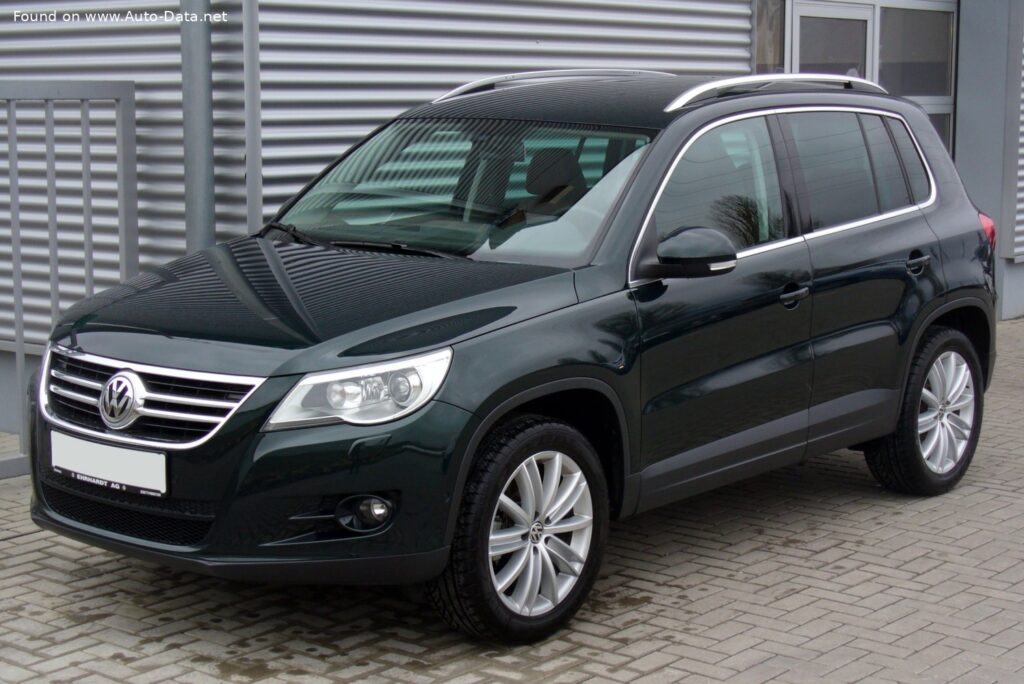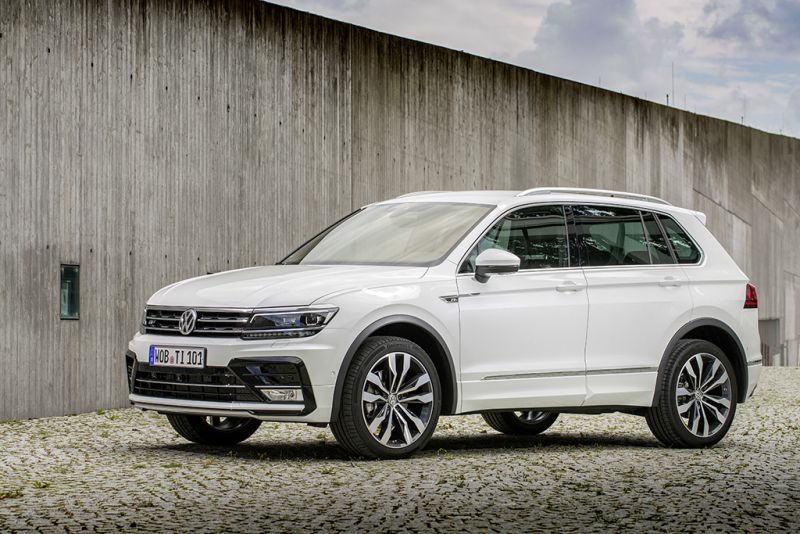
The Volkswagen Tiguan II, specifically the 1.5 TSI (150 Hp) ACT variant, represents a significant evolution in the compact SUV segment, solidifying its position as a versatile and technologically advanced offering from the German automaker. Launched in 2018 as part of the second-generation Tiguan, this particular powertrain, featuring Active Cylinder Technology (ACT), was primarily tailored for European markets, where efficiency and lower emissions are paramount, while still delivering robust performance. Positioned as a family-friendly SUV, the Volkswagen Tiguan II 1.5 TSI (150 Hp) ACT blends practical utility with refined driving dynamics, appealing to a broad spectrum of consumers seeking a capable daily driver with a premium feel. Its production run from 2018 to 2019 marks a specific period for this engine variant within the broader second-generation Tiguan lifecycle, highlighting Volkswagen’s continuous refinement of its powertrain offerings to meet evolving market demands and stringent regulatory standards. While the Tiguan nameplate is well-known globally, this particular engine configuration emphasizes Volkswagen’s commitment to efficiency and innovation within its core markets.
Engineering and Performance of the Volkswagen Tiguan II 1.5 TSI (150 Hp) ACT
At the heart of the Volkswagen Tiguan II 1.5 TSI (150 Hp) ACT lies a sophisticated and highly efficient powertrain designed to deliver a balance of spirited performance and impressive fuel economy. This particular model, produced between 2018 and 2019, is equipped with a 1.5-liter (1498 cm3 or 91.41 cu. in.) inline four-cylinder engine, designated by the code EA211evo / DADA. The engine’s layout is front, transverse, driving the front wheels through a precise 6-speed manual transmission, a popular choice in European markets for driver engagement and control.
Power output for this turbocharged and intercooled unit is a respectable 150 Hp, achieved within a broad rev range of 5000-6000 rpm. This power is complemented by a robust torque figure of 250 Nm, equivalent to 184.39 lb.-ft., available from a remarkably low 1500 rpm and sustained up to 3500 rpm. This wide torque band ensures responsive acceleration and flexible driving characteristics, whether navigating urban environments or cruising on the highway. The engine’s power per liter stands at an impressive 100.1 Hp/l, showcasing its advanced design and efficiency.
A key technological highlight of this powertrain is Volkswagen’s Active Cylinder Technology (ACT), which allows the engine to seamlessly deactivate two of its four cylinders under light load conditions. This system, coupled with a Start & Stop system and direct fuel injection, significantly contributes to the vehicle’s excellent fuel efficiency. On the combined cycle, the Tiguan II 1.5 TSI ACT achieves an estimated 37.3 US mpg (6.3 l/100 km), making it a highly economical choice for its class. Even in urban driving, it delivers 29.4-30.9 US mpg (7.6-8.0 l/100 km), and on the highway, it can reach an impressive 42.8-43.6 US mpg (5.4-5.5 l/100 km). These figures underscore Volkswagen’s commitment to environmental responsibility, further evidenced by its Euro 6 emission standard compliance and CO2 emissions of 143 g/km, aided by a particulate filter.
Performance-wise, the Tiguan II 1.5 TSI ACT is no slouch. It accelerates from 0 to 60 mph in a brisk 8.8 seconds (0-100 km/h in 9.3 seconds), and boasts a maximum speed of 125.52 mph (202 km/h). With a curb weight of 3185.68 lbs (1445 kg) and a weight-to-power ratio of 9.6 kg/Hp, the vehicle feels agile and capable. The combination of its potent yet efficient engine and a well-matched manual gearbox ensures a dynamic and engaging driving experience.
Design and Features: The Volkswagen Tiguan II’s Practicality and Refinement
The Volkswagen Tiguan II, as an SUV, embodies a modern and sophisticated design language that balances robust utility with refined aesthetics. This second-generation model, a 5-door vehicle with seating for five occupants, presents a confident stance on the road, characterized by clean lines and purposeful proportions. Its dimensions contribute to both its interior spaciousness and its maneuverability: a length of 176.61 inches (4486 mm), a width of 72.4 inches (1839 mm, or 82.64 inches including mirrors), and a height of 65.12 inches (1654 mm). The wheelbase measures 105.39 inches (2677 mm), providing a stable ride and ample cabin room.
Inside, the Tiguan II is designed with practicality and comfort in mind. The cabin offers a premium feel with quality materials and intuitive ergonomics. Cargo versatility is a strong suit, with a minimum trunk space of 21.72 cu. ft. (615 liters), which expands significantly to a generous 58.45 cu. ft. (1655 liters) with the rear seats folded down. This expansive cargo area, combined with a maximum load capacity of 1444.03 lbs (655 kg), makes the Tiguan II highly adaptable for various hauling needs, from family road trips to transporting larger items.
Beyond its spacious interior, the Tiguan II is well-equipped with features that enhance both safety and convenience. The vehicle’s robust construction and comprehensive safety systems are paramount. Standard assisting systems include ABS (Anti-lock braking system) for controlled braking. The steering system features a responsive electric power steering rack and pinion, ensuring precise handling and ease of maneuverability, particularly in urban settings, aided by a minimum turning circle of 37.73 feet (11.5 m).
The Tiguan II rides on 215/65 R17 tires mounted on 7J x 17 wheel rims, providing a comfortable ride and confident grip. Braking performance is handled by ventilated discs at the front and solid discs at the rear, ensuring strong stopping power. The ground clearance of 7.52 inches (191 mm) allows for confident navigation over varied terrain, adding to its SUV credentials. Furthermore, the Tiguan II is a capable hauler, with a permitted trailer load of 3968.32 lbs (1800 kg) with brakes (12% incline) and 1653.47 lbs (750 kg) without brakes, alongside a robust max. roof load of 165.35 lbs (75 kg), making it ideal for those with active lifestyles or requiring additional towing capacity. These features collectively underscore the Volkswagen Tiguan II’s reputation as a versatile, safe, and refined compact SUV, perfectly suited for the demands of modern families and individuals alike.
Technical Specifications
| Brand | Volkswagen |
| Model | Tiguan |
| Generation | Tiguan II |
| Type (Engine) | 1.5 TSI (150 Hp) ACT |
| Start of production | 2018 year |
| End of production | 2019 year |
| Powertrain Architecture | Internal Combustion engine |
| Body type | SUV |
| Seats | 5 |
| Doors | 5 |
| Fuel consumption (economy) – urban | 7.6-8.0 l/100 km (30.9 – 29.4 US mpg) |
| Fuel consumption (economy) – extra urban | 5.4-5.5 l/100 km (43.6 – 42.8 US mpg) |
| Fuel consumption (economy) – combined | 6.3 l/100 km (37.3 US mpg) |
| CO2 emissions | 143 g/km |
| Fuel Type | Gasoline |
| Acceleration 0 – 60 mph | 8.8 sec |
| Maximum speed | 125.52 mph (202 km/h) |
| Emission standard | Euro 6 |
| Weight-to-power ratio | 9.6 kg/Hp (103.8 Hp/tonne) |
| Weight-to-torque ratio | 5.8 kg/Nm (173 Nm/tonne) |
| Power | 150 Hp @ 5000-6000 rpm |
| Power per litre | 100.1 Hp/l |
| Torque | 250 Nm (184.39 lb.-ft.) @ 1500-3500 rpm |
| Engine layout | Front, Transverse |
| Engine Model/Code | EA211evo / DADA |
| Engine displacement | 1498 cm3 (91.41 cu. in.) |
| Number of cylinders | 4 |
| Engine configuration | Inline |
| Number of valves per cylinder | 4 |
| Fuel injection system | Direct injection |
| Engine aspiration | Turbocharger, Intercooler |
| Engine oil capacity | 4.3 l (4.54 US qt) |
| Engine systems | Start & Stop System, Cylinder deactivation system, Particulate filter |
| Curb Weight | 1445 kg (3185.68 lbs.) |
| Max. weight | 2100 kg (4629.71 lbs.) |
| Max load | 655 kg (1444.03 lbs.) |
| Trunk space – minimum | 615 l (21.72 cu. ft.) |
| Trunk space – maximum | 1655 l (58.45 cu. ft.) |
| Fuel tank capacity | 58 l (15.32 US gal) |
| Max. roof load | 75 kg (165.35 lbs.) |
| Permitted trailer load with brakes (12%) | 1800 kg (3968.32 lbs.) |
| Permitted trailer load without brakes | 750 kg (1653.47 lbs.) |
| Permitted towbar download | 100 kg (220.46 lbs.) |
| Length | 4486 mm (176.61 in.) |
| Width | 1839 mm (72.4 in.) |
| Width including mirrors | 2099 mm (82.64 in.) |
| Height | 1654 mm (65.12 in.) |
| Wheelbase | 2677 mm (105.39 in.) |
| Front track | 1579-1589 mm (62.17 – 62.56 in.) |
| Rear (Back) track | 1570-1580 mm (61.81 – 62.2 in.) |
| Ride height (ground clearance) | 191 mm (7.52 in.) |
| Minimum turning circle (turning diameter) | 11.5 m (37.73 ft.) |
| Drivetrain Architecture | The Internal combustion engine (ICE) drives the front wheels of the vehicle. |
| Drive wheel | Front wheel drive |
| Number of gears and type of gearbox | 6 gears, manual transmission |
| Front brakes | Ventilated discs |
| Rear brakes | Disc |
| Assisting systems | ABS (Anti-lock braking system) |
| Steering type | Steering rack and pinion |
| Power steering | Electric Steering |
| Tires size | 215/65 R17 |
| Wheel rims size | 7J x 17 |