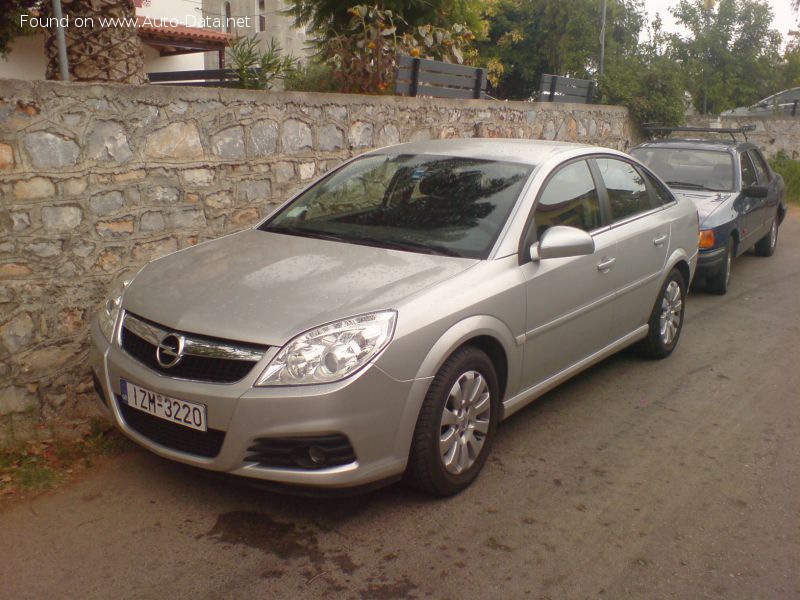
The Opel Vectra C CC, specifically the facelifted 2005 model equipped with the 2.0i 16V Turbo (175 Hp) engine, represented a significant offering in the highly competitive European D-segment, or what is often referred to as the mid-size or large family car segment in American terminology. Produced by the German automaker Opel, a subsidiary of General Motors at the time, the Vectra C generation was known for its robust engineering and practical design, catering primarily to families and fleet customers across Europe and other international markets where Opel (and its Vauxhall counterpart in the UK) had a strong presence. The “CC” designation, while sometimes associated with coupes, in this context referred to a five-door hatchback body style, blending the sedan’s length with the versatility of a liftback. The 2005 facelift introduced a series of aesthetic and technical enhancements, aiming to keep the Vectra competitive against rivals such as the Ford Mondeo, Volkswagen Passat, and Renault Laguna, before its eventual replacement by the Insignia in 2008. This particular variant, with its turbocharged gasoline engine, aimed to offer a compelling balance of performance and everyday usability.
Powertrain and Performance of the Opel Vectra C CC (facelift 2005)
At the heart of the Opel Vectra C CC (facelift 2005) 2.0i 16V Turbo (175 Hp) lies a sophisticated 2.0-liter (1998 cm³ or 121.93 cu. in.) inline four-cylinder engine, designated with the model code Z20NET. This powerplant features a DOHC (Double Overhead Camshaft) valvetrain with 16 valves (four per cylinder), ensuring efficient breathing and optimal performance. Crucially, the engine benefits from a turbocharger and intercooler, a setup that significantly boosts power output and torque across a broad RPM range. This forced induction system allows the relatively compact 2.0-liter unit to produce a healthy 175 horsepower at 5500 rpm, translating to an impressive 87.6 horsepower per liter. Torque figures are equally robust, peaking at 265 Nm (195.45 lb.-ft.) at a low 2500 rpm, which contributes to excellent drivability and responsive acceleration.
The engine’s layout is front, transverse, driving the front wheels through a precise 6-speed manual transmission. This drivetrain architecture is typical for vehicles in this segment, optimizing interior space and manufacturing efficiency. Performance metrics for this turbocharged Vectra are commendable for a family hatchback of its era. It can accelerate from 0 to 60 mph in a brisk 8.6 seconds (0-100 km/h in 9.1 seconds) and achieve a top speed of 142.92 mph (230 km/h). These figures placed it firmly in the upper echelon of its class in terms of dynamic capability, offering a spirited driving experience without sacrificing practicality. The power-to-weight ratio stands at 8.3 kg/Hp (120.3 Hp/tonne), while the torque-to-weight ratio is 5.5 kg/Nm (182.1 Nm/tonne), indicating a well-balanced power delivery for its curb weight of 3207.73 lbs (1455 kg).
Fuel economy, while not the primary focus of a turbocharged variant, was still respectable for its performance level. The combined fuel consumption is rated at 8.6 l/100 km, which translates to approximately 27.4 US mpg. In urban driving, it consumed 12.5 l/100 km (18.8 US mpg), and on extra-urban cycles, it achieved 6.3 l/100 km (37.3 US mpg). These figures underscore the efficiency gains offered by modern engine management and turbocharging technology even in the mid-2000s, providing a good blend of power and reasonable running costs for its European target audience. The fuel tank capacity of 16.11 US gallons (61 liters) ensured a decent cruising range.
Design and Features of the Vectra C CC Facelift
The Opel Vectra C CC (facelift 2005) presented a refreshed and contemporary aesthetic that built upon the solid foundation of the pre-facelift model. As a five-door hatchback, its body type offered a blend of sleek sedan-like lines with the inherent practicality of a liftback. The facelift typically involved updated front and rear fascias, including redesigned headlights, grille, and bumpers, giving the car a more aggressive and modern appearance. The overall length of 181.54 inches (4611 mm) and width of 70.79 inches (1798 mm) positioned it comfortably within the mid-size segment, offering ample interior space for five occupants.
The hatchback configuration was a key selling point for the Vectra CC, providing exceptional versatility. With all five seats in use, the trunk (boot) offered a generous 17.66 cu. ft. (500 liters) of cargo space. When the rear seats were folded, this expanded significantly to 48.03 cu. ft. (1360 liters), making it highly capable for carrying larger items, a characteristic highly valued by European families. The car’s wheelbase of 106.3 inches (2700 mm) contributed to a stable ride and good interior legroom, while the front and rear tracks of 59.96 inches (1523 mm) and 59.57 inches (1513 mm) respectively, ensured a confident stance on the road.
In terms of driving dynamics and safety, the Vectra C CC was equipped with a well-engineered chassis. The front suspension utilized a robust Spring Strut design, known for its balance of comfort and control. The rear suspension featured a sophisticated multi-link setup (described as “Several levers and rods”), which provided superior handling and ride quality, especially over varied road surfaces. Braking performance was assured by ventilated discs at the front and solid discs at the rear, complemented by an Anti-lock Braking System (ABS) as standard, enhancing safety during emergency stops. The steering system was a rack and pinion type, offering direct and responsive feedback to the driver. The vehicle rode on 215/55 R16 tires mounted on 6.5J x 16 wheel rims, providing a good balance between grip, ride comfort, and aesthetic appeal for its class. The maximum load capacity of 1047.2 lbs (475 kg) and a maximum gross weight of 4254.92 lbs (1930 kg) further highlighted its utility as a capable family and touring vehicle.
Technical Specifications: Opel Vectra C CC (facelift 2005) 2.0i 16V Turbo (175 Hp)
| **General Information** | |
| Brand | Opel |
| Model | Vectra |
| Generation | Vectra C CC (facelift 2005) |
| Engine Type | 2.0i 16V Turbo (175 Hp) |
| Production Start | 2005 |
| Production End | August, 2008 |
| Powertrain Architecture | Internal Combustion Engine |
| Body Type | Hatchback |
| Seats | 5 |
| Doors | 5 |
| **Performance Specifications** | |
| Fuel Consumption (Urban) | 12.5 l/100 km (18.8 US mpg) |
| Fuel Consumption (Extra Urban) | 6.3 l/100 km (37.3 US mpg) |
| Fuel Consumption (Combined) | 8.6 l/100 km (27.4 US mpg) |
| Fuel Type | Petrol (Gasoline) |
| Acceleration 0-60 mph | 8.6 sec |
| Acceleration 0-100 km/h | 9.1 sec |
| Maximum Speed | 230 km/h (142.92 mph) |
| Weight-to-Power Ratio | 8.3 kg/Hp (120.3 Hp/tonne) |
| Weight-to-Torque Ratio | 5.5 kg/Nm (182.1 Nm/tonne) |
| **Engine Specifications** | |
| Power | 175 Hp @ 5500 rpm |
| Power per Liter | 87.6 Hp/l |
| Torque | 265 Nm @ 2500 rpm (195.45 lb.-ft. @ 2500 rpm) |
| Engine Layout | Front, Transverse |
| Engine Model/Code | Z20NET |
| Engine Displacement | 1998 cm³ (121.93 cu. in.) |
| Number of Cylinders | 4 |
| Engine Configuration | Inline |
| Cylinder Bore | 86 mm (3.39 in.) |
| Piston Stroke | 86 mm (3.39 in.) |
| Compression Ratio | 9.5:1 |
| Valves per Cylinder | 4 |
| Fuel Injection System | Multi-port manifold injection |
| Engine Aspiration | Turbocharger, Intercooler |
| Valvetrain | DOHC |
| Engine Oil Capacity | 6 l (6.34 US qt) |
| Coolant Capacity | 7.5 l (7.93 US qt) |
| **Space, Volume, and Weights** | |
| Kerb Weight | 1455 kg (3207.73 lbs) |
| Max. Weight | 1930 kg (4254.92 lbs) |
| Max Load | 475 kg (1047.2 lbs) |
| Trunk (Boot) Space – Minimum | 500 l (17.66 cu. ft.) |
| Trunk (Boot) Space – Maximum | 1360 l (48.03 cu. ft.) |
| Fuel Tank Capacity | 61 l (16.11 US gal) |
| **Dimensions** | |
| Length | 4611 mm (181.54 in.) |
| Width | 1798 mm (70.79 in.) |
| Width Including Mirrors | 2036 mm (80.16 in.) |
| Height | 1460 mm (57.48 in.) |
| Wheelbase | 2700 mm (106.3 in.) |
| Front Track | 1523 mm (59.96 in.) |
| Rear (Back) Track | 1513 mm (59.57 in.) |
| **Drivetrain, Brakes, and Suspension** | |
| Drivetrain Architecture | Front-wheel drive, Internal Combustion Engine |
| Drive Wheel | Front wheel drive |
| Gearbox Type | 6 gears, manual transmission |
| Front Suspension | Spring Strut |
| Rear Suspension | Several levers and rods (Multi-link) |
| Front Brakes | Ventilated discs |
| Rear Brakes | Disc |
| Assisting Systems | ABS (Anti-lock braking system) |
| Steering Type | Steering rack and pinion |
| Tires Size | 215/55 R16 |
| Wheel Rims Size | 6.5J x 16 |