
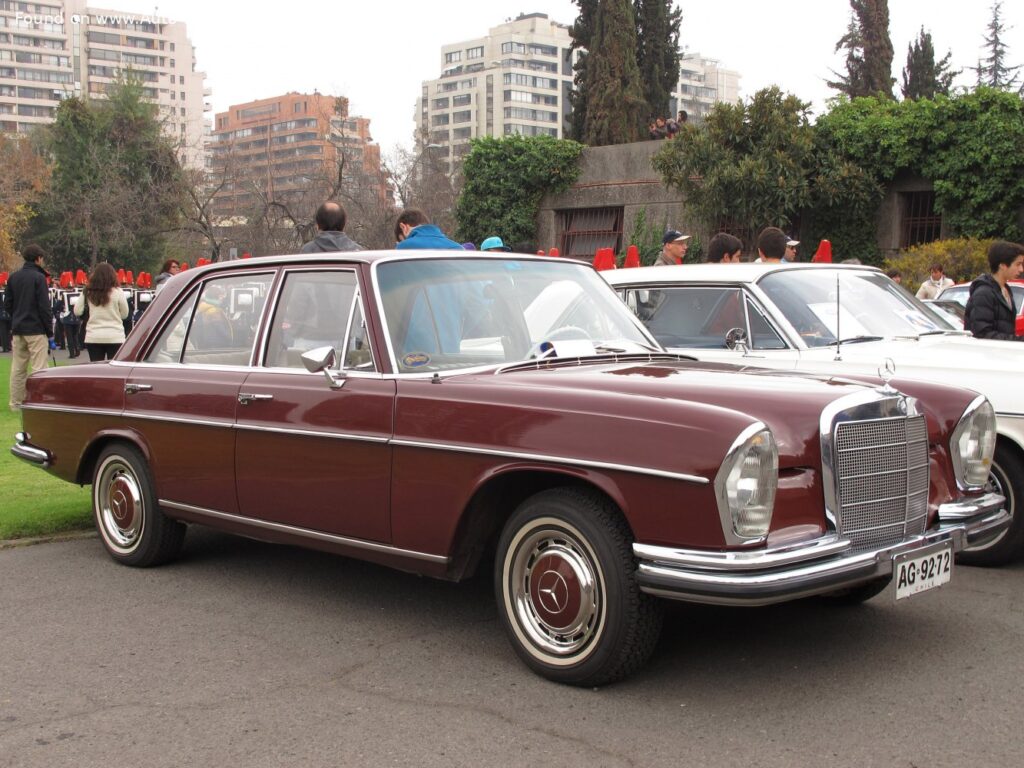
The Mercedes-Benz W108 250 SE (150 Hp) represents a pivotal era in the history of Mercedes-Benz, embodying the marque’s commitment to luxury, engineering excellence, and understated elegance during the mid-1960s. Launched in August 1965, the W108 series succeeded the W111/W112 “Fintail” sedans, shedding some of their more flamboyant styling cues for a cleaner, more timeless aesthetic that would define Mercedes-Benz’s flagship models for years to come. Positioned as a premium executive sedan, the 250 SE was a sophisticated offering for its time, designed to appeal to discerning buyers who valued comfort, build quality, and a refined driving experience. While primarily a European market vehicle, its engineering prowess and design influence resonated globally, setting a benchmark for luxury automobiles.
Engine and Performance of the Mercedes-Benz W108 250 SE
At the heart of the Mercedes-Benz W108 250 SE was the renowned M 129 I / 129.980 inline-six engine, a sophisticated powerplant for its era. With an engine displacement of 2496 cm³ (152.32 cubic inches), this naturally aspirated gasoline engine produced a respectable 150 horsepower at 5500 rpm. This power output was a significant figure for a luxury sedan in the mid-1960s, providing ample capability for both city driving and sustained highway cruising. The engine’s design featured an inline-six configuration with a single overhead camshaft (SOHC) valvetrain and two valves per cylinder, a testament to Mercedes-Benz’s commitment to smooth operation and durability.
One of the most advanced features of the 250 SE’s engine was its multi-port manifold fuel injection system. While many contemporary vehicles still relied on carburetors, Mercedes-Benz had been an early adopter of fuel injection, which offered superior fuel atomization, better throttle response, and improved efficiency. This system contributed to the engine’s impressive power per liter of 60.1 Hp/l and a robust torque output of 216 Nm (159.31 lb.-ft.) at 4200 rpm, ensuring strong acceleration and flexible power delivery across the rev range. The engine’s cylinder bore measured 82 mm (3.23 in.) and piston stroke 78.8 mm (3.1 in.), with a compression ratio of 9.3:1, indicating a well-engineered unit designed for both performance and longevity. The 5.5-liter (5.81 US quart) engine oil capacity and 11.4-liter (12.05 US quart) coolant capacity highlight the robust design intended for sustained operation.
In terms of performance, the 250 SE delivered a compelling package for a luxury sedan of its time. It could accelerate from 0 to 62 mph (100 km/h) in 11.8 seconds, with a calculated 0-60 mph time of 11.2 seconds. The maximum speed reached 118.06 mph (190 km/h), allowing it to comfortably keep pace with, and often surpass, much of the traffic on European autobahns. Fuel consumption, while not a primary concern for luxury car buyers of the era, was a reasonable 11.7 liters per 100 km (20.1 US mpg) in combined driving conditions, reflecting the efficiency benefits of its fuel injection system. The powertrain architecture, with the engine mounted front-longitudinally and driving the rear wheels through a 4-speed manual transmission, provided a classic and engaging driving experience that enthusiasts still appreciate today. The weight-to-power ratio of 9.9 kg/Hp (101.4 Hp/tonne) and a weight-to-torque ratio of 6.9 kg/Nm (145.9 Nm/tonne) underscore the balanced performance characteristics of this elegant machine.
Design and Features of the W108 Chassis
The Mercedes-Benz W108 generation marked a significant evolution in the company’s design language, moving away from the distinctive “Fintail” styling of its W111/W112 predecessors towards a more contemporary and international aesthetic. The 250 SE, as a prominent model in this series, showcased this refined design philosophy. Its body type was a classic 4-door sedan, offering comfortable seating for five occupants. The exterior was characterized by clean, elegant lines, a wider and lower stance, and a reduced emphasis on chrome trim, lending it an air of sophisticated understatement. The car’s dimensions — a length of 4900 mm (192.91 inches), width of 1810 mm (71.26 inches), and height of 1440 mm (56.69 inches) — contributed to its imposing road presence, while the 2750 mm (108.27 inches) wheelbase ensured a spacious cabin and a smooth ride.
Beyond its striking appearance, the W108 250 SE incorporated advanced engineering for its time, particularly in its chassis and suspension. The front suspension featured a double wishbone setup, providing precise steering and excellent road holding. At the rear, Mercedes-Benz employed an innovative combination of a hydro-pneumatic element and trailing arms. This sophisticated rear suspension system was designed to offer superior ride comfort and stability, adapting to varying road conditions and loads – a feature that was quite advanced for the mid-1960s and contributed significantly to the vehicle’s luxurious feel. Braking performance was equally forward-thinking, with disc brakes fitted on both the front and rear axles. This all-around disc brake configuration provided superior stopping power and fade resistance compared to the drum brakes still common on many competitors, enhancing both safety and driver confidence. The steering system utilized a cone worm with recirculation balls, offering precise control and a refined feel.
The interior of the 250 SE reflected Mercedes-Benz’s commitment to luxury and ergonomic design. High-quality materials, meticulous craftsmanship, and comfortable seating were hallmarks of the cabin. While specific features like air conditioning or power windows were often optional or only available on higher trims, the standard amenities were robust and functional. The vehicle’s kerb weight of 1480 kg (3262.84 lbs) and a maximum gross weight of 1980 kg (4365.15 lbs) underscored its solid construction. With a maximum load capacity of 500 kg (1102.31 lbs), the 250 SE was designed not just for prestige but also for practical long-distance travel, supported by a substantial 82-liter (21.66 US gallon) fuel tank, offering an excellent cruising range.
The Enduring Legacy of the Mercedes-Benz W108
The Mercedes-Benz W108 series, and specifically the 250 SE, played a crucial role in cementing Mercedes-Benz’s reputation as a world leader in luxury automotive manufacturing. Its blend of elegant styling, robust engineering, and advanced features for its time set new standards for executive sedans. The W108’s design, characterized by its clean lines and balanced proportions, proved to be remarkably enduring, influencing subsequent generations of Mercedes-Benz flagship models. It successfully bridged the gap between the more ornate designs of the earlier “Fintail” cars and the increasingly modern aesthetic that would define the 1970s.
For collectors and enthusiasts today, the Mercedes-Benz W108 250 SE remains a highly sought-after classic. Its mechanical durability, combined with the timeless appeal of its design, makes it a rewarding vehicle to own and drive. The 250 SE’s place in automotive history is significant; it represented a period of transition and refinement for Mercedes-Benz, showcasing their ability to innovate while maintaining a strong sense of tradition and quality. The introduction of features like multi-port fuel injection and all-around disc brakes on a production sedan of this caliber demonstrated Mercedes-Benz’s forward-thinking approach to safety and performance, long before these became industry standards. The W108 series ultimately laid the groundwork for the legendary S-Class lineage, establishing the template for a luxury sedan that prioritizes comfort, safety, and sophisticated engineering. Its legacy is one of quiet competence and enduring prestige, making it a true icon of automotive design and engineering.
Technical Specifications: Mercedes-Benz W108 250 SE (150 Hp)
| Brand | Mercedes-Benz |
| Model | W108 |
| Generation | W108 |
| Type (Engine) | 250 SE (150 Hp) |
| Start of production | August, 1965 year |
| End of production | January, 1968 year |
| Powertrain Architecture | Internal Combustion engine |
| Body type | Sedan |
| Seats | 5 |
| Doors | 4 |
| Fuel consumption (combined) | 11.7 l/100 km (20.1 US mpg) |
| Fuel Type | Petrol (Gasoline) |
| Acceleration 0 – 60 mph | 11.2 sec |
| Acceleration 0 – 62 mph (0-100 km/h) | 11.8 sec |
| Maximum speed | 118.06 mph (190 km/h) |
| Weight-to-power ratio | 9.9 kg/Hp (101.4 Hp/tonne) |
| Weight-to-torque ratio | 6.9 kg/Nm (145.9 Nm/tonne) |
| Power | 150 Hp @ 5500 rpm |
| Power per liter | 60.1 Hp/l |
| Torque | 216 Nm @ 4200 rpm (159.31 lb.-ft.) |
| Engine layout | Front, Longitudinal |
| Engine Model/Code | M 129 I / 129.980 |
| Engine displacement | 2496 cm³ (152.32 cu. in.) |
| Number of cylinders | 6 |
| Engine configuration | Inline |
| Cylinder Bore | 82 mm (3.23 in.) |
| Piston Stroke | 78.8 mm (3.1 in.) |
| Compression ratio | 9.3:1 |
| Number of valves per cylinder | 2 |
| Fuel injection system | Multi-port manifold injection |
| Engine aspiration | Naturally aspirated engine |
| Valvetrain | SOHC |
| Engine oil capacity | 5.5 l (5.81 US qt) |
| Coolant capacity | 11.4 l (12.05 US qt) |
| Kerb Weight | 1480 kg (3262.84 lbs) |
| Max. weight | 1980 kg (4365.15 lbs) |
| Max load | 500 kg (1102.31 lbs) |
| Fuel tank capacity | 82 l (21.66 US gal) |
| Length | 4900 mm (192.91 in.) |
| Width | 1810 mm (71.26 in.) |
| Height | 1440 mm (56.69 in.) |
| Wheelbase | 2750 mm (108.27 in.) |
| Front track | 1482 mm (58.35 in.) |
| Rear (Back) track | 1485 mm (58.46 in.) |
| Drivetrain Architecture | The Internal combustion engine (ICE) drives the rear wheels of the vehicle. |
| Drive wheel | Rear wheel drive |
| Number of gears and type of gearbox | 4 gears, manual transmission |
| Front suspension | Double wishbone |
| Rear suspension | Hydro-pneumatic element, Trailing arm |
| Front brakes | Disc |
| Rear brakes | Disc |
| Steering type | Cone worm with recirculation balls |
| Wheel rims size | 6J x 14 |
