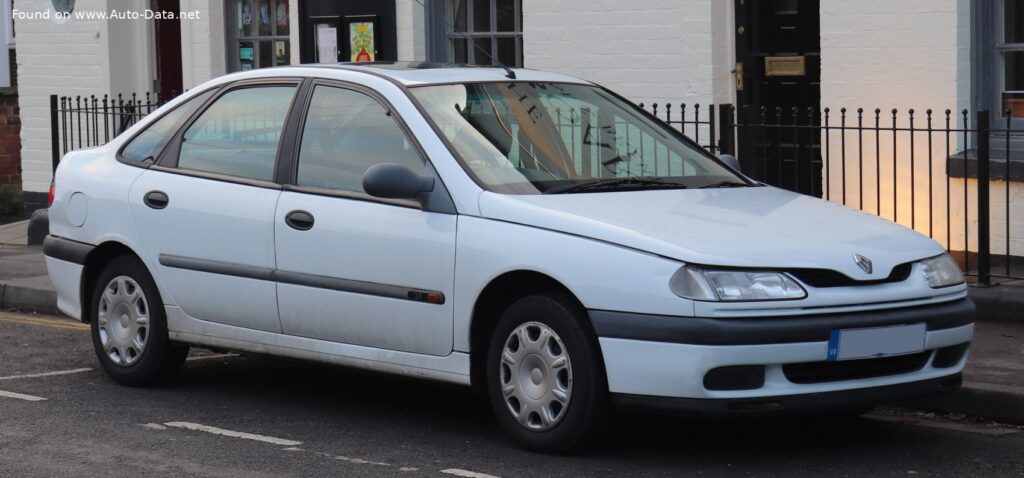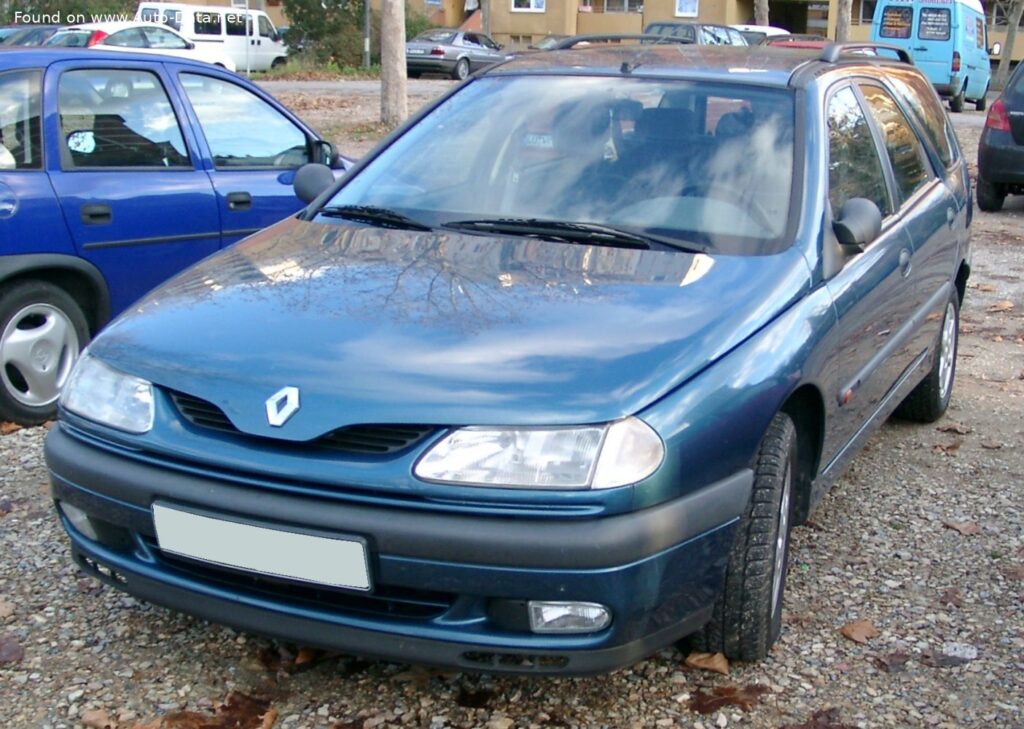
The Renault Laguna Grandtour, particularly the first generation (Type I) produced between 1995 and 2000, represented a cornerstone of the European mid-size family car segment. Launched as an evolution of Renault’s successful 21 series, the Laguna aimed to offer a more sophisticated, comfortable, and dynamically capable package, directly competing with rivals such as the Ford Mondeo, Volkswagen Passat, and Peugeot 406. The “Grandtour” designation signified its station wagon (estate) body style, catering to families and professionals requiring enhanced cargo capacity and versatility. Among its various powertrain options, the Renault Laguna Grandtour 2.0 16V (139 Hp) stood out as a balanced choice, offering a compelling blend of performance and efficiency for its era, making it a popular option across Continental Europe and the UK.
Engine and Performance: The Renault Laguna Grandtour 2.0 16V (139 Hp)
At the heart of the Renault Laguna Grandtour 2.0 16V (139 Hp) was Renault’s N7Q engine, a naturally aspirated 1.9-liter (specifically, 1948 cm3 or 118.87 cu. in.) inline four-cylinder unit. This engine was a significant step forward for Renault, featuring a Double Overhead Camshaft (DOHC) valvetrain with four valves per cylinder, totaling 16 valves. This configuration allowed for improved volumetric efficiency, contributing to both power output and smoother operation compared to older two-valve-per-cylinder designs. Fuel delivery was managed by a multi-port manifold injection system, ensuring precise fuel metering and combustion efficiency.
The N7Q engine produced a respectable 139 horsepower (Hp) at 6000 rpm, delivering 71.4 Hp per liter, a commendable figure for a naturally aspirated engine of its time. Torque output was 185 Nm (136.45 lb.-ft.) at 4500 rpm, providing ample pulling power for daily driving and highway cruising, even when the Grandtour’s spacious trunk was loaded. Power was transmitted to the front wheels via a five-speed manual transmission, a common and reliable setup for European family cars of this period. This powertrain architecture, with the engine mounted transversely at the front, optimized interior space and provided predictable handling characteristics.
Performance figures for the Renault Laguna Grandtour 2.0 16V (139 Hp) were competitive within its segment. It could accelerate from 0 to 60 mph in a brisk 9.4 seconds, and reach a top speed of 123.03 mph (198 km/h). These numbers highlight its capability as a family wagon that didn’t compromise on dynamic ability. Fuel economy, while not segment-leading by today’s standards, was reasonable for a vehicle of its size and power. It achieved an urban fuel consumption of 19.4 US mpg (12.1 l/100 km) and a more efficient extra-urban figure of 33.1 US mpg (7.1 l/100 km), reflecting its suitability for longer journeys.
Design and Features
The Renault Laguna Grandtour’s design embodied the functional elegance prevalent in European automotive design of the mid-1990s. As a five-door station wagon (estate), it prioritized practicality and interior volume without sacrificing aesthetic appeal. Its exterior dimensions – a length of 181.89 inches (4620 mm), a width of 68.98 inches (1752 mm), and a height of 57.01 inches (1448 mm) – placed it firmly in the mid-size segment, offering a substantial road presence. The 105.12-inch (2670 mm) wheelbase contributed to a stable ride and generous cabin space for five occupants.
The Grandtour’s primary appeal lay in its cargo versatility. With the rear seats in place, it offered a minimum trunk capacity of 18.36 cubic feet (520 liters), ample for groceries or luggage. When the rear seats were folded, this capacity expanded significantly to an impressive 62.93 cubic feet (1782 liters), transforming it into a highly capable hauler for larger items, a testament to its “Grandtour” designation. The fuel tank capacity of 17.44 US gallons (66 liters) ensured a good cruising range between fill-ups, complementing its extra-urban fuel economy.
Underneath, the Laguna Grandtour featured a robust chassis designed for comfort and predictable handling. It utilized a wishbone front suspension, known for its ability to provide precise wheel control and a comfortable ride, while the rear suspension employed a torsion beam setup, a space-efficient and cost-effective solution for a front-wheel-drive vehicle of this type. Braking performance was handled by ventilated discs at the front and solid discs at the rear, augmented by an Anti-lock Braking System (ABS), a crucial safety feature for the era that prevented wheel lock-up during hard braking. Steering was managed by a hydraulic rack and pinion system, providing direct feel and assistance, enhancing driver confidence. The vehicle rode on 195/60 R15 tires mounted on 15-inch wheel rims, a common specification for its class, balancing grip, comfort, and replacement cost.
Technical Specifications
| Brand | Renault |
| Model | Laguna |
| Generation | Laguna Grandtour |
| Type (Engine) | 2.0 16V (139 Hp) |
| Start of production | 1995 year |
| End of production | 2000 year |
| Powertrain Architecture | Internal Combustion engine |
| Body type | Station wagon (estate) |
| Seats | 5 |
| Doors | 5 |
| Fuel consumption (economy) – urban | 12.1 l/100 km (19.4 US mpg) |
| Fuel consumption (economy) – extra urban | 7.1 l/100 km (33.1 US mpg) |
| Fuel Type | Petrol (Gasoline) |
| Acceleration 0 – 60 mph | 9.4 sec |
| Maximum speed | 198 km/h (123.03 mph) |
| Weight-to-power ratio | 10.1 kg/Hp, 99.3 Hp/tonne |
| Weight-to-torque ratio | 7.6 kg/Nm, 132.1 Nm/tonne |
| Power | 139 Hp @ 6000 rpm |
| Power per litre | 71.4 Hp/l |
| Torque | 185 Nm @ 4500 rpm (136.45 lb.-ft.) |
| Engine layout | Front, Transverse |
| Engine Model/Code | N7Q |
| Engine displacement | 1948 cm3 (118.87 cu. in.) |
| Number of cylinders | 4 |
| Engine configuration | Inline |
| Cylinder Bore | 83 mm (3.27 in.) |
| Piston Stroke | 90 mm (3.54 in.) |
| Compression ratio | 10.5:1 |
| Number of valves per cylinder | 4 |
| Fuel injection system | Multi-port manifold injection |
| Engine aspiration | Naturally aspirated engine |
| Valvetrain | DOHC |
| Engine oil capacity | 5.9 l (6.23 US qt) |
| Coolant | 8 l (8.45 US qt) |
| Kerb Weight | 1400 kg (3086.47 lbs.) |
| Max. weight | 2075 kg (4574.59 lbs.) |
| Max load | 675 kg (1488.12 lbs.) |
| Trunk (boot) space – minimum | 520 l (18.36 cu. ft.) |
| Trunk (boot) space – maximum | 1782 l (62.93 cu. ft.) |
| Fuel tank capacity | 66 l (17.44 US gal) |
| Length | 4620 mm (181.89 in.) |
| Width | 1752 mm (68.98 in.) |
| Height | 1448 mm (57.01 in.) |
| Wheelbase | 2670 mm (105.12 in.) |
| Front track | 1481 mm (58.31 in.) |
| Rear (Back) track | 1460 mm (57.48 in.) |
| Drivetrain Architecture | The Internal combustion engine (ICE) drives the front wheels of the vehicle. |
| Drive wheel | Front wheel drive |
| Number of gears and type of gearbox | 5 gears, manual transmission |
| Front suspension | Wishbone |
| Rear suspension | Torsion |
| Front brakes | Ventilated discs |
| Rear brakes | Disc |
| Assisting systems | ABS (Anti-lock braking system) |
| Steering type | Steering rack and pinion |
| Power steering | Hydraulic Steering |
| Tires size | 195/60 R15 |
| Wheel rims size | 15 |