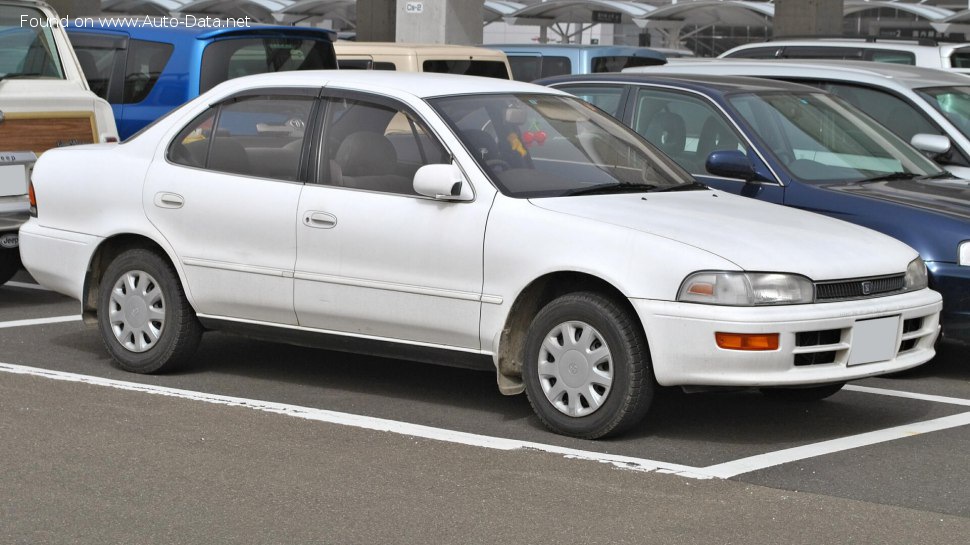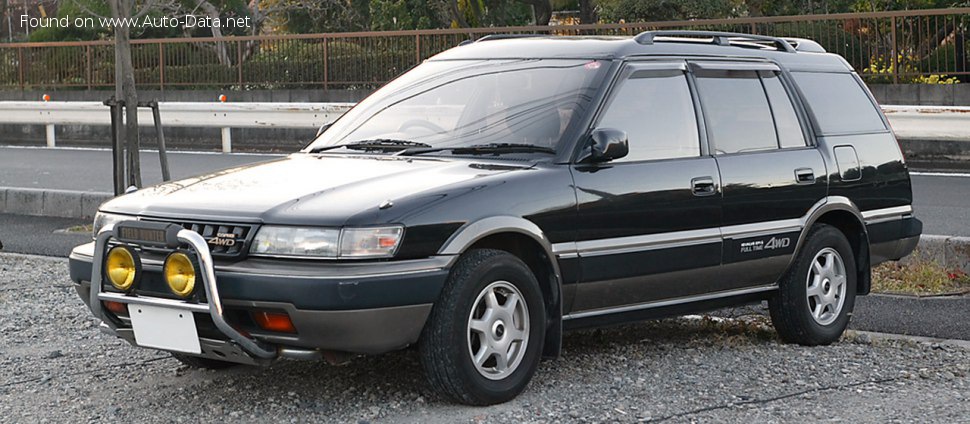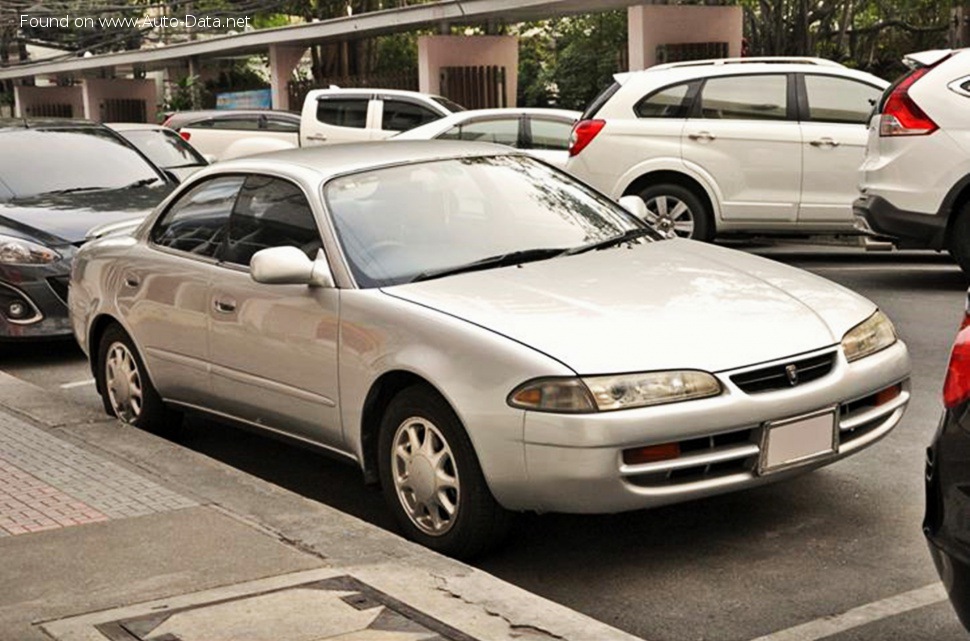
The Toyota Sprinter Marino 1.6i (115 Hp) represents a distinctive chapter in Toyota’s extensive history, specifically within the Japanese Domestic Market (JDM) during the early to mid-1990s. Launched in 1992 as part of the seventh-generation Corolla/Sprinter lineage, the Sprinter Marino was conceived as a stylish, sporty variant of the popular compact sedan, designed to appeal to buyers seeking a more upscale and visually dynamic alternative to its more utilitarian siblings. While never officially imported to the United States, its engineering and design cues reflect Toyota’s global capabilities and its understanding of diverse market preferences. The Sprinter Marino was characterized by its unique “pillarless hardtop” body style, a popular trend in Japan during that era, which offered a sleek, coupe-like profile while retaining the practicality of a four-door sedan. This particular variant, equipped with the 1.6-liter engine producing 115 horsepower, aimed to strike a balance between spirited performance and everyday usability, embodying the era’s focus on refined compact vehicles.
Engineering and Performance of the Toyota Sprinter Marino 1.6i
At the heart of the Toyota Sprinter Marino 1.6i (115 Hp) lies a meticulously engineered powertrain, a testament to Toyota’s reputation for reliability and efficiency. This specific model features a 1.6-liter (1587 cm3 or 96.84 cu. in.) inline four-cylinder engine, configured with a Double Overhead Camshaft (DOHC) valvetrain and four valves per cylinder. This 16-valve setup was advanced for its time, allowing for better airflow and more precise control over valve timing, contributing significantly to both power output and fuel efficiency. The engine’s naturally aspirated design, combined with a multi-port manifold injection fuel system, delivered a respectable 115 horsepower at a relatively high 6600 rpm. This peak power figure, especially for a 1.6-liter engine from the early 90s, underscored its sporty aspirations and Toyota’s ability to extract considerable performance from smaller displacement units.
Torque output for the 1.6i engine stood at 135 Nm (99.57 lb-ft) at 4800 rpm, providing a broad powerband that made the car responsive in urban driving and capable on highways. The engine’s front, transverse layout was typical for front-wheel-drive compacts, optimizing interior space and weight distribution. With a compression ratio of 9.5:1, the engine was designed to run efficiently on petrol (gasoline). The power per liter rating of 72.5 Hp/l was commendable, indicating a well-tuned and efficient design. Paired with a 5-speed manual transmission, the drivetrain architecture ensured direct engagement and allowed drivers to fully exploit the engine’s capabilities. This combination provided a nimble and engaging driving experience, especially when considering the vehicle’s modest curb weight of 1030 kg (2270.76 lbs.). This low weight resulted in a favorable weight-to-power ratio of 9 kg/Hp (111.7 Hp/tonne) and a weight-to-torque ratio of 7.6 kg/Nm (131.1 Nm/tonne), contributing to its agile handling and respectable acceleration for its class.
The DOHC design, a hallmark of performance-oriented engines of the era, allowed for precise control over intake and exhaust valve timing, improving volumetric efficiency across the engine’s rev range. This technical sophistication meant the Sprinter Marino 1.6i was not just about basic transportation but offered a more refined and enjoyable driving dynamic. The engine’s bore of 81 mm and stroke of 77 mm suggest a slightly oversquare configuration, which typically favors higher revving and power delivery, aligning with its peak power at 6600 rpm. The robust engineering ensured that despite its sporty character, the engine retained Toyota’s legendary reliability, making it a practical choice for daily driving while still offering a touch of excitement.
Design and Features of the Toyota Sprinter Marino
The design of the Toyota Sprinter Marino was a significant departure from the more conventional styling of its Sprinter and Corolla counterparts, embodying a specific aesthetic popular in Japan during the 1990s. Its most striking feature was the “pillarless hardtop” body style, a sophisticated design choice that eliminated the B-pillar, allowing for a clean, uninterrupted window line when all four windows were lowered. This gave the 4-door sedan a sleek, coupe-like appearance, blurring the lines between practicality and sportiness. The overall dimensions—a length of 4385 mm (172.64 in), a width of 1695 mm (66.73 in), and a height of 1315 mm (51.77 in)—contributed to its low-slung, dynamic stance. The relatively long wheelbase of 2465 mm (97.05 in) for its overall length helped with ride comfort and stability, while maintaining a compact footprint suitable for Japanese urban environments.
Inside, the Sprinter Marino offered a 5-seat configuration, providing a practical interior despite its sporty exterior. While specific interior features are not detailed, cars of this era and market segment typically included power windows, air conditioning, and a quality audio system as standard or optional equipment. The driver-focused cockpit would have featured clear instrumentation and ergonomic controls, consistent with Toyota’s design philosophy. The minimum turning circle of 9.8 meters (32.15 ft) indicates good maneuverability, a crucial attribute for navigating congested city streets and tight parking spaces. The vehicle’s fuel tank capacity of 50 liters (13.21 US gallons) provided a decent range for both city and highway driving.
In terms of chassis and safety, the Sprinter Marino 1.6i featured front ventilated disc brakes, offering superior stopping power and heat dissipation compared to solid discs, while the rear utilized drum brakes, a common and cost-effective solution for compact cars of the period. This brake setup was adequate for the vehicle’s weight and performance characteristics. The suspension system, though not explicitly detailed, would have been tuned to balance ride comfort with responsive handling, reflecting its sporty aspirations. The car rode on 175/70 R13 tires mounted on 13-inch wheel rims, a practical choice that offered a good balance of grip, comfort, and affordability for replacement. The design ethos of the Sprinter Marino was to offer a distinctive, elegant, and slightly premium compact sedan experience that stood out in a crowded market, blending everyday practicality with an appealing, individualistic style, particularly for the discerning Japanese consumer.
Technical Specifications
| Brand | Toyota |
| Model | Sprinter Marino |
| Generation | Sprinter Marino |
| Type (Engine) | 1.6i (115 Hp) |
| Start of Production | 1992 year |
| End of Production | 1997 year |
| Powertrain Architecture | Internal Combustion engine |
| Body Type | Sedan |
| Seats | 5 |
| Doors | 4 |
| Fuel Type | Petrol (Gasoline) |
| Power | 115 Hp @ 6600 rpm |
| Power per Liter | 72.5 Hp/l |
| Torque | 135 Nm (99.57 lb-ft) @ 4800 rpm |
| Engine Layout | Front, Transverse |
| Engine Displacement | 1587 cm3 (96.84 cu. in.) |
| Number of Cylinders | 4 |
| Engine Configuration | Inline |
| Cylinder Bore | 81 mm (3.19 in.) |
| Piston Stroke | 77 mm (3.03 in.) |
| Compression Ratio | 9.5:1 |
| Number of Valves per Cylinder | 4 |
| Fuel Injection System | Multi-port manifold injection |
| Engine Aspiration | Naturally aspirated engine |
| Valvetrain | DOHC |
| Kerb Weight | 1030 kg (2270.76 lbs.) |
| Weight-to-Power Ratio | 9 kg/Hp (111.7 Hp/tonne) |
| Weight-to-Torque Ratio | 7.6 kg/Nm (131.1 Nm/tonne) |
| Fuel Tank Capacity | 50 l (13.21 US gal) |
| Length | 4385 mm (172.64 in.) |
| Width | 1695 mm (66.73 in.) |
| Height | 1315 mm (51.77 in.) |
| Wheelbase | 2465 mm (97.05 in.) |
| Front Track | 1470 mm (57.87 in.) |
| Rear (Back) Track | 1460 mm (57.48 in.) |
| Minimum Turning Circle (Turning Diameter) | 9.8 m (32.15 ft.) |
| Drivetrain Architecture | The Internal combustion engine (ICE) drives the front wheels of the vehicle. |
| Drive Wheel | Front wheel drive |
| Number of Gears and Type of Gearbox | 5 gears, manual transmission |
| Front Brakes | Ventilated discs |
| Rear Brakes | Drum |
| Tires Size | 175/70 R13 |
| Wheel Rims Size | 13 |