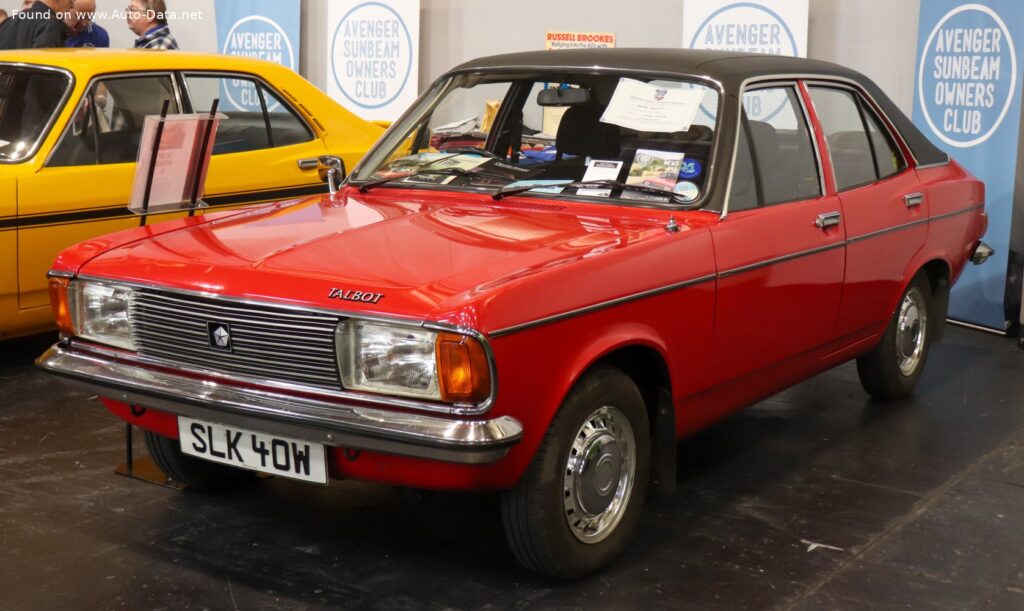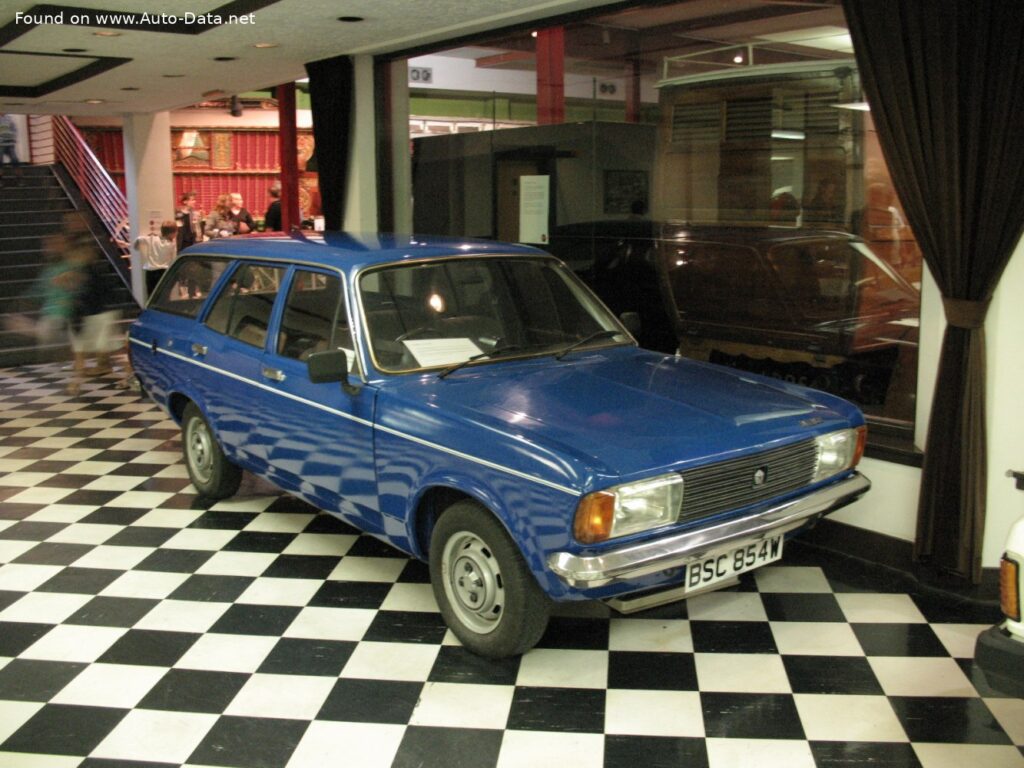
The Talbot Avenger Estate 1.6 (70 Hp), a notable product of the late 1970s and early 1980s, represents a fascinating chapter in European automotive history. Emerging from a period of significant brand consolidation and rebadging, this specific generation of the Avenger Estate was produced under the Talbot marque between 1979 and 1981. Originally conceived as the Hillman Avenger in 1970, and later sold as a Chrysler, the vehicle transitioned to the Talbot brand following Peugeot S.A.’s acquisition of Chrysler Europe in 1978. While never officially imported or sold in the United States, the Avenger played a crucial role in the European and other international markets, serving as a robust and practical family car, particularly in its station wagon (estate) configuration. Its design and engineering reflected the pragmatic approach to motoring prevalent in its era, prioritizing reliability, affordability, and utility for the average European family.
The Evolution and Market Position of the Talbot Avenger Estate
The lineage of the Talbot Avenger Estate is complex, mirroring the tumultuous shifts within the European automotive industry of the 1970s. What began life as the Hillman Avenger, a British-designed and built compact car, quickly became a cornerstone of the Rootes Group’s (later Chrysler Europe’s) product lineup. Its appeal lay in its conventional, yet well-engineered, rear-wheel-drive platform, offering a dependable and straightforward driving experience. The transition to the Talbot brand in 1979 was more a strategic rebranding effort by PSA than a fundamental redesign of the vehicle itself. By this point, the Avenger, including the practical Talbot Avenger Estate, was a mature design, well-understood by mechanics and appreciated by consumers for its no-nonsense approach to transportation. It competed in a highly competitive segment against popular European rivals such as the Ford Escort and Vauxhall Viva (later Astra), offering a slightly more traditional, robust alternative, especially for those seeking the added utility of a station wagon. Its role was primarily that of a workhorse and a family hauler, capable of accommodating passengers and cargo with relative ease and efficiency for its time.
During its brief production run under the Talbot name, the Avenger Estate continued to offer a blend of traditional engineering and practical packaging. The decision to retain the Avenger nameplate, despite the brand change, spoke to the model’s established recognition and loyal customer base. For the European market, particularly in the UK and Ireland, the Avenger had cultivated a reputation for durability and simple maintenance, qualities that resonated strongly with budget-conscious buyers and fleet operators. This specific 1.6-liter variant represented a mid-range offering, balancing adequate performance with reasonable running costs, a critical factor during a period marked by fluctuating fuel prices and economic uncertainty. The car’s continued existence under the Talbot banner, even as PSA began to introduce its own modern front-wheel-drive designs, underscored its enduring relevance and cost-effectiveness in certain market niches.
Engine and Performance Characteristics
Powering the Talbot Avenger Estate 1.6 was a straightforward, naturally aspirated internal combustion engine with a displacement of 1.6 liters. This powerplant delivered a modest but effective 70 horsepower, a figure that was competitive for a family car of its class and era. The engine’s design emphasized reliability and longevity over outright performance, a common characteristic of vehicles intended for everyday utility. Being a naturally aspirated unit, its power delivery was linear and predictable, without the sudden surges associated with turbocharged engines, which were less common in mainstream vehicles at the time. This made the Avenger Estate easy and forgiving to drive, particularly in urban environments and on country roads, where its torque characteristics were well-suited to navigating traffic and carrying varied loads.
The 70 Hp output, while seemingly modest by today’s standards, was entirely adequate for the typical demands placed upon a family station wagon in the late 1970s. Acceleration was leisurely but sufficient, allowing the vehicle to keep pace with traffic on most roads. Fuel efficiency, while not class-leading, was generally considered acceptable for a gasoline-powered engine of its size and design. The Avenger’s rear-wheel-drive architecture, increasingly rare for new compact cars by the early 1980s, contributed to a robust feel and predictable handling, especially when carrying heavy loads in the cargo area. This configuration was particularly favored in markets where vehicles were expected to handle varied road conditions and occasional light towing duties. The engine’s simplicity also meant that maintenance and repairs were generally straightforward and less costly, appealing to owners who performed their own basic servicing or relied on independent workshops. The overall powertrain architecture embodied a philosophy of proven technology and practical application, ensuring that the Talbot Avenger Estate remained a dependable mode of transport throughout its operational life.
Design and Practical Features of the Talbot Avenger Estate
The body type of the Talbot Avenger Estate was, as its name suggests, a station wagon, a highly practical and popular configuration in Europe for families and tradespeople. Its design ethos was one of utilitarianism, characterized by clean lines and a boxy profile that maximized interior space and cargo capacity. Unlike some contemporary designs that were beginning to experiment with more aerodynamic forms, the Avenger Estate retained a traditional, upright stance, which contributed directly to its practicality. The long roofline and expansive rear hatch provided easy access to a generous cargo area, making it ideal for transporting luggage, groceries, or even bulky items like furniture or gardening supplies.
Inside, the Avenger Estate offered a straightforward and functional cabin. While not luxurious, the interior was designed for durability and ease of use, featuring hard-wearing fabrics and plastics that could withstand the rigors of family life. Seating was typically configured to comfortably accommodate five occupants, with ample headroom and legroom for its class. The dashboard layout was conventional, with clear, analog instrumentation and easily accessible controls for heating, ventilation, and the radio. Safety features, typical for the era, would have included basic seatbelts and a robust body structure, but advanced active or passive safety systems seen in modern vehicles were not yet prevalent. The large glass area, especially in the station wagon variant, provided excellent visibility, a boon for maneuvering and parking. The Avenger Estate’s design, therefore, was a testament to the prevailing automotive philosophy of the late 1970s and early 1980s: a focus on functionality, reliability, and cost-effectiveness, delivering a dependable vehicle that served its purpose without unnecessary frills. Its enduring appeal in its primary markets was largely due to this honest and practical approach to vehicle design.
Technical Specifications: Talbot Avenger Estate 1.6 (70 Hp)
| Brand | Talbot |
| Model | Avenger |
| Generation | Avenger Estate |
| Type (Engine) | 1.6 (70 Hp) |
| Start of production | 1979 year |
| End of production | 1981 year |
| Powertrain Architecture | Internal Combustion engine |
| Body type | Station wagon (estate) |
| Fuel Type | Petrol (Gasoline) |
| Power | 70 Hp |
| Engine aspiration | Naturally aspirated engine |