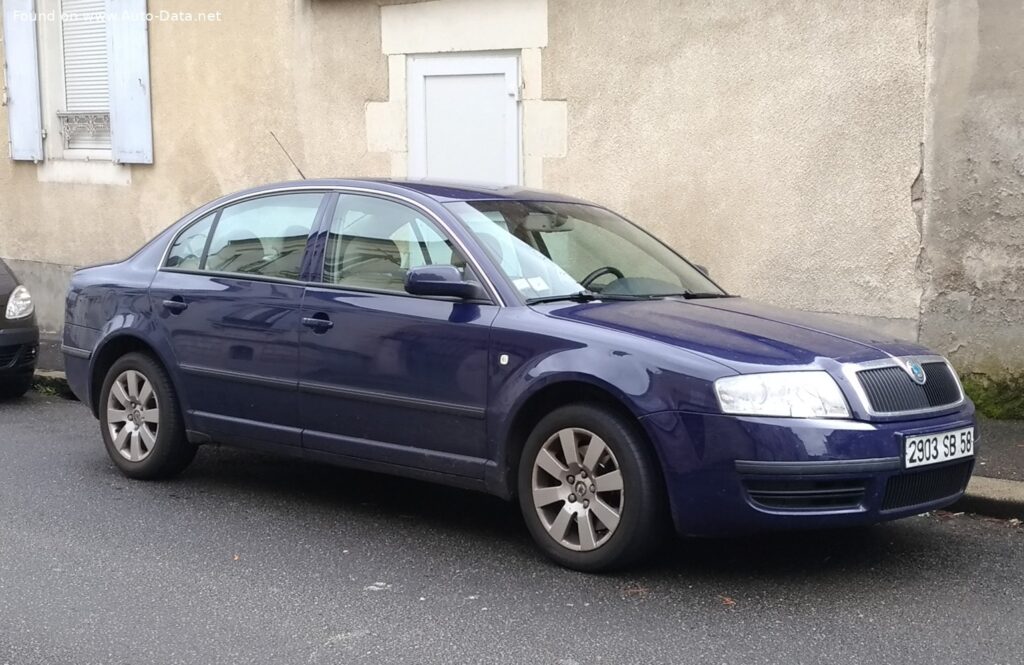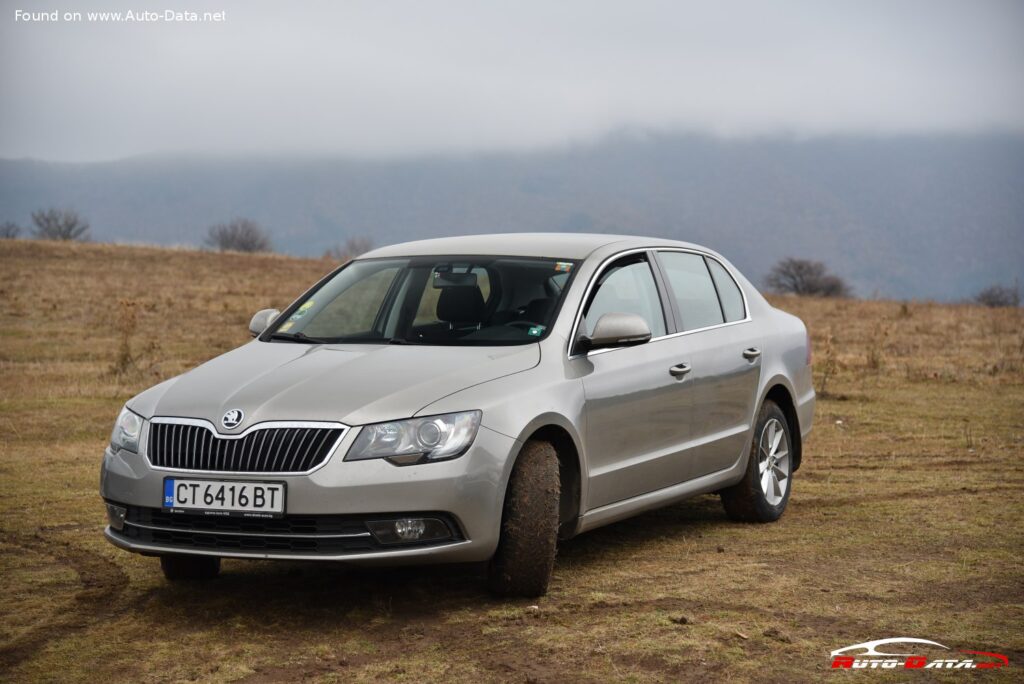
The Skoda Superb II (facelift 2013) 2.0 TDI (170 Hp) DPF DSG represents a sophisticated and highly practical offering within the European D-segment, renowned for its exceptional interior space, robust engineering, and impressive efficiency. As a key model for the Czech automaker Skoda, a subsidiary of the Volkswagen Group, the Superb has consistently carved out a niche for itself by providing near-premium quality and features at a competitive price point. This particular iteration, produced from April 2013 to May 2015, benefited from a mid-cycle refresh that refined its aesthetics, enhanced its technological features, and maintained its strong reputation for comfort and reliability. The 2.0 TDI (170 Hp) DPF DSG variant, with its potent diesel engine and advanced automatic transmission, stood out as a compelling choice for both private buyers and fleet operators across Europe and other international markets where fuel efficiency and long-distance comfort were paramount.
Overview of the Skoda Superb II (facelift 2013)
The second generation of the Skoda Superb, launched in 2008, was a pivotal model for the brand, significantly elevating its perception in the automotive landscape. The 2013 facelift further solidified this position, bringing a fresher visual identity and updated features to keep pace with an increasingly competitive segment. While not officially sold in the United States, the Superb is a highly regarded vehicle in its primary markets, admired for its intelligent design, cavernous interior, and value proposition. The facelifted model introduced subtle yet effective design changes, including revised headlamps and taillights, a new grille, and updated bumper designs, aligning its appearance more closely with Skoda’s evolving design language. Internally, enhancements were made to materials and infotainment options, bolstering its appeal as a comfortable and well-appointed executive or family vehicle. The Skoda Superb II (facelift 2013) continued to be available in both a conventional sedan and the innovative “TwinDoor” liftback configuration, offering unparalleled versatility for cargo loading, a characteristic that became a hallmark of the Superb nameplate.
Engine and Performance: The 2.0 TDI Powerplant
Powertrain Architecture and Efficiency
At the heart of the Skoda Superb II (facelift 2013) 2.0 TDI (170 Hp) DPF DSG lies a highly regarded 2.0-liter inline-four diesel engine, designated with the internal code EA189 / CFGB. This turbocharged, intercooled unit is a testament to the Volkswagen Group’s expertise in diesel technology, delivering a robust 170 horsepower. The power output of 86.4 horsepower per liter demonstrates a strong balance between performance and efficiency. Crucially, the engine produces a substantial 258.15 pound-feet of torque, available across a broad and usable rev range from 1750 to 2500 rpm. This impressive torque figure, coupled with the engine’s front, transverse layout, provides excellent real-world drivability, enabling effortless overtaking and comfortable cruising even when the vehicle is fully loaded. The engine’s compression ratio of 16:1, combined with a sophisticated common rail fuel injection system, ensures precise fuel delivery and optimal combustion efficiency.
Power is seamlessly transmitted to the front wheels via a 6-speed automatic DSG (Direct Shift Gearbox) transmission. This dual-clutch gearbox is renowned for its rapid and smooth gear changes, contributing significantly to both the vehicle’s dynamic performance and its overall refinement. The combination of the 2.0 TDI engine and the DSG transmission allows the Superb to accelerate from 0 to 60 mph in a swift 8.2 seconds, with a top speed reaching 137.94 mph. Despite its strong performance, this powertrain is remarkably fuel-efficient. The combined fuel economy stands at an impressive 44.4 US mpg, making it an economical choice for long-distance travel. Urban consumption is rated at 37.3 US mpg, while highway (extra urban) driving yields an even more remarkable 51.1 US mpg. Furthermore, the engine incorporates a Diesel Particulate Filter (DPF) as standard, helping it meet the stringent Euro 5 J emission standard with CO2 emissions of 139 g/km, reflecting Skoda’s commitment to environmental responsibility.
Engine oil capacity for the 2.0 TDI is 4.3 liters (4.54 US quarts), while the cooling system requires 8.4 liters (8.88 US quarts) of coolant, ensuring optimal thermal management under various operating conditions. The engine’s weight-to-power ratio of 9.2 kg/Hp and weight-to-torque ratio of 4.4 kg/Nm highlight its efficient power delivery relative to the vehicle’s kerb weight of 3432.6 pounds, which underscores the balanced engineering that characterizes the Skoda Superb II (facelift 2013).
Design and Features: Practicality Meets Refinement
Liftback Versatility and Interior Comfort
The Skoda Superb II (facelift 2013) is characterized by its distinctive liftback body type, a design choice that cleverly merges the elegant lines of a sedan with the immense practicality of a hatchback. This 5-door configuration, accommodating five passengers, provides an extraordinary amount of interior space, particularly for rear-seat occupants, a feature that often surprises those accustomed to vehicles in its segment. The exterior dimensions of 190.28 inches in length, 71.54 inches in width, and 57.56 inches in height, coupled with a generous 108.7-inch wheelbase, contribute to its commanding road presence and stable ride quality. The minimum turning circle of 38.35 feet indicates good maneuverability for a vehicle of its size.
One of the Superb’s most compelling features is its expansive cargo capacity. The liftback design allows for an impressive minimum trunk space of 21.01 cubic feet, which can be expanded to a colossal 60.03 cubic feet with the rear seats folded down. This versatility makes the Superb an ideal choice for families, business users, or anyone requiring significant luggage capacity without compromising passenger comfort. The maximum payload capacity of 1241.2 pounds further enhances its utility, underscoring its ability to handle substantial loads.
In terms of driver aids and safety, the Superb II (facelift 2013) comes equipped with essential systems such as ABS (Anti-lock Braking System), providing enhanced control during emergency braking maneuvers. The steering system utilizes a rack and pinion setup, offering precise and responsive handling characteristic of Volkswagen Group vehicles. While the data provided focuses on core mechanical specifications, typical Skoda models of this era also featured a range of comfort and convenience amenities, including climate control, power windows, and a sophisticated infotainment system, all designed to enhance the driving and passenger experience. The overall design philosophy of the Superb emphasizes understated elegance, functional ergonomics, and durable construction, ensuring a high level of satisfaction for its owners.
Market Position and Legacy
In the European market, the Skoda Superb II (facelift 2013) firmly established itself as a formidable competitor in the executive and family car segments. It offered a compelling alternative to more expensive German rivals, providing comparable levels of build quality, sophisticated engineering, and an unparalleled amount of interior and cargo space. Its reputation for being a “value-for-money” proposition, without feeling cheap or compromised, resonated strongly with buyers looking for practicality and refinement. The 2.0 TDI (170 Hp) DPF DSG variant, in particular, was a popular choice due to its ideal blend of performance, fuel economy, and the convenience of an automatic transmission, making it highly attractive for long-distance commuters and company car fleets. The Superb’s success contributed significantly to Skoda’s brand transformation, helping it shed its budget-car image and solidify its position as a producer of well-engineered, intelligent, and highly capable vehicles. Its legacy continues today with subsequent generations of the Superb, all of which maintain the core values of spaciousness, practicality, and excellent overall value.
Technical Specifications: Skoda Superb II (facelift 2013) 2.0 TDI (170 Hp) DPF DSG
| Brand | Skoda |
| Model | Superb |
| Generation | Superb II (facelift 2013) |
| Type (Engine) | 2.0 TDI (170 Hp) DPF DSG |
| Start of production | April, 2013 year |
| End of production | May, 2015 year |
| Powertrain Architecture | Internal Combustion engine |
| Body type | Liftback |
| Seats | 5 |
| Doors | 5 |
| Fuel consumption (economy) – urban | 37.3 US mpg (6.3 l/100 km) |
| Fuel consumption (economy) – extra urban | 51.1 US mpg (4.6 l/100 km) |
| Fuel consumption (economy) – combined | 44.4 US mpg (5.3 l/100 km) |
| CO2 emissions | 139 g/km |
| Fuel Type | Diesel |
| Acceleration 0 – 60 mph | 8.2 sec |
| Maximum speed | 137.94 mph (222 km/h) |
| Emission standard | Euro 5 J |
| Weight-to-power ratio | 9.2 kg/Hp, 109.2 Hp/tonne |
| Weight-to-torque ratio | 4.4 kg/Nm, 224.8 Nm/tonne |
| Power | 170 Hp |
| Power per litre | 86.4 Hp/l |
| Torque | 258.15 lb.-ft. @ 1750-2500 rpm (350 Nm) |
| Engine layout | Front, Transverse |
| Engine Model/Code | EA189 / CFGB |
| Engine displacement | 120.09 cu. in. (1968 cm3) |
| Number of cylinders | 4 |
| Engine configuration | Inline |
| Compression ratio | 16:1 |
| Fuel injection system | Diesel Commonrail |
| Engine aspiration | Turbocharger, Intercooler |
| Engine oil capacity | 4.54 US qt (4.3 l) |
| Coolant | 8.88 US qt (8.4 l) |
| Engine systems | Particulate filter |
| Kerb Weight | 3432.6 lbs. (1557 kg) |
| Max. weight | 4673.8 lbs. (2120 kg) |
| Max load | 1241.2 lbs. (563 kg) |
| Trunk (boot) space – minimum | 21.01 cu. ft. (595 l) |
| Trunk (boot) space – maximum | 60.03 cu. ft. (1700 l) |
| Fuel tank capacity | 15.85 US gal (60 l) |
| Length | 190.28 in. (4833 mm) |
| Width | 71.54 in. (1817 mm) |
| Height | 57.56 in. (1462 mm) |
| Wheelbase | 108.7 in. (2761 mm) |
| Front track | 60.83 in. (1545 mm) |
| Rear (Back) track | 59.76 in. (1518 mm) |
| Minimum turning circle (turning diameter) | 38.35 ft. (11.69 m) |
| Drivetrain Architecture | The Internal combustion engine (ICE) drives the front wheels of the vehicle. |
| Drive wheel | Front wheel drive |
| Number of gears and type of gearbox | 6 gears, automatic transmission DSG |
| Assisting systems | ABS (Anti-lock braking system) |
| Steering type | Steering rack and pinion |