
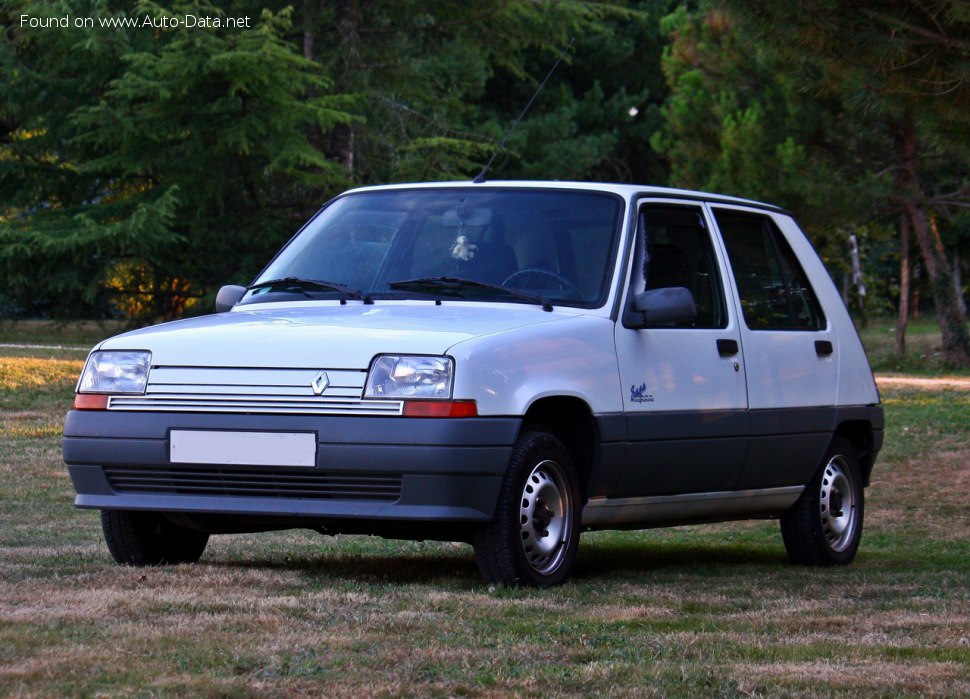
The Renault Super 5, known internally by its generation code B/C40, represented a pivotal evolution in the highly competitive European supermini segment upon its launch in 1984. Succeeding the iconic original Renault 5, a car that had redefined the compact hatchback market, the Super 5 was tasked with modernizing its predecessor’s winning formula while retaining its core appeal of practicality, efficiency, and stylish design. This particular variant, the 1.4 (B/C403) with 71 horsepower, stood as a popular choice within the range, offering a commendable balance of performance and economy for the everyday European driver. While never officially imported into the United States, the Renault Super 5 carved out a significant niche in its primary markets, becoming a ubiquitous sight on European roads and a testament to Renault’s engineering prowess in the compact car category during the mid-to-late 1980s. Its design language, technological advancements, and overall package were carefully tailored to meet the demands of a continent where fuel efficiency, maneuverability, and clever packaging were paramount.
Engine & Performance: The Heart of the Renault Super 5 (B/C40)
Powering the Renault Super 5 1.4 (B/C403) was a robust and well-proven internal combustion engine, specifically identified by the C2J code. This naturally aspirated petrol (gasoline) unit delivered a respectable 71 horsepower, a figure that, while modest by today’s standards, was entirely competitive and sufficient for a light supermini in the 1980s. The C2J engine was renowned for its simplicity, reliability, and ease of maintenance, qualities highly valued by owners seeking an economical and dependable vehicle. Its naturally aspirated design meant predictable power delivery across the rev range, without the complexities or additional costs associated with forced induction systems.
The 71 horsepower output provided the Super 5 with adequate acceleration for city driving and comfortable cruising on European highways. Mated to a manual transmission, which was standard for this era and segment, drivers could extract the most from the engine, making the car feel sprightly and engaging. The engine’s design prioritized efficiency and longevity, with an engine oil capacity of 3.5 liters (3.7 US quarts), reflecting typical maintenance requirements for the period. The cooling system, with a capacity of 5.8 liters (6.13 US quarts), was designed to ensure optimal operating temperatures, even under varied driving conditions, contributing to the engine’s durability.
Fuel economy was a significant selling point for the Super 5, and the 1.4-liter engine contributed positively to this aspect. With a fuel tank capacity of 43 liters (11.36 US gallons), the car offered a practical driving range, making it suitable for both daily commutes and longer journeys across Europe. The powertrain architecture, being a conventional internal combustion engine, positioned the Super 5 firmly within the mainstream of automotive engineering for its time, eschewing experimental or unproven technologies in favor of tried-and-true mechanical principles. This conservative yet effective approach ensured broad market acceptance and contributed to the car’s reputation as a dependable workhorse.
Design & Features: Practicality Meets 80s Style
The design of the Renault Super 5 marked a significant departure from its predecessor, yet retained a recognizable lineage. Styled by Marcello Gandini, the Super 5 adopted a more modern, aerodynamic aesthetic, characterized by its smoother lines, flush-fitting headlights, and a more integrated bumper design. The variant in question, the 1.4 (B/C403), was offered exclusively as a 5-door hatchback, a configuration that underscored its primary mission as a practical and versatile family or urban vehicle. The 5-door layout provided excellent accessibility for rear passengers and facilitated easier loading and unloading of cargo, distinguishing it from the often less practical 3-door variants common in the supermini class.
Inside, the Super 5 offered seating for five occupants, a standard for its segment, though the rear bench was more comfortable for two adults on longer journeys. The interior design was functional and ergonomic, with a focus on ease of use. While lacking the advanced infotainment systems and creature comforts of modern vehicles, the Super 5 provided essential amenities for its time, including clear instrumentation, effective heating and ventilation, and practical storage solutions. The large glass area contributed to excellent outward visibility, a crucial safety and convenience feature in congested urban environments.
The hatchback body style was integral to the Super 5’s appeal, offering a flexible cargo area accessible via a large rear tailgate. This adaptability made it a favorite among young families, urban dwellers, and those who needed a car capable of handling various hauling tasks, from weekly groceries to weekend trips. Safety features, while rudimentary compared to contemporary standards, included a robust body structure designed to offer protection in collisions. The car’s compact dimensions, combined with its light steering and nimble handling, made it exceptionally well-suited for navigating narrow European streets and tight parking spaces, further cementing its reputation as an ideal city car.
Legacy and Market Impact of the Renault Super 5
The Renault Super 5 (B/C40) was more than just a new model; it was a crucial successor to one of Europe’s most beloved cars, the original Renault 5. Launched in 1984, the Super 5 had big shoes to fill, and it did so with remarkable success, quickly establishing itself as a dominant force in the highly competitive supermini class. Its primary market was Europe, where it competed fiercely against rivals like the Peugeot 205, Fiat Uno, Ford Fiesta, and Opel Corsa. The Super 5’s ability to blend modern aesthetics with proven mechanicals and excellent practicality allowed it to capture a significant share of this segment throughout its production run from 1984 to 1989.
The car’s impact stemmed from several key factors. Firstly, its design, penned by Gandini, gave it a fresh, contemporary look that resonated with consumers moving away from the boxier designs of the 1970s. The aerodynamic improvements not only enhanced its visual appeal but also contributed to better fuel efficiency and reduced wind noise. Secondly, the engineering beneath the skin, particularly the 1.4-liter C2J engine found in the (B/C403) variant, offered a compelling combination of reliability, performance, and economy, which were paramount concerns for European motorists. This balance made it an attractive proposition for a wide range of buyers, from first-time car owners to small families.
The Super 5 also built upon Renault’s reputation for innovation in packaging. Its spacious interior for a car of its size, coupled with the versatility of its hatchback design, made it incredibly practical. The 5-door configuration of the 1.4 (B/C403) variant further amplified its utility, making it a popular choice for those needing easy access to the rear seats. Its success was not just commercial; the Super 5 also gained a reputation for its enjoyable driving dynamics, offering a comfortable ride and agile handling that made it a pleasure to drive in both urban and rural settings. Its enduring popularity even led to a brief overlap in production with its successor, the Clio, signifying its strong market presence and the affection it garnered from the public. The Renault Super 5 remains a classic example of French automotive engineering, celebrated for its blend of style, practicality, and accessible performance that defined a generation of European motoring.
Technical Specifications
| Brand | Renault |
| Model | Super 5 |
| Generation | Super 5 (B/C40) |
| Type (Engine) | 1.4 (B/C403) (71 Hp) |
| Start of production | 1984 year |
| End of production | 1989 year |
| Powertrain Architecture | Internal Combustion engine |
| Body type | Hatchback |
| Seats | 5 |
| Doors | 5 |
| Fuel Type | Petrol (Gasoline) |
| Power | 71 Hp |
| Engine Model/Code | C2J |
| Engine aspiration | Naturally aspirated engine |
| Engine oil capacity | 3.5 l (3.7 US qt | 3.08 UK qt) |
| Engine oil specification | Not specified |
| Coolant | 5.8 l (6.13 US qt | 5.1 UK qt) |
| Fuel tank capacity | 43 l (11.36 US gal | 9.46 UK gal) |
