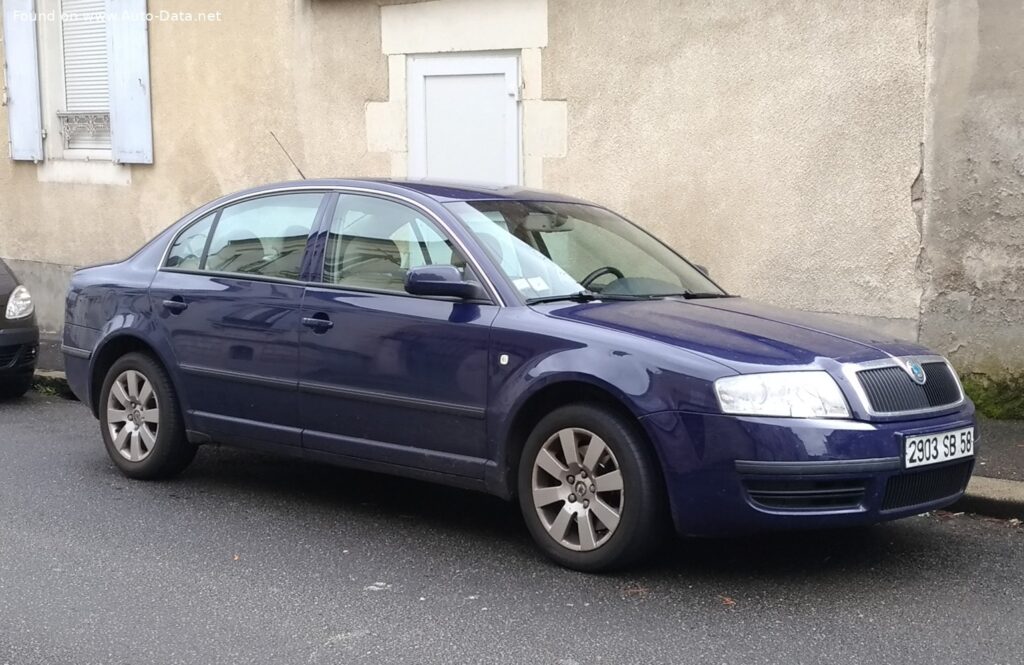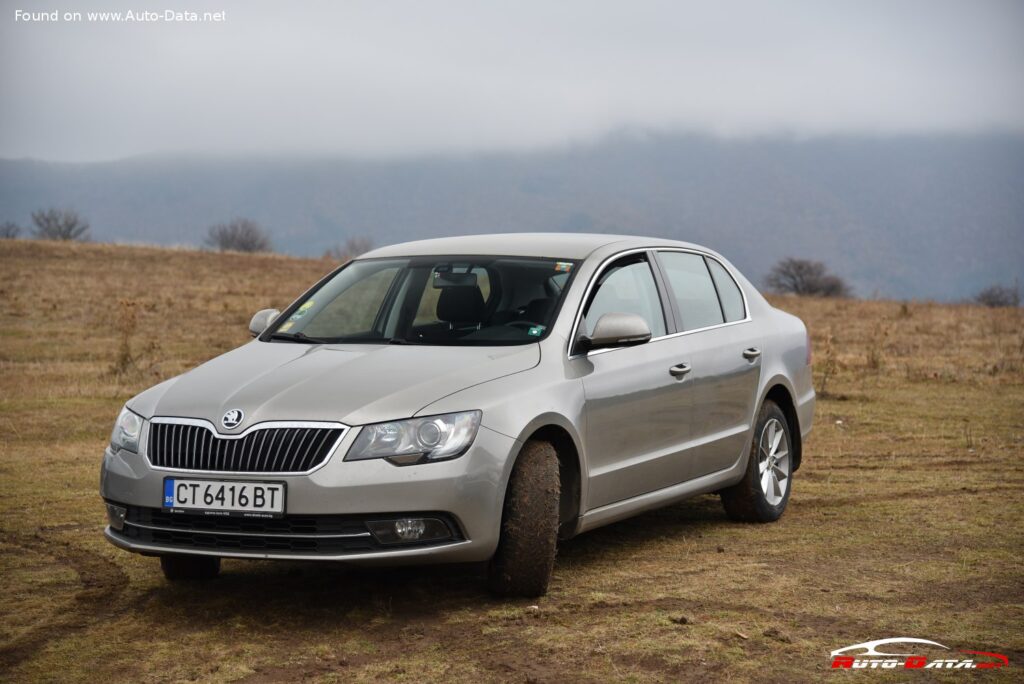
The Skoda Superb II (facelift 2013) 2.0 TSI (200 Hp) DSG represents a significant offering from the Czech automaker Skoda Auto, a subsidiary of the Volkswagen Group. While this particular model, the Superb II, was not officially sold in the United States, it carved out a strong niche in European and Asian markets as a spacious, practical, and well-equipped executive liftback. Produced from April 2013 to May 2015, this facelifted second-generation model continued to build upon Skoda’s reputation for delivering exceptional value, combining premium segment features and impressive interior room with a more accessible price point. The 2.0 TSI (200 Hp) DSG variant, in particular, offered a compelling blend of spirited performance and refined driving dynamics, cementing its position as a highly competitive option in the mid-size and executive sedan segments across its primary markets. The Superb II, especially in its facelifted form, embodied Skoda’s ‘Simply Clever’ philosophy, focusing on intelligent design solutions and user-centric functionality.
Engine and Performance of the Skoda Superb II (facelift 2013) 2.0 TSI (200 Hp) DSG
At the heart of the Skoda Superb II (facelift 2013) 2.0 TSI (200 Hp) DSG lies a robust and highly efficient 2.0-liter turbocharged inline four-cylinder gasoline engine, identified by the EA888 / CCZA code. This powertrain architecture, a hallmark of the Volkswagen Group, features direct fuel injection and an intercooled turbocharger, technologies designed to maximize both power output and fuel efficiency. The engine delivers a strong 200 horsepower, translating to an impressive 100.8 Hp per liter, showcasing its advanced engineering. Torque is equally impressive, peaking at 206.52 lb.-ft. (280 Nm) available across a remarkably broad rev range from 1700 to 5000 rpm. This wide torque band ensures responsive acceleration and flexible in-gear performance, making the Superb feel effortless whether navigating city traffic or cruising on the highway.
Power is channeled to the front wheels via a sophisticated 6-speed automatic DSG (Direct Shift Gearbox) transmission. This dual-clutch gearbox is renowned for its rapid, seamless gear changes, contributing significantly to both the vehicle’s sporty character and its overall fuel economy. The combination of the potent 2.0 TSI engine and the quick-shifting DSG allows the Superb to accelerate from 0 to 60 mph in a swift 7.3 seconds (calculated by Auto-Data.net), and from 0 to 62 mph (0-100 km/h) in 7.7 seconds. The vehicle’s top speed is an impressive 149.13 mph (240 km/h), underscoring its capabilities as a capable long-distance cruiser. Despite its performance credentials, the Superb II 2.0 TSI maintains respectable fuel economy figures for its class and era, with a combined consumption of 29.8 US mpg (7.9 l/100 km). Urban driving yields 22.2 US mpg (10.6 l/100 km), while extra-urban conditions see consumption improve to 37.3 US mpg (6.3 l/100 km). CO2 emissions are rated at 178 g/km, adhering to the Euro 5 J emission standard, reflecting a conscientious approach to environmental impact for a vehicle of its size and performance. The engine’s compression ratio of 9.8:1 further optimizes combustion efficiency, while a generous engine oil capacity of 4.86 US quarts (4.6 liters) and a coolant capacity of 9.09 US quarts (8.6 liters) ensure robust thermal management and longevity.
Design and Features
The Skoda Superb II (facelift 2013) maintained its distinctive and highly practical liftback body type, a design choice that sets it apart from traditional sedans. With five doors and seating for five occupants, the liftback configuration provides unparalleled versatility, blending the elegant silhouette of a sedan with the expansive cargo capacity of a hatchback. The facelift introduced subtle yet effective aesthetic enhancements, including redesigned headlights with integrated LED daytime running lights, a sharper front grille, and updated taillights, giving the Superb a more contemporary and sophisticated appearance. Its generous dimensions—190.28 inches (4833 mm) in length, 71.54 inches (1817 mm) in width, and 57.56 inches (1462 mm) in height—contribute to its commanding road presence and, more importantly, its cavernous interior.
Inside, the Superb II truly excelled in its class. The 108.7-inch (2761 mm) wheelbase translated into executive-level rear legroom, often surpassing that of vehicles in higher price brackets. The focus on passenger comfort was evident, with well-appointed seating and a logical, ergonomic dashboard layout. While specific infotainment features would vary by trim level, the facelifted model typically offered modern connectivity options for its time, including Bluetooth integration, advanced audio systems, and available navigation. Safety features were comprehensive, with standard Anti-lock Braking System (ABS) and a suite of airbags contributing to a secure driving environment. The liftback design is a key differentiator, offering a minimum trunk space of 21.01 cubic feet (595 liters), which expands to an astonishing 60.03 cubic feet (1700 liters) with the rear seats folded down. This enormous cargo volume made the Superb an exceptionally practical vehicle for families, business travelers, and anyone requiring substantial hauling capability without compromising on passenger comfort or a refined driving experience. The vehicle’s curb weight of 3395.12 lbs (1540 kg) and a maximum permissible weight of 4636.32 lbs (2103 kg) attest to its solid construction and load-carrying ability, while a minimum turning circle of 38.35 feet (11.69 m) ensures reasonable maneuverability despite its size.
Technical Specifications
| Brand | Skoda |
| Model | Superb |
| Generation | Superb II (facelift 2013) |
| Type (Engine) | 2.0 TSI (200 Hp) DSG |
| Start of production | April, 2013 year |
| End of production | May, 2015 year |
| Powertrain Architecture | Internal Combustion engine |
| Body type | Liftback |
| Seats | 5 |
| Doors | 5 |
| Fuel consumption (economy) – urban | 10.6 l/100 km (22.2 US mpg) |
| Fuel consumption (economy) – extra urban | 6.3 l/100 km (37.3 US mpg) |
| Fuel consumption (economy) – combined | 7.9 l/100 km (29.8 US mpg) |
| CO2 emissions | 178 g/km |
| Fuel Type | Petrol (Gasoline) |
| Acceleration 0 – 100 km/h | 7.7 sec |
| Acceleration 0 – 62 mph | 7.7 sec |
| Acceleration 0 – 60 mph (Calculated) | 7.3 sec |
| Maximum speed | 240 km/h (149.13 mph) |
| Emission standard | Euro 5 J |
| Weight-to-power ratio | 7.7 kg/Hp (129.9 Hp/tonne) |
| Weight-to-torque ratio | 5.5 kg/Nm (181.8 Nm/tonne) |
| Power | 200 Hp |
| Power per liter | 100.8 Hp/l |
| Torque | 280 Nm @ 1700-5000 rpm (206.52 lb.-ft. @ 1700-5000 rpm) |
| Engine layout | Front, Transverse |
| Engine Model/Code | EA888 / CCZA |
| Engine displacement | 1984 cm3 (121.07 cu. in.) |
| Number of cylinders | 4 |
| Engine configuration | Inline |
| Compression ratio | 9.8:1 |
| Fuel injection system | Direct injection |
| Engine aspiration | Turbocharger, Intercooler |
| Engine oil capacity | 4.6 l (4.86 US qt) |
| Coolant | 8.6 l (9.09 US qt) |
| Curb Weight | 1540 kg (3395.12 lbs) |
| Max. weight | 2103 kg (4636.32 lbs) |
| Max load | 563 kg (1241.2 lbs) |
| Trunk (boot) space – minimum | 595 l (21.01 cu. ft.) |
| Trunk (boot) space – maximum | 1700 l (60.03 cu. ft.) |
| Fuel tank capacity | 60 l (15.85 US gal) |
| Length | 4833 mm (190.28 in.) |
| Width | 1817 mm (71.54 in.) |
| Height | 1462 mm (57.56 in.) |
| Wheelbase | 2761 mm (108.7 in.) |
| Front track | 1545 mm (60.83 in.) |
| Rear (Back) track | 1518 mm (59.76 in.) |
| Minimum turning circle (turning diameter) | 11.69 m (38.35 ft.) |
| Drivetrain Architecture | The Internal combustion engine (ICE) drives the front wheels of the vehicle. |
| Drive wheel | Front wheel drive |
| Number of gears and type of gearbox | 6 gears, automatic transmission DSG |
| Assisting systems | ABS (Anti-lock braking system) |
| Steering type | Steering rack and pinion |