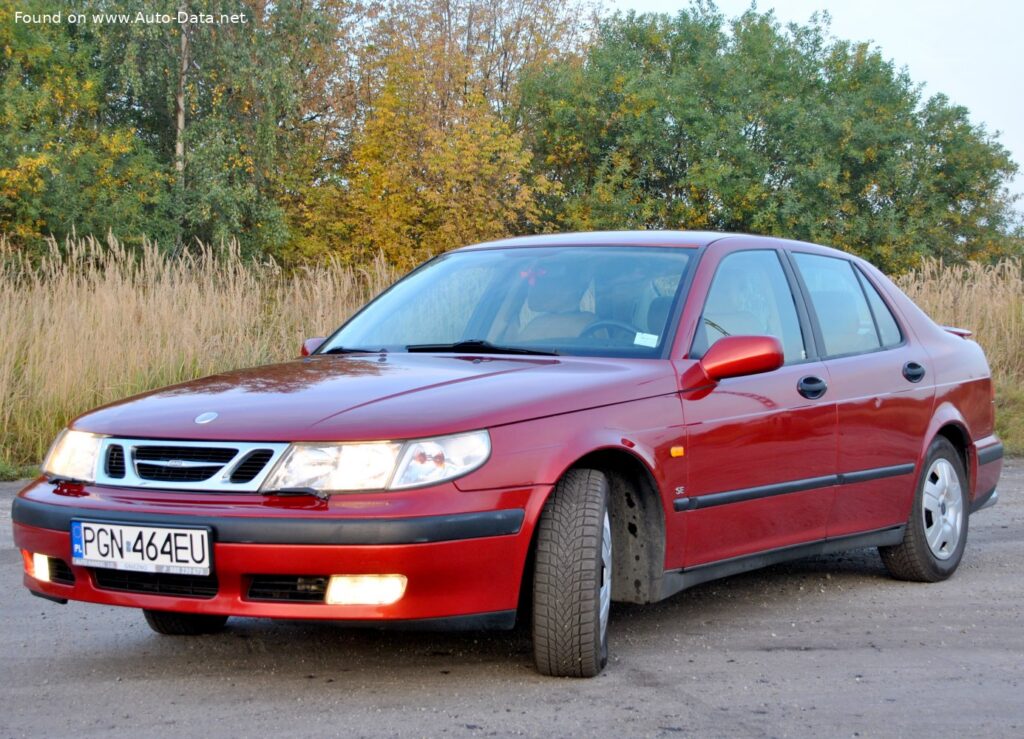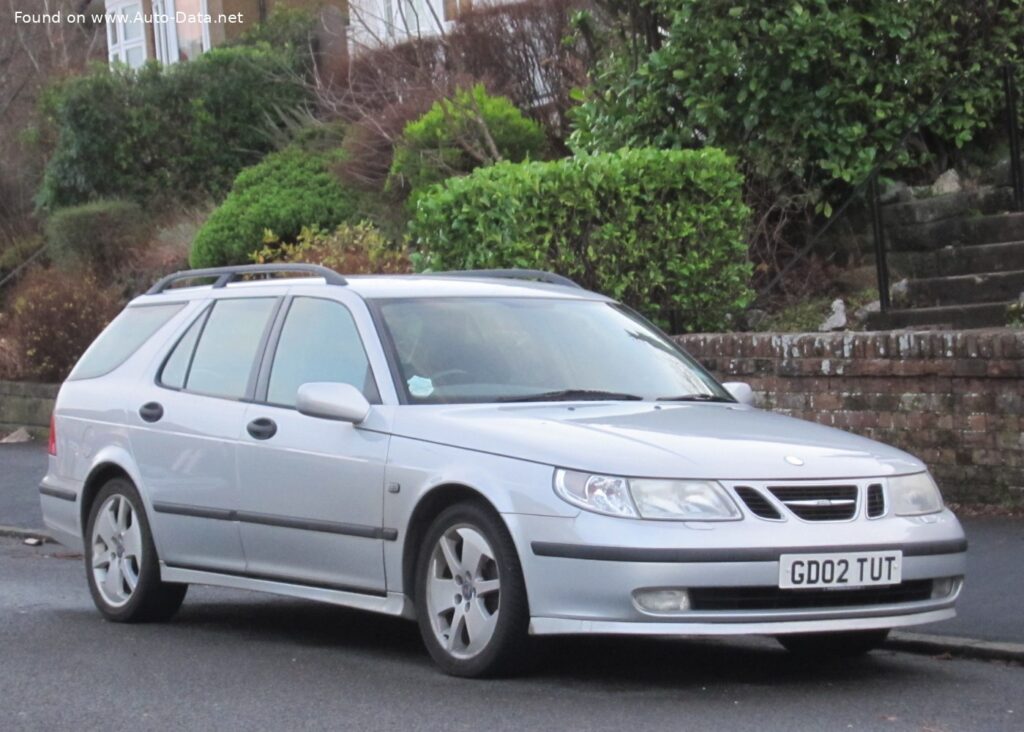
The Saab 9-5 Sport Combi (facelift 2001) represents a pivotal chapter in the history of the Swedish automaker, embodying Saab’s distinctive blend of avant-garde design, robust engineering, and a strong emphasis on safety and practicality. Launched for the 2002 model year, following its mid-cycle refresh, this generation of the 9-5 Sport Combi continued to carve out a niche in the competitive European executive station wagon segment until its production ceased in 2005. While Saab vehicles, particularly the 9-5, had a dedicated following in North America, this specific 2.2 TDi (120 Hp) diesel variant was primarily tailored for the European market, where diesel powertrains held a significant market share due to their fuel efficiency and torque characteristics. The Saab 9-5 Sport Combi (facelift 2001) was more than just a car; it was a statement of individuality, combining Scandinavian minimalism with a functional, driver-centric approach that was unmistakably Saab.
Engine and Performance of the Saab 9-5 Sport Combi (facelift 2001)
At the heart of the Saab 9-5 Sport Combi (facelift 2001) 2.2 TDi variant was a robust and efficient D223L inline four-cylinder diesel engine. This powerplant, featuring an engine displacement of 2172 cubic centimeters (132.54 cu. in.), was engineered to deliver a balance of usable power and impressive fuel economy, a crucial consideration for its target market. The engine was configured with a front, transverse layout, driving the front wheels through a 5-speed manual transmission, a common and reliable setup for vehicles in this class during its era. Power output for this particular model was rated at 120 horsepower, achieved at 4300 revolutions per minute, translating to a power per liter figure of 55.2 Hp/l. This might not sound like a high-performance figure by modern standards, but it was ample for the vehicle’s intended purpose as a comfortable and capable long-distance cruiser.
More significant than peak horsepower for a diesel engine of this vintage was its torque delivery. The 2.2 TDi generated a substantial 280 Newton-meters (206.52 lb.-ft.) of torque at a remarkably low 1500 rpm. This low-end torque was a key characteristic, providing strong pulling power from just off idle, making the car feel responsive and effortless in everyday driving conditions, whether navigating city traffic or cruising on the highway. The engine’s aspiration system featured a turbocharger complemented by an intercooler, a sophisticated setup for the early 2000s that significantly improved both power output and efficiency by cooling the compressed air before it entered the engine. The fuel injection system utilized Commonrail technology, which was instrumental in achieving finer fuel atomization and more precise combustion, contributing to better fuel economy and reduced emissions compared to earlier diesel injection methods. With a high compression ratio of 19.5:1 and a valvetrain employing an Overhead Camshaft (OHC) design with four valves per cylinder, the engine was technically advanced for its time, ensuring optimal airflow and combustion efficiency.
Performance figures for the 2.2 TDi variant underscored its practical orientation. The 9-5 Sport Combi could accelerate from 0 to 60 mph in a respectable 10.9 seconds, with a 0 to 100 km/h sprint taking 11.5 seconds. Its maximum speed was recorded at 195 km/h (121.17 mph), which was more than adequate for European autobahns and highways. Despite its substantial kerb weight of 3328.98 lbs (1510 kg), the engine provided a weight-to-power ratio of 12.6 kg/Hp (79.5 Hp/tonne) and a weight-to-torque ratio of 5.4 kg/Nm (185.4 Nm/tonne), indicating a well-balanced power-to-weight profile for a vehicle of its size and class. Fuel economy was a major selling point, with combined consumption rated at 6.7 liters per 100 kilometers, translating to an impressive 35.1 US miles per gallon. Urban driving yielded 25.3 US mpg, while extra-urban conditions saw consumption drop to 43.6 US mpg, highlighting the engine’s efficiency on longer journeys. The 70-liter (18.49 US gallon) fuel tank provided an excellent cruising range, further cementing its appeal as a practical and economical choice for families and business travelers alike.
Design and Features of the Saab 9-5 Sport Combi (facelift 2001)
The Saab 9-5 Sport Combi (facelift 2001) distinguished itself with a design philosophy that prioritized function, safety, and a subtle yet sophisticated aesthetic. As a station wagon (often referred to as an estate in Europe), its body type inherently offered immense practicality. Measuring 189.29 inches (4808 mm) in length, 70.55 inches (1792 mm) in width, and 58.74 inches (1492 mm) in height, with a generous wheelbase of 106.42 inches (2703 mm), the 9-5 Sport Combi provided a spacious cabin for five occupants and substantial cargo capacity. The facelift introduced subtle refinements to the exterior, maintaining its distinctive Saab identity while modernizing certain elements. The front and rear tracks, both measuring 59.92 inches (1522 mm), contributed to a stable and composed ride.
Saab’s commitment to safety was legendary, and the 9-5 Sport Combi was no exception. It featured an Anti-lock Braking System (ABS) as standard, complementing its ventilated disc brakes at the front and disc brakes at the rear, ensuring confident stopping power. The robust construction and advanced crash structures were integral to Saab’s reputation for occupant protection. Inside, the cabin reflected Saab’s aviation heritage with a driver-focused cockpit. Ergonomics were paramount, with controls intuitively placed and high-quality materials used throughout. A unique “Night Panel” feature allowed drivers to dim all non-essential instrument lighting at night, reducing distraction and enhancing focus on the road – a direct nod to aircraft cockpit design. The seating was designed for long-distance comfort, offering excellent support.
Beyond its safety and ergonomic strengths, the 9-5 Sport Combi excelled in versatility. With all five seats in use, the trunk (boot) space offered a generous 415 liters (14.66 cu. ft.) of volume. For larger loads, the rear seats could be folded down, expanding the cargo area to an impressive 1490 liters (52.62 cu. ft.), making it exceptionally practical for carrying luggage, sports equipment, or bulkier items. This flexibility was a cornerstone of its appeal in the European market, where station wagons were highly valued for their ability to combine family transport with utility. The vehicle rode on 205/65 R15 tires mounted on 15-inch wheel rims, providing a comfortable ride quality and adequate grip. The suspension system, featuring Spring Struts at both the front and rear, was tuned to offer a balance between handling precision and ride comfort, characteristic of a premium European touring car. Steering was managed by a