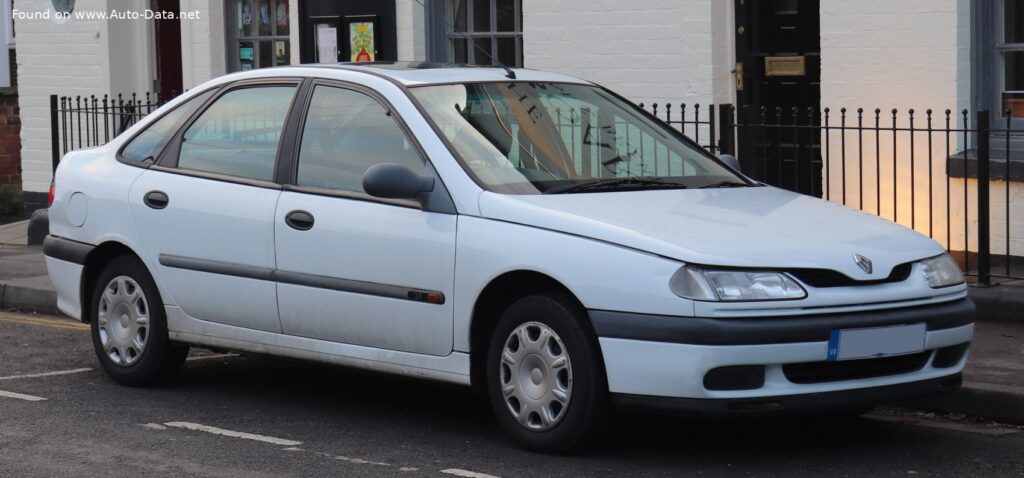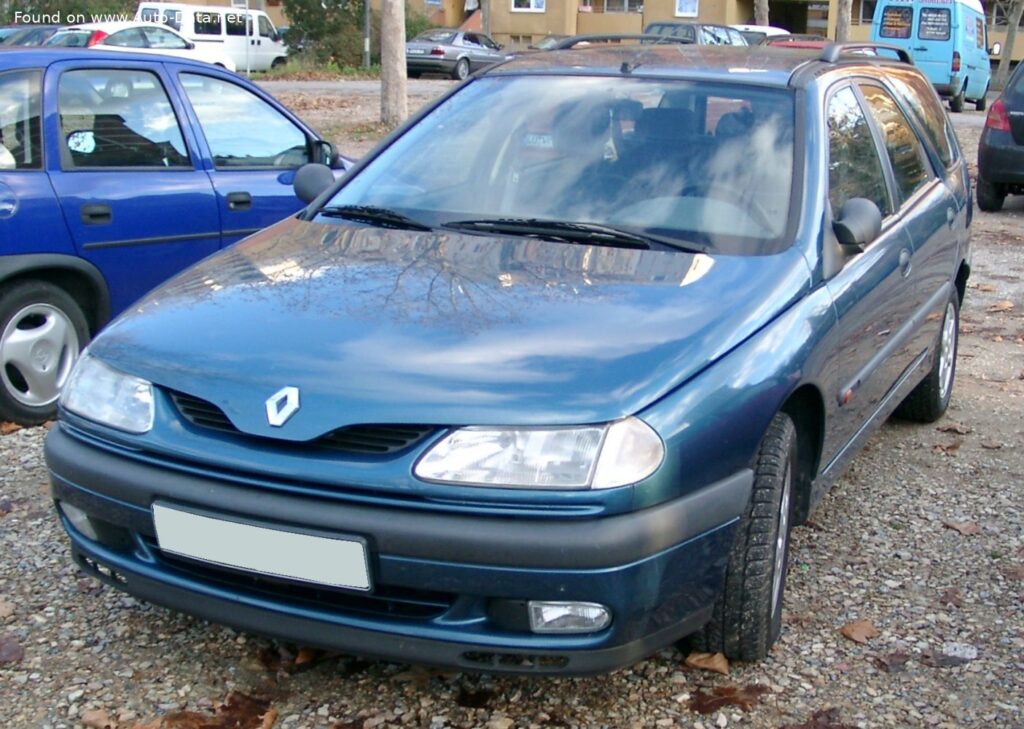
The Renault Laguna Grandtour 2.2 dT (113 Hp) represents a significant chapter in the history of European family vehicles, a testament to Renault’s commitment to practical, comfortable, and efficient transportation during the late 1990s. Launched in 1996 as part of the first-generation Laguna lineup, this specific Grandtour, or station wagon, variant was engineered to cater to the diverse needs of families and business users across the continent. While the Laguna was never officially sold in the United States, its design ethos and technical specifications reflect the prevailing trends and consumer demands of its primary European market, where diesel engines and versatile body styles were, and remain, highly popular. This particular model, produced until 2000, was positioned as a robust and economical choice in the competitive mid-size segment, offering a compelling blend of space, utility, and fuel efficiency.
The Renault Laguna Grandtour: A European Family Workhorse
The first-generation Renault Laguna, introduced in 1994, quickly established itself as a strong contender in Europe’s D-segment, a category characterized by its emphasis on comfort, safety, and practicality. The Grandtour, or estate, version expanded upon the sedan’s foundations by offering significantly enhanced cargo capacity and versatility, crucial attributes for European families. The 2.2 dT (113 Hp) model, specifically, was a key offering within this range, leveraging the economic advantages and strong torque characteristics of turbodiesel technology. Its role was to provide a reliable and spacious vehicle capable of handling daily commutes, long-distance travel, and family adventures, all while keeping running costs in check. The design of the Laguna Grandtour was contemporary for its era, featuring smooth lines and a functional aesthetic that prioritized aerodynamic efficiency and interior space. With five doors and seating for five occupants, it embodied the quintessential European family wagon, designed for utility without sacrificing passenger comfort.
Powertrain and Driving Dynamics
At the heart of the 1996 Renault Laguna Grandtour 2.2 dT (113 Hp) lay Renault’s G8T series 2.2-liter (2188 cm3 or 133.52 cu. in.) inline-four diesel engine. This robust powerplant was designed for durability and efficiency, featuring an Overhead Camshaft (OHC) valvetrain with three valves per cylinder, a configuration that balanced performance with fuel economy. A critical component of its performance was the turbocharger, which significantly boosted the engine’s output, allowing it to produce 113 horsepower at 4300 rpm. More notably for a family wagon, the engine delivered a substantial 250 Nm (184.39 lb.-ft.) of torque at a relatively low 2200 rpm. This ample low-end torque was instrumental in providing strong acceleration from a standstill and confident overtaking capabilities, even when the vehicle was fully loaded, a common scenario for a station wagon.
The fuel injection system was a Diesel Commonrail, which was a relatively advanced technology for the mid-to-late 1990s. Commonrail systems offered more precise control over fuel delivery, leading to improved combustion, better fuel economy, reduced emissions, and enhanced engine refinement compared to earlier, less sophisticated diesel injection methods. With a high compression ratio of 22:1, characteristic of diesel engines, the G8T engine was optimized for efficiency. Power was delivered to the front wheels via a smooth-shifting 5-speed manual transmission, a standard and reliable setup that provided direct driver engagement and contributed to the vehicle’s overall fuel economy.
Performance figures for the Laguna Grandtour 2.2 dT were respectable for its class and intended purpose. It could accelerate from 0 to 60 mph in approximately 12 seconds, reaching a maximum speed of 115 mph. While not designed for outright speed, these figures underscore its capability as a competent highway cruiser. Fuel efficiency was a major selling point, with urban consumption rated at 24 US mpg and an impressive 40.6 US mpg on the extra-urban cycle. This efficiency, combined with a generous 17.44 US gallon fuel tank, provided a significant cruising range, making it an ideal vehicle for long European road trips. The vehicle’s weight-to-power ratio stood at 13.1 kg/Hp, indicating a balanced approach to performance and economy for a family-oriented vehicle.
Design Philosophy and Practicality
The design of the Renault Laguna Grandtour was fundamentally driven by practicality and functional elegance. As a station wagon (estate), its primary purpose was to offer superior cargo volume and versatility compared to its sedan counterpart. The vehicle’s dimensions, measuring 181.89 inches in length, 68.98 inches in width, and 57.01 inches in height, provided a spacious interior without making the car overly cumbersome for city driving or parking. The 105.12-inch wheelbase contributed to a stable ride and generous passenger legroom.
The cargo area was particularly impressive, offering a minimum trunk space of 18.36 cubic feet (520 liters), which could expand to a cavernous 62.93 cubic feet (1782 liters) with the rear seats folded down. This flexibility made the Laguna Grandtour an excellent choice for families needing to transport luggage, sports equipment, or even small furniture, embodying the “Grandtour” moniker with its emphasis on touring and utility. The five-door configuration further enhanced accessibility to both the passenger cabin and the cargo bay.
Underneath, the Laguna Grandtour featured a suspension system designed for comfort and predictable handling. A wishbone setup at the front provided precise steering and good road holding, while a torsion beam rear suspension offered a compact and robust solution, maximizing interior space. Braking duties were handled by ventilated discs at the front and solid discs at the rear, providing confident stopping power. A crucial safety feature for its time, the Anti-lock Braking System (ABS), was standard, enhancing control during emergency braking maneuvers. Steering was managed by a rack and pinion system with hydraulic power steering, offering a comfortable and assisted steering feel that was appreciated in a family vehicle of this size. The vehicle rode on 195/65 R15 tires, mounted on 15-inch wheel rims, a common and cost-effective tire size for the segment, balancing grip with ride comfort and affordability.
Comprehensive Technical Specifications
| Brand | Renault |
| Model | Laguna |
| Generation | Laguna Grandtour |
| Type (Engine) | 2.2 dT (113 Hp) |
| Start of production | 1996 year |
| End of production | 2000 year |
| Powertrain Architecture | Internal Combustion engine |
| Body type | Station wagon (estate) |
| Seats | 5 |
| Doors | 5 |
| Fuel consumption (economy) – urban | 9.8 l/100 km (24 US mpg) |
| Fuel consumption (economy) – extra urban | 5.8 l/100 km (40.6 US mpg) |
| Fuel Type | Diesel |
| Acceleration 0 – 60 mph | 12 sec |
| Maximum speed | 185 km/h (114.95 mph) |
| Weight-to-power ratio | 13.1 kg/Hp |
| Weight-to-torque ratio | 5.9 kg/Nm |
| Power | 113 Hp @ 4300 rpm |
| Power per liter | 51.6 Hp/l |
| Torque | 250 Nm (184.39 lb.-ft.) @ 2200 rpm |
| Engine layout | Front, Transverse |
| Engine Model/Code | G8T |
| Engine displacement | 2188 cm3 (133.52 cu. in.) |
| Number of cylinders | 4 |
| Engine configuration | Inline |
| Cylinder Bore | 87 mm (3.43 in.) |
| Piston Stroke | 92 mm (3.62 in.) |
| Compression ratio | 22:1 |
| Number of valves per cylinder | 3 |
| Fuel injection system | Diesel Commonrail |
| Engine aspiration | Turbocharger |
| Valvetrain | OHC |
| Engine oil capacity | 7.2 l (7.61 US qt) |
| Coolant capacity | 9 l (9.51 US qt) |
| Kerb Weight | 1485 kg (3273.86 lbs.) |
| Max. weight | 2105 kg (4640.73 lbs.) |
| Max load | 620 kg (1366.87 lbs.) |
| Trunk (boot) space – minimum | 520 l (18.36 cu. ft.) |
| Trunk (boot) space – maximum | 1782 l (62.93 cu. ft.) |
| Fuel tank capacity | 66 l (17.44 US gal) |
| Length | 4620 mm (181.89 in.) |
| Width | 1752 mm (68.98 in.) |
| Height | 1448 mm (57.01 in.) |
| Wheelbase | 2670 mm (105.12 in.) |
| Front track | 1481 mm (58.31 in.) |
| Rear (Back) track | 1460 mm (57.48 in.) |
| Drivetrain Architecture | Front-wheel drive, Internal Combustion engine |
| Drive wheel | Front wheel drive |
| Number of gears and type of gearbox | 5 gears, manual transmission |
| Front suspension | Wishbone |
| Rear suspension | Torsion |
| Front brakes | Ventilated discs |
| Rear brakes | Disc |
| Assisting systems | ABS (Anti-lock braking system) |
| Steering type | Steering rack and pinion |
| Power steering | Hydraulic Steering |
| Tires size | 195/65 R15 |
| Wheel rims size | 15 |