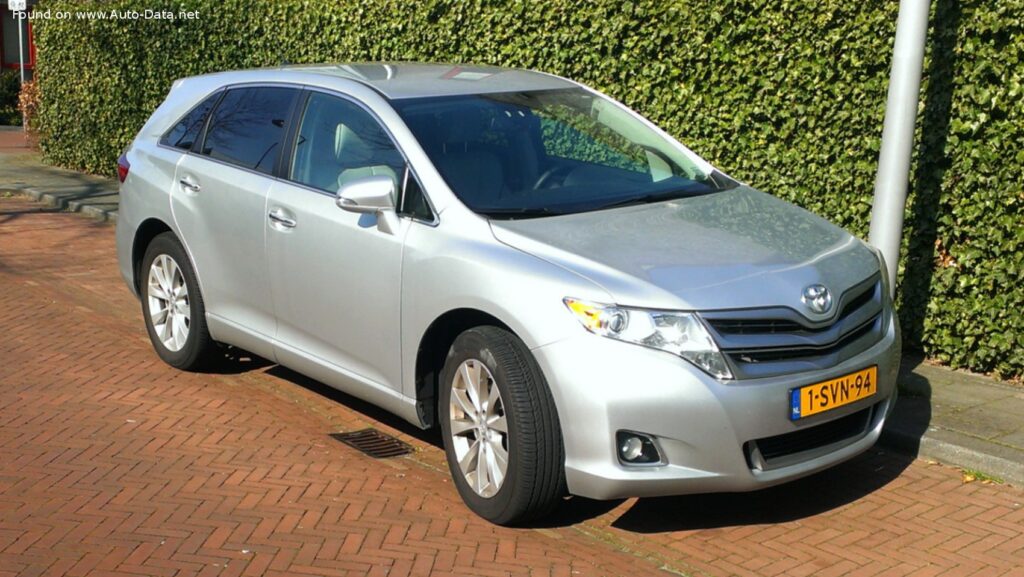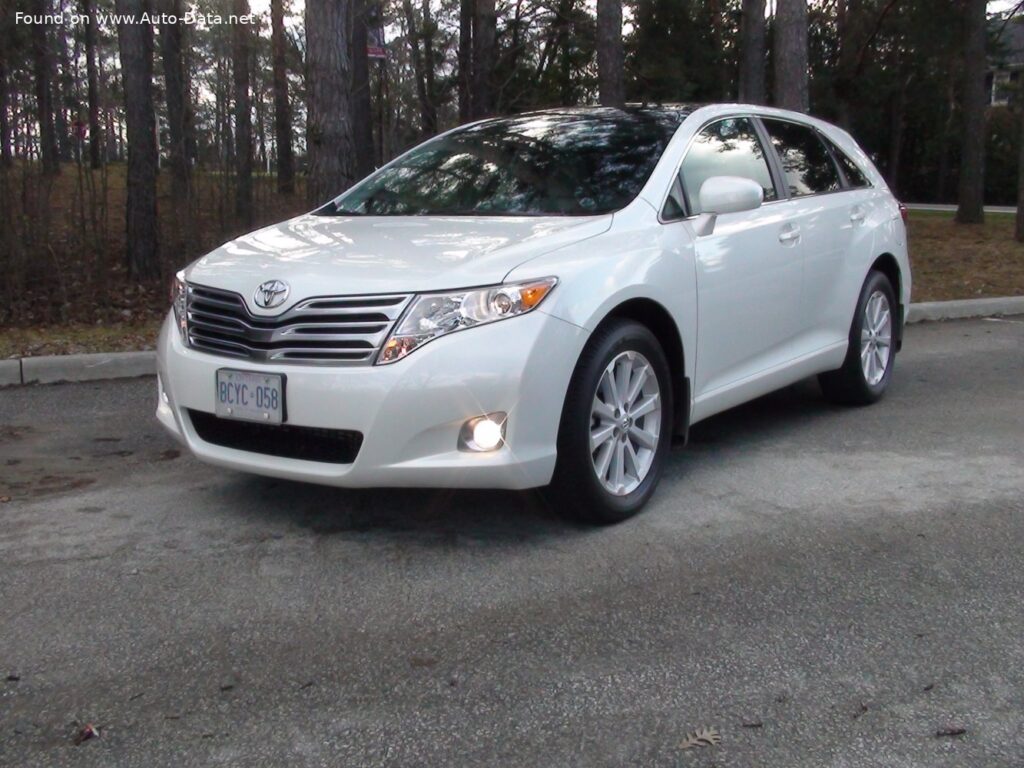
The Toyota Venza I (AV10) 2.7 (182 Hp) Automatic represented a significant entry into the burgeoning crossover segment when it debuted in 2008, bridging the gap between traditional sedans, station wagons, and sport utility vehicles. Designed primarily for the North American market, the Venza aimed to offer the comfortable ride and handling of a passenger car with the elevated driving position, cargo capacity, and versatile interior of an SUV. This particular iteration, featuring the 2.7-liter inline-four engine paired with an automatic transmission, was a cornerstone of the first-generation Venza lineup, which ran until 2012. Positioned as a practical and refined family vehicle, the Venza I (AV10) carved out a niche for consumers seeking a blend of sophisticated design, dependable performance, and Toyota’s renowned reliability, making it a compelling option in its competitive landscape. Its unique “wagon-like” yet “SUV-ish” stance contributed to its distinctive identity within Toyota’s extensive portfolio, offering a compelling alternative to more conventional vehicle types.
The Toyota Venza I (AV10) 2.7 (182 Hp) Automatic: A Crossover’s Genesis
The first-generation Toyota Venza, internally designated AV10, was a distinctive model that defied easy categorization, often described as a “crossover” or “mid-size wagon” rather than a traditional SUV. Its production span from 2008 to 2012 saw it become a popular choice for families and individuals seeking a vehicle that combined the practicality of a wagon with the commanding presence and accessibility of a sport utility vehicle, but without the larger footprint or fuel economy penalties often associated with full-size SUVs. The Venza was built on the same platform as the popular Camry and Highlander, inheriting their reputation for reliability and comfort. This strategic positioning allowed Toyota to appeal to a broad demographic, offering a vehicle that was both stylish and eminently functional for daily commutes and longer road trips alike. The 2.7-liter variant, in particular, was designed to provide an optimal balance of power and efficiency, making it a pragmatic choice for many consumers.
Powertrain and Performance Characteristics
At the heart of the Toyota Venza I (AV10) 2.7 (182 Hp) Automatic lies a robust and efficient 2.7-liter 1AR-FE inline-four engine. This naturally aspirated gasoline powerplant was engineered to deliver a smooth and responsive driving experience, producing a respectable 182 horsepower at 4800 rpm. The power output, translating to 67.6 horsepower per liter, provided ample acceleration for merging onto highways and navigating city traffic. Torque figures were equally impressive for its class, with 240 Newton-meters (177.01 lb.-ft.) available at a relatively low 4000 rpm, ensuring strong pulling power and reducing the need for constant downshifts. The engine’s inline configuration and front, longitudinal layout contributed to balanced weight distribution and a stable ride.
The 1AR-FE engine featured a Dual Overhead Camshaft (DOHC) valvetrain with 4 valves per cylinder, optimizing airflow for enhanced combustion efficiency. Fuel delivery was handled by a multi-port manifold injection system, a proven technology for reliable and precise fuel metering. With a compression ratio of 9.5:1, the engine was designed to operate efficiently on regular unleaded gasoline. The bore and stroke were both 95 mm (3.74 inches), indicating a square engine design, which often contributes to a good balance of low-end torque and high-end power. The engine’s displacement of 2694 cm3 (164.4 cu. in.) was a key factor in its ability to offer both decent performance and competitive fuel economy for a vehicle of its size and weight.
Power was transmitted to the front wheels via a smooth-shifting 6-speed automatic transmission. This gearbox was meticulously tuned to provide seamless gear changes, enhancing both driving comfort and fuel efficiency. The front-wheel-drive architecture, common in many crossovers, ensured predictable handling and adequate traction in most driving conditions, further solidifying its appeal as a practical family vehicle. The combination of the refined 2.7-liter engine and the well-matched automatic transmission made the Venza a pleasant vehicle to drive, offering sufficient power for daily tasks without being overly aggressive or inefficient.
Exterior Design and Interior Versatility
The design philosophy of the Toyota Venza I (AV10) was centered on creating a vehicle that combined the sleek aesthetics of a sedan with the practical utility of a station wagon and the commanding presence of an SUV. While officially classified as a “station wagon (estate),” its styling and market positioning firmly placed it within the burgeoning crossover segment. The Venza’s dimensions contributed significantly to its road presence and interior volume: a length of 4801 mm (189.02 in.), a width of 1905 mm (75 in.), and a height of 1610 mm (63.39 in.). These proportions, coupled with a substantial wheelbase of 2776 mm (109.29 in.), provided a spacious cabin and a stable ride.
The exterior styling featured a bold grille, distinctive headlights, and a flowing roofline that tapered towards the rear, giving it a dynamic yet sophisticated appearance. The raised ground clearance, while not as extreme as a traditional SUV, offered a more confident driving position and easier ingress/egress than a conventional sedan. The body type, with 5 doors and seating for 5 occupants, emphasized its role as a versatile family hauler. The spacious interior was a key selling point, offering comfortable seating for all passengers and ample cargo space, especially with the rear seats folded down. Thoughtful storage solutions and a well-appointed cabin underscored Toyota’s commitment to passenger comfort and convenience.
Underneath its stylish exterior, the Venza featured a sophisticated suspension system designed for a comfortable and controlled ride. The front utilized an independent McPherson strut setup, known for its ability to provide precise handling and absorb road imperfections effectively. The rear suspension consisted of an independent coil spring system, further contributing to the vehicle’s smooth ride quality and stability, particularly when loaded. These suspension components, combined with the wide front track of 1631 mm (64.21 in.) and rear track of 1636 mm (64.41 in.), ensured confident road holding and minimal body roll, making the Venza a pleasant vehicle for long journeys. Safety features, while not explicitly detailed in the raw data, for a Toyota of this era would typically include a comprehensive suite of airbags, anti-lock brakes (ABS), electronic stability control (ESC), and traction control, all contributing to its appeal as a secure family vehicle.
Technical Specifications of the Toyota Venza I (AV10) 2.7 (182 Hp) Automatic
| Brand | Toyota |
| Model | Venza |
| Generation | Venza I (AV10) |
| Type (Engine) | 2.7 (182 Hp) Automatic |
| Start of production | 2008 year |
| End of production | 2012 year |
| Powertrain Architecture | Internal Combustion engine |
| Body type | Station wagon (estate) |
| Seats | 5 |
| Doors | 5 |
| Fuel Type | Petrol (Gasoline) |
| Power | 182 Hp @ 4800 rpm. |
| Power per litre | 67.6 Hp/l |
| Torque | 240 Nm @ 4000 rpm. (177.01 lb.-ft. @ 4000 rpm.) |
| Engine layout | Front, Longitudinal |
| Engine Model/Code | 1AR-FE |
| Engine displacement | 2694 cm3 (164.4 cu. in.) |
| Number of cylinders | 4 |
| Engine configuration | Inline |
| Cylinder Bore | 95 mm (3.74 in.) |
| Piston Stroke | 95 mm (3.74 in.) |
| Compression ratio | 9.5:1 |
| Number of valves per cylinder | 4 |
| Fuel injection system | Multi-port manifold injection |
| Engine aspiration | Naturally aspirated engine |
| Valvetrain | DOHC |
| Engine oil capacity | 4.4 l (4.65 US qt | 3.87 UK qt) |
| Coolant | 7.1 l (7.5 US qt | 6.25 UK qt) |
| Fuel tank capacity | 67 l (17.7 US gal | 14.74 UK gal) |
| Length | 4801 mm (189.02 in.) |
| Width | 1905 mm (75 in.) |
| Height | 1610 mm (63.39 in.) |
| Wheelbase | 2776 mm (109.29 in.) |
| Front track | 1631 mm (64.21 in.) |
| Rear (Back) track | 1636 mm (64.41 in.) |
| Drivetrain Architecture | The Internal combustion engine (ICE) drives the front wheels of the vehicle. |
| Drive wheel | Front wheel drive |
| Number of gears and type of gearbox | 6 gears, automatic transmission |
| Front suspension | Independent type McPherson |
| Rear suspension | Independent coil spring |