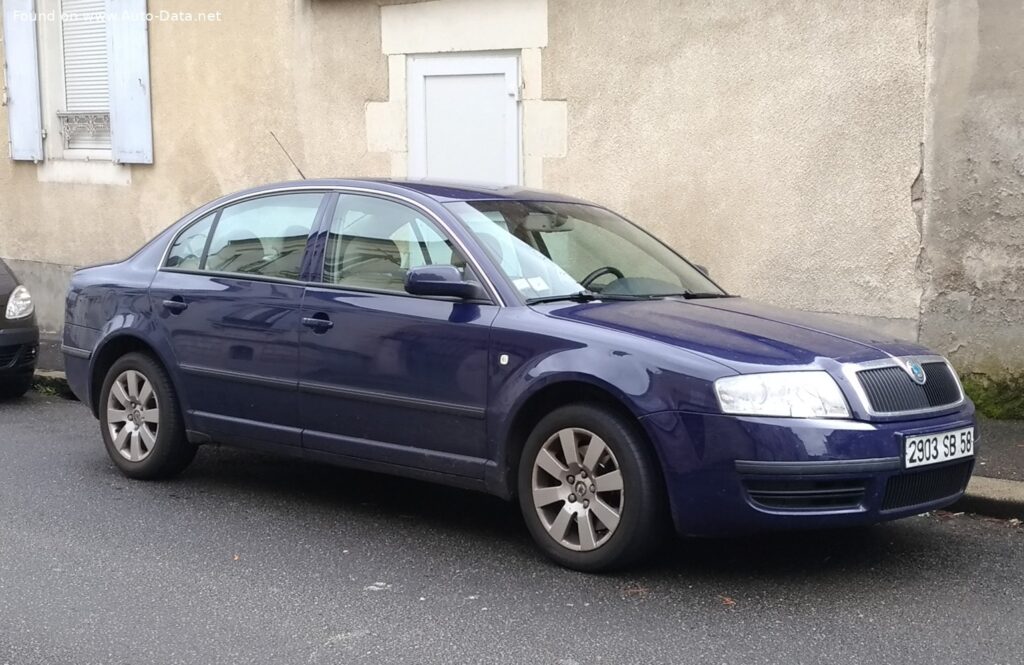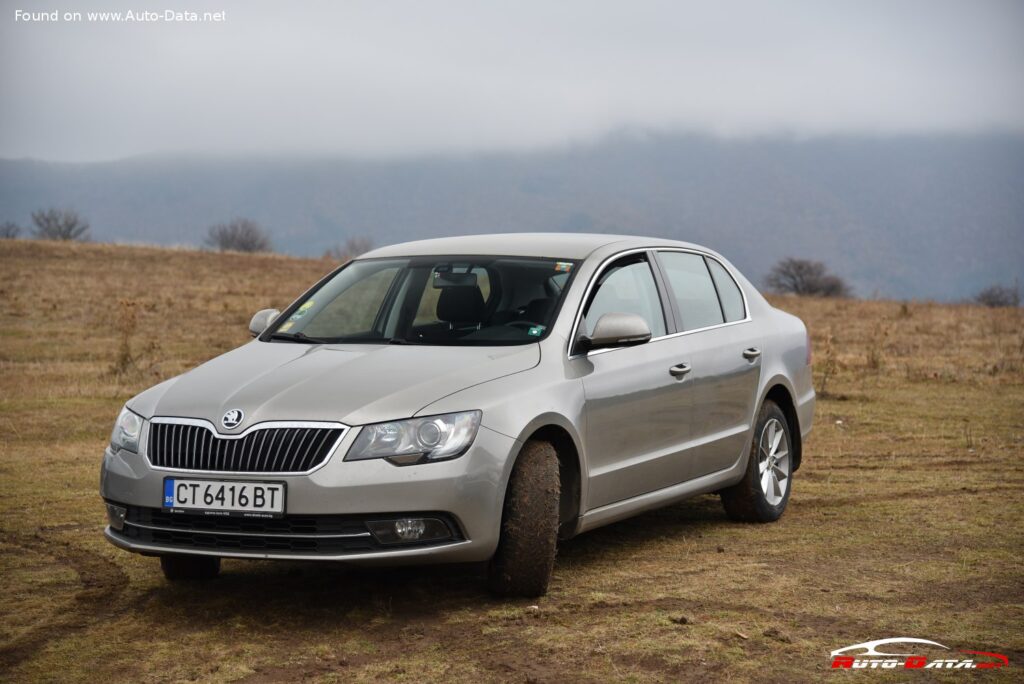
The Skoda Superb II, specifically the facelifted model introduced in 2013 and featuring the potent 3.6 FSI (260 Hp) 4×4 DSG powertrain, represented the pinnacle of Skoda’s executive car offering during its production run from April 2013 to 2015. Positioned as a value-oriented yet highly capable alternative in the European D-segment, the Superb II was renowned for its exceptional interior space, robust build quality, and sophisticated engineering derived from its Volkswagen Group parentage. While not officially sold in the United States, this particular variant showcased Skoda’s ambition to compete with more established premium brands by offering a compelling blend of performance, practicality, and refinement, all wrapped in a distinctive liftback body style. The 3.6 FSI engine, combined with all-wheel drive and a dual-clutch automatic transmission, underscored its role as a flagship model, delivering a driving experience that was both powerful and secure.
The Skoda Superb II (facelift 2013): Engineering and Market Position
The second-generation Skoda Superb, launched in 2008, was a significant departure from its predecessor, moving to the longer B6 platform shared with the Volkswagen Passat. The 2013 facelift brought a series of aesthetic and technical updates, ensuring the Superb remained competitive in its segment. For the European market, the Superb carved out a niche by offering limousine-like rear legroom in a package that was considerably more affordable than its German premium rivals. The liftback body style, a clever design allowing for both a conventional sedan-style trunk lid and a full hatchback opening, was a key differentiator, offering immense practicality and cargo volume. This specific 3.6 FSI 4×4 DSG variant, with its powerful V6 engine and advanced drivetrain, was the performance flagship, appealing to buyers who desired strong acceleration and all-weather capability without compromising on the Superb’s renowned comfort and spaciousness. Its market was primarily in Central and Eastern Europe, as well as parts of Western Europe, where Skoda’s reputation for robust, sensible, and value-packed vehicles resonated strongly.
Powertrain and Dynamic Performance
At the heart of this particular Skoda Superb II (facelift 2013) lies the formidable 3.6-liter FSI V6 engine, a naturally aspirated gasoline unit generating a robust 260 horsepower (Hp) and 258.15 lb.-ft. of torque, available across a broad rev range from 2400 to 4000 rpm. This engine, designated EA390 / CDVA, employs a V-engine configuration with six cylinders and features direct fuel injection, ensuring efficient combustion and responsive power delivery. With an engine displacement of 3597 cubic centimeters (219.5 cu. in.) and a compression ratio of 11.4:1, the powertrain is engineered for smooth yet forceful acceleration. The power output translates to an impressive weight-to-power ratio of 6.6 kg/Hp, or 152.6 Hp per tonne, indicating a strong performance orientation for a vehicle of its class and size.
Mated to this potent engine is a sophisticated 6-speed automatic DSG (Direct Shift Gearbox) transmission, which is renowned for its rapid and seamless gear changes, contributing significantly to the vehicle’s dynamic character. Power is efficiently distributed to all four wheels via an advanced all-wheel-drive (4×4) system, providing superior traction and stability, particularly in adverse weather conditions or during spirited driving. This combination allows the Skoda Superb II 3.6 FSI to accelerate from 0 to 60 mph in a swift 6.1 seconds, making it one of the quicker executive cars in its segment. The top speed is electronically limited to 155.34 mph (250 km/h), a testament to its high-speed cruising capability. Despite its performance credentials, the Superb II 3.6 FSI manages a combined fuel economy of 25.3 US mpg (9.3 l/100 km), with urban consumption at 18.1 US mpg and extra-urban at 33.6 US mpg. It adheres to the Euro 5 J emission standard, with CO2 emissions rated at 215 g/km.
Design, Features, and Practicality
The 2013 facelift of the Skoda Superb II brought subtle yet effective design enhancements, updating its executive appearance. The Superb’s exterior was characterized by a more angular and assertive front fascia, revised grille, and updated headlight designs, often incorporating LED daytime running lights, giving it a more contemporary and sophisticated look. The rear also received refreshed taillight clusters and a subtly restyled bumper. The liftback body type is a standout feature, offering the elegant profile of a sedan with the unparalleled practicality of a hatchback. The rear tailgate, known as the “Twindoor” system, allowed the trunk to be opened in two ways: either just the boot lid, like a conventional sedan, or the entire tailgate including the rear window, providing a massive aperture for loading bulky items. This innovative design contributed to an impressive minimum trunk space of 21.01 cu. ft. (595 liters), expandable to a cavernous 60.03 cu. ft. (1700 liters) with the rear seats folded down, making it exceptionally practical for families and business users alike.
Inside, the Superb II continued its tradition of offering immense passenger space, particularly for rear occupants, rivaling vehicles from a class above. The cabin was designed with a focus on ergonomics and high-quality materials, typical of Volkswagen Group vehicles. Standard features for a flagship model of this era would have included a comprehensive infotainment system with navigation, automatic climate control, heated seats, and a range of power-adjustable settings. Safety was also a key consideration, with ABS (Anti-lock Braking System) as standard, alongside multiple airbags, electronic stability control, and advanced driver-assistance systems that were becoming prevalent in the mid-2010s, such as parking sensors and cruise control. The steering system utilized a precise rack and pinion setup, ensuring predictable and comfortable handling. With a length of 190.28 inches, a width of 71.54 inches, and a height of 57.56 inches, riding on a 108.7-inch wheelbase, the Superb II commanded a significant road presence while offering a remarkably tight turning circle of 38.35 feet, enhancing maneuverability in urban environments. Its curb weight of 3756.68 lbs. (1704 kg) and a maximum permissible weight of 4993.47 lbs. (2265 kg) underscored its robust construction and load-carrying capability.
Technical Specifications: Skoda Superb II (facelift 2013) 3.6 FSI (260 Hp) 4×4 DSG
| Brand | Skoda |
| Model | Superb |
| Generation | Superb II (facelift 2013) |
| Type (Engine) | 3.6 FSI (260 Hp) 4×4 DSG |
| Start of production | April, 2013 year |
| End of production | 2015 year |
| Powertrain Architecture | Internal Combustion engine |
| Body type | Liftback |
| Seats | 5 |
| Doors | 5 |
| Fuel consumption (economy) – urban | 18.1 US mpg (13 l/100 km) |
| Fuel consumption (economy) – extra urban | 33.6 US mpg (7 l/100 km) |
| Fuel consumption (economy) – combined | 25.3 US mpg (9.3 l/100 km) |
| CO2 emissions | 215 g/km |
| Fuel Type | Petrol (Gasoline) |
| Acceleration 0 – 60 mph | 6.1 sec |
| Maximum speed | 155.34 mph (250 km/h) |
| Emission standard | Euro 5 J |
| Weight-to-power ratio | 6.6 kg/Hp, 152.6 Hp/tonne |
| Weight-to-torque ratio | 4.9 kg/Nm, 205.4 Nm/tonne |
| Power | 260 Hp |
| Power per liter | 72.3 Hp/l |
| Torque | 258.15 lb.-ft. @ 2400-4000 rpm (350 Nm) |
| Engine layout | Front, Transverse |
| Engine Model/Code | EA390 / CDVA |
| Engine displacement | 219.5 cu. in. (3597 cm3) |
| Number of cylinders | 6 |
| Engine configuration | V-engine |
| Compression ratio | 11.4:1 |
| Fuel injection system | Direct injection |
| Engine aspiration | Naturally aspirated engine |
| Engine oil capacity | 5.81 US qt (5.5 l) |
| Coolant | 9.51 US qt (9 l) |
| Kerb Weight | 3756.68 lbs. (1704 kg) |
| Max. weight | 4993.47 lbs. (2265 kg) |
| Max load | 1236.79 lbs. (561 kg) |
| Trunk (boot) space – minimum | 21.01 cu. ft. (595 l) |
| Trunk (boot) space – maximum | 60.03 cu. ft. (1700 l) |
| Fuel tank capacity | 15.85 US gal (60 l) |
| Length | 190.28 in. (4833 mm) |
| Width | 71.54 in. (1817 mm) |
| Height | 57.56 in. (1462 mm) |
| Wheelbase | 108.7 in. (2761 mm) |
| Front track | 60.51 in. (1537 mm) |
| Rear (Back) track | 59.45 in. (1510 mm) |
| Minimum turning circle (turning diameter) | 38.35 ft. (11.69 m) |
| Drive wheel | All wheel drive (4×4) |
| Number of gears and type of gearbox | 6 gears, automatic transmission DSG |
| Assisting systems | ABS (Anti-lock braking system) |
| Steering type | Steering rack and pinion |