
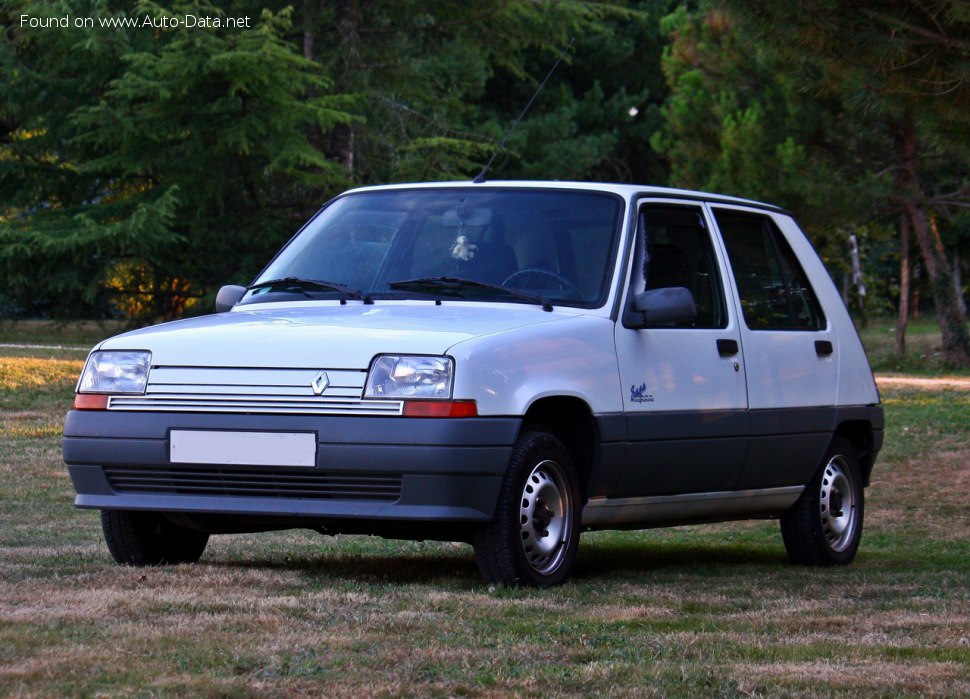
The Renault Super 5 (B/C40) 1.4 (B/C40M) (60 Hp) stands as a quintessential representation of the European supermini segment during the late 1980s. Launched as the successor to the highly successful and iconic original Renault 5, the Super 5, known internally by its chassis code B/C40, aimed to modernize the beloved formula while retaining its accessible charm and practicality. This particular variant, produced between 1987 and 1990, embodied the core values of the Super 5 range: efficient performance, compact dimensions, and robust engineering tailored for the demands of European urban and extra-urban driving. While never officially sold in the United States, the Super 5 played a crucial role in solidifying Renault’s position as a dominant force in the compact car market across Europe, continuing a legacy of innovative and popular small vehicles.
Engineering and Performance of the Renault Super 5 (B/C40) 1.4 (B/C40M) (60 Hp)
At the heart of the Renault Super 5 (B/C40) 1.4 (B/C40M) (60 Hp) was a reliable and well-proven powertrain, a hallmark of Renault’s engineering philosophy for its mass-market vehicles. This specific model was equipped with a 1.4-liter (1397 cm³) naturally aspirated inline-four engine, identified by its C1J engine code. This unit produced a modest but entirely adequate 60 horsepower, delivered at a usable RPM range that made it responsive in city traffic and capable on open roads. The engine’s naturally aspirated design, devoid of forced induction, contributed to its simplicity, ease of maintenance, and inherent reliability—factors that were highly valued by consumers in this segment.
The performance figures for the 1.4-liter Super 5 were respectable for its era and class. It could achieve a maximum speed of 98.18 mph (158 km/h), which was sufficient for highway cruising in most European countries. More importantly for its target audience, the vehicle demonstrated commendable fuel economy. In urban driving conditions, it consumed approximately 8.3 liters per 100 kilometers, translating to an estimated 28.3 US mpg. On extra-urban cycles, the efficiency improved significantly, reaching around 5.2 liters per 100 kilometers, or an impressive 45.2 US mpg. These figures underscored the Super 5’s role as an economical daily driver, a critical attribute in markets with high fuel prices. The engine’s oil capacity was 3.5 liters (3.7 US quarts), and the cooling system required 5.5 liters (5.81 US quarts) of coolant, indicating a compact and efficient thermal management design.
The powertrain architecture of the Super 5 was conventional yet effective, featuring an internal combustion engine driving the front wheels. This front-wheel-drive layout was a standard for superminis of the time, optimizing interior space, improving traction in adverse conditions, and reducing manufacturing complexity. The 60 horsepower output, combined with the vehicle’s relatively light curb weight (though not specified, typical for its class), provided a sprightly driving experience, particularly in urban environments where its compact dimensions and nimble handling allowed it to navigate tight streets and parking spaces with ease. The engine’s robust design and widespread use across various Renault models of the period also meant that parts and servicing expertise were readily available, further enhancing its appeal as a practical and dependable vehicle.
Design, Features, and Heritage
The Renault Super 5 (B/C40) represented a significant evolutionary step from its predecessor, both mechanically and aesthetically. While the original Renault 5, designed by Michel Boué, was a revolutionary design, the Super 5 brought a more modern, aerodynamic, and refined appearance to the compact segment. The design, often attributed to Marcello Gandini (though his full involvement is debated, his influence on the overall shape and details is evident), modernized the original’s ‘cute’ and boxy lines into a smoother, more contemporary silhouette. This particular variant was offered as a 5-door hatchback, a highly practical configuration that appealed to families and individuals needing greater accessibility to the rear seats and cargo area.
With seating for five occupants, the 5-door Super 5 maximized its interior volume within a compact footprint. The design prioritized practicality, with a focus on ease of entry and exit, and a versatile cargo space that could be expanded by folding down the rear seats—a standard but essential feature for a utility-focused hatchback. The Super 5’s body type was not merely about aesthetics; its improved aerodynamics contributed to better fuel efficiency and reduced wind noise at higher speeds, enhancing the overall driving experience compared to its more angular predecessor.
In terms of features, the 1987-1990 Super 5, being a mainstream compact car, offered a functional and straightforward cabin. While luxury amenities were not its primary focus, it provided all the necessary controls and comforts expected for a vehicle in its class during the late 1980s. This included basic heating and ventilation systems, durable cloth upholstery, and a clear, uncluttered instrument panel. Safety features, while rudimentary by today’s standards, included standard seatbelts for all occupants and a structure designed with basic crumple zones to absorb impact energy. Its enduring popularity in Europe speaks to its successful blend of practical design, economical operation, and a driving character that was both engaging and forgiving.
The heritage of the Super 5 is deeply intertwined with Renault’s identity as a manufacturer of accessible and innovative small cars. It built upon the original R5’s reputation for being a ‘car for living,’ offering improved refinement, better build quality, and a more comfortable ride. Its mechanical impact stemmed from its widespread adoption of reliable components and a design that was easy to manufacture and maintain. The Super 5 was a car that millions of Europeans learned to drive in, used for daily commutes, and relied upon for family transport. Its legacy endures as a testament to effective, practical automotive design that resonated strongly with its target market, cementing its place as a true classic of the European automotive scene.
Technical Specifications
| Brand | Renault |
| Model | Super 5 |
| Generation | Super 5 (B/C40) |
| Type (Engine) | 1.4 (B/C40M) (60 Hp) |
| Start of production | 1987 year |
| End of production | 1990 year |
| Powertrain Architecture | Internal Combustion engine |
| Body type | Hatchback |
| Seats | 5 |
| Doors | 5 |
| Fuel consumption (economy) – urban | 8.3 l/100 km (28.3 US mpg) |
| Fuel consumption (economy) – extra urban | 5.2 l/100 km (45.2 US mpg) |
| Fuel Type | Petrol (Gasoline) |
| Maximum speed | 158 km/h (98.18 mph) |
| Power | 60 Hp |
| Engine Model/Code | C1J |
| Engine aspiration | Naturally aspirated engine |
| Engine oil capacity | 3.5 l (3.7 US qt) |
| Coolant | 5.5 l (5.81 US qt) |
| Fuel tank capacity | 43 l (11.36 US gal) |
