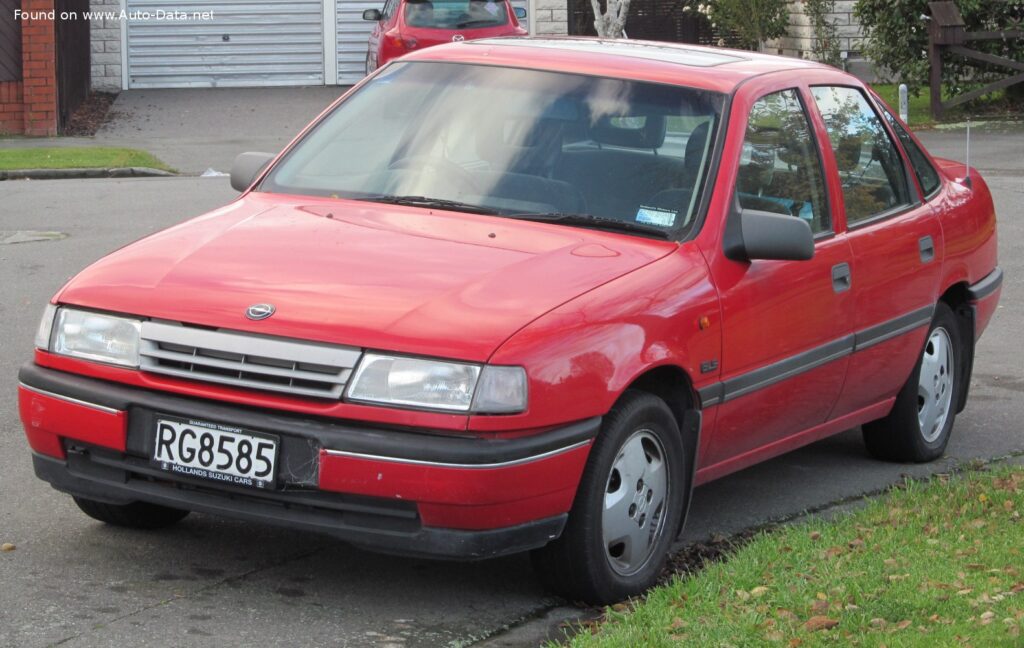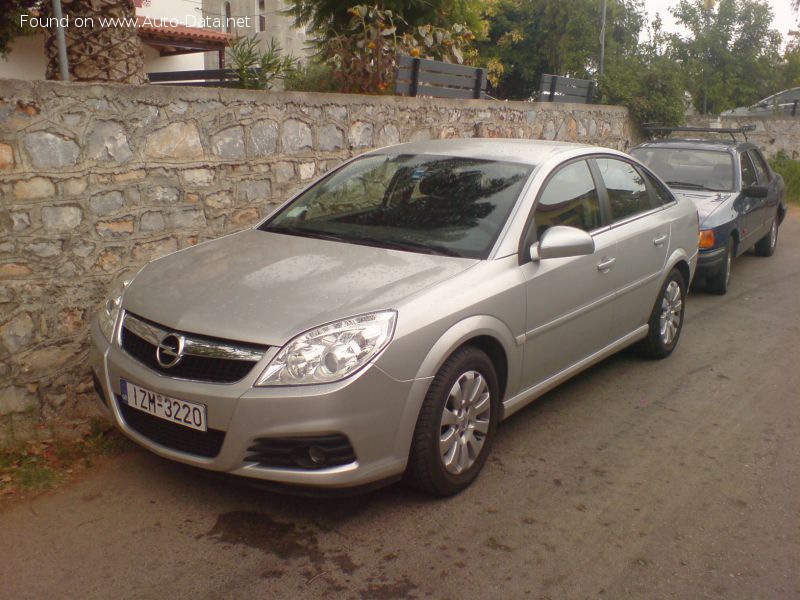
The Opel Vectra C CC (facelift 2005) 3.0 CDTI (184 Hp) Automatic represents a significant offering from General Motors’ European subsidiary, Opel, within the highly competitive mid-size segment. Launched in July 2005 as a refreshed iteration of the third-generation Vectra, this particular variant, known as the “Caravan Coupe” or simply a 5-door hatchback, was a staple in the European market until its production ceased in August 2008. Positioned as a versatile family car capable of covering long distances efficiently, the Vectra C CC aimed to blend practicality with executive-level comfort and performance, particularly appealing to buyers seeking the robust torque and fuel economy characteristic of modern diesel powertrains. While never officially sold under the Opel badge in the United States, the Vectra played a crucial role in Opel’s strategy to compete with rivals like the Ford Mondeo, Volkswagen Passat, and Renault Laguna, embodying a blend of German engineering and pragmatic design tailored for the European consumer base.
Powertrain and Performance of the Opel Vectra C CC (facelift 2005) 3.0 CDTI (184 Hp) Automatic
At the heart of this particular Opel Vectra C CC (facelift 2005) 3.0 CDTI (184 Hp) Automatic model lies a potent 3.0-liter V6 CDTI (Common Rail Diesel Injection) engine, designated by the internal code Z30DT. This sophisticated diesel powerplant was engineered to deliver a compelling balance of power, refinement, and efficiency. It produces a robust 184 horsepower at 4000 rpm, which, when combined with its impressive peak torque of 295.02 lb.-ft. (400 Nm) available at a remarkably low 1900 rpm, provides the vehicle with strong, accessible acceleration and effortless cruising capability. The engine’s configuration as a V-engine with six cylinders, each featuring four valves, contributes to its smooth operation and efficient combustion.
Key to the engine’s performance characteristics is its advanced fuel injection system, utilizing direct injection, and its forced induction setup, which includes a turbocharger and an intercooler. The turbocharger significantly boosts air intake, allowing for more complete combustion and greater power output, while the intercooler cools the compressed air, further enhancing efficiency and preventing pre-ignition. With a high compression ratio of 18.5:1, typical for diesel engines, the Z30DT unit is optimized for fuel economy and torque production. Its displacement of 180.51 cubic inches (2958 cm³) ensures ample power reserves for various driving conditions.
Power is meticulously managed by a 6-speed automatic transmission, providing seamless gear changes and contributing to a relaxed driving experience, particularly in urban environments or during long-distance travel. The drivetrain architecture is front-wheel drive, a common and efficient layout for vehicles in this segment, offering predictable handling and packaging advantages. In terms of outright performance, the Vectra C CC 3.0 CDTI is capable of accelerating from 0 to 60 mph in a respectable 9.2 seconds, with a maximum speed of 139.19 mph (224 km/h). These figures underscore its ability to comfortably handle highway speeds and provide confident overtaking maneuvers.
Fuel efficiency was a major selling point for diesel vehicles in Europe, and this Vectra variant excelled in that regard. It achieves an estimated 21.8 US mpg (10.8 l/100 km) in urban driving conditions and an impressive 42 US mpg (5.6 l/100 km) on the extra-urban cycle. These figures highlight the economic advantages of the CDTI engine, making it an attractive option for high-mileage drivers. The vehicle’s weight-to-power ratio stands at 8.5 kg/Hp (117.6 Hp/tonne), while the weight-to-torque ratio is 3.9 kg/Nm (255.6 Nm/tonne), indicating a well-balanced power-to-weight distribution that enhances both performance and efficiency.
Design and Features
The Opel Vectra C CC (facelift 2005) presented a refreshed and contemporary design that built upon the solid foundation of the third-generation Vectra. The “CC” designation, while sometimes implying a coupe-cabriolet, in this context refers to a distinct 5-door hatchback body style, offering a blend of sedan-like aesthetics with the enhanced practicality of a liftback. The facelift introduced subtle but effective changes to the exterior, including revised front and rear fascias, updated lighting signatures, and new wheel designs, all aimed at giving the car a more modern and assertive presence on the road. Its dimensions, measuring 181.54 inches (4611 mm) in length, 70.79 inches (1798 mm) in width (80.16 inches or 2036 mm including mirrors), and 57.48 inches (1460 mm) in height, contributed to a substantial road presence and a spacious interior.
The 5-door configuration, coupled with a 5-seat layout, emphasized the Vectra CC’s role as a versatile family vehicle. The hatchback design provided excellent cargo flexibility, with a generous trunk (boot) space of 17.66 cubic feet (500 liters). This capacity could be further expanded by folding down the rear seats, making it highly practical for carrying larger items, luggage for extended trips, or sports equipment. The maximum load capacity of 1201.52 lbs. (545 kg) further underscored its utility.
Inside, the facelifted Vectra C CC benefited from interior refinements, including updated materials, improved ergonomics, and potentially new infotainment options for its era. While specific interior features are not detailed in the provided data, Opel typically equipped its mid-range vehicles with a comprehensive array of comfort and convenience features. The focus for a modern car of this period would have been on creating a comfortable and functional cabin environment, with attention to driver accessibility and passenger comfort during long journeys.
Safety was a paramount concern for vehicles in this segment, and the Vectra C CC incorporated essential assisting systems. Anti-lock Braking System (ABS) was a standard feature, providing enhanced control during emergency braking by preventing wheel lock-up. The braking system itself comprised disc brakes on both the front and rear axles, ensuring strong and consistent stopping power. The suspension system featured independent coil springs at both the front and rear, a sophisticated setup designed to provide a compliant ride quality while maintaining good handling characteristics. This independent suspension architecture allowed each wheel to react to road imperfections individually, improving comfort and stability.
The vehicle rode on 16-inch wheel rims, fitted with 215/55 R16 tires. This tire and wheel combination was chosen to provide a balance between ride comfort, grip, and fuel efficiency, suitable for a wide range of driving conditions encountered across Europe. The wheelbase of 106.3 inches (2700 mm) contributed to stable high-speed cruising and a comfortable ride, while the front track of 60.47 inches (1536 mm) and rear track of 60.04 inches (1525 mm) provided a solid stance and contributed to the vehicle’s handling dynamics. Overall, the Opel Vectra C CC (facelift 2005) 3.0 CDTI (184 Hp) Automatic was a well-rounded package, offering a compelling blend of practical design, robust performance, and efficiency for the discerning European buyer.
Technical Specifications
| Brand | Opel |
| Model | Vectra |
| Generation | Vectra C CC (facelift 2005) |
| Type (Engine) | 3.0 CDTI (184 Hp) Automatic |
| Start of production | July, 2005 year |
| End of production | August, 2008 year |
| Powertrain Architecture | Internal Combustion engine |
| Body type | Hatchback |
| Seats | 5 |
| Doors | 5 |
| Fuel consumption (economy) – urban | 10.8 l/100 km (21.8 US mpg) |
| Fuel consumption (economy) – extra urban | 5.6 l/100 km (42 US mpg) |
| Fuel Type | Diesel |
| Acceleration 0 – 60 mph | 9.2 sec |
| Maximum speed | 139.19 mph (224 km/h) |
| Weight-to-power ratio | 8.5 kg/Hp (117.6 Hp/tonne) |
| Weight-to-torque ratio | 3.9 kg/Nm (255.6 Nm/tonne) |
| Power | 184 Hp @ 4000 rpm |
| Power per liter | 62.2 Hp/l |
| Torque | 295.02 lb.-ft. @ 1900 rpm (400 Nm) |
| Engine layout | Front, Transverse |
| Engine Model/Code | Z30DT |
| Engine displacement | 180.51 cu. in. (2958 cm³) |
| Number of cylinders | 6 |
| Engine configuration | V-engine |
| Cylinder Bore | 3.44 in. (87.5 mm) |
| Piston Stroke | 3.23 in. (82 mm) |
| Compression ratio | 18.5:1 |
| Number of valves per cylinder | 4 |
| Fuel injection system | Direct injection |
| Engine aspiration | Turbocharger, Intercooler |
| Engine oil capacity | 7.93 US qt (7.5 l) |
| Coolant | 8.77 US qt (8.3 l) |
| Kerb Weight | 3450.23 lbs. (1565 kg) |
| Max. weight | 4651.75 lbs. (2110 kg) |
| Max load | 1201.52 lbs. (545 kg) |
| Trunk (boot) space – maximum | 17.66 cu. ft. (500 l) |
| Fuel tank capacity | 16.11 US gal (61 l) |
| Length | 181.54 in. (4611 mm) |
| Width | 70.79 in. (1798 mm) |
| Width including mirrors | 80.16 in. (2036 mm) |
| Height | 57.48 in. (1460 mm) |
| Wheelbase | 106.3 in. (2700 mm) |
| Front track | 60.47 in. (1536 mm) |
| Rear (Back) track | 60.04 in. (1525 mm) |
| Drivetrain Architecture | The Internal combustion engine (ICE) drives the front wheels of the vehicle. |
| Drive wheel | Front wheel drive |
| Number of gears and type of gearbox | 6 gears, automatic transmission |
| Front suspension | Independent coil spring |
| Rear suspension | Independent coil spring |
| Front brakes | Disc |
| Rear brakes | Disc |
| Assisting systems | ABS (Anti-lock braking system) |
| Tires size | 215/55 R16 |
| Wheel rims size | 16 |