
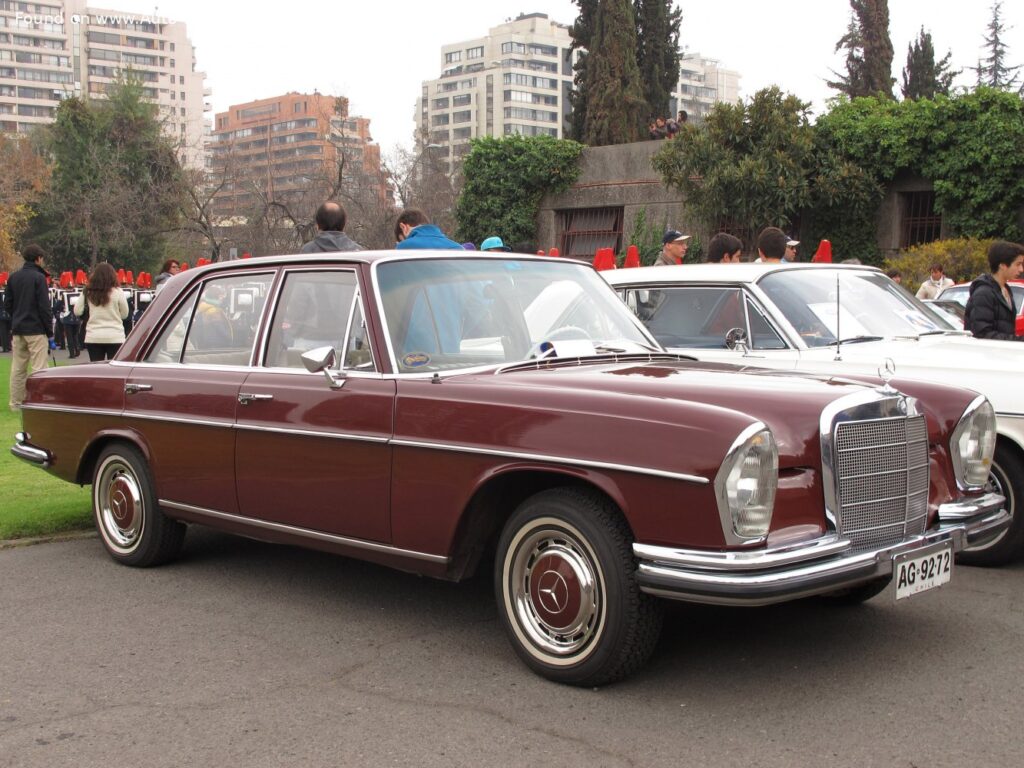
The Mercedes-Benz W108 280 SE (160 Hp) Automatic represents a significant chapter in the storied history of German luxury automobiles, embodying the marque’s commitment to engineering excellence, sophisticated design, and robust performance during the late 1960s and early 1970s. Launched in November 1967 as part of the esteemed W108 generation, this four-door, five-seat sedan quickly established itself as a benchmark in the executive class. Produced until September 1972, the 280 SE variant, with its potent inline-six engine and smooth automatic transmission, offered a compelling blend of power, comfort, and timeless elegance that resonated deeply with discerning buyers in its primary European market and beyond. Its enduring legacy is a testament to its quality and the vision of Mercedes-Benz during a transformative era for automotive design and technology.
The W108 Legacy and the Mercedes-Benz W108 280 SE (160 Hp) Automatic
The W108 generation, a direct successor to the iconic “Fintail” sedans, marked a pivotal transition for Mercedes-Benz, refining the brand’s aesthetic towards a more understated, yet equally imposing, design language. While shedding the pronounced tailfins of its predecessors, the W108 retained a commanding road presence, characterized by its clean lines, expansive glasshouse, and hallmark Mercedes-Benz grille. This series, including the distinguished Mercedes-Benz W108 280 SE (160 Hp) Automatic, was engineered to offer unparalleled comfort and durability, qualities that cemented Mercedes-Benz’s reputation as a manufacturer of world-class luxury vehicles. It was a car designed for long-distance touring, executive transport, and as a statement of success, often favored by diplomats, business leaders, and affluent families across Europe and other international markets where it was sold. Its robust construction and advanced mechanical components ensured a long service life, contributing to its status as a desirable classic today.
The 280 SE variant, in particular, was positioned as a premium offering within the W108 lineup. It combined a substantial 2.8-liter engine with a luxurious interior, providing a driving experience that was both refined and engaging. The W108’s engineering philosophy prioritized safety, comfort, and reliability, features that were increasingly important in the automotive landscape of the late 1960s. Its solid body structure, advanced suspension system, and potent braking capabilities were all designed to provide a secure and composed ride. The model’s production span from late 1967 to late 1972 ensured a significant number were built, allowing it to leave a lasting impression on the automotive world and secure its place as a cherished classic for enthusiasts and collectors alike.
Powertrain and Performance of the Mercedes-Benz W108 280 SE (160 Hp) Automatic
At the heart of the Mercedes-Benz W108 280 SE (160 Hp) Automatic lies a meticulously engineered M 130 E 28 (or 130.980) inline-six engine, a hallmark of Mercedes-Benz’s commitment to smooth, durable, and responsive power delivery. This naturally aspirated unit, displacing 2778 cubic centimeters (approximately 169.52 cubic inches), was a sophisticated piece of machinery for its time. Featuring a Single Overhead Camshaft (SOHC) valvetrain and a multi-port manifold injection system, it represented a significant step forward in engine technology, offering improved fuel efficiency and power output compared to carbureted alternatives. The engine was designed for longevity and effortless operation, producing a respectable 160 horsepower at 5500 RPM. This power output, combined with a compression ratio of 9.5:1, allowed the 280 SE to move with authority and grace, even when fully laden.
Torque delivery was equally impressive, with 177.01 lb.-ft. (240 Nm) available at a relatively low 4250 RPM, ensuring strong acceleration from a standstill and ample passing power on the highway. Paired with a smooth 4-speed automatic transmission, the powertrain delivered a refined driving experience, characteristic of Mercedes-Benz luxury sedans. This combination enabled the 280 SE to accelerate from 0 to 60 mph in a swift 10.6 seconds, with a top speed of approximately 114.95 mph (185 km/h). These figures were highly competitive for a luxury sedan of its era, balancing comfort with genuine performance. Fuel economy, while not a primary concern for buyers in this segment, was rated at a combined 19.1 US mpg (12.3 l/100 km), a reasonable figure given the vehicle’s size, weight, and the technology available at the time. The engine’s robust design, including an oil capacity of 6 US quarts (6 liters) and a coolant capacity of 11.41 US quarts (10.8 liters), underscored its engineering for reliability and sustained performance, making it a reliable choice for long journeys and daily use.
Design, Engineering, and Features
The design of the Mercedes-Benz W108 280 SE (160 Hp) Automatic epitomizes the understated elegance that became a hallmark of Mercedes-Benz in the late 1960s. As a four-door sedan with seating for five, its proportions were carefully balanced, exuding a sense of dignity and purpose. With an overall length of 192.91 inches (4900 mm), a width of 71.26 inches (1810 mm), and a height of 56.69 inches (1440 mm), the W108 commanded a significant footprint, contributing to its imposing presence. The 108.27-inch (2750 mm) wheelbase provided a spacious cabin and a stable ride, further enhanced by the wide front (58.35 in.) and rear (58.46 in.) tracks. The exterior was characterized by its clean, unadorned surfaces, punctuated by tasteful chrome accents around the windows, grille, and bumpers, which highlighted its premium status without resorting to ostentation. The timeless aesthetic ensures that the W108 remains a visually appealing vehicle even decades after its production ended.
Beyond aesthetics, the W108 was a marvel of engineering for its time, particularly in its chassis and suspension design. The front utilized a double wishbone setup, providing precise steering and excellent road holding. The rear suspension was notably advanced, featuring a hydro-pneumatic element combined with trailing arms. This sophisticated system was instrumental in delivering the legendary “magic carpet” ride quality for which Mercedes-Benz sedans were renowned, effectively isolating occupants from road imperfections while maintaining composure during spirited driving. Safety was also a paramount concern; the 280 SE was equipped with disc brakes on both the front and rear wheels, offering superior stopping power and fade resistance compared to the drum brakes still common on many vehicles of the era. Steering was managed by a cone worm with recirculation balls system, providing a predictable and comfortable feel. With a kerb weight of 3295.91 lbs. (1495 kg) and a maximum permissible weight of 4398.22 lbs. (1995 kg), the W108 was a substantially built vehicle, emphasizing its robust construction and inherent safety. The 21.66 US gallon (82-liter) fuel tank capacity ensured an impressive cruising range, further cementing its credentials as a capable long-distance tourer. The interior, though not detailed in the provided data, would have featured high-quality materials, ergonomic controls, and comfortable seating, reflecting the luxury expected of a Mercedes-Benz of this caliber.
Technical Specifications
| Brand | Mercedes-Benz |
| Model | W108 |
| Generation | W108 |
| Type (Engine) | 280 SE (160 Hp) Automatic |
| Start of production | November, 1967 year |
| End of production | September, 1972 year |
| Powertrain Architecture | Internal Combustion engine |
| Body type | Sedan |
| Seats | 5 |
| Doors | 4 |
| Fuel consumption (economy) – combined | 12.3 l/100 km (19.1 US mpg) |
| Fuel Type | Petrol (Gasoline) |
| Acceleration 0 – 60 mph | 10.6 sec |
| Maximum speed | 114.95 mph (185 km/h) |
| Weight-to-power ratio | 9.3 kg/Hp (107 Hp/tonne) |
| Weight-to-torque ratio | 6.2 kg/Nm (160.5 Nm/tonne) |
| Power | 160 Hp @ 5500 rpm |
| Power per liter | 57.6 Hp/l |
| Torque | 177.01 lb.-ft. (240 Nm) @ 4250 rpm |
| Engine layout | Front, Longitudinal |
| Engine Model/Code | M 130 E 28 / 130.980 |
| Engine displacement | 2778 cm³ (169.52 cu. in.) |
| Number of cylinders | 6 |
| Engine configuration | Inline |
| Cylinder Bore | 3.41 in. (86.5 mm) |
| Piston Stroke | 3.1 in. (78.8 mm) |
| Compression ratio | 9.5:1 |
| Number of valves per cylinder | 2 |
| Fuel injection system | Multi-port manifold injection |
| Engine aspiration | Naturally aspirated engine |
| Valvetrain | SOHC |
| Engine oil capacity | 6 l (6.34 US qt) |
| Coolant | 10.8 l (11.41 US qt) |
| Kerb Weight | 1495 kg (3295.91 lbs.) |
| Max. weight | 1995 kg (4398.22 lbs.) |
| Max load | 500 kg (1102.31 lbs.) |
| Fuel tank capacity | 82 l (21.66 US gal) |
| Length | 4900 mm (192.91 in.) |
| Width | 1810 mm (71.26 in.) |
| Height | 1440 mm (56.69 in.) |
| Wheelbase | 2750 mm (108.27 in.) |
| Front track | 1482 mm (58.35 in.) |
| Rear (Back) track | 1485 mm (58.46 in.) |
| Drivetrain Architecture | Internal combustion engine drives rear wheels |
| Drive wheel | Rear wheel drive |
| Number of gears and type of gearbox | 4 gears, automatic transmission |
| Front suspension | Double wishbone |
| Rear suspension | Hydro-pneumatic element, Trailing arm |
| Front brakes | Disc |
| Rear brakes | Disc |
| Steering type | Cone worm with recirculation balls |
| Wheel rims size | 6J x 14 |
