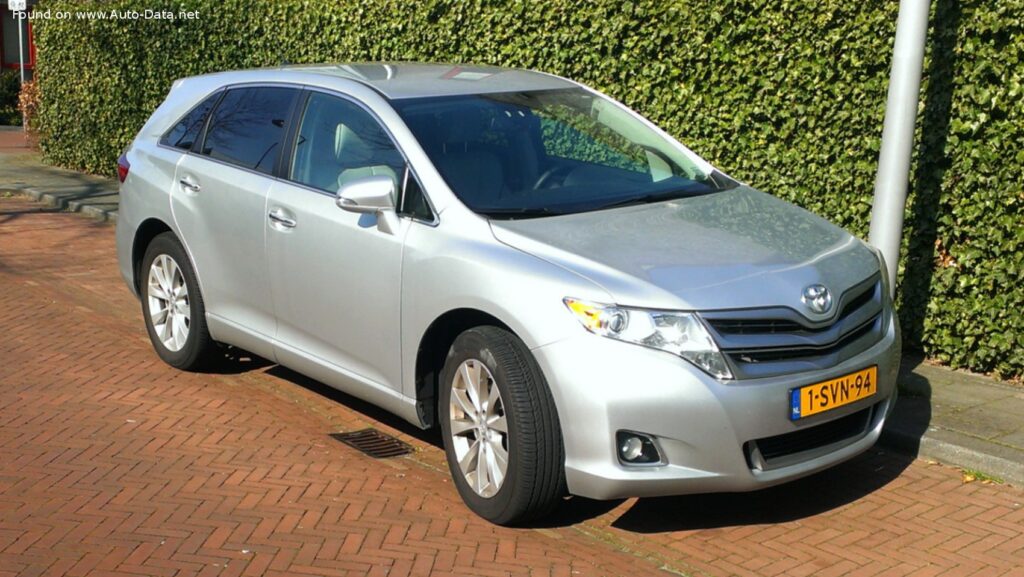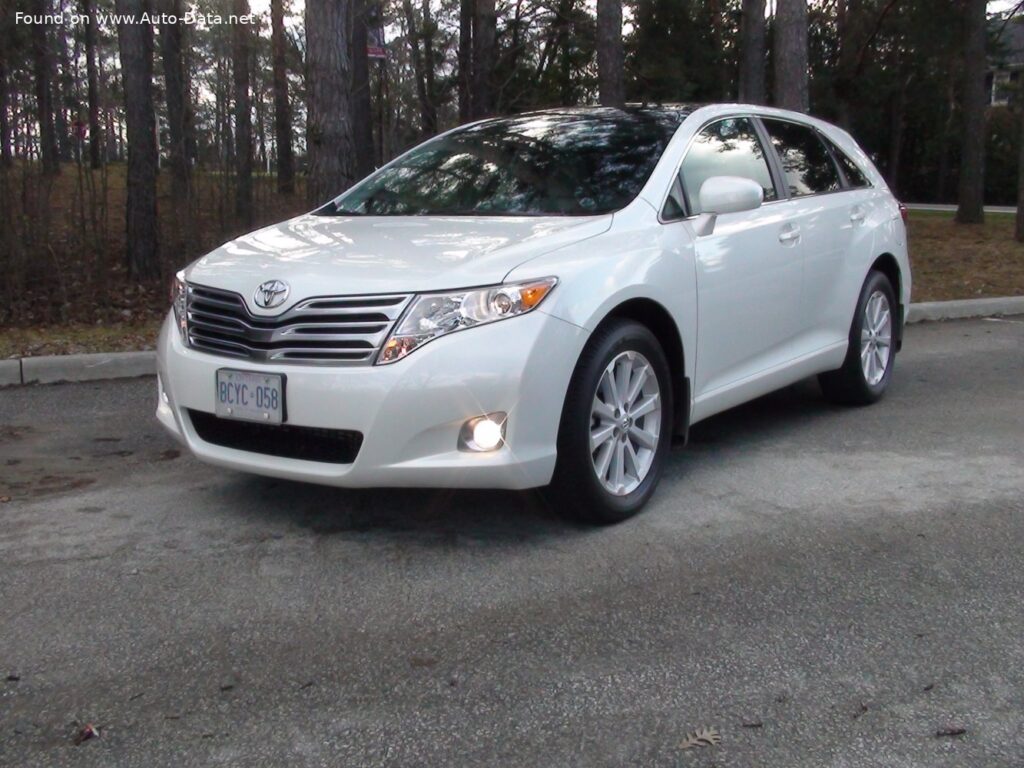
The Toyota Venza I (AV10), produced from 2008 to 2012, represented a distinctive entry into the North American automotive market, carving out a unique niche between the traditional sedan and the burgeoning SUV segment. While technically classified as a “station wagon (estate)” in some contexts due to its elongated roofline and expansive cargo area, the Venza was strategically marketed and perceived in the United States as a mid-size crossover SUV. Its design ethos aimed to combine the comfort and driving dynamics of a passenger car with the versatility and elevated seating position typically associated with an SUV. This specific variant, the 3.5 (268 Hp) Automatic, stood as a prominent offering, emphasizing strong performance and a smooth, refined driving experience tailored for American consumers seeking practicality without compromising on power or comfort. The Venza I (AV10) was designed from the ground up to cater to families and individuals desiring ample interior space, a commanding view of the road, and the reliability synonymous with the Toyota brand, establishing itself as a sensible yet capable option in its competitive class.
Powertrain and Performance: The Heart of the Toyota Venza I (AV10)
At the core of this particular Toyota Venza I (AV10) variant lies a robust 3.5-liter V6 engine, identified by the internal code 2GR-FE. This naturally aspirated, V-configured six-cylinder powerplant was renowned for its balance of power, refinement, and durability. Generating a substantial 268 horsepower and 246.35 lb.-ft. of torque at 4700 rpm, the Venza offered confident acceleration and ample passing power, making it well-suited for both urban commutes and long-distance highway cruising. The engine’s DOHC (Double Overhead Camshaft) valvetrain with four valves per cylinder, coupled with a multi-port manifold injection system, optimized combustion efficiency and contributed to its smooth power delivery across the rev range. With a power per liter rating of 77.5 Hp/l, the 2GR-FE demonstrated an efficient use of its displacement, providing responsive performance without feeling strained.
Engine Architecture and Drivetrain Dynamics
The engine’s layout is front, transverse, a common configuration for front-wheel-drive (FWD) vehicles, which this Venza variant employs. Power is seamlessly transferred to the front wheels via a sophisticated 6-speed automatic transmission. This gearbox was engineered to provide smooth and precise shifts, enhancing both driving comfort and fuel efficiency. The FWD architecture, combined with the V6 engine, ensured predictable handling and adequate traction in most driving conditions, further solidifying the Venza’s appeal as a practical daily driver. The vehicle’s curb weight of 4045.48 lbs. (1835 kg) contributes to a weight-to-power ratio of 6.8 kg/Hp (146 Hp/tonne) and a weight-to-torque ratio of 5.5 kg/Nm (182 Nm/tonne). These figures suggest a vehicle that is capable and responsive for its class, offering a comfortable and stable ride rather than outright sportiness. The use of petrol (gasoline) as fuel, along with a generous 17.7 US gallon (67 liter) fuel tank, provided a respectable cruising range, making the Venza a suitable companion for road trips. The engine’s oil capacity stands at 6.45 US quarts (6.1 liters), with a coolant capacity of 10.88 US quarts (10.3 liters), indicating robust cooling and lubrication systems designed for longevity and consistent performance.
Design and Features: Form and Function of the Toyota Venza I (AV10)
The design of the Toyota Venza I (AV10) was a deliberate departure from traditional SUV aesthetics, aiming for a sleeker, more car-like profile that bridged the gap between a sedan and a utility vehicle. Its “station wagon (estate)” body type designation in technical specifications hints at its elongated, low-slung stance compared to more upright SUVs, yet its elevated ground clearance and robust wheel arches firmly placed it within the crossover category for consumers. The Venza offered a compelling package for those who appreciated the cargo capacity and flexibility of a wagon but desired the commanding view and perceived safety of an SUV.
Exterior Dimensions and Interior Versatility
Measuring 189.02 inches (4801 mm) in length, 75 inches (1905 mm) in width, and 63.39 inches (1610 mm) in height, the Venza possessed a substantial road presence. Its wheelbase of 89.61 inches (2276 mm) contributed to a stable ride and a spacious cabin. The front track of 64.21 inches (1631 mm) and a rear track of 64.41 inches (1636 mm) further enhanced its planted feel on the road. With five doors and seating for five occupants, the Venza was designed with practicality and family utility in mind. The interior was characterized by its ergonomic layout, high-quality materials, and thoughtful storage solutions, reflecting Toyota’s commitment to user-friendly design. Rear passengers enjoyed ample legroom, and the large cargo area, easily accessible through the wide rear hatch, could be expanded by folding down the rear seats, making it highly versatile for transporting luggage, groceries, or sports equipment. The elevated seating position provided excellent visibility, a key selling point for crossover buyers.
Ride Comfort and Handling
The Venza’s suspension system was engineered to deliver a comfortable and composed ride. It featured an independent McPherson type front suspension and an independent coil spring rear suspension. This setup effectively absorbed road imperfections, contributing to a smooth and quiet cabin environment, a hallmark of Toyota vehicles of this era. While not designed for aggressive cornering, the Venza offered predictable and secure handling, making it an ideal choice for everyday driving and long journeys. The combination of its refined powertrain, comfortable interior, and well-tuned suspension made the Toyota Venza I (AV10) a highly appealing option for buyers seeking a versatile, reliable, and comfortable family vehicle that expertly blended the best attributes of multiple automotive segments.
Technical Specifications
| Brand | Toyota |
| Model | Venza |
| Generation | Venza I (AV10) |
| Type (Engine) | 3.5 (268 Hp) Automatic |
| Start of production | 2008 year |
| End of production | 2012 year |
| Powertrain Architecture | Internal Combustion engine |
| Body type | Station wagon (estate) |
| Seats | 5 |
| Doors | 5 |
| Fuel Type | Petrol (Gasoline) |
| Weight-to-power ratio | 6.8 kg/Hp, 146 Hp/tonne |
| Weight-to-torque ratio | 5.5 kg/Nm, 182 Nm/tonne |
| Power | 268 Hp |
| Power per liter | 77.5 Hp/l |
| Torque | 334 Nm @ 4700 rpm (246.35 lb.-ft. @ 4700 rpm) |
| Engine layout | Front, Transverse |
| Engine Model/Code | 2GR-FE |
| Engine displacement | 3456 cm3 (210.9 cu. in.) |
| Number of cylinders | 6 |
| Engine configuration | V-engine |
| Number of valves per cylinder | 4 |
| Fuel injection system | Multi-port manifold injection |
| Engine aspiration | Naturally aspirated engine |
| Valvetrain | DOHC |
| Engine oil capacity | 6.1 l (6.45 US qt) |
| Engine oil specification | Information not available |
| Coolant | 10.3 l (10.88 US qt) |
| Kerb Weight | 1835 kg (4045.48 lbs.) |
| Fuel tank capacity | 67 l (17.7 US gal) |
| Length | 4801 mm (189.02 in.) |
| Width | 1905 mm (75 in.) |
| Height | 1610 mm (63.39 in.) |
| Wheelbase | 2276 mm (89.61 in.) |
| Front track | 1631 mm (64.21 in.) |
| Rear (Back) track | 1636 mm (64.41 in.) |
| Drivetrain Architecture | The Internal combustion engine (ICE) drives the front wheels of the vehicle. |
| Drive wheel | Front wheel drive |
| Number of gears and type of gearbox | 6 gears, automatic transmission |
| Front suspension | Independent type McPherson |
| Rear suspension | Independent coil spring |