
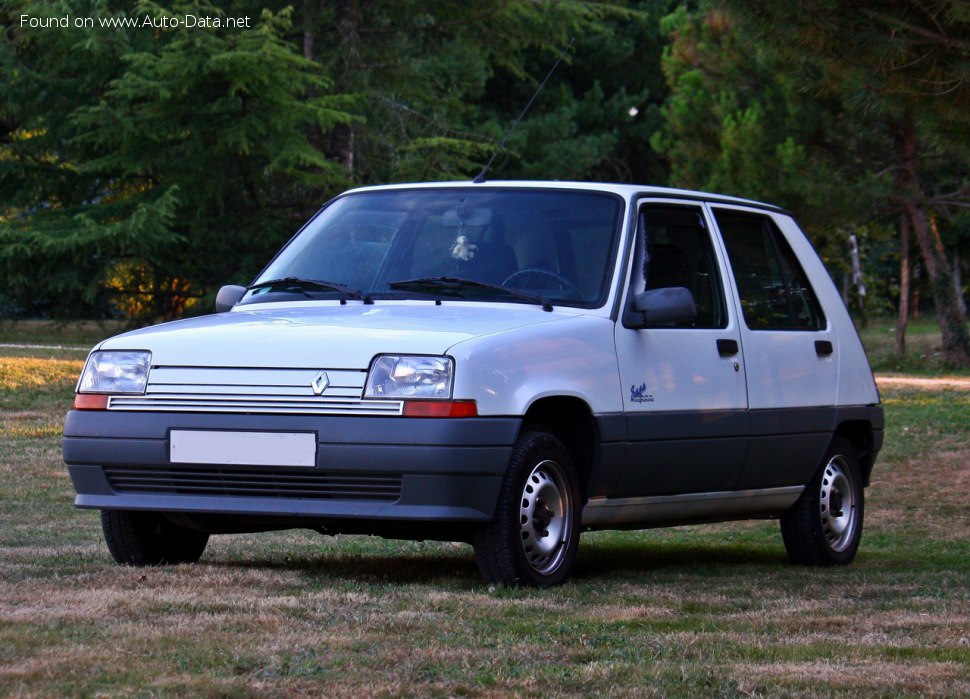
The Renault Super 5, known affectionately in its home market as the “Supercinq,” represents a significant chapter in the history of European superminis, building upon the groundbreaking success of the original Renault 5. Launched in 1984, the Super 5 was tasked with modernizing a beloved icon, and it did so with considerable aplomb, introducing a more contemporary design, improved aerodynamics, and a range of updated powertrains. The specific variant under consideration, the Renault Super 5 (B/C40) 1.7 (B/C40K,B/C40G) (87 Hp), manufactured between 1987 and 1995, exemplified a mid-range offering that blended accessible performance with the practical virtues inherent in its hatchback design. While never officially sold in the United States, this model played a crucial role in solidifying Renault’s position in the highly competitive European compact car segment, appealing to a wide demographic seeking an economical, versatile, and stylish urban vehicle.
Engine and Performance Characteristics of the Renault Super 5 (B/C40) 1.7 (B/C40K,B/C40G)
At the heart of the Renault Super 5 (B/C40) 1.7 (B/C40K,B/C40G) lay a robust and well-proven internal combustion engine, specifically the F2N engine model. This naturally aspirated, gasoline-fueled powerplant was designed to deliver a balance of performance and efficiency suitable for the European market’s diverse driving conditions, from bustling city streets to longer highway stretches. With a power output of 87 horsepower, this 1.7-liter engine was a significant step up from the smaller displacement units available in the Super 5 range, offering a more spirited driving experience without sacrificing the economy expected of a compact car. The F2N engine was renowned for its straightforward design, contributing to its reliability and ease of maintenance, traits highly valued by European consumers during its production run from 1987 to 1995.
The naturally aspirated configuration meant a smooth, linear power delivery, characteristic of engines from this era, providing predictable acceleration and a comfortable driving experience. While 87 horsepower might seem modest by today’s standards, for a lightweight hatchback in the late 1980s and early 1990s, it provided ample motivation. It allowed the Super 5 to keep pace with traffic, offering sufficient overtaking capability on secondary roads and comfortable cruising speeds on autostradas. The engine’s design emphasized durability, ensuring a long service life for owners who typically kept these vehicles for many years. Its relatively simple architecture also meant fewer complex systems to go wrong, contributing to lower running costs – a critical factor for buyers in this segment.
Operational fluids were managed with practical capacities for the era. The engine oil capacity stood at 5.2 liters (5.49 US quarts or 4.58 UK quarts), a typical volume for a four-cylinder engine of this size, ensuring adequate lubrication and cooling for the internal components. Similarly, the cooling system held 5.5 liters (5.81 US quarts or 4.84 UK quarts) of coolant, designed to maintain optimal engine temperatures across various climates experienced throughout Europe. These capacities reflected standard engineering practices of the time, balancing performance requirements with practical considerations for maintenance intervals and fluid replenishment. The fuel tank capacity of 43 liters (11.36 US gallons or 9.46 UK gallons) provided a respectable cruising range, making the Super 5 a viable option for both daily commuting and occasional longer journeys, a testament to its versatility.
Design and Features of the Renault Super 5 (B/C40)
The design of the Renault Super 5 (B/C40) was a masterful evolution of its predecessor, the iconic Renault 5. While retaining the fundamental charm and compact footprint of the original, the Super 5 embraced a more contemporary aesthetic that was both aerodynamically efficient and visually appealing for the late 1980s. Its clean lines, flush-fitting glass, and improved panel gaps contributed to a more modern and cohesive appearance, a significant departure from the somewhat boxier styling of the first-generation model. The specific body type for this variant was a 5-door hatchback, a configuration that underscored its primary mission as a highly practical and versatile vehicle for families and individuals alike.
The 5-door hatchback body offered excellent accessibility to both front and rear passengers, a crucial advantage over its 3-door sibling for those requiring frequent access to the back seats or the cargo area. With seating for five occupants, the interior was cleverly packaged to maximize space within its compact dimensions. While not luxurious, the cabin was designed with ergonomics and functionality in mind. Controls were intuitively placed, and visibility was generally good, contributing to an easy and confidence-inspiring driving experience, particularly in urban environments where maneuverability was paramount. The rear seats could typically be folded down, expanding the cargo capacity significantly and enhancing the Super 5’s utility for carrying larger items, a feature highly valued by European consumers.
In terms of features, the Renault Super 5, particularly in its 1.7-liter guise, offered a level of equipment appropriate for its market segment during its production years. While advanced infotainment systems or extensive driver-assistance technologies were still decades away, the Super 5 provided essentials such as efficient heating and ventilation systems, comfortable seating, and often options like a sunroof, power windows, or central locking on higher trims. Safety features, while rudimentary by today’s standards, included robust chassis construction for the time, effective braking systems, and three-point seatbelts for front occupants. The Super 5’s design prioritized everyday usability, low running costs, and a cheerful disposition, making it a beloved choice across Europe. Its enduring popularity ensured a long production run, testifying to its successful blend of style, practicality, and mechanical reliability.
Technical Specifications
| Brand | Renault |
| Model | Super 5 |
| Generation | Super 5 (B/C40) |
| Type (Engine) | 1.7 (B/C40K,B/C40G) (87 Hp) |
| Start of production | 1987 year |
| End of production | 1995 year |
| Powertrain Architecture | Internal Combustion engine |
| Body type | Hatchback |
| Seats | 5 |
| Doors | 5 |
| Fuel Type | Petrol (Gasoline) |
| Power | 87 Hp |
| Engine Model/Code | F2N |
| Engine aspiration | Naturally aspirated engine |
| Engine oil capacity | 5.2 l (5.49 US qt | 4.58 UK qt) |
| Coolant | 5.5 l (5.81 US qt | 4.84 UK qt) |
| Fuel tank capacity | 43 l (11.36 US gal | 9.46 UK gal) |
