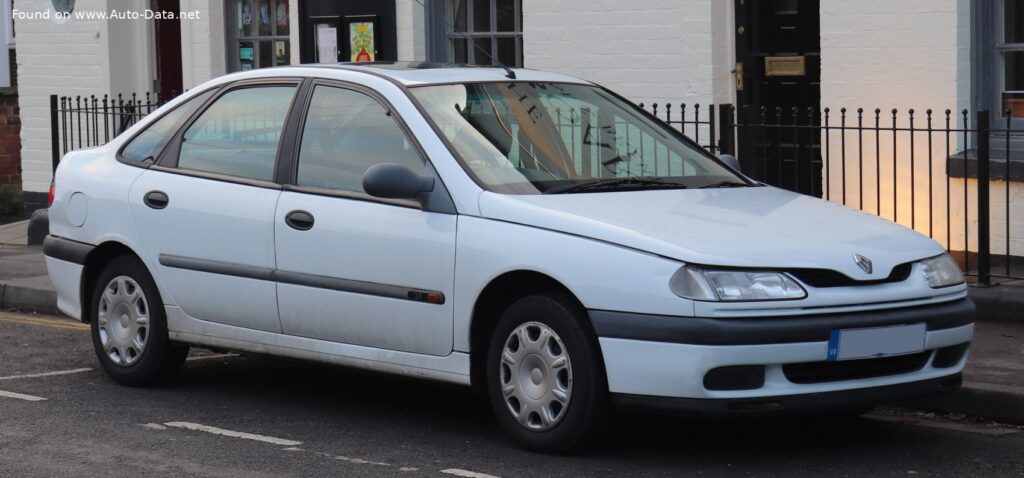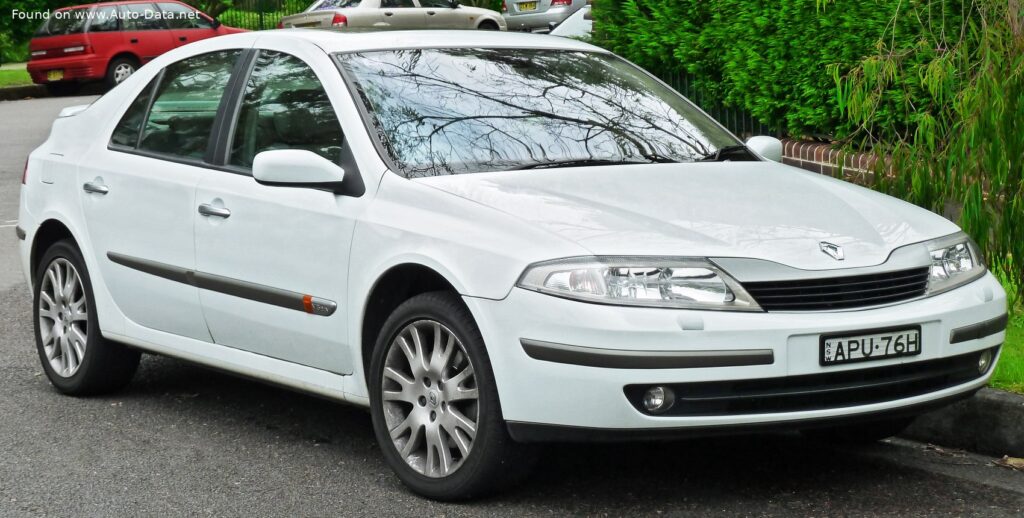
The Renault Laguna II 1.8 16V (120 Hp) represents a significant chapter in the European automotive landscape, serving as a cornerstone of the French manufacturer’s D-segment offerings from its introduction in 2001 until the conclusion of its production run in 2005. This particular variant, powered by a 1.8-liter 16-valve engine, was designed to cater to the discerning European consumer seeking a blend of comfort, practicality, and modern technology in a family-oriented vehicle. While never officially sold in the United States, the Laguna II played a crucial role in establishing Renault’s reputation for innovative design and advanced safety features across Europe and other international markets. Its focus keyword, the Renault Laguna II 1.8 16V (120 Hp), encapsulates a model that aimed to redefine expectations within its class, emphasizing a smooth driving experience and a contemporary aesthetic for the early 21st century.
Engine and Performance of the Renault Laguna II 1.8 16V (120 Hp)
At the heart of the Renault Laguna II 1.8 16V (120 Hp) lies the F4P engine, a naturally aspirated inline-four gasoline (petrol) unit designed for balanced performance and efficiency. With an engine displacement of 1783 cubic centimeters (1.8 liters or 108.81 cubic inches), this powerplant delivers a respectable 120 horsepower at 5750 revolutions per minute. Torque output stands at 165 Newton-meters, which translates to 121.7 pound-feet, peaking at a accessible 3500 rpm. This configuration ensures a broad and usable powerband, making the Laguna II a capable performer in various driving conditions, from city commuting to highway cruising.
The engine’s architecture features a Dual Overhead Camshaft (DOHC) valvetrain with four valves per cylinder, promoting efficient breathing and combustion. Fuel is delivered via a multi-port manifold injection system, a standard and reliable technology for the era, ensuring precise fuel metering. With a compression ratio of 10:1, the engine is designed for optimal performance on regular unleaded gasoline. The powertrain architecture is a classic front-engine, transverse layout, driving the front wheels through a precise 5-speed manual transmission. This setup provides a direct and engaging driving experience, characteristic of European family cars of the period.
Performance figures for the Laguna II 1.8 16V are competitive within its segment. It accelerates from 0 to 60 miles per hour in a calculated 10.2 seconds (0-100 km/h in 10.7 seconds), and boasts a maximum speed of 126.14 mph (203 km/h). These figures underscore its suitability as a comfortable and competent long-distance cruiser. Fuel economy was also a key consideration for European buyers, and the Laguna II delivers a combined fuel consumption of 7.6 liters per 100 kilometers, equating to an impressive 30.9 US miles per gallon. Urban consumption is rated at 10 l/100 km (23.5 US mpg), while extra-urban driving achieves 6.1 l/100 km (38.6 US mpg). These efficiency metrics, combined with an emission standard of Euro 3, highlight Renault’s commitment to delivering an environmentally conscious vehicle for its time. The engine oil capacity is 5.1 liters (5.39 US quarts), and the cooling system holds 6.5 liters (6.87 US quarts), indicating robust engineering for sustained operation.
Design and Features of the Renault Laguna II
The Renault Laguna II ushered in a new design language for the brand, moving towards a more fluid and contemporary aesthetic that blended practicality with elegance. The specific variant discussed here, the 1.8 16V (120 Hp), is offered in a versatile 5-door hatchback body style, a popular choice in European markets for its blend of sedan-like comfort and wagon-like utility. This configuration provides easy access to both the passenger compartment and the cargo area, making it ideal for families and individuals alike.
Dimensionally, the Laguna II is a substantial vehicle, measuring 4576 mm (180.16 inches) in length, 1772 mm (69.76 inches) in width, and 1429 mm (56.26 inches) in height. Its generous wheelbase of 2740 mm (107.87 inches) contributes significantly to both interior space and ride comfort, minimizing pitching motions over uneven surfaces. The front track of 1525 mm (60.04 inches) and rear track of 1480 mm (58.27 inches) provide a stable stance on the road, enhancing handling characteristics. With a kerb weight of 1355 kg (2987.26 lbs) and a maximum permissible weight of 1865 kg (4111.62 lbs), the Laguna II offers a robust platform capable of carrying a maximum load of 510 kg (1124.36 lbs).
Inside, the Laguna II provides seating for five occupants, designed with comfort and ergonomics in mind. The hatchback body offers a practical trunk (boot) space of 430 liters (15.19 cubic feet) as a minimum, which can be expanded by folding down the rear seats, significantly increasing its cargo-carrying versatility. This makes it highly functional for daily errands, family vacations, or transporting larger items. The fuel tank capacity of 70 liters (18.49 US gallons) ensures a good driving range, reducing the frequency of fuel stops on longer journeys.
In terms of driving dynamics and safety, the Laguna II 1.8 16V (120 Hp) incorporates a range of features for its era. The front suspension utilizes a tried-and-true spring strut system, while the rear features coil springs, a setup that prioritizes ride comfort and stable handling. Braking performance is handled by ventilated discs at the front and solid discs at the rear, providing confident stopping power. An Anti-lock Braking System (ABS) was a standard assisting system, enhancing control during emergency braking maneuvers, a crucial safety feature for early 2000s vehicles. Steering is managed by a hydraulic rack and pinion system, offering direct feedback and ease of maneuverability, further contributing to the vehicle’s comfortable and predictable driving experience. The car is fitted with 205/55 R16 tires on 16-inch wheel rims, a common size that balances ride comfort with adequate grip.
Technical Specifications: Renault Laguna II 1.8 16V (120 Hp)
| Brand | Renault |
| Model | Laguna |
| Generation | Laguna II |
| Type (Engine) | 1.8 16V (120 Hp) |
| Start of production | 2001 year |
| End of production | 2005 year |
| Powertrain Architecture | Internal Combustion engine |
| Body type | Hatchback |
| Seats | 5 |
| Doors | 5 |
| Fuel consumption (economy) – urban | 10 l/100 km (23.5 US mpg, 28.2 UK mpg) |
| Fuel consumption (economy) – extra urban | 6.1 l/100 km (38.6 US mpg, 46.3 UK mpg) |
| Fuel consumption (economy) – combined | 7.6 l/100 km (30.9 US mpg, 37.2 UK mpg) |
| Fuel Type | Petrol (Gasoline) |
| Acceleration 0 – 100 km/h | 10.7 sec |
| Acceleration 0 – 62 mph | 10.7 sec |
| Acceleration 0 – 60 mph (Calculated) | 10.2 sec |
| Maximum speed | 203 km/h (126.14 mph) |
| Emission standard | Euro 3 |
| Weight-to-power ratio | 11.3 kg/Hp (88.6 Hp/tonne) |
| Weight-to-torque ratio | 8.2 kg/Nm (121.8 Nm/tonne) |
| Power | 120 Hp @ 5750 rpm |
| Power per litre | 67.3 Hp/l |
| Torque | 165 Nm @ 3500 rpm (121.7 lb.-ft. @ 3500 rpm) |
| Engine layout | Front, Transverse |
| Engine Model/Code | F4P |
| Engine displacement | 1783 cm3 (108.81 cu. in.) |
| Number of cylinders | 4 |
| Engine configuration | Inline |
| Cylinder Bore | 82.7 mm (3.26 in.) |
| Piston Stroke | 83 mm (3.27 in.) |
| Compression ratio | 10:1 |
| Number of valves per cylinder | 4 |
| Fuel injection system | Multi-port manifold injection |
| Engine aspiration | Naturally aspirated engine |
| Valvetrain | DOHC |
| Engine oil capacity | 5.1 l (5.39 US qt, 4.49 UK qt) |
| Coolant | 6.5 l (6.87 US qt, 5.72 UK qt) |
| Kerb Weight | 1355 kg (2987.26 lbs) |
| Max. weight | 1865 kg (4111.62 lbs) |
| Max load | 510 kg (1124.36 lbs) |
| Trunk (boot) space – minimum | 430 l (15.19 cu. ft.) |
| Fuel tank capacity | 70 l (18.49 US gal, 15.4 UK gal) |
| Length | 4576 mm (180.16 in.) |
| Width | 1772 mm (69.76 in.) |
| Height | 1429 mm (56.26 in.) |
| Wheelbase | 2740 mm (107.87 in.) |
| Front track | 1525 mm (60.04 in.) |
| Rear (Back) track | 1480 mm (58.27 in.) |
| Drivetrain Architecture | The Internal combustion engine (ICE) drives the front wheels of the vehicle. |
| Drive wheel | Front wheel drive |
| Number of gears and type of gearbox | 5 gears, manual transmission |
| Front suspension | Spring Strut |
| Rear suspension | Coil spring |
| Front brakes | Ventilated discs |
| Rear brakes | Disc |
| Assisting systems | ABS (Anti-lock braking system) |
| Steering type | Steering rack and pinion |
| Power steering | Hydraulic Steering |
| Tires size | 205/55 R16 |
| Wheel rims size | 16 |