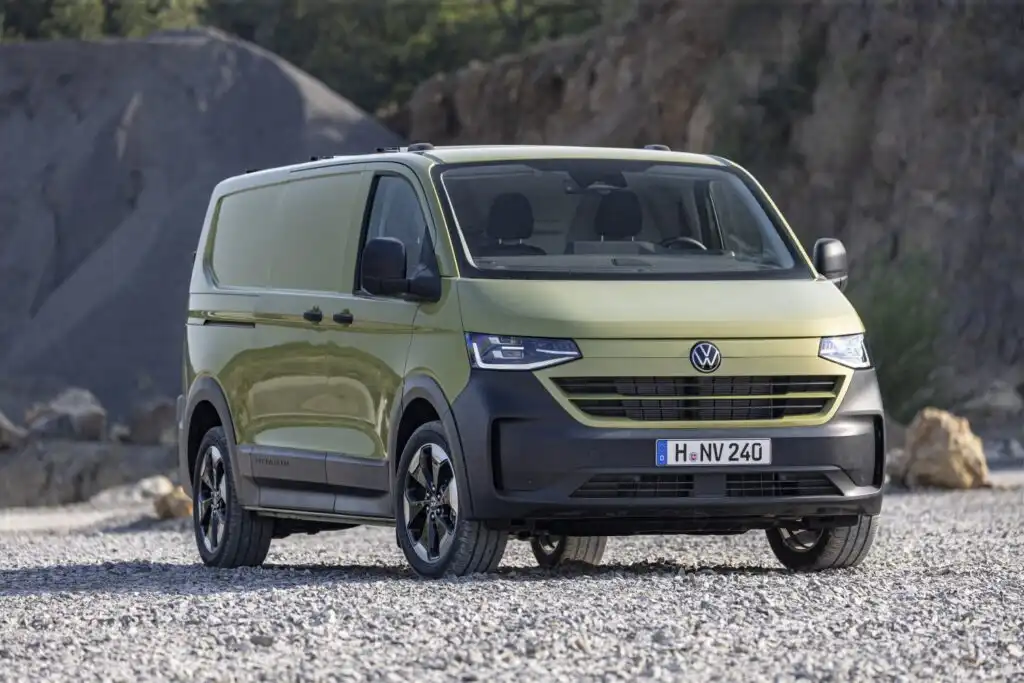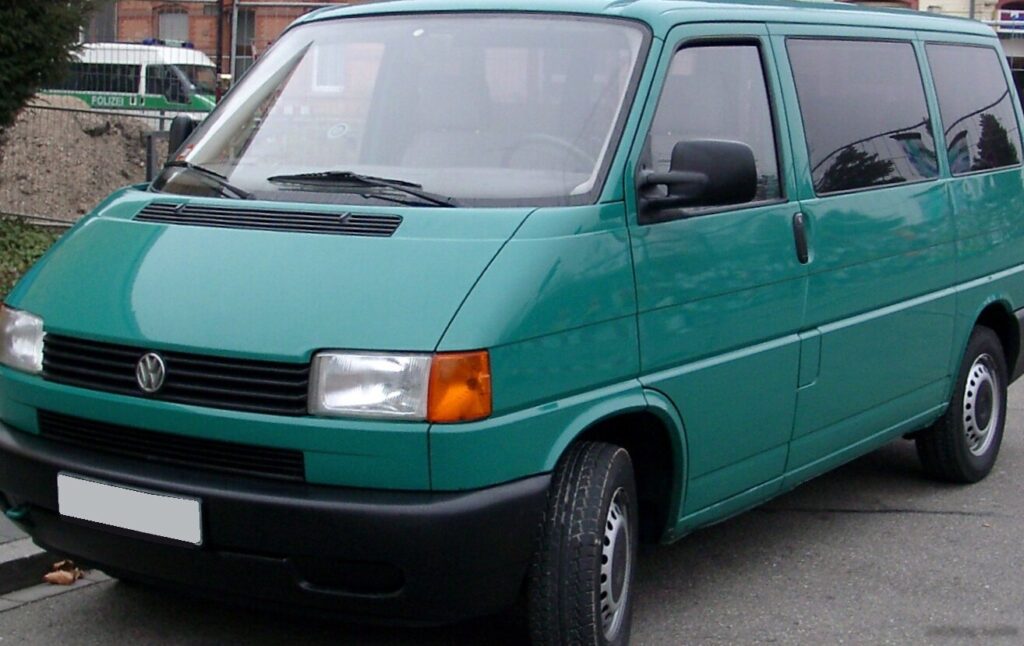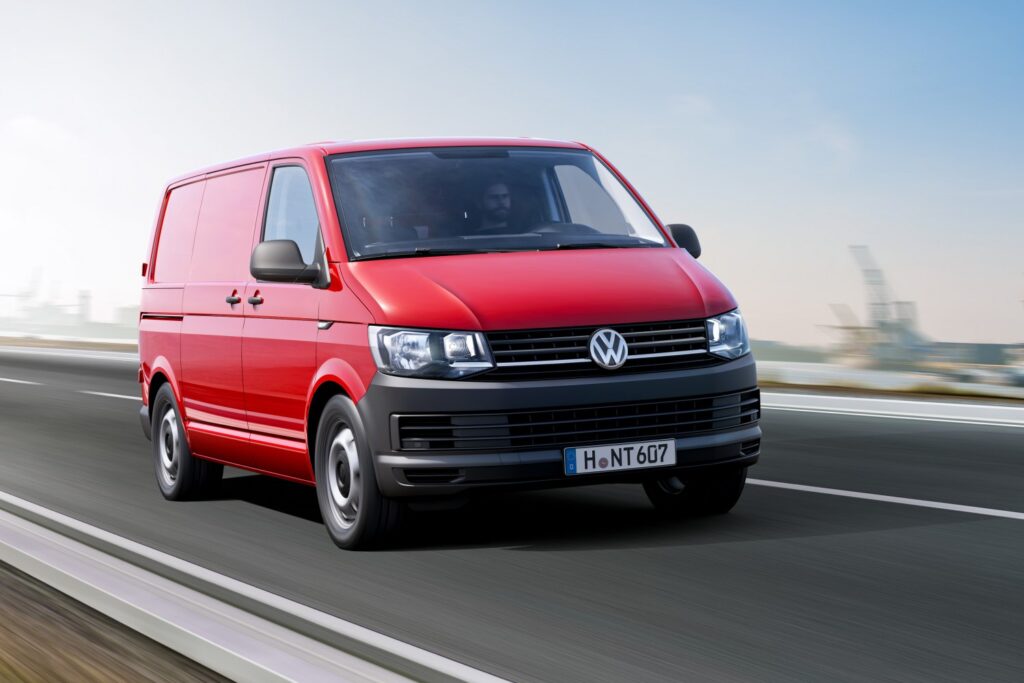
The Volkswagen Transporter, a name synonymous with versatility and commercial utility across Europe and beyond, entered its sixth generation, the T6, building upon a formidable legacy dating back to the iconic Type 2. The specific variant under examination, the Volkswagen Transporter (T6) Panel Van 2.0 TDI (84 Hp) L2H3, represents a highly functional and robust segment of this lineage, designed as a dedicated workhorse for businesses requiring substantial cargo capacity and reliability. Produced between 2016 and 2019, this iteration of the T6 Panel Van continued to solidify its position as a class-leading light commercial vehicle, particularly in markets where compact yet capacious vans are indispensable for urban logistics and trade. While not a common sight on American roads in this configuration, its influence on global commercial vehicle design and engineering is undeniable, embodying Volkswagen’s commitment to pragmatic and durable automotive solutions. The L2H3 designation indicates a long wheelbase and a high roof, signifying its enhanced capability for accommodating larger volumes and taller items, making it an ideal choice for a diverse array of professional applications.
The Volkswagen Transporter (T6) Panel Van: A European Workhorse
The Volkswagen Transporter (T6) Panel Van represents the continuation of a storied heritage, evolving from its predecessors to meet contemporary demands for efficiency, practicality, and driver comfort within the commercial vehicle sector. In its primary markets, particularly across Europe, the T6 is a ubiquitous presence, serving as the backbone for countless small businesses, delivery services, and tradespeople. Its design philosophy prioritizes functionality and durability, creating a vehicle that can withstand the rigors of daily commercial use while offering a driving experience that is both manageable and surprisingly refined for its class. The T6 generation introduced a host of subtle yet significant improvements over the outgoing T5, focusing on powertrain enhancements, increased safety features, and a more car-like interior, elevating the user experience without compromising its core utility. The Panel Van configuration, as explored here, is specifically engineered for cargo transport, foregoing rear passenger seating in favor of a vast, unobstructed load area, making it an indispensable tool for operations requiring substantial hauling capacity.
Engine and Performance
At the heart of the Volkswagen Transporter (T6) Panel Van 2.0 TDI (84 Hp) L2H3 lies Volkswagen’s well-regarded 2.0-liter TDI (Turbocharged Direct Injection) diesel engine, specifically coded as EA288 / CXGA. This inline four-cylinder powerplant, mounted transversely at the front, is engineered for optimal balance between fuel economy, torque delivery, and longevity – critical attributes for any commercial vehicle. With an engine displacement of 1,968 cubic centimeters (approximately 120.09 cubic inches), this unit delivers a modest but highly effective 84 horsepower, available across a practical rev range from 2,750 to 3,750 rpm. More crucial for its intended purpose is the robust torque output of 220 Newton-meters (162.26 lb-ft), which peaks early between 1,250 and 2,500 rpm. This low-end torque is paramount for a commercial van, enabling confident acceleration from a standstill, effortless hauling of heavy loads, and minimizing the need for frequent gear changes, particularly in urban environments.
The engine’s architecture features a DOHC (Double Overhead Camshaft) valvetrain with four valves per cylinder, ensuring efficient gas flow and combustion. Fuel delivery is managed by a sophisticated Diesel Commonrail injection system, which precisely controls fuel atomization for improved efficiency and reduced emissions. Augmenting its performance is a turbocharger coupled with an intercooler, which forces cool, dense air into the cylinders, significantly boosting power and torque output while maintaining fuel economy. With a compression ratio of 15.5:1, the engine is optimized for diesel combustion characteristics. To comply with stringent European environmental regulations, this T6 variant is rated as Euro 6, incorporating both a Start & Stop System to reduce fuel consumption and emissions during idle periods, and a Particulate Filter (DPF) to capture harmful soot particles. The engine oil capacity is 7.4 liters (7.82 US quarts), indicating a substantial lubrication system designed for durability.
Powertrain Architecture and Efficiency
The powertrain architecture of the Volkswagen Transporter (T6) Panel Van is based on a front-wheel-drive configuration, where the internal combustion engine drives the front wheels. This layout is common in light commercial vehicles, offering advantages in terms of packaging efficiency, interior space, and traction in lighter load conditions. Power is transmitted through a 5-speed manual transmission, a choice that emphasizes driver engagement and allows for precise control over the engine’s power band, particularly when navigating varied terrain or heavy traffic. While a 5-speed unit might seem less advanced than some modern multi-speed automatics, it is well-suited to the demands of a commercial vehicle, offering simplicity, robustness, and cost-effectiveness.
Fuel efficiency is a critical factor for commercial operators, and the 2.0 TDI (84 Hp) L2H3 delivers competitive figures. According to NEDC (New European Driving Cycle) standards, urban fuel consumption ranges from 7.3-7.9 liters per 100 kilometers (32.2 – 29.8 US mpg), while extra-urban driving sees efficiency improve to 5.2-5.8 liters per 100 kilometers (45.2 – 40.6 US mpg). The combined cycle averages 6-6.6 liters per 100 kilometers (39.2 – 35.6 US mpg), making it an economical choice for businesses. CO2 emissions are rated between 156-173 g/km, reflecting its Euro 6 compliance. Performance figures, while not the primary focus for a panel van, include an acceleration from 0 to 60 mph in a calculated 19.3 seconds and a maximum speed of 84.51 mph (136 km/h). These figures underscore its role as a practical, rather than performance-oriented, vehicle, prioritizing load-carrying capability and operational economy.
Design, Features, and Practicality
The design of the Volkswagen Transporter (T6) Panel Van 2.0 TDI (84 Hp) L2H3 is inherently functional, prioritizing utility and robust construction over superfluous styling. As a panel van, its body type is designed for maximum cargo space, featuring a closed rear compartment and typically 4-5 doors, including a rear access door (or barn doors) and often a sliding side door for convenient loading and unloading. The cabin is configured for 2-3 seats, catering to a driver and one or two passengers, essential for many commercial operations. The L2H3 designation is particularly significant: ‘L2’ denotes the long wheelbase variant, which measures 3,400 mm (133.86 inches), providing enhanced stability and a larger load floor. ‘H3’ refers to the high roof, resulting in an overall height of 2,477 mm (97.52 inches), which dramatically increases the internal cargo volume.
Dimensions and Cargo Capacity
The exterior dimensions of the Transporter T6 L2H3 are substantial, reflecting its capacity. It measures 5,304 mm (208.82 inches) in length, 1,904 mm (74.96 inches) in width (2,297 mm or 90.43 inches including mirrors), and the aforementioned 2,477 mm (97.52 inches) in height. These dimensions contribute to an impressive maximum trunk (boot) space of 9,300 liters (328.43 cubic feet), making it highly capable of accommodating bulky items or a significant volume of goods. The kerb weight ranges from 1,779-2,096 kg (3,922.02 – 4,620.89 lbs), while the maximum permissible weight is between 2,800-3,000 kg (6,172.94 – 6,613.87 lbs). This provides a substantial maximum payload capacity of 904-1,021 kg (1,992.98 – 2,250.92 lbs), allowing for heavy loads. The vehicle also boasts significant towing capabilities, with a permitted trailer load of 2,200 kg (4,850.17 lbs) with brakes and 750 kg (1,653.47 lbs) without brakes, further extending its utility for businesses that need to transport trailers or equipment. A 70-liter (18.49 US gallon) fuel tank ensures a good operating range, while a 13-liter (3.43 US gallon) AdBlue tank supports its advanced emission control system.
Chassis, Braking, and Steering Systems
Underneath its practical exterior, the Volkswagen Transporter (T6) Panel Van is engineered for reliable and stable operation. The front suspension features an independent McPherson type with coil springs and an anti-roll bar, providing a balance of comfort and load-carrying capability. The rear suspension is also independent, utilizing coil springs, wishbones, and a transverse stabilizer, which is crucial for maintaining vehicle stability and handling characteristics, especially when fully loaded. Braking performance is handled by ventilated discs on both the front (308×29.5 mm) and rear (294×22 mm) axles, complemented by an Anti-lock Braking System (ABS) to ensure controlled stopping power in various conditions. The steering system is a hydraulic rack and pinion setup, offering direct feedback and robust operation, essential for a vehicle that will spend much of its life navigating tight urban spaces and maneuvering with heavy loads. The minimum turning circle of 13.2 meters (43.31 feet) is commendable for a vehicle of its size, aiding maneuverability. The vehicle is fitted with 205/65 R16 or 215/65 R16 tires on 6.5J x 16 wheel rims, providing a good balance of durability, grip, and ride comfort for commercial applications. With a ground clearance of 202 mm (7.95 inches), it can handle diverse road conditions, while approach, departure, and ramp-over angles of 21.2°, 16.2°, and 12.2° respectively, indicate its capability for light off-road or uneven terrain access typical of construction sites or delivery routes.
Technical Specifications
| Brand | Volkswagen |
| Model | Transporter |
| Generation | Transporter (T6) Panel Van |
| Type (Engine) | 2.0 TDI (84 Hp) L2H3 |
| Start of production | 2016 year |
| End of production | 2019 year |
| Powertrain Architecture | Internal Combustion engine |
| Body type | Van |
| Seats | 2-3 |
| Doors | 4-5 |
| Fuel consumption (economy) – urban (NEDC) | 7.3-7.9 l/100 km (32.2 – 29.8 US mpg) |
| Fuel consumption (economy) – extra urban (NEDC) | 5.2-5.8 l/100 km (45.2 – 40.6 US mpg) |
| Fuel consumption (economy) – combined (NEDC) | 6-6.6 l/100 km (39.2 – 35.6 US mpg) |
| CO2 emissions (NEDC) | 156-173 g/km |
| Fuel Type | Diesel |
| Acceleration 0 – 60 mph (Calculated) | 19.3 sec |
| Maximum speed | 136 km/h (84.51 mph) |
| Emission standard | Euro 6 |
| Weight-to-power ratio | 21.2 kg/Hp (47.2 Hp/tonne) |
| Weight-to-torque ratio | 8.1 kg/Nm (123.7 Nm/tonne) |
| Power | 84 Hp @ 2750-3750 rpm |
| Power per litre | 42.7 Hp/l |
| Torque | 220 Nm @ 1250-2500 rpm (162.26 lb.-ft.) |
| Engine layout | Front, Transverse |
| Engine Model/Code | EA288 / CXGA |
| Engine displacement | 1968 cm3 (120.09 cu. in.) |
| Number of cylinders | 4 |
| Engine configuration | Inline |
| Cylinder Bore | 81 mm (3.19 in.) |
| Piston Stroke | 95.5 mm (3.76 in.) |
| Compression ratio | 15.5:1 |
| Number of valves per cylinder | 4 |
| Fuel injection system | Diesel Commonrail |
| Engine aspiration | Turbocharger, Intercooler |
| Valvetrain | DOHC |
| Engine oil capacity | 7.4 l (7.82 US qt) |
| Engine systems | Start & Stop System, Particulate filter |
| Kerb Weight | 1779-2096 kg (3922.02 – 4620.89 lbs.) |
| Max. weight | 2800-3000 kg (6172.94 – 6613.87 lbs.) |
| Max load | 904-1021 kg (1992.98 – 2250.92 lbs.) |
| Trunk (boot) space – maximum | 9300 l (328.43 cu. ft.) |
| Fuel tank capacity | 70 l (18.49 US gal) |
| AdBlue tank | 13 l (3.43 US gal) |
| Permitted trailer load with brakes (12%) | 2200 kg (4850.17 lbs.) |
| Permitted trailer load without brakes | 750 kg (1653.47 lbs.) |
| Permitted towbar download | 100 kg (220.46 lbs.) |
| Length | 5304 mm (208.82 in.) |
| Width | 1904 mm (74.96 in.) |
| Width including mirrors | 2297 mm (90.43 in.) |
| Height | 2477 mm (97.52 in.) |
| Wheelbase | 3400 mm (133.86 in.) |
| Front overhang | 908 mm (35.75 in.) |
| Rear overhang | 993 mm (39.09 in.) |
| Ride height (ground clearance) | 202 mm (7.95 in.) |
| Minimum turning circle (turning diameter) | 13.2 m (43.31 ft.) |
| Approach angle | 21.2° |
| Departure angle | 16.2° |
| Ramp-over (brakeover) angle | 12.2° |
| Drivetrain Architecture | Front wheel drive |
| Drive wheel | Front wheel drive |
| Number of gears and type of gearbox | 5 gears, manual transmission |
| Front suspension | Independent, type McPherson with coil spring and anti-roll bar |
| Rear suspension | Independent coil spring, Wishbone, Transverse stabilizer |
| Front brakes | Ventilated discs, 308×29.5 mm |
| Rear brakes | Ventilated discs, 294×22 mm |
| Assisting systems | ABS (Anti-lock braking system) |
| Steering type | Steering rack and pinion |
| Power steering | Hydraulic Steering |
| Tires size | 205/65 R16; 215/65 R16 |
| Wheel rims size | 6.5J x 16 |