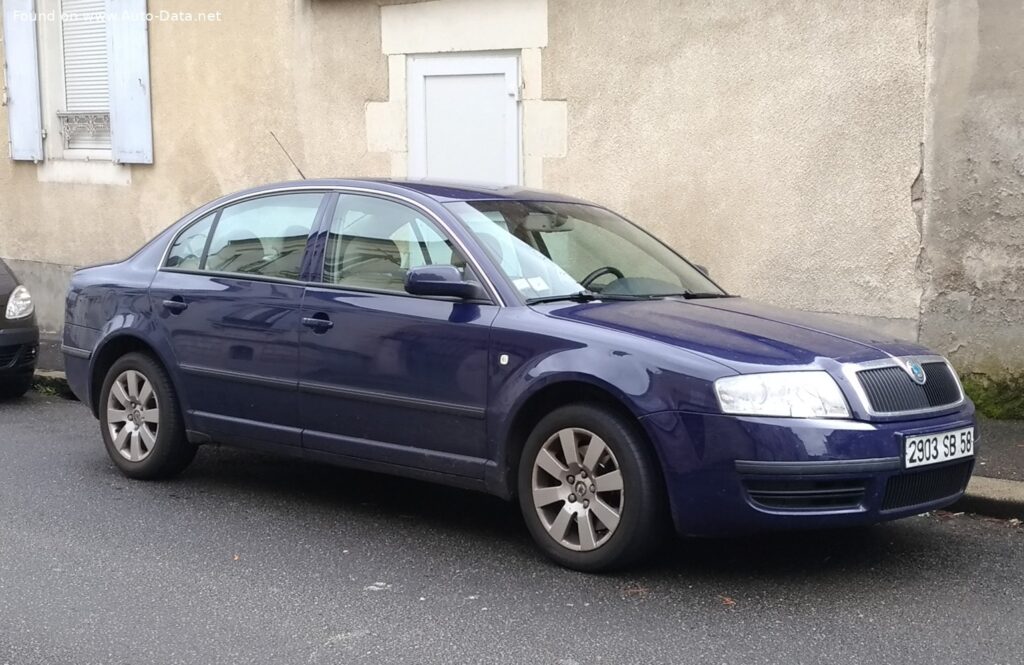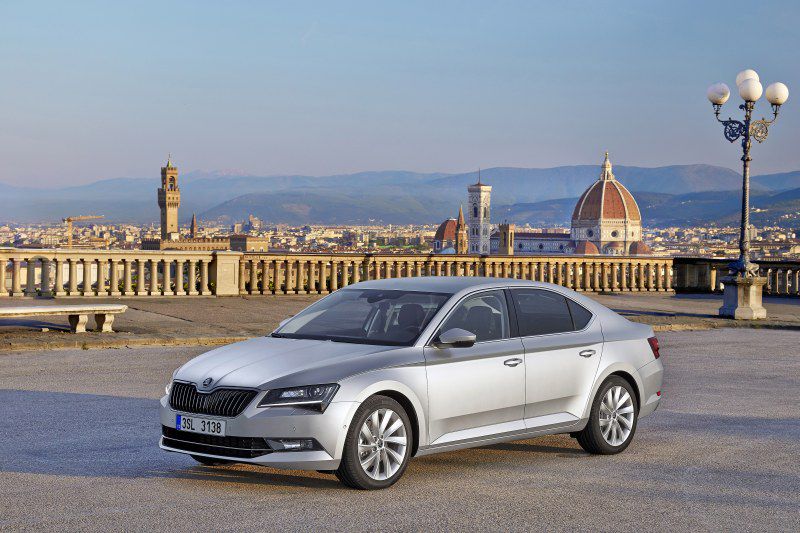
The Skoda Superb III 1.5 TSI (150 Hp) DSG ACT, produced between November 2018 and 2019, represents a compelling offering in the European D-segment, or what would be considered a mid-size to large family car in the United States. As the third generation of Skoda’s flagship model, the Superb III built upon its predecessors’ reputation for exceptional space, practicality, and value within the Volkswagen Group’s extensive portfolio. While not officially sold in the North American market, the Superb has carved out a significant niche in Europe and other international markets, lauded for its blend of executive-class comfort and pragmatic design. This particular variant, equipped with the efficient 1.5-liter TSI engine featuring Active Cylinder Technology (ACT) and a sophisticated Direct Shift Gearbox (DSG), highlights Skoda’s commitment to modern powertrain solutions that balance performance with environmental responsibility and fuel economy, a critical focus for contemporary automotive engineering.
Engineering and Performance of the Skoda Superb III 1.5 TSI (150 Hp) DSG ACT
At the heart of this specific Skoda Superb III variant lies the EA211 evo / DADA 1.5-liter (1498 cm3 or 91.41 cu. in.) TSI engine, a modern inline four-cylinder gasoline (petrol) unit designed for efficiency and refined performance. This turbocharged and intercooled powerplant, featuring direct injection and a DOHC valvetrain, delivers a robust 150 horsepower at a broad range of 5000-6000 rpm. Its maximum torque of 250 Nm (184.39 lb.-ft.) is available from a low 1500 rpm, extending up to 3500 rpm, ensuring strong, accessible pulling power across typical driving scenarios. This torque characteristic contributes significantly to the vehicle’s lively acceleration, propelling the Superb from 0 to 60 mph in a swift 8.5 seconds, and reaching a top speed of 134.22 mph (216 km/h).
A key technological highlight of this engine is the Active Cylinder Technology (ACT). This innovative system can seamlessly deactivate two of the four cylinders under light load conditions, such as cruising at a steady speed, to reduce fuel consumption and emissions. Coupled with a Start & Stop system and a particulate filter, the ACT system underscores the Superb’s focus on ecological efficiency. Power is transmitted to the front wheels via a 7-speed automatic DSG transmission, renowned for its quick, smooth shifts and ability to optimize engine output for both performance and fuel economy. The combination of these technologies enables the Superb III 1.5 TSI to achieve impressive fuel economy figures, with a combined WLTP rating of 34.6 – 30.5 US mpg (6.8-7.7 l/100 km) and CO2 emissions between 154-175 g/km, meeting the stringent Euro 6d-TEMP emission standard. Even under the older NEDC equivalent test cycle, it boasted a combined 43.6 US mpg (5.4 l/100 km) and 122-123 g/km CO2, demonstrating its inherent efficiency.
Design and Features of the Skoda Superb III
The Skoda Superb III, particularly in its liftback configuration, is a masterclass in practical and elegant design. Measuring 191.38 inches (4861 mm) in length, 73.39 inches (1864 mm) in width (79.96 inches or 2031 mm including mirrors), and between 57.2 to 57.8 inches (1453-1468 mm) in height, it commands a substantial road presence. Its generous 111.85-inch (2841 mm) wheelbase translates directly into an exceptionally spacious cabin, particularly for rear-seat passengers, a hallmark of the Superb line. The liftback body style, with its wide-opening tailgate, provides unparalleled access to the cargo area, blending the sleek profile of a sedan with the versatility of a hatchback or wagon.
Cargo capacity is a significant strength of the Superb III, offering a cavernous 22.07 cu. ft. (625 liters) of trunk space with the rear seats in place, expanding to an impressive 62.15 cu. ft. (1760 liters) when the rear seats are folded down. This makes it one of the most practical vehicles in its segment, capable of accommodating substantial luggage or bulky items. The exterior design is characterized by crisp lines, a distinctive grille, and sharp headlights, presenting a sophisticated and understated aesthetic that has become synonymous with the Skoda brand. The drag coefficient (Cd) of 0.303 indicates a well-engineered aerodynamic profile, contributing to both fuel efficiency and reduced wind noise at higher speeds.
Underneath its elegant exterior, the Superb III is built on the Volkswagen Group’s MQB platform, allowing for advanced chassis tuning. It features an independent McPherson strut front suspension with a coil spring and anti-roll bar, paired with an independent multi-link rear suspension with a stabilizer. This setup ensures a comfortable ride quality while maintaining composed handling dynamics. Braking is handled by ventilated discs at the front and solid discs at the rear, complemented by an Anti-lock Braking System (ABS) for enhanced safety. The electric power steering system provides precise control and ease of maneuverability, with a minimum turning circle of 38.39 feet (11.7 meters). The vehicle’s kerb weight stands at 3068.83 lbs (1392 kg), with a maximum permissible weight of 4497.43 lbs (2040 kg), highlighting its robust construction and load-carrying capability.
Technical Specifications: Skoda Superb III 1.5 TSI (150 Hp) DSG ACT
| Brand | Skoda |
| Model | Superb |
| Generation | Superb III |
| Type (Engine) | 1.5 TSI (150 Hp) DSG ACT |
| Start of production | November, 2018 year |
| End of production | 2019 year |
| Powertrain Architecture | Internal Combustion engine |
| Body type | Liftback |
| Seats | 5 |
| Doors | 5 |
| Fuel consumption at Low speed (WLTP) | 8.6-9.5 l/100 km (27.4 – 24.8 US mpg) |
| Fuel consumption at Medium speed (WLTP) | 6.7-7.6 l/100 km (35.1 – 30.9 US mpg) |
| Fuel consumption at High speed (WLTP) | 5.9-6.8 l/100 km (39.9 – 34.6 US mpg) |
| Fuel consumption at Very High speed (WLTP) | 7-8 l/100 km (33.6 – 29.4 US mpg) |
| Combined fuel consumption (WLTP) | 6.8-7.7 l/100 km (34.6 – 30.5 US mpg) |
| CO2 emissions (WLTP) | 154-175 g/km |
| Fuel consumption (economy) – urban (NEDC, WLTP equivalent) | 6.7 l/100 km (35.1 US mpg) |
| Fuel consumption (economy) – extra urban (NEDC, WLTP equivalent) | 4.6-4.7 l/100 km (51.1 – 50 US mpg) |
| Fuel consumption (economy) – combined (NEDC, WLTP equivalent) | 5.4 l/100 km (43.6 US mpg) |
| CO2 emissions (NEDC, WLTP equivalent) | 122-123 g/km |
| Fuel Type | Petrol (Gasoline) |
| Acceleration 0 – 60 mph | 8.5 sec |
| Acceleration 0 – 100 km/h | 8.9 sec |
| Maximum speed | 216 km/h (134.22 mph) |
| Emission standard | Euro 6d – TEMP |
| Weight-to-power ratio | 9.3 kg/Hp (107.8 Hp/tonne) |
| Weight-to-torque ratio | 5.6 kg/Nm (179.6 Nm/tonne) |
| Power | 150 Hp @ 5000-6000 rpm |
| Power per liter | 100.1 Hp/l |
| Torque | 250 Nm @ 1500-3500 rpm (184.39 lb.-ft. @ 1500-3500 rpm) |
| Engine layout | Front, Transverse |
| Engine Model/Code | EA211 evo / DADA |
| Engine displacement | 1498 cm3 (91.41 cu. in.) |
| Number of cylinders | 4 |
| Engine configuration | Inline |
| Cylinder Bore | 74.5 mm (2.93 in.) |
| Piston Stroke | 85.9 mm (3.38 in.) |
| Compression ratio | 10.5:1 |
| Number of valves per cylinder | 4 |
| Fuel injection system | Direct injection |
| Engine aspiration | Turbocharger, Intercooler |
| Valvetrain | DOHC |
| Engine oil capacity | 4.3 l (4.54 US qt | 3.78 UK qt) |
| Coolant | 10 l (10.57 US qt | 8.8 UK qt) |
| Engine systems | Start & Stop System, Cylinder deactivation system, Particulate filter |
| Kerb Weight | 1392 kg (3068.83 lbs) |
| Max. weight | 2040 kg (4497.43 lbs) |
| Max load | 648 kg (1428.6 lbs) |
| Trunk (boot) space – minimum | 625 l (22.07 cu. ft.) |
| Trunk (boot) space – maximum | 1760 l (62.15 cu. ft.) |
| Fuel tank capacity | 66 l (17.44 US gal | 14.52 UK gal) |
| Max. roof load | 100 kg (220.46 lbs) |
| Permitted trailer load with brakes (8%) | 1900 kg (4188.78 lbs) |
| Permitted trailer load with brakes (12%) | 1600 kg (3527.4 lbs) |
| Permitted trailer load without brakes | 730 kg (1609.37 lbs) |
| Permitted towbar download | 90 kg (198.42 lbs) |
| Length | 4861 mm (191.38 in.) |
| Width | 1864 mm (73.39 in.) |
| Width including mirrors | 2031 mm (79.96 in.) |
| Height | 1453-1468 mm (57.2 – 57.8 in.) |
| Wheelbase | 2841 mm (111.85 in.) |
| Front track | 1584 mm (62.36 in.) |
| Rear (Back) track | 1572 mm (61.89 in.) |
| Front overhang | 897 mm (35.31 in.) |
| Rear overhang | 1123 mm (44.21 in.) |
| Ride height (ground clearance) | 134-149 mm (5.28 – 5.87 in.) |
| Drag coefficient (Cd) | 0.303 |
| Minimum turning circle (turning diameter) | 11.7 m (38.39 ft.) |
| Approach angle | 14° |
| Departure angle | 12.2° |
| Drivetrain Architecture | The Internal combustion engine (ICE) drives the front wheels of the vehicle. |
| Drive wheel | Front wheel drive |
| Number of gears and type of gearbox | 7 gears, automatic transmission DSG |
| Front suspension | Independent, type McPherson with coil spring and anti-roll bar |
| Rear suspension | Independent multi-link spring suspension with stabilizer |
| Front brakes | Ventilated discs |
| Rear brakes | Disc |
| Assisting systems | ABS (Anti-lock braking system) |
| Steering type | Steering rack and pinion |
| Power steering | Electric Steering |
| Tires size | 215/60 R16; 215/55 R17; 235/45 R18 |
| Wheel rims size | 6.5J x 16; 7J x 17; 8J x 18 |