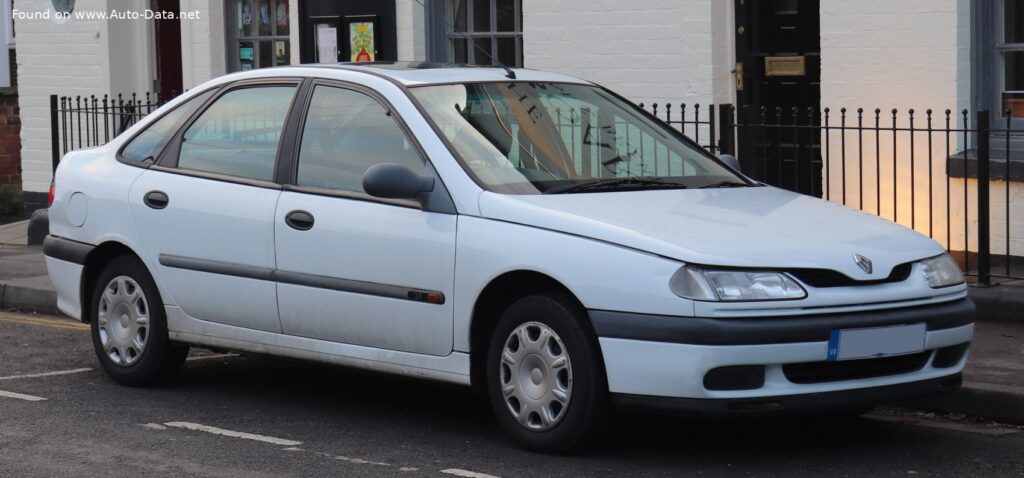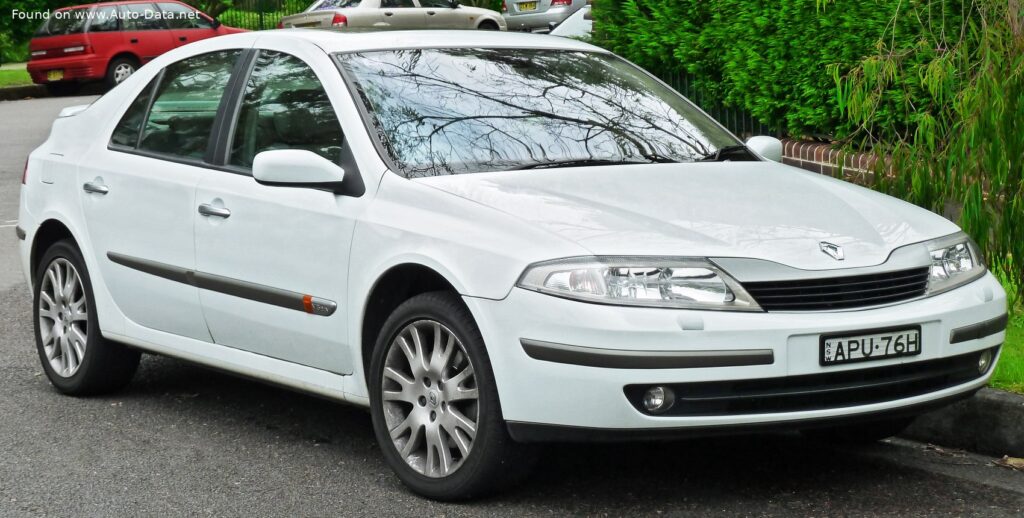
The Renault Laguna II 1.9 dCi (107 Hp) represents a pivotal moment for the French automaker in the highly competitive European D-segment during the early 2000s. Launched in 2001, the second-generation Laguna was designed to build upon the success of its predecessor while introducing a new level of sophistication, safety, and technological innovation. Positioned as a family-friendly mid-size car, it was offered primarily in Europe and other select international markets, where it competed fiercely against established rivals with its distinctive styling and an emphasis on occupant protection. The 1.9 dCi variant, specifically the 107 horsepower model, was a cornerstone of its powertrain lineup, catering to the strong European demand for fuel-efficient diesel engines that offered a compelling blend of economy and practical performance for daily commuting and long-distance travel. This generation of the Laguna was particularly renowned for its groundbreaking safety credentials, being the first car to achieve a five-star Euro NCAP crash test rating, a significant achievement that underscored Renault’s commitment to passenger well-being and set a new benchmark for the industry.
Engineering and Performance of the Renault Laguna II
At the heart of the Renault Laguna II 1.9 dCi (107 Hp) lay a robust and efficient turbodiesel engine, a powertrain configuration highly favored in the European market for its impressive fuel economy and torque characteristics. This particular variant, designated with the internal code F9Q, featured a 1.9-liter (1870 cm3 or 114.11 cu. in.) inline-four configuration. The engine utilized a common rail direct injection system, a technology that was becoming standard for modern diesels, allowing for precise fuel delivery, improved combustion efficiency, and reduced emissions compared to older indirect injection systems. Further enhancing its performance and efficiency was a turbocharger coupled with an intercooler, which boosted air intake and consequently power output. The valvetrain was an OHC (Overhead Camshaft) design with two valves per cylinder, striking a balance between performance and mechanical simplicity. With a compression ratio of 19:1, typical for a diesel engine, it was optimized for the combustion of diesel fuel.
The 1.9 dCi engine produced a respectable 107 horsepower at 4000 rpm, delivering adequate power for the Laguna’s role as a family hauler. More importantly for a diesel, it generated a substantial 184.39 lb.-ft. (250 Nm) of torque at a low 2000 rpm. This ample low-end torque was crucial for effortless acceleration, strong pulling power, and relaxed highway cruising, minimizing the need for frequent gear changes. Power was transmitted to the front wheels via a smooth-shifting 6-speed manual transmission, a feature that was still somewhat premium for a D-segment car at the time, offering greater flexibility and efficiency across a wider range of speeds. The combination of this engine and gearbox allowed the Laguna II 1.9 dCi to accelerate from 0 to 60 mph in a competitive 11.7 seconds (0-100 km/h in 12.3 seconds) and achieve a maximum speed of 118.06 mph (190 km/h). These figures positioned it well within its class, offering sufficient performance for everyday driving without compromising on economy.
Fuel efficiency was a major selling point for the 1.9 dCi, particularly in a market sensitive to fuel costs. The combined fuel economy was rated at 42 US mpg (5.6 l/100 km), an impressive figure for a vehicle of its size and capacity. Urban consumption stood at 32.2 US mpg (7.3 l/100 km), while extra-urban driving yielded an excellent 51.1 US mpg (4.6 l/100 km), highlighting its efficiency on longer journeys. The 18.49 US gallon (70-liter) fuel tank provided an extensive cruising range, a practical benefit for European drivers covering long distances. The engine oil capacity was 4.6 liters (4.86 US qt), and the cooling system required 7 liters (7.4 US qt) of coolant, indicating standard maintenance requirements for its class. The weight-to-power ratio of 13.3 kg/Hp and a weight-to-torque ratio of 5.7 kg/Nm further illustrate the balanced engineering, focusing on usable power and torque for its intended purpose rather than outright performance.
Design and Features of the Renault Laguna II
The second-generation Renault Laguna marked a significant evolution in design language for the brand, moving towards a more fluid, elegant, and sophisticated aesthetic compared to its angular predecessor. The Laguna II was offered as a 5-door hatchback, a highly popular body style in Europe, blending the practicality of a wagon with the sleeker profile of a sedan. Its exterior dimensions, with a length of 180.16 inches (4576 mm), a width of 69.76 inches (1772 mm), and a height of 56.26 inches (1429 mm), contributed to a substantial road presence while maintaining maneuverability for urban environments. The generous 107.87-inch (2740 mm) wheelbase was a key factor in providing a spacious interior, accommodating five occupants comfortably across two rows of seating.
Inside, the Laguna II aimed to deliver a premium feel with thoughtful design and improved material quality. As a modern car for its era, emphasis was placed on features that enhanced comfort, convenience, and safety. The standard 5-seat configuration was designed for family use, offering ample headroom and legroom. The trunk space was highly versatile, starting at 15.19 cu. ft. (430 liters) with all seats in place, and expanding significantly to 46.97 cu. ft. (1330 liters) when the rear seats were folded, making it suitable for carrying larger items or luggage for extended trips. This adaptability was a crucial aspect of its appeal to families and individuals requiring practical cargo solutions.
Safety was arguably the most defining characteristic of the Laguna II. It was a trailblazer, becoming the first car to achieve a full five-star rating in the demanding Euro NCAP crash tests, a testament to Renault’s commitment to structural integrity and passive safety systems. Key safety features included an Anti-lock Braking System (ABS) as standard, along with a comprehensive suite of airbags (front, side, and curtain airbags were typically available depending on trim levels). The vehicle’s structure was engineered to absorb impact energy effectively, protecting occupants. For active driving dynamics, the Laguna II featured a front-wheel-drive architecture. The suspension system consisted of a spring strut design at the front and a coil spring setup at the rear, a common arrangement that provided a comfortable and compliant ride, absorbing road imperfections effectively. Braking performance was confident, with ventilated discs at the front and solid discs at the rear, ensuring consistent stopping power. The steering system utilized a hydraulic rack and pinion setup, offering direct and responsive feedback to the driver. The car rode on 195/65 R15 tires mounted on 15-inch wheel rims, a practical choice balancing ride comfort, grip, and replacement cost. Overall, the Renault Laguna II 1.9 dCi (107 Hp) was a well-rounded package that combined attractive design, a practical and safe interior, and an efficient powertrain, making it a highly competitive and popular choice in its European market segment.
Technical Specifications: Renault Laguna II 1.9 dCi (107 Hp)
| Brand | Renault |
| Model | Laguna |
| Generation | Laguna II |
| Type (Engine) | 1.9 dCi (107 Hp) |
| Start of production | 2001 year |
| End of production | 2007 year |
| Powertrain Architecture | Internal Combustion engine |
| Body type | Hatchback |
| Seats | 5 |
| Doors | 5 |
| Fuel consumption (economy) – urban | 7.3 l/100 km (32.2 US mpg) |
| Fuel consumption (economy) – extra urban | 4.6 l/100 km (51.1 US mpg) |
| Fuel consumption (economy) – combined | 5.6 l/100 km (42 US mpg) |
| Fuel Type | Diesel |
| Acceleration 0 – 60 mph | 11.7 sec |
| Maximum speed | 190 km/h (118.06 mph) |
| Weight-to-power ratio | 13.3 kg/Hp |
| Weight-to-torque ratio | 5.7 kg/Nm |
| Power | 107 Hp @ 4000 rpm |
| Power per liter | 57.2 Hp/l |
| Torque | 250 Nm @ 2000 rpm (184.39 lb.-ft. @ 2000 rpm) |
| Engine layout | Front, Transverse |
| Engine Model/Code | F9Q |
| Engine displacement | 1870 cm3 (114.11 cu. in.) |
| Number of cylinders | 4 |
| Engine configuration | Inline |
| Cylinder Bore | 80 mm (3.15 in.) |
| Piston Stroke | 93 mm (3.66 in.) |
| Compression ratio | 19:1 |
| Number of valves per cylinder | 2 |
| Fuel injection system | Diesel Commonrail |
| Engine aspiration | Turbocharger, Intercooler |
| Valvetrain | OHC |
| Engine oil capacity | 4.6 l (4.86 US qt) |
| Coolant | 7 l (7.4 US qt) |
| Kerb Weight | 1425 kg (3141.59 lbs.) |
| Max. weight | 1935 kg (4265.94 lbs.) |
| Max load | 510 kg (1124.36 lbs.) |
| Trunk (boot) space – minimum | 430 l (15.19 cu. ft.) |
| Trunk (boot) space – maximum | 1330 l (46.97 cu. ft.) |
| Fuel tank capacity | 70 l (18.49 US gal) |
| Length | 4576 mm (180.16 in.) |
| Width | 1772 mm (69.76 in.) |
| Height | 1429 mm (56.26 in.) |
| Wheelbase | 2740 mm (107.87 in.) |
| Front track | 1525 mm (60.04 in.) |
| Rear (Back) track | 1480 mm (58.27 in.) |
| Drivetrain Architecture | The Internal combustion engine (ICE) drives the front wheels of the vehicle. |
| Drive wheel | Front wheel drive |
| Number of gears and type of gearbox | 6 gears, manual transmission |
| Front suspension | Spring Strut |
| Rear suspension | Coil spring |
| Front brakes | Ventilated discs |
| Rear brakes | Disc |
| Assisting systems | ABS (Anti-lock braking system) |
| Steering type | Steering rack and pinion |
| Power steering | Hydraulic Steering |
| Tires size | 195/65 R15 |
| Wheel rims size | 15 |