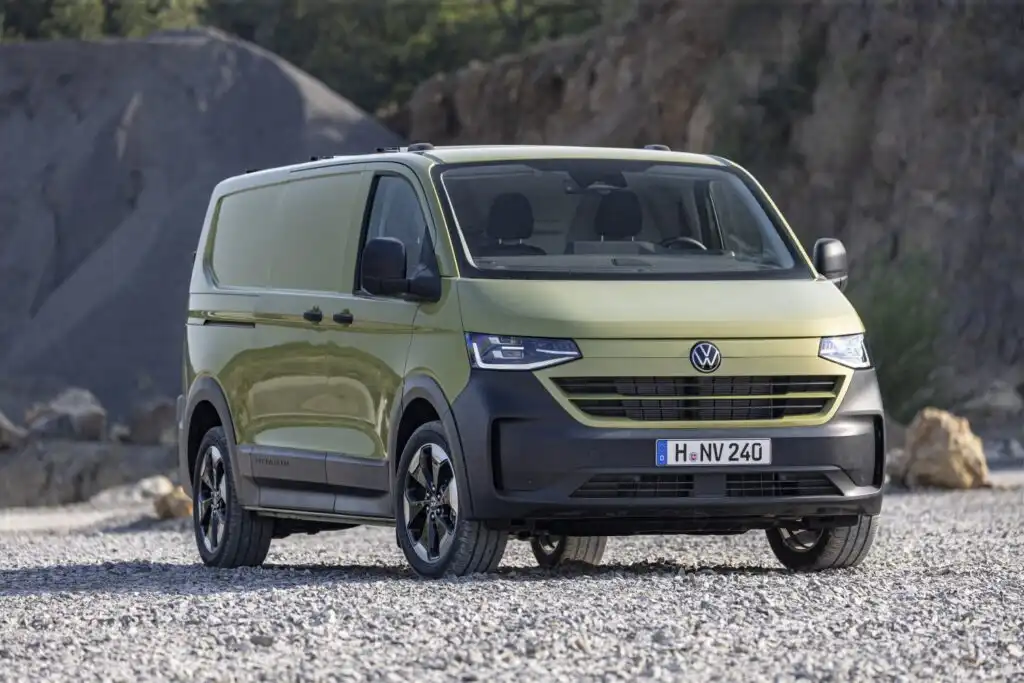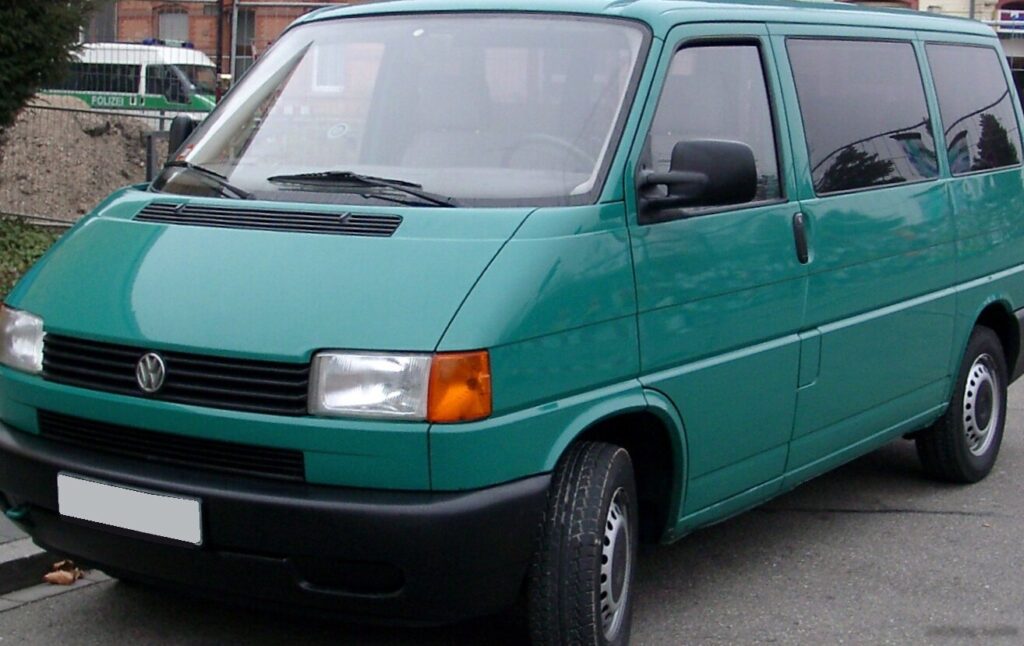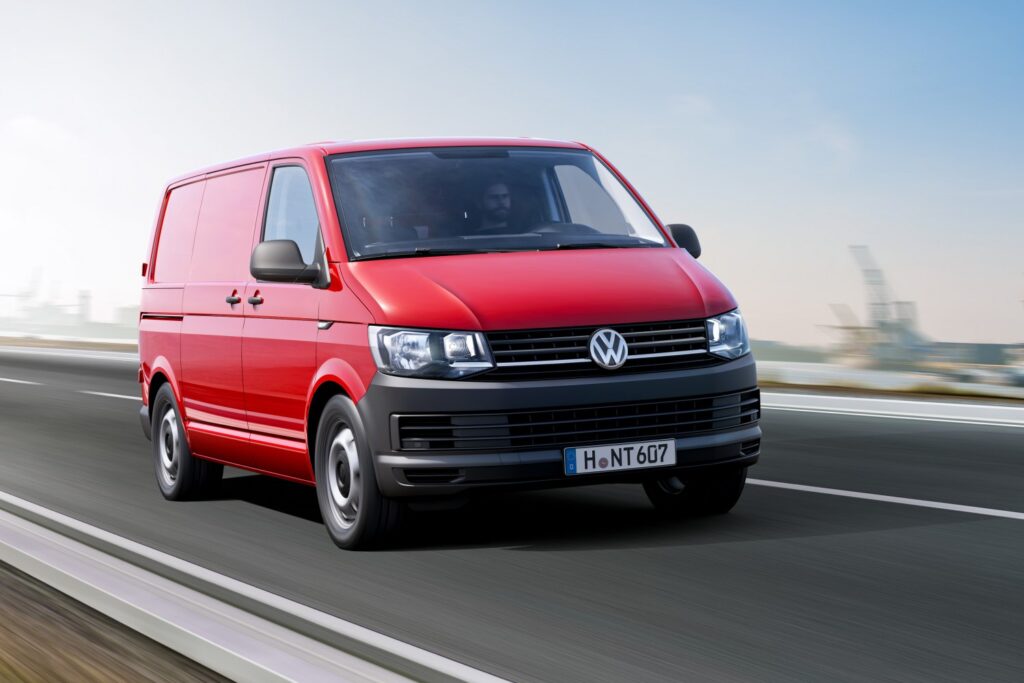
The Volkswagen Transporter, specifically the T6 generation Panel Van, represents a cornerstone in the European light commercial vehicle market, renowned for its versatility, robust engineering, and enduring legacy. While not a common sight in the United States in its commercial panel van guise, the T6, produced from 2015 to 2019, continued the Transporter’s tradition of offering a sophisticated and practical solution for businesses and tradespeople across the globe. The variant under scrutiny, the Volkswagen Transporter (T6) Panel Van 2.0 TSI (150 Hp) L1H1, exemplifies a balance of efficiency and performance, catering to operators who require a capable workhorse with modern gasoline (petrol) powertrain technology. This particular model, designated L1H1 for its standard length and standard roof height, was designed to navigate urban environments with ease while offering substantial cargo capacity, embodying Volkswagen’s commitment to functional design and driver comfort in a commercial package.
Engine and Performance: The Heart of the Volkswagen Transporter (T6) Panel Van
Powering the Volkswagen Transporter (T6) Panel Van 2.0 TSI (150 Hp) L1H1 is a sophisticated 2.0-liter TSI (Turbocharged Stratified Injection) gasoline engine, a member of Volkswagen’s highly regarded EA888 engine family, identified by the code CJKB. This inline four-cylinder unit is mounted transversely at the front, a configuration that optimizes interior space and contributes to the vehicle’s stable handling characteristics. With a displacement of 1984 cubic centimeters (121.07 cubic inches), the engine delivers a robust 150 horsepower, available across a broad rev range from 3750 to 6000 rpm. This wide power band is complemented by an impressive peak torque output of 280 Nm, or 206.52 lb.-ft., which is accessible from a low 1500 rpm and sustained up to 3750 rpm. Such a flat torque curve is crucial for a commercial vehicle, ensuring strong pulling power from low speeds and minimizing the need for frequent gear changes, particularly when the van is fully loaded or navigating challenging terrain.
The engine’s advanced technical specifications include a DOHC (Double Overhead Camshaft) valvetrain with four valves per cylinder, direct fuel injection, and a turbocharger with an intercooler. This combination ensures efficient combustion, optimal power delivery, and relatively low emissions for its class. The compression ratio stands at 9.8:1, a balance that aids both power and efficiency. Power is transmitted to the front wheels via a precise 6-speed manual transmission, offering the driver direct control and engagement. Performance figures for this panel van are respectable, with an acceleration from 0 to 60 mph achieved in approximately 10.5 seconds, and a top speed reaching 113.09 mph (182 km/h). These metrics highlight the T6 Panel Van’s capability to keep pace with traffic on highways while offering sufficient agility for urban deliveries.
Fuel economy, a critical consideration for commercial operators, is measured under the NEDC (New European Driving Cycle) standard. The combined cycle consumption ranges from 9-9.7 liters per 100 kilometers, translating to an average of 24.2 to 26.1 US miles per gallon. Urban driving sees figures between 18.5 and 19.3 US mpg, while extra-urban (highway) driving improves to 29.4 to 32.7 US mpg. These figures, combined with CO2 emissions of 206-221 g/km, position the Transporter T6 as a relatively efficient gasoline-powered commercial vehicle, meeting the Euro 6 emission standard. Further enhancing its efficiency, the vehicle incorporates a Start & Stop System, automatically shutting off the engine when stationary to conserve fuel and reduce emissions in city traffic. With an 80-liter (21.13 US gallon) fuel tank, the T6 Panel Van offers a commendable driving range, reducing downtime for refueling.
Design and Features: Practicality and Ergonomics of the Volkswagen Transporter (T6) Panel Van
The design of the Volkswagen Transporter (T6) Panel Van 2.0 TSI (150 Hp) L1H1 adheres to Volkswagen’s philosophy of functional elegance, prioritizing utility and durability. As a panel van, its primary purpose is cargo transport, and the L1H1 designation indicates the standard length (4904 mm or 193.07 inches) and standard height (1990 mm or 78.35 inches) configuration, making it a versatile choice for a wide range of tasks. The vehicle features 4 to 5 doors, typically comprising front cabin doors and one or two sliding side doors for easy access to the cargo area, along with a rear tailgate or barn doors. The cabin is designed to accommodate 2 to 3 occupants, providing a comfortable and ergonomic workspace for the driver and crew.
The T6 Panel Van truly excels in its cargo capacity, offering a maximum trunk volume of 5800 liters, or 204.83 cubic feet. This generous space is complemented by a substantial maximum payload capacity ranging from 1054 to 1137 kg (2323.67 to 2506.66 lbs.), allowing businesses to transport significant loads. The vehicle’s robust construction is evident in its curb weight, which ranges from 1746 to 2063 kg (3849.27 to 4548.14 lbs.), and a maximum permissible gross vehicle weight (GVW) of 2800 to 3200 kg (6172.94 to 7054.79 lbs.). Towing capabilities are also impressive, with a braked towing capacity of 2500 kg (5511.56 lbs.) and an unbraked capacity of 750 kg (1653.47 lbs.), further extending its utility for trailers and equipment.
Underneath, the T6 features an independent suspension setup both front and rear, which is a significant contributor to its car-like driving