
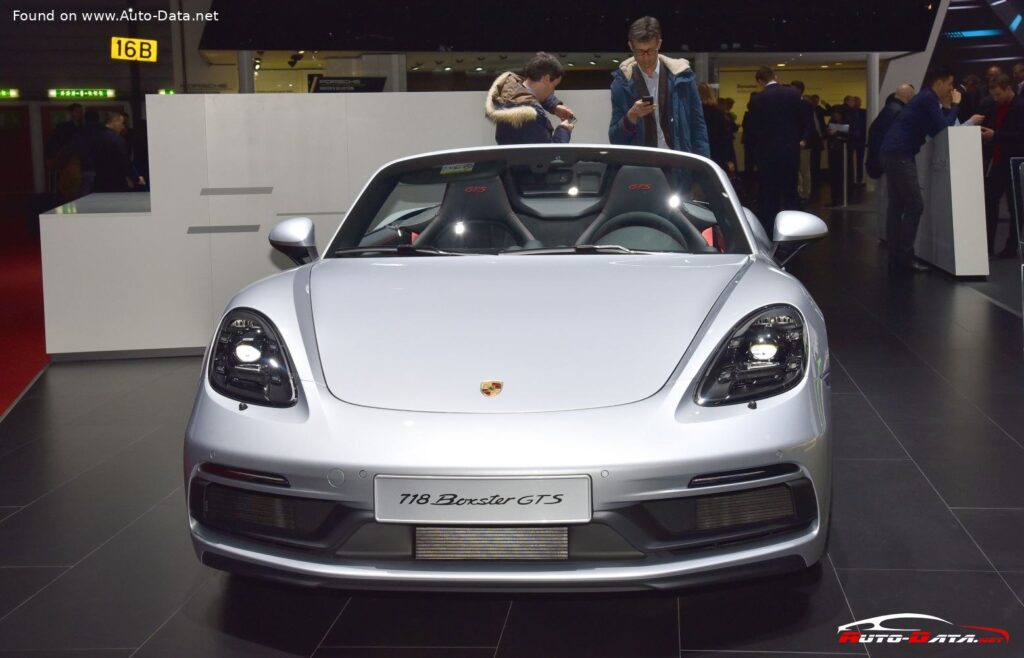
The Porsche 718 Boxster (982) T 2.0 (300 Hp) PDK represents a compelling chapter in the storied history of Porsche’s mid-engine roadster. Introduced in December 2018 and produced until June 2020, this particular variant of the 718 generation encapsulates a purist’s approach to open-top driving, blending potent performance with a focus on driver engagement. As a two-door, two-seat cabriolet, it firmly positions itself in the premium sports car segment, offering an exhilarating driving experience that is uniquely Porsche, yet with a distinct character refined by its “T” designation, signifying “Touring” or a more focused, minimalist performance philosophy.
The Porsche 718 Boxster (982) T 2.0 (300 Hp) PDK: A Purist’s Roadster
The 718 Boxster (982) generation marked a significant departure for Porsche’s entry-level sports cars, transitioning from naturally aspirated flat-six engines to turbocharged flat-four units. This change, while initially met with some traditionalist reservations, allowed for enhanced torque delivery and improved fuel efficiency, aligning with modern automotive trends. The “T” variant takes this a step further, drawing inspiration from the 911 T of 1968, which emphasized a stripped-down, lightweight, and driver-focused experience. For the 718 Boxster T, this translates into a meticulously engineered package designed to maximize agility and tactile feedback, making every journey, whether a spirited drive on winding roads or a leisurely cruise, a memorable event.
Positioned as a more accessible yet equally thrilling alternative to its higher-powered siblings, the 718 Boxster T appeals to enthusiasts who value balance, responsiveness, and direct communication over outright power. Its relatively compact dimensions, coupled with a sophisticated mid-engine layout, ensure a near-perfect weight distribution, which is fundamental to its exceptional handling characteristics. This generation continues Porsche’s legacy of crafting sports cars that are not only fast but also incredibly rewarding to drive, embodying the essence of a true driver’s machine.
Engine and Performance
At the heart of the Porsche 718 Boxster (982) T 2.0 (300 Hp) PDK lies a highly advanced 2.0-liter turbocharged flat-four engine, designated by the code DDPB. This horizontally opposed, or “boxer,” configuration is a signature of Porsche engineering, contributing to a lower center of gravity and improved dynamic stability. Despite its relatively modest displacement of 1988 cm³ (121.32 cu. in.), this powerplant generates a formidable 300 horsepower at a peak of 7500 rpm, translating to an impressive power-per-liter output of 150.9 Hp/l. The engine’s aspiration system, featuring a turbocharger and intercooler, ensures a robust and linear power delivery across the rev range, mitigating turbo lag and providing immediate throttle response.
Crucially, the torque output is equally impressive, with 380 Nm (280.27 lb.-ft.) available across a wide band from 2150 to 4500 rpm. This broad torque curve is a key benefit of the turbocharged architecture, providing effortless acceleration and flexible in-gear performance. The engine’s mid-longitudinal layout further optimizes the car’s balance, enhancing its handling prowess by centralizing mass within the chassis. Power is efficiently transmitted to the rear wheels via Porsche’s renowned 7-speed PDK (Porsche Doppelkupplung) automatic transmission. This dual-clutch gearbox is celebrated for its lightning-fast shifts and seamless power delivery, allowing the 718 Boxster T to sprint from 0 to 60 mph in a blistering 4.5 seconds (calculated by Auto-Data.net) and reach 0 to 100 km/h in 4.7 seconds. The top speed is a remarkable 275 km/h (170.88 mph).
Beyond raw performance, the 718 Boxster T also demonstrates commendable efficiency for a high-performance sports car. Its combined fuel consumption is rated at 7.9 l/100 km (29.8 US mpg), with urban figures of 10.5 l/100 km (22.4 US mpg) and extra-urban figures dropping to 6.4 l/100 km (36.8 US mpg). CO2 emissions stand at 181 g/km, adhering to the stringent Euro 6d-TEMP emission standard, reflecting Porsche’s commitment to environmental responsibility alongside performance. The engine incorporates direct fuel injection and a particulate filter, showcasing modern powertrain technologies aimed at optimizing both power and emissions. With a kerb weight of 1380 kg (3042.38 lbs.), the car boasts an excellent weight-to-power ratio of 4.6 kg/Hp (217.4 Hp/tonne), underscoring its agile and responsive character.
Design and Features
The design of the Porsche 718 Boxster (982) T is an exquisite blend of classic Porsche aesthetics and contemporary styling. As a cabriolet, its sleek, low-slung profile is instantly recognizable, designed not only for visual appeal but also for aerodynamic efficiency, evidenced by a drag coefficient (Cd) of 0.31. The two-door, two-seat configuration emphasizes its role as a dedicated driver’s car, focusing on an intimate and engaging experience for its occupants. Its dimensions are finely tuned for agility: a length of 4379 mm (172.4 in.), a width of 1801 mm (70.91 in.) (1994 mm or 78.5 in. including mirrors), and a height of 1264 mm (49.76 in.). A wheelbase of 2475 mm (97.44 in.) contributes to its stable yet nimble handling, complemented by a front track of 1528 mm (60.16 in.) and a rear track of 1534 mm (60.39 in.).
The “T” designation often brings subtle but significant enhancements, typically including sportier trim, a slightly lower ride height, and a focus on essential driving elements. While the detailed data doesn’t specify unique aesthetic “T” elements, the core Boxster design language speaks volumes. The car features ventilated disc brakes at both the front and rear, ensuring potent stopping power commensurate with its performance capabilities. An Anti-lock Braking System (ABS) comes standard, providing crucial safety and control during emergency braking maneuvers. Steering is handled by a precise rack and pinion system with electric power steering, offering excellent feedback and responsiveness.
The 718 Boxster T is equipped with staggered tire and wheel sizes, a common practice in high-performance sports cars to optimize grip and handling. The front wheels are 8J x 18 inches, shod with 235/45 ZR18 tires, while the rear wheels are larger at 9.5J x 18 inches, wrapped in 265/45 ZR18 tires. This setup provides a robust contact patch, crucial for transferring the engine’s power to the road effectively. Practicality for a sports car is also considered, with a minimum trunk (boot) space of 150 liters (5.3 cu. ft.) and a fuel tank capacity of 54 liters (14.27 US gal), offering a reasonable range for touring. The maximum permissible weight is 1685 kg (3714.79 lbs.), allowing for a maximum load of 305 kg (672.41 lbs.), accommodating two occupants and their luggage for weekend getaways. The overall design and feature set of the 718 Boxster T underscore its identity as a sophisticated, performance-oriented roadster built for the discerning driver.
Technical Specifications of the Porsche 718 Boxster (982) T 2.0 (300 Hp) PDK
| Brand | Porsche |
| Model | 718 |
| Generation | 718 Boxster (982) |
| Type (Engine) | T 2.0 (300 Hp) PDK |
| Start of production | December, 2018 year |
| End of production | June, 2020 year |
| Powertrain Architecture | Internal Combustion engine |
| Body type | Cabriolet |
| Seats | 2 |
| Doors | 2 |
| Fuel consumption (economy) – urban | 10.5 l/100 km (22.4 US mpg) |
| Fuel consumption (economy) – extra urban | 6.4 l/100 km (36.8 US mpg) |
| Fuel consumption (economy) – combined | 7.9 l/100 km (29.8 US mpg) |
| CO2 emissions | 181 g/km |
| Fuel Type | Petrol (Gasoline) |
| Acceleration 0 – 60 mph | 4.5 sec |
| Acceleration 0 – 100 km/h | 4.7 sec |
| Maximum speed | 275 km/h (170.88 mph) |
| Emission standard | Euro 6d – TEMP |
| Weight-to-power ratio | 4.6 kg/Hp (217.4 Hp/tonne) |
| Weight-to-torque ratio | 3.6 kg/Nm (275.4 Nm/tonne) |
| Power | 300 Hp @ 7500 rpm |
| Power per litre | 150.9 Hp/l |
| Torque | 380 Nm @ 2150-4500 rpm (280.27 lb.-ft.) |
| Engine layout | Middle, Longitudinal |
| Engine Model/Code | DDPB |
| Engine displacement | 1988 cm³ (121.32 cu. in.) |
| Number of cylinders | 4 |
| Engine configuration | Boxer |
| Cylinder Bore | 91 mm (3.58 in.) |
| Piston Stroke | 76.4 mm (3.01 in.) |
| Compression ratio | 9.5:1 |
| Number of valves per cylinder | 4 |
| Fuel injection system | Direct injection |
| Engine aspiration | Turbocharger, Intercooler |
| Engine oil capacity | 5.7 l (6.02 US qt) |
| Engine oil specification | Not specified in public data |
| Engine systems | Particulate filter |
| Kerb Weight | 1380 kg (3042.38 lbs.) |
| Max. weight | 1685 kg (3714.79 lbs.) |
| Max load | 305 kg (672.41 lbs.) |
| Trunk (boot) space – minimum | 150 l (5.3 cu. ft.) |
| Fuel tank capacity | 54 l (14.27 US gal) |
| Length | 4379 mm (172.4 in.) |
| Width | 1801 mm (70.91 in.) |
| Width including mirrors | 1994 mm (78.5 in.) |
| Height | 1264 mm (49.76 in.) |
| Wheelbase | 2475 mm (97.44 in.) |
| Front track | 1528 mm (60.16 in.) |
| Rear (Back) track | 1534 mm (60.39 in.) |
| Drag coefficient (Cd) | 0.31 |
| Drivetrain Architecture | The Internal combustion engine (ICE) drives the rear wheels of the vehicle. |
| Drive wheel | Rear wheel drive |
| Number of gears and type of gearbox | 7 gears, automatic transmission PDK |
| Front brakes | Ventilated discs |
| Rear brakes | Ventilated discs |
| Assisting systems | ABS (Anti-lock braking system) |
| Steering type | Steering rack and pinion |
| Power steering | Electric Steering |
| Tires size | Front: 235/45 ZR18; Rear: 265/45 ZR18 |
| Wheel rims size | Front: 8J x 18; Rear: 9.5J x 18 |
