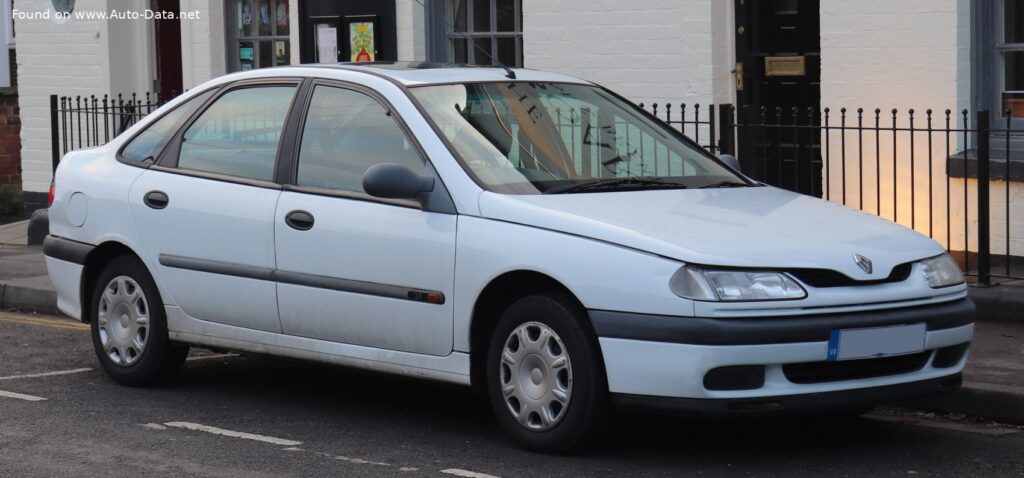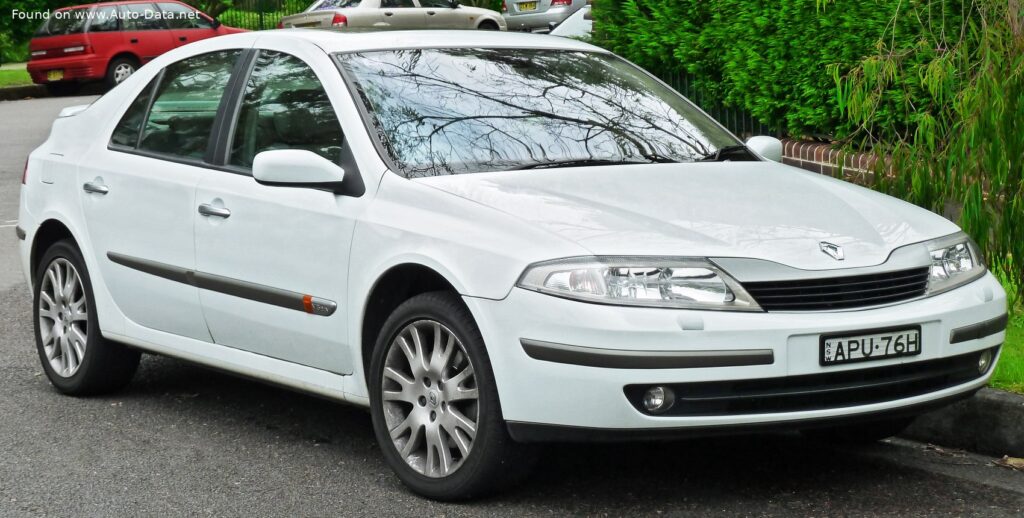
The Renault Laguna II 1.9 dCi (120 Hp) represents a significant chapter in the history of European D-segment family cars, a class of vehicles designed to offer a compelling blend of comfort, practicality, and fuel efficiency for the continent’s diverse driving conditions. Launched in 2001, the second generation of the Laguna marked a bold step for Renault, aiming to solidify its reputation for innovation and safety in a highly competitive market. As a model never officially sold in the United States, the Laguna II’s relevance in its primary European market cannot be overstated, where it served as a mainstream choice for families and business fleets alike. This particular variant, powered by a 1.9-liter dCi diesel engine, was a prime example of the growing popularity of diesel powertrains in Europe during the early 2000s, offering a robust balance of performance and remarkable fuel economy that resonated deeply with consumers facing rising fuel costs and environmental considerations. Its production run from 2001 to 2007 saw it evolve through various updates, but the core appeal of a spacious, safe, and economical hatchback remained central to its identity.
Engine & Performance: The Renault Laguna II 1.9 dCi (120 Hp) Powertrain
At the heart of the Renault Laguna II 1.9 dCi (120 Hp) lies its advanced F9Q engine, a 1.9-liter (1870 cm3 or 114.11 cu. in.) inline-four diesel unit that showcased Renault’s expertise in common rail direct injection technology. This powertrain architecture, featuring an internal combustion engine driving the front wheels, was meticulously engineered to deliver a harmonious blend of usable power and exceptional fuel efficiency. The engine’s configuration included a single overhead camshaft (OHC) valvetrain with two valves per cylinder, a design chosen for its reliability and efficiency. Crucially, the engine benefited from a turbocharger paired with an intercooler, significantly boosting both power output and low-end torque, a characteristic highly valued in diesel engines for effortless driving.
This 1.9 dCi engine produced a respectable 120 horsepower at 4000 rpm. While not a powerhouse by modern standards, this output was more than adequate for a family car of its era, providing confident acceleration and cruising capability. More impressive for its class was the torque figure: 199.14 lb.-ft. (270 Nm) delivered at a low 2000 rpm. This substantial torque at accessible engine speeds meant strong pulling power and flexibility, making the Laguna II 1.9 dCi particularly well-suited for highway driving and overtaking maneuvers, even when fully loaded. The engine’s high compression ratio of 19:1 was typical for a diesel of its time, contributing to its combustion efficiency.
Performance figures for the Renault Laguna II 1.9 dCi (120 Hp) reflected its practical orientation. The vehicle could accelerate from 0 to 60 mph in a competitive 10.2 seconds (0-100 km/h in 10.7 seconds), placing it firmly within the expected performance envelope for a mid-size family diesel. Its maximum speed reached 124.27 mph (200 km/h), demonstrating its capability for sustained high-speed cruising on European autobahns. Power was transmitted to the front wheels via a smooth-shifting 6-speed manual transmission, which was a significant advantage at the time, offering an extra gear for improved fuel economy and reduced engine noise at highway speeds compared to many 5-speed rivals.
Fuel economy was a standout feature, particularly for European consumers. The combined fuel consumption was an impressive 5.6 liters per 100 kilometers, translating to approximately 42 US miles per gallon. For urban driving, it achieved 32.7 US mpg (7.2 l/100 km), while extra-urban conditions saw it reach an excellent 49 US mpg (4.8 l/100 km). These figures underscored the diesel variant’s economic appeal, making it a cost-effective choice for long-distance commuters and families. With a substantial 18.49 US gallon (70 l) fuel tank capacity, the Laguna II 1.9 dCi offered an extensive driving range between fill-ups, further enhancing its suitability for cross-country travel.
Design & Features: Practicality and Innovation
The Renault Laguna II represented a stylistic departure from its predecessor, embracing a more fluid and less angular design language that was characteristic of Renault’s early 2000s aesthetic. As a 5-door hatchback, it offered a versatile body type that combined the practicality of a wagon with the sleek profile of a sedan. Its dimensions – a length of 180.16 inches (4576 mm), a width of 69.76 inches (1772 mm), and a height of 56.26 inches (1429 mm) – positioned it perfectly within the D-segment, providing ample interior space without being overly cumbersome for urban environments. The generous wheelbase of 107.87 inches (2740 mm) contributed significantly to ride comfort and interior room for its five occupants.
Inside, the Laguna II was designed with passenger comfort and utility in mind. The five-seat configuration offered a spacious environment, typical of a family-oriented vehicle. Practicality was a strong suit, exemplified by its flexible cargo capacity. The trunk (boot) space ranged from a very usable 15.19 cubic feet (430 liters) with all seats in place, expanding dramatically to a cavernous 46.97 cubic feet (1330 liters) when the rear seats were folded down. This adaptability made the Laguna II an ideal choice for varying cargo needs, from daily groceries to holiday luggage.
In terms of chassis and handling, the Laguna II was equipped with a robust and comfortable suspension setup. The front featured a Spring Strut system, providing precise steering and good roadholding, while the rear utilized a Coil spring arrangement, balancing comfort with stability. The steering system employed a hydraulic power-assisted rack and pinion setup, ensuring a responsive and communicative driving experience. For braking, the vehicle featured ventilated discs at the front and solid discs at the rear, complemented by an Anti-lock Braking System (ABS) as a standard assisting system. This combination provided confident stopping power and enhanced safety, a hallmark of Renault’s commitment to passive and active safety features during this period.
The car rode on 16-inch wheel rims fitted with 205/55 R16 tires, a common size for D-segment vehicles of the time, offering a good compromise between ride comfort, grip, and aesthetic appeal. The overall design language, combined with its practical features and focus on safety, ensured the Renault Laguna II 1.9 dCi (120 Hp) remained a strong contender in the highly competitive European family car market throughout its production lifecycle, appealing to buyers who prioritized a reliable, efficient, and comfortable mode of transport.
Technical Specifications
| Brand | Renault |
| Model | Laguna |
| Generation | Laguna II |
| Type (Engine) | 1.9 dCi (120 Hp) |
| Start of production | 2001 year |
| End of production | 2007 year |
| Powertrain Architecture | Internal Combustion engine |
| Body type | Hatchback |
| Seats | 5 |
| Doors | 5 |
| Fuel consumption (economy) – urban | 7.2 l/100 km / 32.7 US mpg |
| Fuel consumption (economy) – extra urban | 4.8 l/100 km / 49 US mpg |
| Fuel consumption (economy) – combined | 5.6 l/100 km / 42 US mpg |
| Fuel Type | Diesel |
| Acceleration 0 – 60 mph | 10.2 sec |
| Acceleration 0 – 100 km/h | 10.7 sec |
| Maximum speed | 200 km/h / 124.27 mph |
| Weight-to-power ratio | 11.9 kg/Hp / 84.2 Hp/tonne |
| Weight-to-torque ratio | 5.3 kg/Nm / 189.5 Nm/tonne |
| Power | 120 Hp @ 4000 rpm |
| Power per liter | 64.2 Hp/l |
| Torque | 270 Nm @ 2000 rpm / 199.14 lb.-ft. @ 2000 rpm |
| Engine layout | Front, Transverse |
| Engine Model/Code | F9Q |
| Engine displacement | 1870 cm3 / 114.11 cu. in. |
| Number of cylinders | 4 |
| Engine configuration | Inline |
| Cylinder Bore | 80 mm / 3.15 in. |
| Piston Stroke | 93 mm / 3.66 in. |
| Compression ratio | 19:1 |
| Number of valves per cylinder | 2 |
| Fuel injection system | Diesel Commonrail |
| Engine aspiration | Turbocharger, Intercooler |
| Valvetrain | OHC |
| Engine oil capacity | 4.6 l / 4.86 US qt |
| Engine oil specification | Log in to see. |
| Coolant | 7 l / 7.4 US qt |
| Kerb Weight | 1425 kg / 3141.59 lbs. |
| Max. weight | 1935 kg / 4265.94 lbs. |
| Max load | 510 kg / 1124.36 lbs. |
| Trunk (boot) space – minimum | 430 l / 15.19 cu. ft. |
| Trunk (boot) space – maximum | 1330 l / 46.97 cu. ft. |
| Fuel tank capacity | 70 l / 18.49 US gal |
| Length | 4576 mm / 180.16 in. |
| Width | 1772 mm / 69.76 in. |
| Height | 1429 mm / 56.26 in. |
| Wheelbase | 2740 mm / 107.87 in. |
| Front track | 1525 mm / 60.04 in. |
| Rear (Back) track | 1480 mm / 58.27 in. |
| Drivetrain Architecture | The Internal combustion engine (ICE) drives the front wheels of the vehicle. |
| Drive wheel | Front wheel drive |
| Number of gears and type of gearbox | 6 gears, manual transmission |
| Front suspension | Spring Strut |
| Rear suspension | Coil spring |
| Front brakes | Ventilated discs |
| Rear brakes | Disc |
| Assisting systems | ABS (Anti-lock braking system) |
| Steering type | Steering rack and pinion |
| Power steering | Hydraulic Steering |
| Tires size | 205/55 R16 |
| Wheel rims size | 16 |