
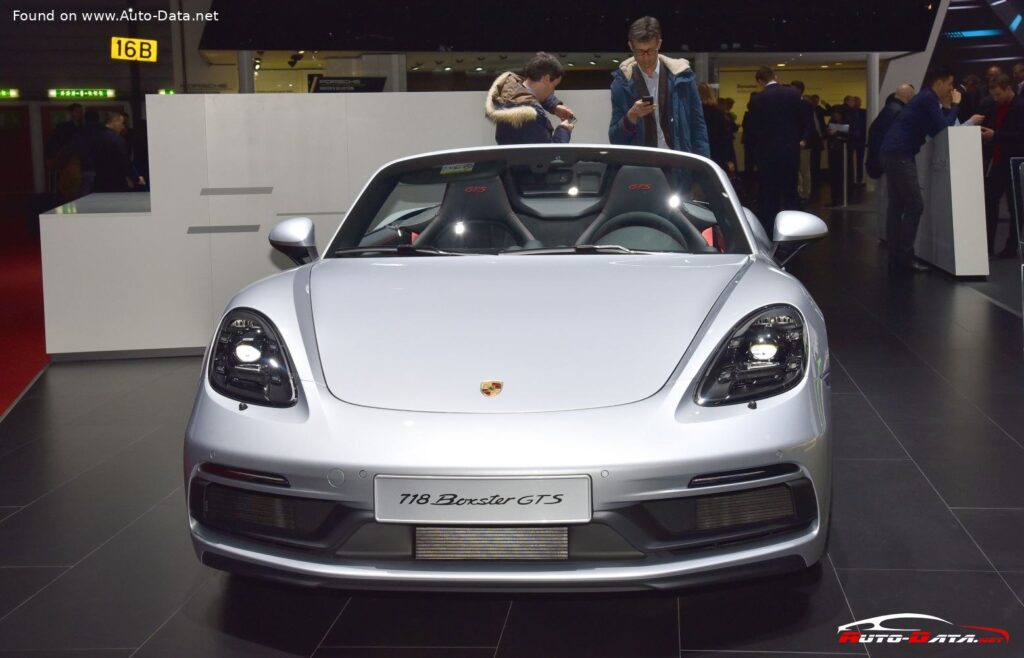
The Porsche 718 Boxster (982) T 2.0 (300 Hp) PDK represents a compelling iteration within the highly acclaimed 718 Boxster generation, first introduced in June 2020. This specific variant, denoted by the “T” for Touring, signifies a back-to-basics, purist approach to the mid-engine roadster experience, emphasizing driving dynamics and a lightweight philosophy. While the Boxster has been a staple in Porsche’s lineup since its inception, the 718 generation marked a significant shift with its adoption of turbocharged flat-four engines, moving away from the naturally aspirated flat-sixes of its predecessors. The 718 Boxster T, in particular, aims to deliver an unadulterated connection between driver and machine, offering a distinct blend of performance, agility, and everyday usability within the premium two-seat convertible segment. Its primary market spans globally, with a strong presence in Europe, North America, and Asia, where it appeals to enthusiasts seeking a visceral driving experience coupled with Porsche’s renowned engineering prowess.
Engine & Performance: The Heart of the Porsche 718 Boxster (982) T 2.0 (300 Hp) PDK
At the core of the Porsche 718 Boxster (982) T 2.0 (300 Hp) PDK lies a sophisticated 2.0-liter (1988 cm³ or 121.32 cu. in.) turbocharged flat-four Boxer engine. This powerplant, designated with the model code DDPB, is longitudinally mounted in a mid-engine layout, a configuration critical to the Boxster’s exceptional balance and handling characteristics. The engine delivers a robust 300 horsepower at 6500 rpm, translating to an impressive power-per-liter output of 150.9 HP/l, showcasing its high-performance tuning. Torque is equally significant, with 280.27 lb.-ft. (380 Nm) available across a broad rev range, specifically from 2150 to 4500 rpm, ensuring potent acceleration and flexibility in various driving scenarios. The maximum engine speed of 7500 rpm indicates its willingness to rev and its sporting character.
This engine utilizes a direct injection fuel system, optimizing fuel delivery for both power and efficiency, complemented by a turbocharger and intercooler setup that ensures consistent performance by managing intake air temperature. With a compression ratio of 9.5:1 and four valves per cylinder, the engine is engineered for optimal combustion and responsiveness. Power is exclusively sent to the rear wheels via Porsche’s acclaimed 7-speed PDK (Porsche Doppelkupplung) automatic transmission. This dual-clutch gearbox is renowned for its lightning-fast shifts and seamless power delivery, contributing significantly to the car’s exhilarating acceleration figures. The 718 Boxster T 2.0 PDK can sprint from 0 to 60 mph in a blistering 4.5-4.7 seconds (0-100 km/h in 4.7-4.9 seconds) and reach 124 mph (200 km/h) in 17.8-18.1 seconds. Its maximum speed is an impressive 170.88 mph (275 km/h).
Beyond raw speed, the powertrain architecture also focuses on efficiency and environmental responsibility. The vehicle incorporates a Start & Stop System to reduce fuel consumption and emissions during idle, along with a particulate filter to meet stringent emission standards like Euro 6d-ISC-FCM. Fuel economy figures reflect a balance between performance and practicality: 21.6 US mpg (10.9 l/100 km) in urban conditions, 36.2 US mpg (6.5 l/100 km) on the extra-urban cycle, and a combined 27 US mpg (8.7 l/100 km). CO2 emissions are rated at 185 g/km, underscoring Porsche’s commitment to modern environmental regulations without compromising its performance ethos. The Boxer engine’s inherent low center of gravity also contributes to the car’s dynamic stability and cornering prowess, making the 718 Boxster T a truly engaging driver’s car.
Design & Features: Form Meets Function in the 718 Boxster T
The Porsche 718 Boxster (982) T 2.0 (300 Hp) PDK embodies the classic roadster silhouette, characterized by its sleek lines, compact dimensions, and a focus on open-top driving pleasure. As a Cabriolet, it features a retractable soft-top roof, allowing occupants to fully immerse themselves in the driving experience. The design is unmistakably Porsche, with sculpted fenders, prominent air intakes, and a purposeful stance that hints at its performance capabilities. The “T” designation often brings subtle aesthetic and functional enhancements, such as unique wheels, darker exterior accents, and a more minimalist interior to reinforce its driver-focused character.
Measuring 172.4 inches (4379 mm) in length, 70.91 inches (1801 mm) in width (78.5 inches or 1994 mm including mirrors), and 49.76 inches (1264 mm) in height, the 718 Boxster T maintains a compact footprint, contributing to its agility. A wheelbase of 97.44 inches (2475 mm) ensures stability, while the front track of 60.16 inches (1528 mm) and rear track of 60.39 inches (1534 mm) provide a wide and planted stance. The drag coefficient (Cd) of 0.31 is indicative of its aerodynamic efficiency, reducing wind resistance at higher speeds. The two-seat configuration emphasizes its role as a pure sports car, prioritizing the driving experience for its occupants.
Underneath its svelte exterior, the 718 Boxster T is equipped with a robust chassis and sophisticated suspension system. It features independent McPherson struts at both the front and rear, tuned for optimal handling and ride comfort. Braking power is supplied by substantial ventilated discs: 330×28 mm at the front and 299×20 mm at the rear, ensuring powerful and consistent stopping performance. An Anti-lock Braking System (ABS) comes standard, enhancing safety during aggressive braking maneuvers. The electric power steering system, with its rack and pinion setup, provides precise feedback and responsiveness, crucial for a high-performance sports car. The car rides on staggered wheel and tire setups, with 235/35 ZR20 tires on 8J x 20 rims at the front and wider 265/35 ZR20 tires on 10J x 20 rims at the rear, optimizing grip and handling balance. Despite its performance focus, the 718 Boxster T offers practical elements such as a minimum trunk space of 4.41 cu. ft. (125 l) and a fuel tank capacity of 14.27 US gallons (54 l), allowing for extended spirited drives.
The Porsche 718 Boxster (982) T 2.0 (300 Hp) PDK: Technical Specifications
| Brand | Porsche |
| Model | 718 |
| Generation | 718 Boxster (982) |
| Type (Engine) | T 2.0 (300 Hp) PDK |
| Start of production | June, 2020 year |
| Powertrain Architecture | Internal Combustion engine |
| Body type | Cabriolet |
| Seats | 2 |
| Doors | 2 |
| Fuel consumption (economy) – urban | 10.9 l/100 km (21.6 US mpg) |
| Fuel consumption (economy) – extra urban | 6.5 l/100 km (36.2 US mpg) |
| Fuel consumption (economy) – combined | 8.7 l/100 km (27 US mpg) |
| CO2 emissions | 185 g/km |
| Fuel Type | Petrol (Gasoline) |
| Acceleration 0 – 60 mph | 4.5-4.7 sec |
| Acceleration 0 – 100 km/h | 4.7-4.9 sec |
| Acceleration 0 – 200 km/h | 17.8-18.1 sec |
| Maximum speed | 275 km/h (170.88 mph) |
| Emission standard | Euro 6d-ISC-FCM |
| Weight-to-power ratio | 4.6 kg/Hp (217.4 Hp/tonne) |
| Weight-to-torque ratio | 3.6 kg/Nm (275.4 Nm/tonne) |
| Power | 300 Hp @ 6500 rpm |
| Power per litre | 150.9 Hp/l |
| Torque | 380 Nm @ 2150-4500 rpm (280.27 lb.-ft.) |
| Maximum engine speed | 7500 rpm |
| Engine layout | Middle, Longitudinal |
| Engine Model/Code | DDPB |
| Engine displacement | 1988 cm³ (121.32 cu. in.) |
| Number of cylinders | 4 |
| Engine configuration | Boxer |
| Cylinder Bore | 91.01 mm (3.58 in.) |
| Piston Stroke | 76.4 mm (3.01 in.) |
| Compression ratio | 9.5:1 |
| Number of valves per cylinder | 4 |
| Fuel injection system | Direct injection |
| Engine aspiration | Turbocharger, Intercooler |
| Engine oil capacity | 5.7 l (6.02 US qt) |
| Engine oil specification | Log in to see. |
| Engine systems | Start & Stop System, Particulate filter |
| Kerb Weight | 1380 kg (3042.38 lbs.) |
| Max. weight | 1685 kg (3714.79 lbs.) |
| Max load | 305 kg (672.41 lbs.) |
| Trunk (boot) space – minimum | 125 l (4.41 cu. ft.) |
| Fuel tank capacity | 54 l (14.27 US gal) |
| Length | 4379 mm (172.4 in.) |
| Width | 1801 mm (70.91 in.) |
| Width including mirrors | 1994 mm (78.5 in.) |
| Height | 1264 mm (49.76 in.) |
| Wheelbase | 2475 mm (97.44 in.) |
| Front track | 1528 mm (60.16 in.) |
| Rear (Back) track | 1534 mm (60.39 in.) |
| Drag coefficient (Cd) | 0.31 |
| Minimum turning circle (turning diameter) | 10.98 m (36.02 ft.) |
| Drivetrain Architecture | The Internal combustion engine (ICE) drives the rear wheels of the vehicle. |
| Drive wheel | Rear wheel drive |
| Number of gears and type of gearbox | 7 gears, automatic transmission PDK |
| Front suspension | Independent type McPherson |
| Rear suspension | McPherson |
| Front brakes | Ventilated discs, 330×28 mm |
| Rear brakes | Ventilated discs, 299×20 mm |
| Assisting systems | ABS (Anti-lock braking system) |
| Steering type | Steering rack and pinion |
| Power steering | Electric Steering |
| Tires size | Front: 235/35 ZR20, Rear: 265/35 ZR20 |
| Wheel rims size | Front: 8J x 20, Rear: 10J x 20 |
