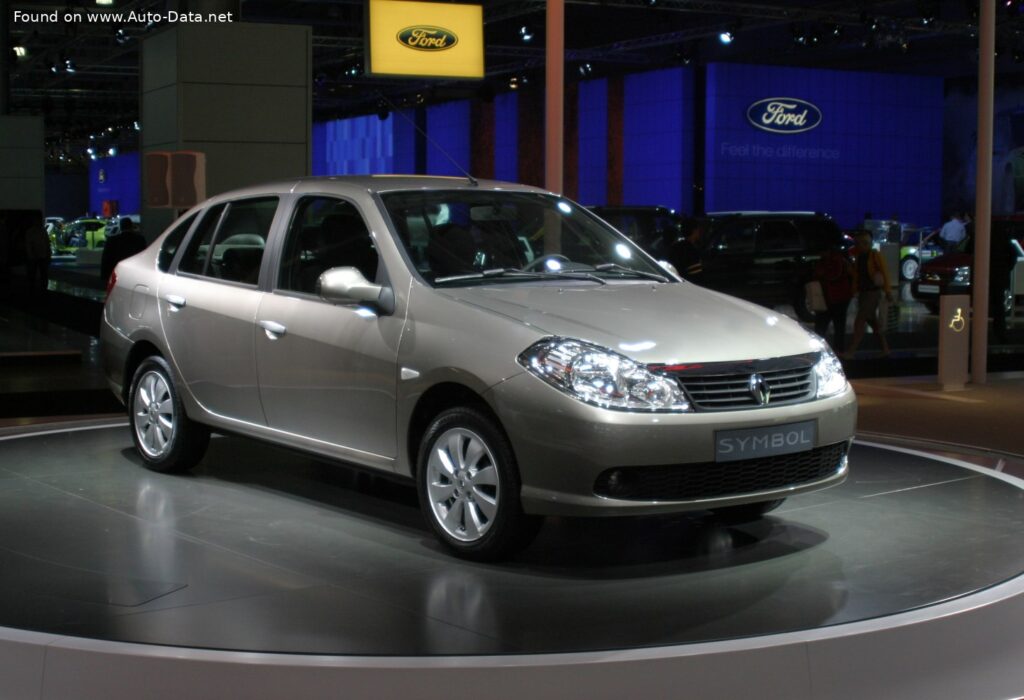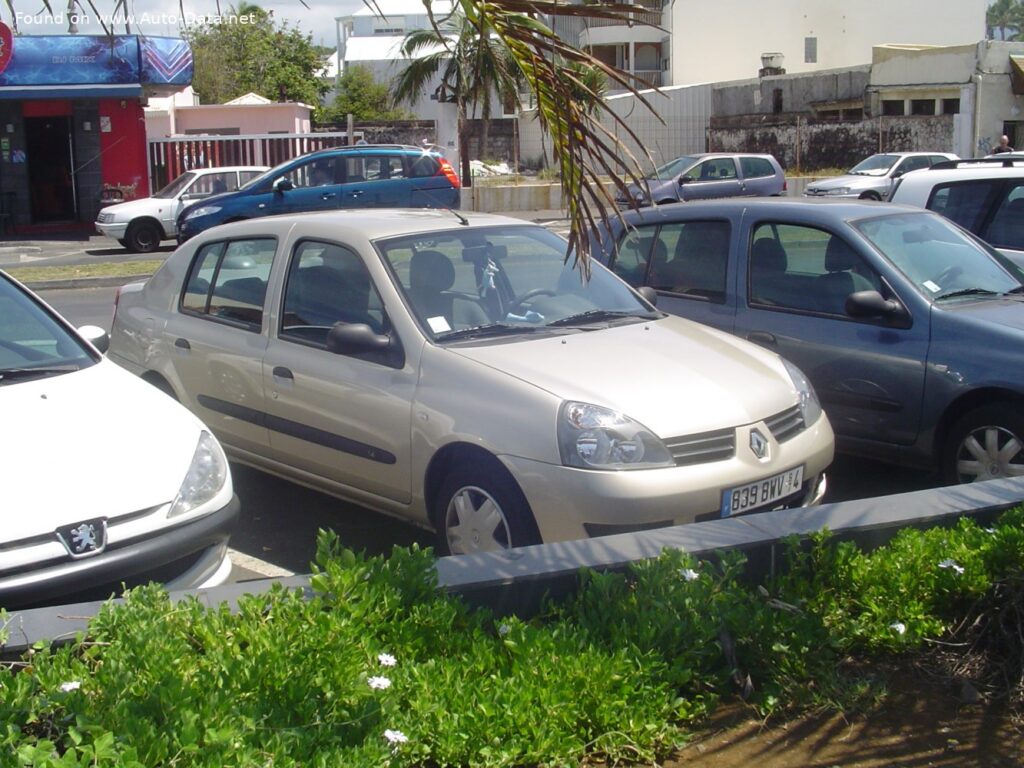
The Renault Symbol, often recognized in various global markets as the Renault Thalia, represents a strategic entry by the French automaker into the compact sedan segment, primarily targeting emerging economies in Eastern Europe, the Middle East, North Africa, and parts of Latin America. The specific model under examination, the Renault Symbol I (facelift 2002) 1.4 16V (98 Hp), is a significant iteration of the first generation, introduced in 2002 as a refreshed version of the original Symbol that debuted in 1999. This particular variant, produced until 2008, ingeniously repurposed the robust B-platform of the second-generation Renault Clio hatchback, transforming it into a conventional three-box sedan to cater to consumer preferences in regions where sedans were historically favored over hatchbacks due to perceived prestige and practicality. While never officially imported or sold in the United States, the Symbol’s design philosophy and engineering exemplify Renault’s global strategy of offering reliable, accessible, and purpose-built vehicles tailored to specific market demands and economic conditions.
Engineering and Performance of the Renault Symbol I (facelift 2002) 1.4 16V (98 Hp)
At the core of the Renault Symbol I (facelift 2002) 1.4 16V (98 Hp) lies its K4J 712 engine, a naturally aspirated 1.4-liter (1390 cm3 or 84.82 cu. in.) inline four-cylinder powertrain. This engine is a testament to Renault’s expertise in developing efficient and durable small-displacement engines. Featuring a 16-valve Dual Overhead Camshaft (DOHC) valvetrain, it is engineered to deliver a balanced blend of efficiency and responsive performance. The engine generates a respectable 98 horsepower at 6000 rpm, translating to a power-per-liter ratio of 70.5 horsepower per liter, which is quite competitive for a naturally aspirated engine of its era and class. Torque output stands at 93.67 lb.-ft. (127 Newton-meters), available at a relatively accessible 3750 rpm. This provides ample pulling power for daily driving scenarios, whether navigating congested city streets or maintaining speed on highways.
The engine’s layout is front and transverse-mounted, a common and space-efficient configuration for front-wheel-drive vehicles. Power is channeled through a precise 5-speed manual transmission, driving the front wheels. This drivetrain architecture is known for its reliability and direct engagement, offering drivers a hands-on experience. Performance figures highlight the Symbol’s role as a practical and economical family sedan rather than a high-performance machine. It achieves a 0 to 60 mph acceleration in a calculated 10.6 seconds (0-100 km/h in 11.2 seconds), a respectable time for its segment at the turn of the millennium. The vehicle’s maximum speed is 115.58 mph (186 km/h), allowing for comfortable and sustained highway cruising. Fuel economy is a strong attribute, with an impressive extra-urban consumption figure of 43.6 US mpg (5.4 l/100 km) and an urban consumption of 23.8 US mpg (9.9 l/100 km). This efficiency, combined with a 13.21 US gallon (50-liter) fuel tank capacity, ensures a commendable cruising range, a vital consideration for buyers in its target markets who often prioritize low running costs and infrequent refueling stops. The engine’s compression ratio of 10:1 and multi-port manifold injection system contribute to optimized combustion and precise fuel delivery, further enhancing its overall efficiency and smooth operation.
Design, Features, and Practicality
The Renault Symbol I (facelift 2002) presents a classic four-door, five-seat sedan body type, embodying a design ethos centered on practicality and understated elegance. Its exterior dimensions are compact yet functional, measuring 164.21 inches (4171 mm) in length, 64.53 inches (1639 mm) in width, and 56.57 inches (1437 mm) in height. The wheelbase spans 97.32 inches (2472 mm), providing a stable foundation and contributing to a surprisingly comfortable ride for its occupants. The 2002 facelift brought subtle but impactful updates to the exterior styling, aligning the Symbol with Renault’s contemporary design language of the early 2000s. These revisions included redesigned headlamps, a refreshed grille, and updated bumper aesthetics, giving the car a more modern and refined appearance that helped it maintain relevance in a competitive market.
Despite its relatively compact exterior footprint, the Symbol truly excels in interior volume and practicality, particularly with its cargo capacity. It boasts a remarkably generous trunk space of 18.01 cubic feet (510 liters). This expansive cargo hold was a significant selling point in markets where the ability to transport large amounts of luggage or goods is highly valued, often surpassing the capacity offered by larger, more expensive vehicles. The interior, while designed with a focus on durability and functionality rather than lavish luxury, provided essential comfort and utility for its five occupants. The cabin layout was ergonomic and straightforward, ensuring ease of use and maintenance, which are critical factors for its target demographic.
In terms of chassis dynamics and safety, the Renault Symbol I (facelift 2002) is built upon a front-wheel-drive architecture. Its suspension system features coil springs at both the front and rear, designed to offer a compliant and comfortable ride quality, capable of absorbing imperfections from varied road surfaces. Braking performance is managed by ventilated disc brakes at the front, offering effective stopping power, complemented by traditional drum brakes at the rear. This combination provides a cost-effective yet entirely adequate braking setup for a vehicle of its weight and performance capabilities. A notable safety feature for its class and time was the inclusion of an Anti-lock Braking System (ABS), which significantly enhances vehicle control during emergency braking maneuvers, preventing wheel lock-up and allowing the driver to steer. The steering system employs a rack and pinion mechanism, enhanced with hydraulic power steering, providing a direct and assisted feel that makes maneuvering the Symbol agile and effortless, especially in urban environments. The vehicle is fitted with 175/65 R14 tires mounted on 14-inch wheel rims, a common and practical size that strikes an excellent balance between ride comfort, handling characteristics, and affordable replacement costs. With a kerb weight of 2094.39 lbs (950 kg) and a maximum load capacity of 1157.43 lbs (525 kg), the Symbol demonstrates a robust build quality for its class, engineered to withstand the diverse road conditions and demanding usage patterns typical of its primary markets. The Renault Symbol I (facelift 2002) 1.4 16V (98 Hp) ultimately stands as a testament to Renault’s strategic vision, offering a compelling blend of practicality, efficiency, and affordability that solidified its position as a popular and reliable choice in markets where value and utility were paramount.
Technical Specifications
| Brand | Renault |
| Model | Symbol |
| Generation | Symbol I (facelift 2002) |
| Type (Engine) | 1.4 16V (98 Hp) |
| Start of production | 2002 year |
| End of production | 2008 year |
| Powertrain Architecture | Internal Combustion engine |
| Body type | Sedan |
| Seats | 5 |
| Doors | 4 |
| Fuel consumption (economy) – urban | 9.9 l/100 km (23.8 US mpg) |
| Fuel consumption (economy) – extra urban | 5.4 l/100 km (43.6 US mpg) |
| Fuel Type | Petrol (Gasoline) |
| Acceleration 0 – 60 mph (Calculated) | 10.6 sec |
| Acceleration 0 – 100 km/h | 11.2 sec |
| Maximum speed | 186 km/h (115.58 mph) |
| Weight-to-power ratio | 9.7 kg/Hp, 103.2 Hp/tonne |
| Weight-to-torque ratio | 7.5 kg/Nm, 133.7 Nm/tonne |
| Power | 98 Hp @ 6000 rpm |
| Power per liter | 70.5 Hp/l |
| Torque | 127 Nm @ 3750 rpm (93.67 lb.-ft. @ 3750 rpm) |
| Engine layout | Front, Transverse |
| Engine Model/Code | K4J 712 |
| Engine displacement | 1390 cm3 (84.82 cu. in.) |
| Number of cylinders | 4 |
| Engine configuration | Inline |
| Cylinder Bore | 79.5 mm (3.13 in.) |
| Piston Stroke | 70 mm (2.76 in.) |
| Compression ratio | 10:1 |
| Number of valves per cylinder | 4 |
| Fuel injection system | Multi-port manifold injection |
| Engine aspiration | Naturally aspirated engine |
| Valvetrain | DOHC |
| Engine oil capacity | 5 l (5.28 US qt) |
| Coolant | 6.5 l (6.87 US qt) |
| Kerb Weight | 950 kg (2094.39 lbs.) |
| Max. weight | 1475 kg (3251.82 lbs.) |
| Max load | 525 kg (1157.43 lbs.) |
| Trunk (boot) space – minimum | 510 l (18.01 cu. ft.) |
| Fuel tank capacity | 50 l (13.21 US gal) |
| Length | 4171 mm (164.21 in.) |
| Width | 1639 mm (64.53 in.) |
| Height | 1437 mm (56.57 in.) |
| Wheelbase | 2472 mm (97.32 in.) |
| Front track | 1406 mm (55.35 in.) |
| Rear (Back) track | 1386 mm (54.57 in.) |
| Drivetrain Architecture | The Internal combustion engine (ICE) drives the front wheels of the vehicle. |
| Drive wheel | Front wheel drive |
| Number of gears and type of gearbox | 5 gears, manual transmission |
| Front suspension | Coil spring |
| Rear suspension | Coil spring |
| Front brakes | Ventilated discs |
| Rear brakes | Drum |
| Assisting systems | ABS (Anti-lock braking system) |
| Steering type | Steering rack and pinion |
| Power steering | Hydraulic Steering |
| Tires size | 175/65 R14 |
| Wheel rims size | 14 |