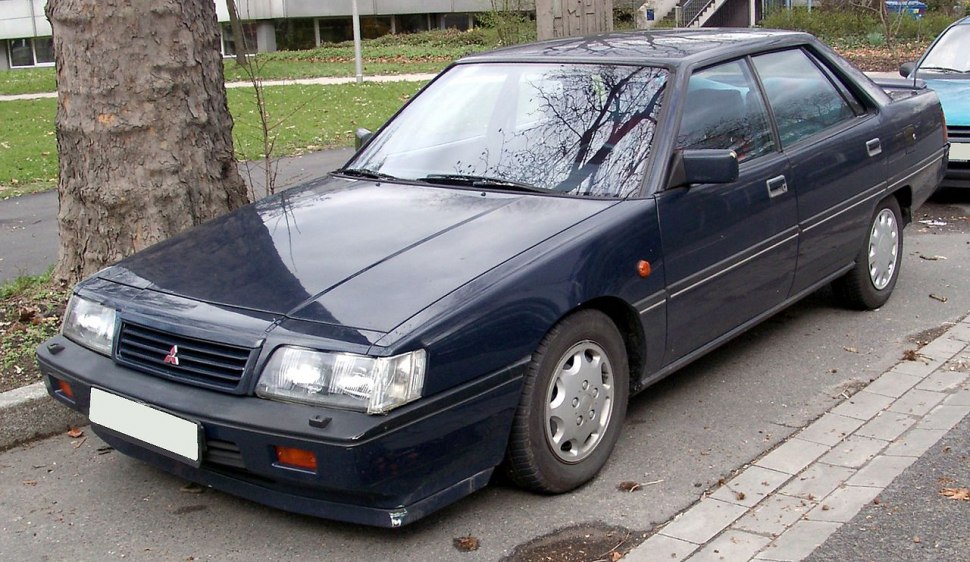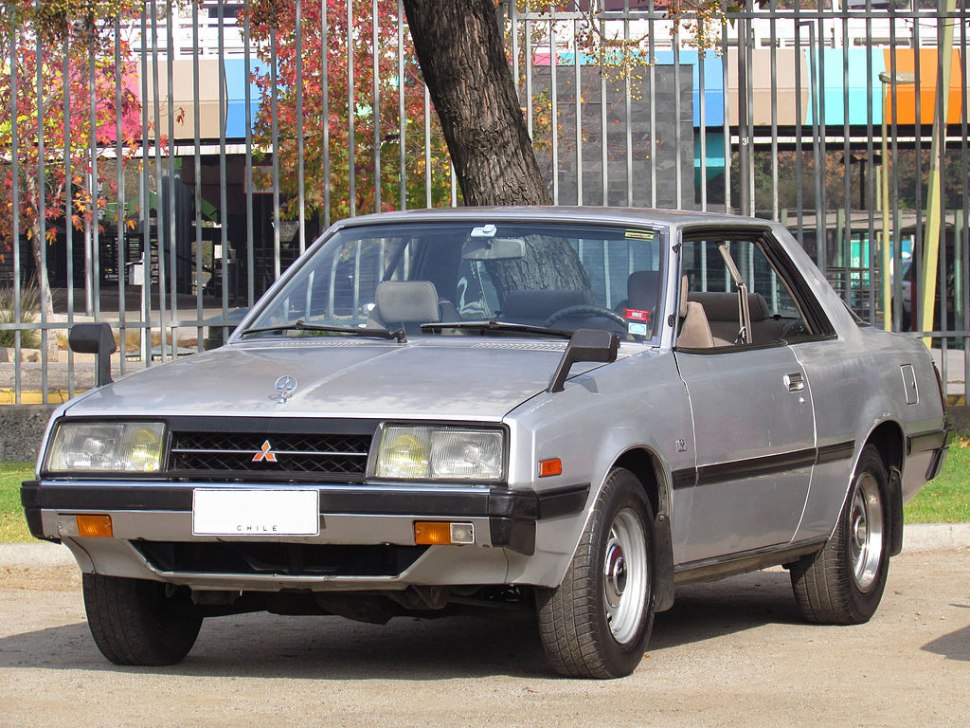
The Mitsubishi Sapporo I (A12_) represents a significant chapter in the history of Japanese automotive design and engineering, particularly within the burgeoning personal luxury coupe segment of the late 1970s. Launched in 1978, this first-generation model, internally designated A12_, was more than just a domestic offering; it was a global player, known across different markets by various names, including the Mitsubishi Galant Lambda in Japan and a rebadged version as the Plymouth Sapporo and Dodge Challenger in North America. Its introduction marked Mitsubishi’s ambition to compete with established European and American marques by offering a blend of distinctive styling, a comfortable interior, and reliable mechanicals. Positioned as a stylish grand tourer, the Sapporo I aimed to provide a more upscale and engaging driving experience than many of its contemporaries, reflecting the growing sophistication of Japanese automotive manufacturing during this period. The particular variant under scrutiny, the 2.0 (A123) with 107 horsepower, was a core offering, balancing performance with everyday usability, and it played a crucial role in establishing Mitsubishi’s reputation beyond its more utilitarian vehicles.
Engine and Performance of the Mitsubishi Sapporo I (A12_)
At the heart of the Mitsubishi Sapporo I (A12_) 2.0 (A123) lies a robust and proven powertrain architecture, designed for a blend of reliability and adequate performance characteristic of its era. This particular model, produced between 1978 and 1980, featured an internal combustion engine driving the rear wheels, a classic layout favored for its dynamic balance and engaging driving characteristics. The engine itself is a 2.0-liter unit, configured as an inline four-cylinder, a common and efficient design for passenger vehicles of the time. With four cylinders arranged longitudinally at the front of the vehicle, the engine contributed to the Sapporo’s balanced weight distribution and traditional long-hood, short-deck coupe aesthetic.
The power output for this 2.0 (A123) variant stood at a respectable 107 horsepower. While this figure may seem modest by today’s standards, it was competitive for a naturally aspirated 2.0-liter engine in the late 1970s, especially one designed for a personal luxury coupe rather than an outright sports car. The engine utilized a carburettor fuel injection system, a standard technology before the widespread adoption of electronic fuel injection, ensuring a relatively straightforward and reliable fuel delivery. Being a naturally aspirated engine, it delivered power smoothly and predictably, without the complexity or lag associated with forced induction systems. Each cylinder was equipped with two valves, a configuration that balanced efficiency and performance for the engine’s design parameters.
The transmission choice further emphasized the Sapporo’s driver-oriented character. It came equipped with a 5-speed manual gearbox, which was a notable feature for the period. Many competitors still offered 4-speed manuals or automatic transmissions as standard, making the 5-speed manual a distinct advantage for enthusiasts seeking more control and better fuel economy on longer journeys. This manual transmission, coupled with the rear-wheel-drive architecture, provided a direct and engaging driving experience, allowing the driver to fully exploit the engine’s 107 horsepower. The drivetrain’s emphasis on rear-wheel drive not only contributed to a more dynamic feel but also aligned with the prevailing engineering philosophies for upscale coupes, offering a clear distinction from the growing number of front-wheel-drive economy cars entering the market. Fueling this engine was petrol (gasoline), stored in a substantial 60-liter (15.85 US gallon) fuel tank, offering a commendable cruising range, further cementing its grand touring credentials.
Design and Features of the Mitsubishi Sapporo I (A12_)
The design of the Mitsubishi Sapporo I (A12_) is a quintessential representation of late 1970s automotive aesthetics, blending Japanese precision with a touch of American personal luxury influence, especially given its North American market variants. As a two-door coupe, the Sapporo I exuded a sense of sportiness and elegance, aiming to capture the attention of buyers seeking a vehicle that was both stylish and practical. Its body type, a coupe, featured sleek lines, a relatively long hood, and a distinctive rear profile that gave it a substantial road presence. The design was characterized by crisp edges and a balanced proportion, typical of the era, moving away from the more curvaceous forms of the early 1970s.
With seating for five occupants, the Sapporo I offered more interior space than many compact coupes, making it a viable option for small families or those who frequently carried additional passengers. The cabin was designed with comfort in mind, featuring materials and finishes that were considered upscale for a Japanese car of its time. Driver ergonomics were a key consideration, with a well-laid-out dashboard and controls that were intuitive and within easy reach. The two-door configuration emphasized its coupe identity, while the generous seating capacity hinted at its grand touring aspirations, capable of comfortable long-distance travel.
Underneath its stylish exterior, the Sapporo I incorporated several advanced features for its time, particularly in its suspension and braking systems. The front suspension utilized an independent McPherson type, a sophisticated design that offered an excellent balance of ride comfort and handling precision. This setup was crucial for isolating road imperfections and maintaining stability, contributing significantly to the car’s refined driving dynamics. Complementing the advanced front suspension, the Sapporo I was equipped with disc brakes on both the front and rear wheels. While front disc brakes were becoming common, rear disc brakes were still a premium feature in the late 1970s, typically found on more expensive or performance-oriented vehicles. This commitment to superior braking performance underscored Mitsubishi’s focus on safety and driver confidence.
Further enhancing its road manners were the tire and wheel specifications. The Sapporo I came with 195/70 R14 tires, a common size for vehicles of its class, providing a good balance of grip and ride comfort. These tires were mounted on 5.5J x 14-inch wheel rims, which were designed to complement the vehicle’s overall aesthetic while providing adequate structural support. The combination of a well-engineered chassis, independent front suspension, and four-wheel disc brakes ensured that the Mitsubishi Sapporo I (A12_) delivered a driving experience that was both engaging and secure, solidifying its place as a desirable personal luxury coupe in its competitive market segment.
Technical Specifications: Mitsubishi Sapporo I (A12_) 2.0 (A123) (107 Hp)
| Brand | Mitsubishi |
| Model | Sapporo |
| Generation | Sapporo I (A12_) |
| Type (Engine) | 2.0 (A123) (107 Hp) |
| Start of production | 1978 year |
| End of production | 1980 year |
| Powertrain Architecture | Internal Combustion engine |
| Body type | Coupe |
| Seats | 5 |
| Doors | 2 |
| Fuel Type | Petrol (Gasoline) |
| Power | 107 Hp |
| Engine layout | Front, Longitudinal |
| Number of cylinders | 4 |
| Engine configuration | Inline |
| Number of valves per cylinder | 2 |
| Fuel injection system | Carburettor |
| Engine aspiration | Naturally aspirated engine |
| Fuel tank capacity | 60 l (15.85 US gal | 13.2 UK gal) |
| Drivetrain Architecture | The Internal combustion engine (ICE) drives the rear wheels of the vehicle. |
| Drive wheel | Rear wheel drive |
| Number of gears and type of gearbox | 5 gears, manual transmission |
| Front suspension | Independent type McPherson |
| Front brakes | Disc |
| Rear brakes | Disc |
| Tires size | 195/70 R14 |
| Wheel rims size | 5.5J x 14 |