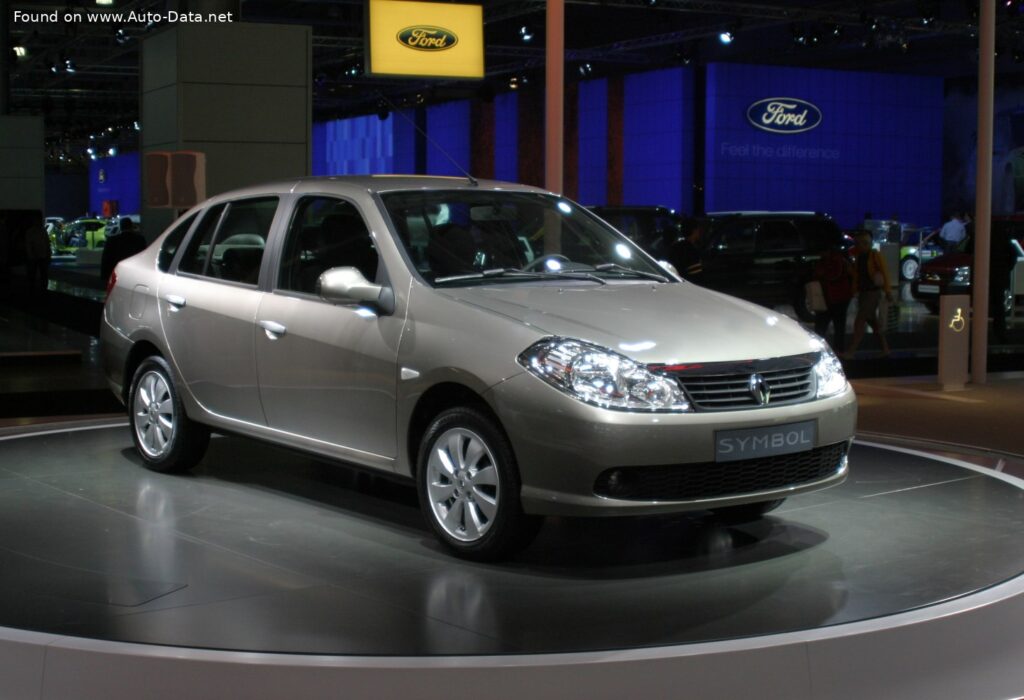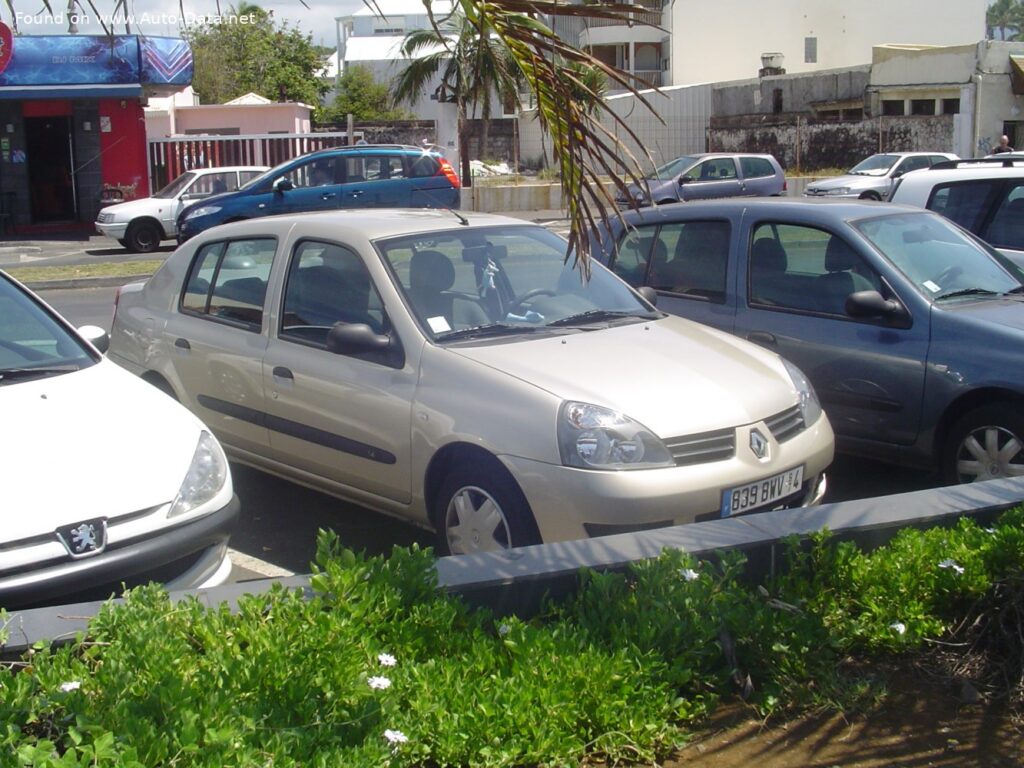
The Renault Symbol I (facelift 2002) 1.4 16V (98 Hp) Automatic represents a significant offering in Renault’s strategy for emerging markets and regions where compact sedans were, and often still are, preferred over hatchbacks. Primarily known as the Renault Clio Symbol or Renault Thalia in various markets outside of Western Europe, this model was a rebadged and slightly re-engineered sedan version of the popular second-generation Renault Clio hatchback. Its production commenced with the facelift in 2002 and continued through 2008, establishing itself as a practical, economical, and reliable family vehicle across Eastern Europe, the Middle East, North Africa, and Latin America. The Symbol’s design philosophy centered on providing robust transportation with a generous trunk capacity, a feature highly valued by consumers in these regions. While not officially sold in the United States, understanding the Renault Symbol I’s role provides insight into the diverse global automotive landscape and Renault’s targeted approach to different consumer needs, particularly during the early 2000s when affordability and utility were paramount in its primary markets. This particular variant, equipped with a 1.4-liter 16-valve engine and an automatic transmission, aimed to blend accessible performance with the convenience of an automatic gearbox, making it an attractive option for urban dwellers and families alike.
Engine & Performance of the Renault Symbol I (facelift 2002)
At the heart of the Renault Symbol I (facelift 2002) 1.4 16V (98 Hp) Automatic lies a dependable 1.4-liter, 16-valve inline-four engine, designated by Renault as the K4J 712. This naturally aspirated gasoline engine was engineered to deliver a balanced blend of power and fuel efficiency suitable for its intended markets. With an engine displacement of 1390 cubic centimeters (84.82 cubic inches), it produces a respectable 98 horsepower at 6000 revolutions per minute. This power output translates to a specific power of 70.5 horsepower per liter, indicating a fairly efficient design for its era. Torque figures stand at 127 Newton-meters (93.67 lb.-ft.) delivered at a moderate 3750 rpm, providing adequate pulling power for city driving and highway cruising. The engine’s configuration features a DOHC (Double Overhead Camshaft) valvetrain with four valves per cylinder, optimizing airflow for combustion and contributing to its smooth operation and efficiency.
Fuel is delivered via a multi-port manifold injection system, a common and reliable method for precise fuel metering. The engine operates with a compression ratio of 10:1, indicative of a design optimized for readily available gasoline fuel types. The K4J 712 engine is mounted front, transversely, driving the front wheels, a conventional and space-efficient layout for compact vehicles. Paired with a 4-speed automatic transmission, this powertrain configuration prioritizes driving ease and comfort, particularly in congested urban environments where manual shifting can become tiresome. While not designed for outright performance, the automatic gearbox offers a relaxed driving experience, a significant convenience feature for many buyers in its segment.
In terms of performance, the Renault Symbol I (facelift 2002) 1.4 16V (98 Hp) Automatic accelerates from 0 to 60 mph in a calculated 12.9 seconds, with 0 to 100 km/h achieved in 13.6 seconds. Its maximum speed is 186 km/h (115.58 mph). These figures position it as a capable performer for daily commuting and family travel, rather than a sporty offering. Fuel economy was a key consideration, with urban consumption rated at 10 liters per 100 km (23.5 US mpg) and extra-urban consumption at an impressive 5.8 liters per 100 km (40.6 US mpg). These numbers highlight the Symbol’s economical nature, a crucial factor for its target demographic. The vehicle’s weight-to-power ratio stands at 9.7 kg per horsepower (103.2 Hp per tonne), and its weight-to-torque ratio is 7.5 kg per Newton-meter (133.7 Nm per tonne), further underscoring its design as a practical and efficient mode of transport.
Design & Features of the Renault Symbol I (facelift 2002)
The design of the Renault Symbol I (facelift 2002) is characterized by its functional and unpretentious sedan body type, a deliberate choice to cater to market preferences for a conventional three-box shape. As a four-door, five-seat vehicle, it prioritizes interior space and luggage capacity, making it an ideal family car. The facelift in 2002 brought subtle updates to its exterior styling, typically involving refreshed front and rear fascias, updated lighting elements, and minor interior enhancements, aiming to keep the model competitive and visually appealing without a complete overhaul. Its dimensions are compact yet practical, with a length of 4171 mm (164.21 inches), a width of 1639 mm (64.53 inches), and a height of 1437 mm (56.57 inches). The wheelbase measures 2472 mm (97.32 inches), contributing to a stable ride and reasonable interior room for its class.
A standout feature for a vehicle of its segment and era is the generous trunk space, offering a minimum of 510 liters (18.01 cubic feet). This cavernous boot was a significant selling point, providing ample room for luggage, groceries, or family essentials, a practical advantage over many hatchbacks or smaller sedans. The fuel tank capacity of 50 liters (13.21 US gallons) further enhances its practicality, allowing for respectable driving ranges between fill-ups, especially considering its economical fuel consumption figures.
Underneath, the Symbol I features a conventional and robust suspension setup, with coil springs at both the front and rear, designed to absorb road imperfections and provide a comfortable ride, a crucial aspect for varied road conditions in its primary markets. Braking performance is handled by ventilated discs at the front for effective stopping power and traditional drum brakes at the rear, a cost-effective and reliable solution for a vehicle of this type. An Anti-lock Braking System (ABS) was included as an assisting system, enhancing safety by preventing wheel lock-up during hard braking maneuvers. The steering system employs a hydraulic rack and pinion setup, providing direct feedback and ease of maneuverability, particularly beneficial for urban driving and parking. The vehicle rides on 175/65 R14 tires mounted on 14-inch wheel rims, a common size that balances ride comfort, handling, and tire replacement costs. The overall design and feature set of the Renault Symbol I (facelift 2002) underscore its role as a practical, reliable, and value-oriented compact sedan tailored for the specific demands of its global markets.
Technical Specifications
| Brand | Renault |
| Model | Symbol |
| Generation | Symbol I (facelift 2002) |
| Type (Engine) | 1.4 16V (98 Hp) Automatic |
| Start of production | 2002 year |
| End of production | 2008 year |
| Powertrain Architecture | Internal Combustion engine |
| Body type | Sedan |
| Seats | 5 |
| Doors | 4 |
| Fuel consumption (economy) – urban | 10 l/100 km (23.5 US mpg) |
| Fuel consumption (economy) – extra urban | 5.8 l/100 km (40.6 US mpg) |
| Fuel Type | Petrol (Gasoline) |
| Acceleration 0 – 100 km/h | 13.6 sec |
| Acceleration 0 – 62 mph | 13.6 sec |
| Acceleration 0 – 60 mph (Calculated) | 12.9 sec |
| Maximum speed | 186 km/h (115.58 mph) |
| Weight-to-power ratio | 9.7 kg/Hp, 103.2 Hp/tonne |
| Weight-to-torque ratio | 7.5 kg/Nm, 133.7 Nm/tonne |
| Power | 98 Hp @ 6000 rpm. |
| Power per litre | 70.5 Hp/l |
| Torque | 127 Nm @ 3750 rpm. (93.67 lb.-ft.) |
| Engine layout | Front, Transverse |
| Engine Model/Code | K4J 712 |
| Engine displacement | 1390 cm3 (1.4 l, 84.82 cu. in.) |
| Number of cylinders | 4 |
| Engine configuration | Inline |
| Cylinder Bore | 79.5 mm (3.13 in.) |
| Piston Stroke | 70 mm (2.76 in.) |
| Compression ratio | 10:1 |
| Number of valves per cylinder | 4 |
| Fuel injection system | Multi-port manifold injection |
| Engine aspiration | Naturally aspirated engine |
| Valvetrain | DOHC |
| Engine oil capacity | 5 l (5.28 US qt) |
| Coolant | 6.5 l (6.87 US qt) |
| Kerb Weight | 950 kg (2094.39 lbs.) |
| Max. weight | 1475 kg (3251.82 lbs.) |
| Max load | 525 kg (1157.43 lbs.) |
| Trunk (boot) space – minimum | 510 l (18.01 cu. ft.) |
| Fuel tank capacity | 50 l (13.21 US gal) |
| Length | 4171 mm (164.21 in.) |
| Width | 1639 mm (64.53 in.) |
| Height | 1437 mm (56.57 in.) |
| Wheelbase | 2472 mm (97.32 in.) |
| Front track | 1406 mm (55.35 in.) |
| Rear (Back) track | 1386 mm (54.57 in.) |
| Drivetrain Architecture | Internal combustion engine drives front wheels |
| Drive wheel | Front wheel drive |
| Number of gears and type of gearbox | 4 gears, automatic transmission |
| Front suspension | Coil spring |
| Rear suspension | Coil spring |
| Front brakes | Ventilated discs |
| Rear brakes | Drum |
| Assisting systems | ABS (Anti-lock braking system) |
| Steering type | Steering rack and pinion |
| Power steering | Hydraulic Steering |
| Tires size | 175/65 R14 |
| Wheel rims size | 14 |