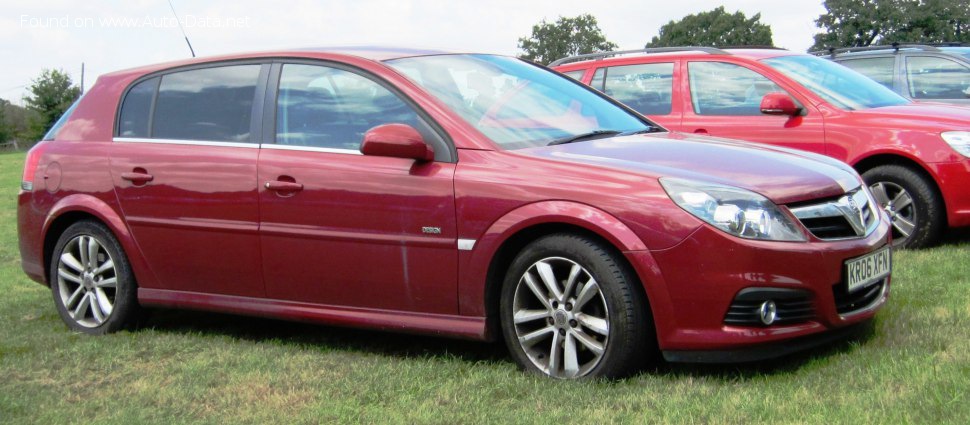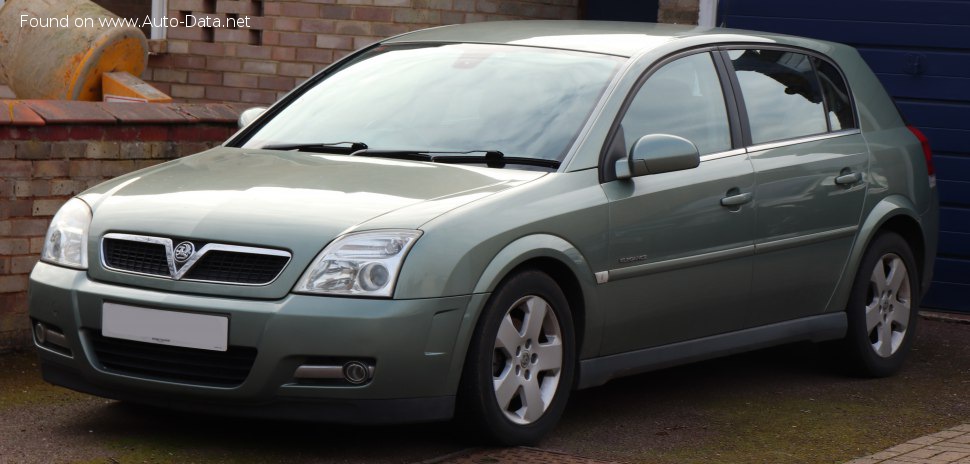
The Vauxhall Signum 1.9 CDTi ECOTEC (150 Hp) represents a distinctive chapter in European automotive design, emerging from a period where manufacturers experimented with blending traditional body styles to cater to evolving consumer preferences. Introduced in 2004 and produced until 2005, this particular iteration of the Signum was a product of General Motors’ European division, Vauxhall in the UK and Opel on the continent, designed primarily for the discerning European market. It was never officially sold in the United States, making it a unique example of European engineering and market strategy. Positioned above the Vectra in the lineup, the Signum carved out its own niche, aiming to offer the spaciousness and versatility of an estate (wagon) with the dynamic styling of a hatchback, all while providing a premium feel. The focus keyword for this detailed examination is the Vauxhall Signum 1.9 CDTi ECOTEC (150 Hp), a model celebrated for its efficient diesel powertrain and innovative interior packaging.
Engine & Performance: The Vauxhall Signum 1.9 CDTi ECOTEC (150 Hp) Powertrain
At the heart of the Vauxhall Signum 1.9 CDTi ECOTEC (150 Hp) lies a robust and efficient 1.9-liter (1910 cm3 / 116.56 cu. in.) inline four-cylinder diesel engine, designated with the model code Z19DTH. This powerplant was a significant offering in its class, delivering a formidable 150 horsepower at 4000 revolutions per minute, translating to a respectable power per liter rating of 78.5 Hp/l. More impressively for a diesel, it generated a substantial 236.02 lb.-ft. (320 Nm) of torque, available across a broad and usable rev range from 2000 to 2750 rpm. This impressive torque output provided excellent low-end grunt and flexible in-gear acceleration, making it well-suited for both urban commuting and long-distance highway cruising, a key characteristic desired in European markets.
The engine’s architecture featured a front, transverse layout, driving the front wheels through a precise 6-speed manual transmission. This combination ensured an engaging driving experience while optimizing power delivery and fuel efficiency. Key to its performance and environmental credentials was the ECOTEC designation, signifying Vauxhall’s commitment to economical and ecological technology. The engine utilized a Diesel Commonrail fuel injection system, a sophisticated technology for its time that allowed for precise fuel delivery and improved combustion efficiency. Further enhancing its performance was a turbocharger coupled with an intercooler, which significantly boosted power output and responsiveness across the rev range. With an OHC (Overhead Camshaft) valvetrain and two valves per cylinder, the engine maintained a balance of simplicity and efficiency, while its 18:1 compression ratio was typical for a direct-injection diesel of the era.
Performance figures for the Vauxhall Signum 1.9 CDTi ECOTEC (150 Hp) were quite competitive for its segment. It could achieve a maximum speed of approximately 129.87 mph (209 km/h), demonstrating its capability for sustained high-speed travel on European autobahns. Fuel economy was a strong suit, particularly for a vehicle of its size and performance. The combined fuel consumption was rated at an impressive 39.2 US mpg (6 l/100 km), with extra-urban driving yielding an even better 47 US mpg (5 l/100 km). Even in urban conditions, it managed a respectable 30.5 US mpg (7.7 l/100 km). These figures underscored the efficiency of the CDTi ECOTEC engine, making it an attractive option for buyers conscious of running costs and environmental impact. Furthermore, with CO2 emissions of 162 g/km and adherence to the Euro 4 emission standard, the Signum was positioned as a relatively environmentally conscious choice for its time, aligning with increasingly strict European regulations.
The vehicle’s weight-to-power ratio stood at 9.4 kg/Hp (106 Hp/tonne), while the weight-to-torque ratio was 4.4 kg/Nm (226.1 Nm/tonne). These metrics indicate a well-balanced power-to-weight characteristic for a family-oriented vehicle, contributing to its responsive acceleration and overall driving dynamics. The engine’s reliability and serviceability were also considered, with an engine oil capacity of 4.54 US quarts (4.3 liters) and a coolant capacity of 7.4 US quarts (7 liters), ensuring adequate lubrication and thermal management for longevity.
Design & Features: Innovation in Form and Function
The Vauxhall Signum presented a unique proposition in its segment, challenging conventional body style definitions. While officially classified as a 5-door hatchback, its extended wheelbase and innovative rear seating design blurred the lines between a traditional hatchback, a sedan, and a compact executive wagon. Measuring 183.11 inches (4651 mm) in length, 70.79 inches (1798 mm) in width (80.16 inches / 2036 mm including mirrors), and 57.72 inches (1466 mm) in height, the Signum possessed a substantial road presence. Its most distinguishing feature was arguably the generous 111.42-inch (2830 mm) wheelbase, shared with the longer Vectra estate. This extended wheelbase was crucial to its design philosophy, primarily benefiting rear passenger comfort and flexibility, aiming to provide a superior experience to what was typically found in a family hatchback.
The interior of the Signum was designed with versatility and passenger comfort in mind. It offered seating for five, but its rear compartment featured individual sliding and reclining seats rather than a conventional bench. This “FlexSpace” system allowed for a high degree of customization, enabling passengers to optimize legroom or cargo space as needed. This innovative approach to seating was a key selling point in a market that valued practicality and adaptable interior configurations. The trunk space reflected this adaptability, offering a minimum of 12.89 cu. ft. (365 liters) with all seats in place, which could expand significantly to a maximum of 49.79 cu. ft. (1410 liters) by folding down the rear seats. This made the Signum exceptionally practical for families or individuals requiring flexible cargo solutions, further solidifying its niche as a versatile, premium-oriented vehicle.
Aerodynamics played a role in the Signum’s design, as evidenced by its commendable drag coefficient (Cd) of 0.28. This low figure contributed to both its fuel efficiency and reduced wind noise at higher speeds, enhancing the overall refinement of the cabin, a desirable trait for long European journeys. In terms of safety and driving dynamics, the Signum was equipped with a comprehensive set of features for its era. The drivetrain architecture saw the internal combustion engine driving the front wheels, a common and efficient setup for a vehicle of this type. Suspension duties were handled by an independent McPherson strut system with coil springs and an anti-roll bar at the front, complemented by an independent multi-link suspension at the rear. This sophisticated suspension setup was engineered to provide a comfortable ride quality while maintaining composed handling characteristics, crucial for varying European road conditions. Braking performance was assured by ventilated discs at the front and disc brakes at the rear, supported by an Anti-lock Braking System (ABS) as a standard assisting system, ensuring reliable stopping power and enhanced control during emergency maneuvers.
The Vauxhall Signum 1.9 CDTi ECOTEC (150 Hp) was, therefore, more than just a means of transportation; it was a thoughtfully engineered vehicle that sought to bridge market gaps by offering a blend of executive comfort, family practicality, and efficient performance, all wrapped in a distinctive European package. Its short production run in this specific configuration from 2004 to 2005 underscores its niche appeal and its role as an interesting experiment in automotive segmentation, demonstrating Vauxhall’s efforts to innovate within the competitive European market.
Technical Specifications
| Brand | Vauxhall |
| Model | Signum |
| Generation | Signum

|