The Mitsubishi Sapporo I (A12_) represents a significant chapter in Mitsubishi’s journey into the global automotive landscape, embodying the brand’s aspirations in the personal luxury coupe segment during the late 1970s. Launched in 1978, this first-generation Sapporo, specifically the 2.0 (A123) variant, was a stylish and comfortable two-door hardtop designed to appeal to buyers seeking a blend of elegance, reliability, and practical performance. While the Sapporo nameplate might be less familiar to a contemporary American audience, this vehicle was a crucial part of Mitsubishi’s export strategy, finding its way to various international markets under different badges, including as the Dodge Challenger and Plymouth Sapporo in North America, and the Mitsubishi Scorpion in Australia. This strategic rebadging allowed Mitsubishi to gain a foothold in competitive markets, leveraging its engineering prowess through established distribution networks. The {original_title} was positioned as a sophisticated alternative, offering a distinctive Japanese take on the popular personal luxury coupe formula that was prevalent during its era. Its production run from 1978 to 1980 marked a period of evolving automotive design and increasing demand for fuel-efficient yet well-equipped vehicles, a challenge the Sapporo aimed to address with its balanced approach.
The Genesis and Global Reach of the Mitsubishi Sapporo I
The Mitsubishi Sapporo I (A12_) emerged during a transformative period for the global automotive industry. Following the energy crises of the 1970s, consumers increasingly sought vehicles that offered a more sensible balance between size, fuel economy, and creature comforts. Mitsubishi, a company with a rich history in engineering and manufacturing, responded with models that aimed to blend Japanese reliability with contemporary styling and features. The Sapporo I, derived from the Mitsubishi Galant Lambda platform, was a prime example of this strategy. It was conceived as a sleek, two-door hardtop coupe, a body style that resonated strongly with buyers looking for a personal statement vehicle that was distinct from the family sedan. Its introduction in 1978 was timely, allowing it to compete with established players in its segment while showcasing Mitsubishi’s advancing design language and technical capabilities.
Beyond its domestic Japanese market, the Sapporo I was instrumental in expanding Mitsubishi’s international presence. The decision to market the vehicle under various brand names in different regions was a clever strategy to circumvent import restrictions and leverage existing dealer networks. In North America, it was sold through Chrysler’s captive import program as the Dodge Challenger and Plymouth Sapporo, offering American consumers a sportier, more compact alternative to traditional domestic personal luxury coupes. This cross-branding not only diversified the product offerings for Dodge and Plymouth but also introduced Mitsubishi engineering to a wider audience, gradually building brand recognition and trust. The Sapporo I’s role was therefore dual-faceted: to serve as a stylish and capable offering in its own right and to act as a precursor for Mitsubishi’s eventual direct market entry into the United States.
Engine and Performance: The 2.0 (A123) Powerplant
At the heart of the Mitsubishi Sapporo I (A12_) 2.0 (A123) lay a robust 2.0-liter internal combustion engine, designed to deliver a dependable and smooth driving experience. This naturally aspirated engine produced 90 horsepower (Hp), a figure that, while modest by today’s standards, was entirely competitive for a personal luxury coupe of its class in the late 1970s. The emphasis for this powertrain was not on raw speed or track performance, but rather on providing sufficient power for comfortable highway cruising and responsive urban driving, all while maintaining a reasonable level of fuel efficiency for its time. The engine’s design prioritized reliability and longevity, hallmarks of Japanese engineering that were becoming increasingly valued globally.
The 2.0-liter displacement offered a good balance between power output and operational economy. As a naturally aspirated unit, it delivered its power in a linear and predictable fashion, making for an easy-to-drive vehicle. The 90 Hp was more than adequate for the Sapporo’s intended purpose, allowing it to keep pace with traffic and execute passing maneuvers without undue strain. This powertrain architecture, focusing on a conventional internal combustion engine, was standard for the era, but Mitsubishi’s execution ensured a level of refinement and durability that helped build its reputation. The engine was typically paired with either a manual or automatic transmission, offering buyers a choice based on their driving preferences. The overall performance profile of the Sapporo I 2.0 (A123) underscored its identity as a comfortable and stylish cruiser, rather than an outright sports car, aligning perfectly with the personal luxury coupe segment it aimed to capture.
Design and Features of the Sapporo I Coupe
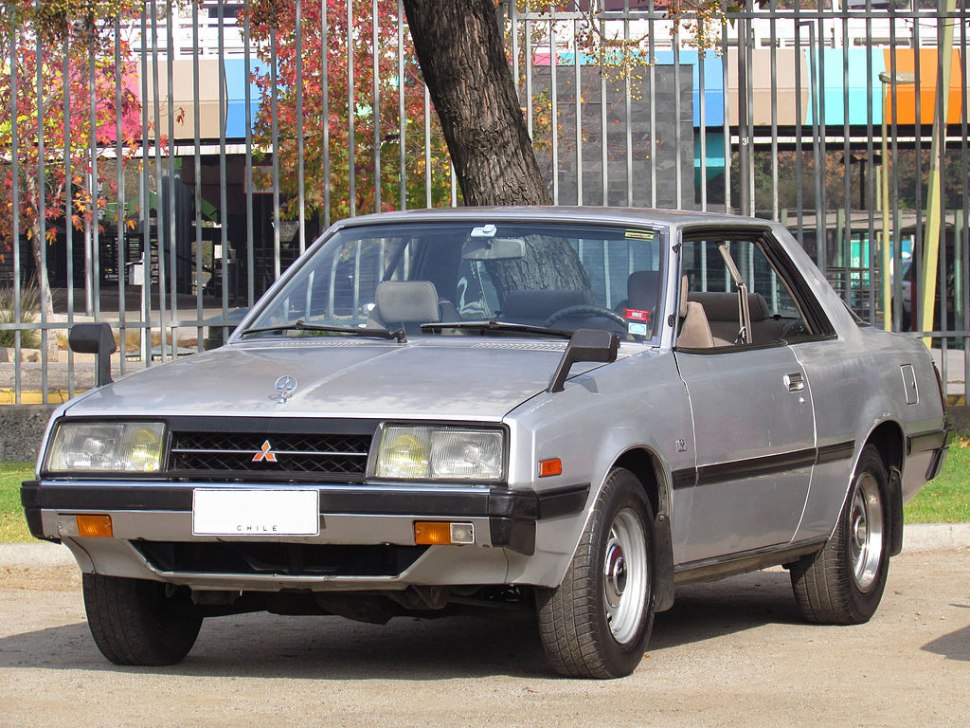
The design of the Mitsubishi Sapporo I (A12_) was a key selling point, embodying the sleek and somewhat angular aesthetics popular in the late 1970s. Its body type was a classic two-door hardtop coupe, characterized by its pillarless side windows when all glass was lowered, creating an open and airy feel. This design choice contributed significantly to its elegant and sporty profile, distinguishing it from more conventional sedans. The Sapporo I featured clean lines, a relatively long hood, and a short rear deck, proportions that were considered aspirational and dynamic during its production years. The front fascia typically included rectangular headlights and a distinctive grille, giving the car a sophisticated and confident road presence. Chrome accents were used judiciously to highlight its premium aspirations, a common design element in personal luxury vehicles of the era.
Inside, the Sapporo I aimed to provide a comfortable and inviting cabin environment. While specific features varied by market and trim level, the focus was on driver and passenger comfort, with well-padded seating and a user-friendly dashboard layout. Instrumentation was clear and concise, providing essential information to the driver. Features that might seem basic today, such as air conditioning, power windows, and an AM/FM stereo, were considered desirable amenities in the late 1970s, enhancing the car’s appeal as a personal luxury vehicle. Safety, while not featuring the advanced systems of modern cars, was addressed with standard seatbelts and a robust body structure for its time. The overall design ethos of the Sapporo I was one of understated elegance and practical luxury, offering a refined driving experience within a stylish package that resonated with consumers looking for something more distinctive than a typical family car.
Technical Specifications: Mitsubishi Sapporo I (A12_) 2.0 (A123) (90 Hp)
| Brand | Mitsubishi |
| Model | Sapporo |
| Generation | Sapporo I (A12_) |
| Type (Engine) | 2.0 (A123) (90 Hp) |
| Start of production | 1978 year |
| End of production | 1980 year |
| Powertrain Architecture | Internal Combustion engine |
| Body type | Coupe |
| Fuel Type | Petrol (Gasoline) |
| Engine specs Power | 90 Hp |
| Engine aspiration | Naturally aspirated engine |
| What is the body type, Mitsubishi Sapporo I (A12_)? | Coupe |
| How much power, Mitsubishi Sapporo Coupe 1978 2.0 (A123) (90 Hp)? | 90 Hp |
| What is the drivetrain, Mitsubishi Sapporo I (A12_) Coupe 1978 2.0 (A123) (90 Hp)? | Internal Combustion engine |