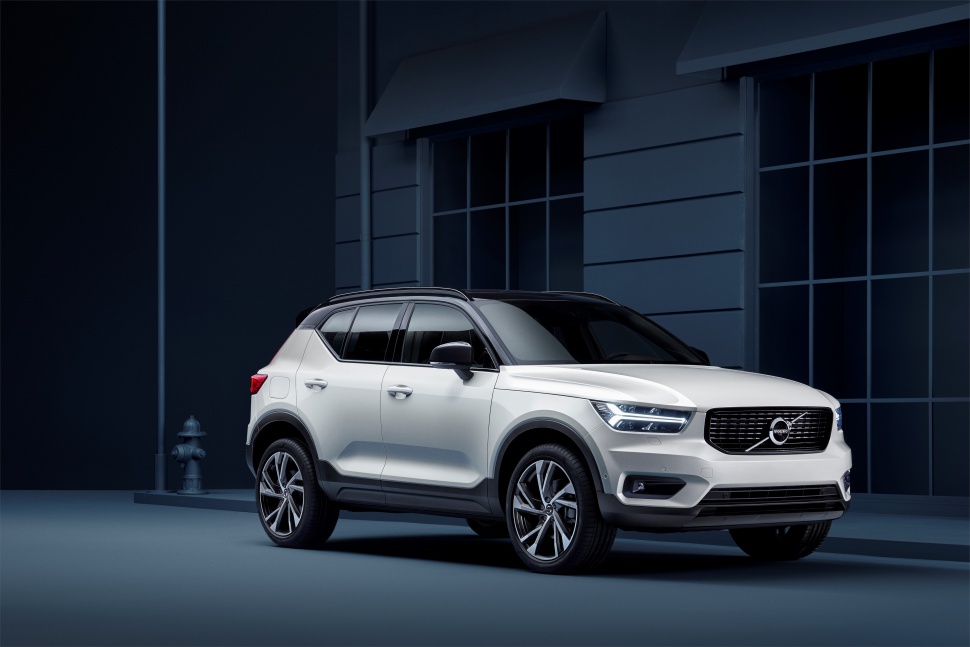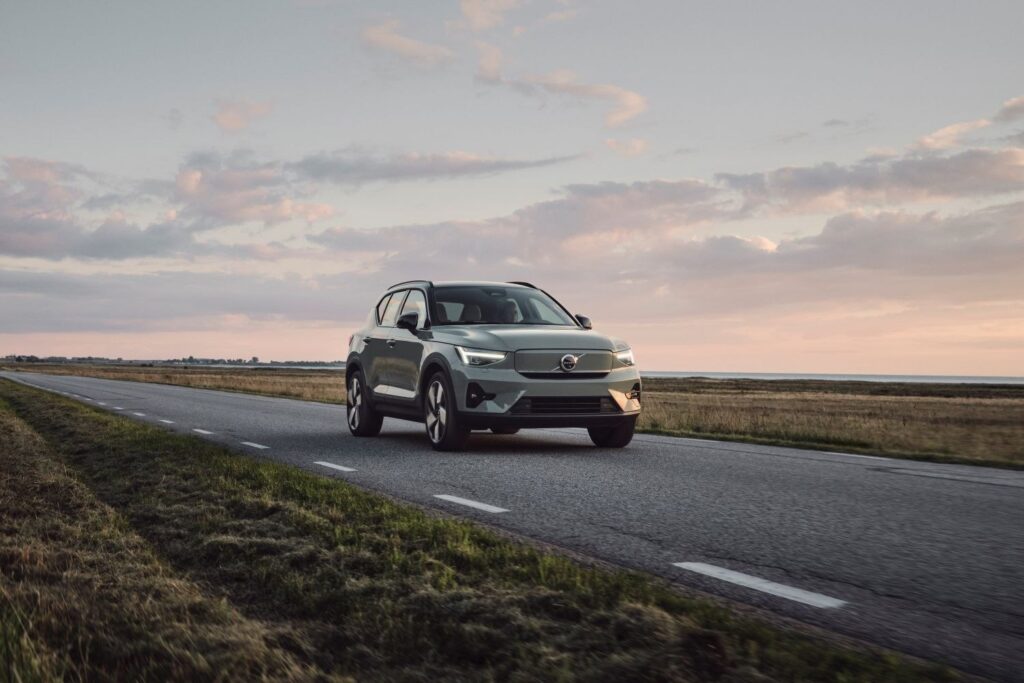
The Volvo XC40 (facelift 2022) 1.5 T2 (129 Hp) represents a compelling entry in the premium compact SUV segment, a category increasingly vital for manufacturers seeking to capture urban and suburban buyers. This particular variant, introduced in March 2022 as part of the XC40’s mid-cycle refresh, underscores Volvo’s commitment to offering a diverse range of powertrains tailored for various global markets. While the XC40 itself has enjoyed significant success in North America, this specific 1.5-liter T2 engine, with its focus on efficiency and lower displacement, is more prominently featured in European and Asian markets where tax structures and fuel economy standards favor such configurations. It embodies Volvo’s modern design philosophy, advanced safety features, and a sophisticated driving experience in a more accessible and environmentally conscious package.
Engine and Performance of the Volvo XC40 (facelift 2022)
At the heart of the {original_focus_keyword} 1.5 T2 lies a technically sophisticated powertrain designed for efficiency and adequate urban performance. This variant is equipped with a 1.5-liter (1477 cm³ or 90.13 cu. in.) inline three-cylinder engine, designated as the B3154T9. Despite its compact displacement, the engine benefits from a turbocharger and intercooler, ensuring a robust power delivery that belies its size. It produces 129 horsepower at 5000 rpm, translating to a respectable 87.3 horsepower per liter, showcasing modern engine design principles. Torque output is equally impressive for its class, rated at 245 Nm (180.7 lb.-ft.), available across a broad rev range, peaking at a maximum engine speed of 6000 rpm. This ample torque helps in everyday driving, especially in city traffic and when merging onto highways.
Power is delivered to the front wheels via a standard 6-speed manual transmission, a choice that emphasizes driver engagement and allows for precise control over the engine’s output, a common offering in European markets. The powertrain architecture is a straightforward front-wheel-drive setup, with the internal combustion engine mounted transversely. Performance figures indicate that the XC40 1.5 T2 can accelerate from 0 to 60 mph in a computed 10.4 seconds (0-100 km/h in 10.9 seconds), making it suitable for daily commuting rather than outright speed. The maximum speed is electronically limited to 111.85 mph (180 km/h), a common practice for Volvo vehicles to enhance safety and efficiency. Fuel injection is handled by a direct injection system, optimizing fuel delivery for both power and economy, while a DOHC (Double Overhead Camshaft) valvetrain ensures precise valve timing. The engine also features a 10.5:1 compression ratio, a particulate filter, and a Start & Stop System, all contributing to its compliance with the stringent Euro 6d emission standard and improved fuel efficiency.
Fuel economy is a key selling point for this T2 variant. According to WLTP (Worldwide Harmonized Light Vehicles Test Procedure) standards, the combined fuel consumption ranges from 7 to 7.6 liters per 100 km, which translates to approximately 33.6 to 30.9 US mpg. Even under the older NEDC equivalent, combined consumption is a commendable 6.3-6.4 liters per 100 km (37.3-36.8 US mpg). CO2 emissions are kept between 158-173 g/km (WLTP), further highlighting its environmental consideration in its primary markets. The 54-liter (14.27 US gallons) fuel tank capacity allows for a decent cruising range between fill-ups, making it practical for both city driving and longer journeys.
Design and Features of the Volvo XC40 (facelift 2022)
The Volvo XC40 (facelift 2022) retains its distinctive and acclaimed design language, characterized by a bold, youthful, and contemporary aesthetic. As an SUV body type with five doors and seating for five occupants, it strikes an ideal balance between urban maneuverability and practical utility. The 2022 facelift brought subtle yet effective updates, primarily focusing on refreshed front fascias, new wheel designs, and updated interior trim options, aligning its appearance more closely with Volvo’s fully electric Recharge models. Its compact dimensions, with a length of 174.21 inches (4425 mm), a width of 73.35 inches (1863 mm), and a height of 65.04 inches (1652 mm), make it easy to navigate through congested city streets and park in tight spaces. The 106.38-inch (2702 mm) wheelbase contributes to a stable ride and generous interior volume for its class.
Inside, the XC40 continues to impress with its thoughtful Scandinavian design, emphasizing minimalism, premium materials, and ergonomic functionality. While specific features for this T2 variant are not detailed, Volvo’s commitment to safety is paramount across its entire lineup. Expect a comprehensive suite of active and passive safety systems, including advanced driver-assistance systems (ADAS) that leverage radar, cameras, and sensors to prevent accidents or mitigate their severity. Standard features typically include ABS (Anti-lock braking system), and the vehicle’s robust chassis design ensures excellent occupant protection. The interior is designed for comfort and connectivity, with intuitive infotainment systems and smart storage solutions that maximize practicality for families and individuals alike.
Practicality extends to its cargo capabilities. The XC40 offers a minimum trunk (boot) space of 452 liters (15.96 cu. ft.), which expands significantly to 1328 liters (46.9 cu. ft.) with the rear seats folded down, making it highly versatile for hauling luggage, groceries, or sports equipment. The vehicle’s ground clearance of 7.72 inches (196 mm) and impressive approach, departure, and ramp-over angles (20.3°, 26.9°, 20.3° respectively), along with a wading depth of 17.72 inches (450 mm), hint at its capability to handle light off-road excursions or challenging weather conditions, reinforcing its SUV credentials. The suspension system, featuring an independent McPherson strut setup with a coil spring and anti-roll bar at the front and an independent multi-link spring suspension with a stabilizer at the rear, ensures a comfortable and composed ride, absorbing road imperfections effectively. Braking is handled by ventilated discs both front and rear (296-345×25-30 mm front, 280-340×12-20 mm rear), providing confident stopping power. Electric power steering and a tight minimum turning circle of 38.71 feet (11.8 m) further enhance its agility in urban environments.
Technical Specifications
| Brand | Volvo |
| Model | XC40 |
| Generation | XC40 (facelift 2022) |
| Type (Engine) | 1.5 T2 (129 Hp) |
| Start of production | March, 2022 year |
| Powertrain Architecture | Internal Combustion engine |
| Body type | SUV |
| Seats | 5 |
| Doors | 5 |
| Fuel consumption at Low speed (WLTP) | 8.9-9.6 l/100 km (26.4 – 24.5 US mpg) |
| Fuel consumption at Medium speed (WLTP) | 6.7-7.4 l/100 km (35.1 – 31.8 US mpg) |
| Fuel consumption at high speed (WLTP) | 5.9-6.6 l/100 km (39.9 – 35.6 US mpg) |
| Fuel consumption at very high speed (WLTP) | 7.2-8 l/100 km (32.7 – 29.4 US mpg) |
| Combined fuel consumption (WLTP) | 7-7.6 l/100 km (33.6 – 30.9 US mpg) |
| CO2 emissions (WLTP) | 158-173 g/km |
| Fuel consumption (economy) – combined (NEDC, WLTP equivalent) | 6.3-6.4 l/100 km (37.3 – 36.8 US mpg) |
| CO2 emissions (NEDC, WLTP equivalent) | 142-146 g/km |
| Fuel Type | Petrol (Gasoline) |
| Acceleration 0 – 60 mph (Calculated) | 10.4 sec |
| Acceleration 0 – 100 km/h | 10.9 sec |
| Maximum speed | 180 km/h (111.85 mph), Electronically limited |
| Braking distance 100 km/h – 0 | 36 m |
| Emission standard | Euro 6d |
| Power | 129 Hp @ 5000 rpm |
| Power per liter | 87.3 Hp/l |
| Torque | 245 Nm (180.7 lb.-ft.) |
| Maximum engine speed | 6000 rpm |
| Engine layout | Front, Transverse |
| Engine Model/Code | B3154T9 |
| Engine displacement | 1477 cm³ (90.13 cu. in.) |
| Number of cylinders | 3 |
| Engine configuration | Inline |
| Cylinder Bore | 82 mm (3.23 in.) |
| Piston Stroke | 93.2 mm (3.67 in.) |
| Compression ratio | 10.5:1 |
| Number of valves per cylinder | 4 |
| Fuel injection system | Direct injection |
| Engine aspiration | Turbocharger, Intercooler |
| Valvetrain | DOHC |
| Engine oil capacity | 5.6 l (5.92 US qt) |
| Engine systems | Start & Stop System, Particulate filter |
| Trunk (boot) space – minimum | 452 l (15.96 cu. ft.) |
| Trunk (boot) space – maximum | 1328 l (46.9 cu. ft.) |
| Fuel tank capacity | 54 l (14.27 US gal) |
| Max. roof load | 75 kg (165.35 lbs.) |
| Permitted trailer load with brakes (12%) | 1600 kg (3527.4 lbs.) |
| Permitted trailer load without brakes | 750 kg (1653.47 lbs.) |
| Length | 4425 mm (174.21 in.) |
| Width | 1863 mm (73.35 in.) |
| Width with mirrors folded | 1910 mm (75.2 in.) |
| Width including mirrors | 2034 mm (80.08 in.) |
| Height | 1652 mm (65.04 in.) |
| Wheelbase | 2702 mm (106.38 in.) |
| Front track | 1601 mm (63.03 in.) |
| Rear (Back) track | 1626 mm (64.02 in.) |
| Front overhang | 855 mm (33.66 in.) |
| Rear overhang | 868 mm (34.17 in.) |
| Ride height (ground clearance) | 196 mm (7.72 in.) |
| Drag coefficient (Cd) | 0.340 |
| Minimum turning circle (turning diameter) | 11.8 m (38.71 ft.) |
| Approach angle | 20.3° |
| Departure angle | 26.9° |
| Ramp-over (brakeover) angle | 20.3° |
| Wading depth | 450 mm (17.72 in.) |
| Drivetrain Architecture | Internal combustion engine drives front wheels |
| Drive wheel | Front wheel drive |
| Number of gears and type of gearbox | 6 gears, manual transmission |
| Front suspension | Independent, McPherson with coil spring and anti-roll bar |
| Rear suspension | Independent multi-link spring suspension with stabilizer |
| Front brakes | Ventilated discs, 296-345×25-30 mm |
| Rear brakes | Ventilated discs, 280-340×12-20 mm |
| Assisting systems | ABS (Anti-lock braking system) |
| Steering type | Steering rack and pinion |
| Power steering | Electric Steering |
| Wheel rims size | 16; 17; 18 inches |