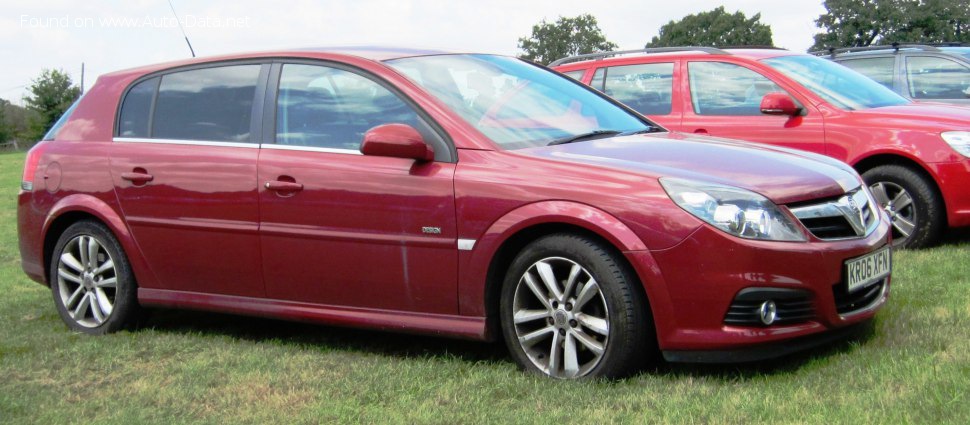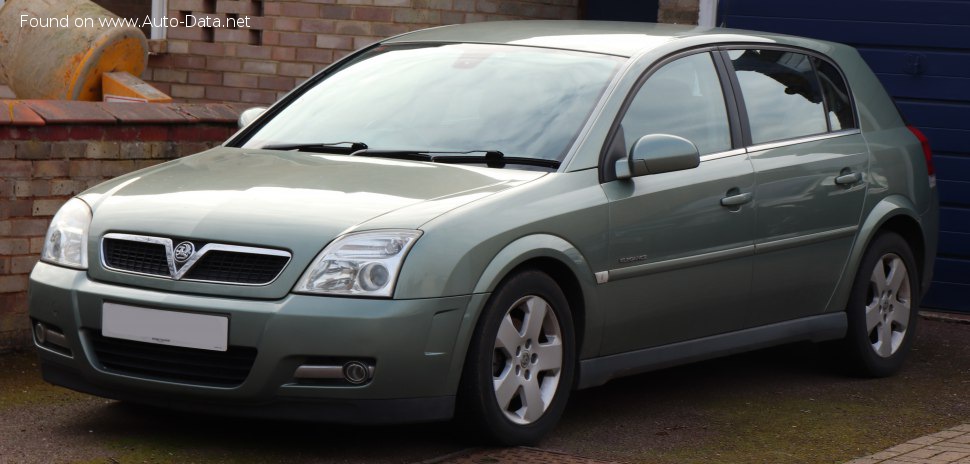
The Vauxhall Signum, specifically the 2004-2005 generation featuring the 1.9 CDTi ECOTEC (150 Hp) Automatic powertrain, represented a unique and somewhat unconventional offering in the European automotive landscape. Positioned as a large premium hatchback, it aimed to bridge the gap between traditional sedans and more versatile station wagons, catering to buyers seeking executive comfort combined with enhanced practicality. While never officially sold in the North American market, the Signum was a significant model for Vauxhall (and its continental European counterpart, Opel) during its production run, reflecting the brand’s efforts to innovate within the D-segment. This particular variant, with its robust diesel engine and automatic transmission, embodied a blend of performance, efficiency, and comfort designed for long-distance cruising on European motorways, a common characteristic of its market segment.
Engine & Performance of the Vauxhall Signum 1.9 CDTi ECOTEC (150 Hp) Automatic
At the heart of this particular Vauxhall Signum model lies the 1.9 CDTi ECOTEC engine, a testament to the growing prominence of diesel technology in Europe during the early 2000s. This powerplant, designated with the internal code Z19DTH, is a 1.9-liter (116.56 cu. in.) inline four-cylinder unit featuring an overhead camshaft (OHC) valvetrain with two valves per cylinder. Its architecture is front-transverse, driving the front wheels, a typical configuration for maximizing interior space and manufacturing efficiency in this class of vehicle.
The engine’s performance figures were quite respectable for its time and segment. It produced a healthy 150 HP at 4000 rpm, delivering a power-per-liter ratio of 78.5 HP/l, showcasing efficient power extraction from its displacement. More crucially for a diesel, it generated a substantial 236.02 lb.-ft. (320 Nm) of torque, available across a broad and usable rev range from 2000 to 2750 rpm. This ample low-end torque was a key characteristic, providing strong acceleration and effortless cruising, particularly when paired with the standard 6-speed automatic transmission. The automatic gearbox was designed to provide smooth and refined shifts, enhancing the vehicle’s executive appeal and reducing driver fatigue during long journeys. The combination of the powerful diesel engine and the efficient automatic transmission allowed the Signum to achieve a maximum speed of 126.76 mph (204 km/h), making it well-suited for high-speed motorway travel common in Europe.
Fuel efficiency was a significant selling point for the 1.9 CDTi ECOTEC. The combined fuel consumption was rated at an impressive 33.6 US mpg (7 l/100 km), with extra-urban figures reaching an even more economical 42.8 US mpg (5.5 l/100 km). Even in urban environments, it managed a respectable 24.5 US mpg (9.6 l/100 km). These figures highlight the inherent efficiency of modern common-rail diesel technology, especially when compared to gasoline counterparts of similar output. The engine utilized a Diesel Commonrail fuel injection system, coupled with a turbocharger and an intercooler, optimizing combustion and boosting power output while maintaining efficiency. With a compression ratio of 18:1, typical for a diesel engine, and an engine oil capacity of 4.3 liters (4.54 US qt), the powertrain was engineered for durability and consistent performance. Environmental considerations were also addressed, with the 2004-2005 Signum meeting the Euro 4 emission standard, emitting 189 g/km of CO2, which was a competitive figure for a vehicle of its size and power at the time.
Design & Features of the Vauxhall Signum
The Vauxhall Signum, particularly this generation, was instantly recognizable by its distinctive body type: a 5-door hatchback with seating for five occupants. Its design aimed to blend the executive presence of a sedan with the practical utility of a wagon, resulting in a silhouette that was longer and more elongated than a typical hatchback. Measuring 183.11 inches (4651 mm) in length, 70.79 inches (1798 mm) in width (80.16 inches or 2036 mm including mirrors), and 57.72 inches (1466 mm) in height, the Signum commanded a significant road presence. A substantial wheelbase of 111.42 inches (2830 mm) was a key factor in its design, contributing to a spacious cabin and a remarkably smooth ride, further enhancing its executive appeal.
Aerodynamics played a role in its design, evidenced by a low drag coefficient (Cd) of 0.28. This not only contributed to its fuel efficiency but also reduced wind noise at higher speeds, improving overall cabin refinement. The interior was designed with flexibility in mind, offering a versatile cargo area. The trunk (boot) space ranged from 12.89 cu. ft. (365 liters) with all seats in place, expanding significantly to 49.79 cu. ft. (1410 liters) with the rear seats folded down. This adaptability was a core differentiator, allowing the Signum to cater to diverse needs, from business travel to family excursions, making it a highly practical choice for the European market.
While the Signum emphasized comfort and versatility, safety features were also standard for its class. The inclusion of ABS (Anti-lock Braking System) provided crucial stopping power and control, especially under emergency braking conditions. The vehicle’s kerb weight of 3119.54 lbs (1415 kg) contributed to a solid and planted feel on the road, further enhancing perceived safety and stability. The overall design language, while perhaps not universally acclaimed for its aesthetics, prioritized functionality, interior volume, and aerodynamic efficiency, all critical attributes for a premium European tourer.
Chassis & Drivetrain of the Vauxhall Signum
The driving dynamics of the Vauxhall Signum 1.9 CDTi ECOTEC (150 Hp) Automatic were engineered to provide a comfortable yet composed ride, suitable for both urban commuting and high-speed motorway cruising. The drivetrain architecture is straightforward: an internal combustion engine (ICE) driving the front wheels, a configuration known for its packaging efficiency and predictable handling characteristics, especially in adverse weather conditions. The 6-speed automatic transmission seamlessly manages the engine’s power, transmitting it to the front wheels with a focus on smoothness and efficiency.
For its suspension system, the Signum adopted a tried-and-tested setup designed to balance ride comfort with handling precision. The front suspension utilized an independent McPherson strut arrangement, complemented by coil springs and an anti-roll bar. This configuration is widely regarded for its ability to provide good wheel control and absorb road imperfections effectively. At the rear, the Signum featured an independent multi-link suspension system. Multi-link setups are generally more sophisticated than simpler beam axles, offering superior control over wheel geometry, which translates to enhanced ride comfort, improved stability, and better handling characteristics, particularly when dealing with varying road surfaces or carrying loads. This combination of front and rear independent suspension systems was crucial in delivering the refined driving experience expected of a premium D-segment vehicle.
Braking performance was handled by a robust system. The front wheels were equipped with ventilated discs, which are highly effective at dissipating heat generated during braking, thus reducing brake fade under heavy use. The rear wheels featured solid disc brakes, providing consistent and reliable stopping power. Complementing these mechanical components was the Anti-lock Braking System (ABS), a critical safety feature that prevents wheel lock-up during hard braking, allowing the driver to maintain steering control and reduce stopping distances. The 60-liter (15.85 US gal) fuel tank capacity provided a substantial cruising range, further cementing the Signum’s role as a capable long-distance vehicle.
Technical Specifications
| Brand | Vauxhall |
| Model | Signum |
| Generation | Signum |
| Type (Engine) | 1.9 CDTi ECOTEC (150 Hp) Automatic |
| Start of production | 2004 year |
| End of production | 2005 year |
| Powertrain Architecture | Internal Combustion engine |
| Body type | Hatchback |
| Seats | 5 |
| Doors | 5 |
| Fuel consumption (economy) – urban | 9.6 l/100 km (24.5 US mpg) |
| Fuel consumption (economy) – extra urban | 5.5 l/100 km (42.8 US mpg) |
| Fuel consumption (economy) – combined | 7 l/100 km (33.6 US mpg) |
| CO2 emissions | 189 g/km |
| Fuel Type | Diesel |
| Maximum speed | 204 km/h (126.76 mph) |
| Emission standard | Euro 4 |
| Weight-to-power ratio | 9.4 kg/Hp (106 Hp/tonne) |
| Weight-to-torque ratio | 4.4 kg/Nm (226.1 Nm/tonne) |
| Power | 150 Hp @ 4000 rpm |
| Power per liter | 78.5 Hp/l |
| Torque | 320 Nm @ 2000-2750 rpm (236.02 lb.-ft.) |
| Engine layout | Front, Transverse |
| Engine Model/Code | Z19DTH |
| Engine displacement | 1910 cm3 (116.56 cu. in.) |
| Number of cylinders | 4 |
| Engine configuration | Inline |
| Cylinder Bore | 82 mm (3.23 in.) |
| Piston Stroke | 90.4 mm (3.56 in.) |
| Compression ratio | 18:1 |
| Number of valves per cylinder | 2 |
| Fuel injection system | Diesel Commonrail |
| Engine aspiration | Turbocharger, Intercooler |
| Valvetrain | OHC |
| Engine oil capacity | 4.3 l (4.54 US qt) |
| Coolant | 7 l (7.4 US qt) |
| Kerb Weight | 1415 kg (3119.54 lbs.) |
| Trunk (boot) space – minimum | 365 l (12.89 cu. ft.) |
| Trunk (boot) space – maximum | 1410 l (49.79 cu. ft.) |
| Fuel tank capacity | 60 l (15.85 US gal) |
| Length | 4651 mm (183.11 in.) |
| Width | 1798 mm (70.79 in.) |
| Width including mirrors | 2036 mm (80.16 in.) |
| Height | 1466 mm (57.72 in.) |
| Wheelbase | 2830 mm (111.42 in.) |
| Drag coefficient (Cd) | 0.28 |
| Drivetrain Architecture | The Internal combustion engine (ICE) drives the front wheels of the vehicle. |
| Drive wheel | Front wheel drive |
| Number of gears and type of gearbox | 6 gears, automatic transmission |
| Front suspension | Independent, type McPherson with coil spring and anti-roll bar |
| Rear suspension | Independent multi-link suspension |
| Front brakes | Ventilated discs |
| Rear brakes | Disc |
| Assisting systems | ABS (Anti-lock braking system) |