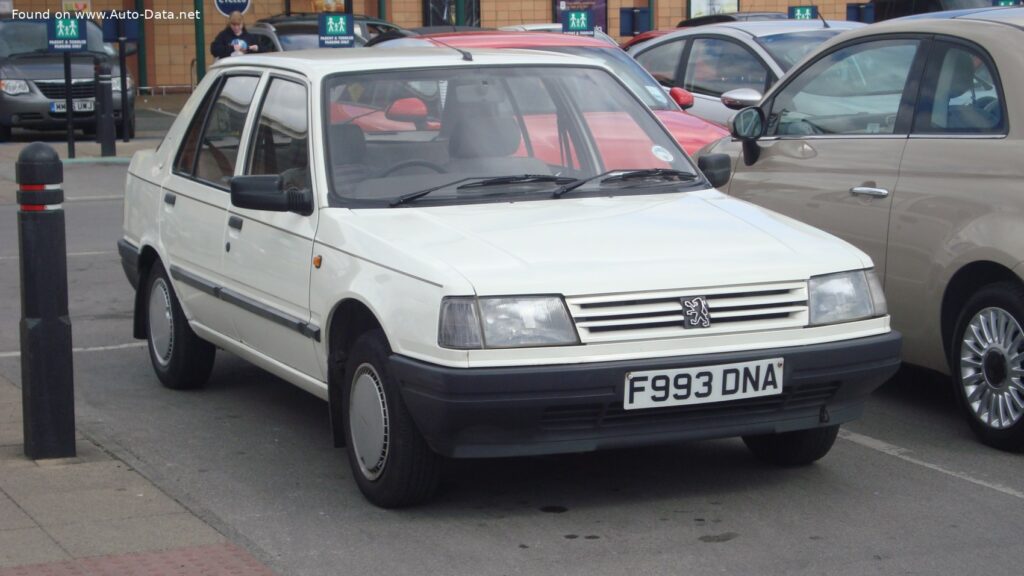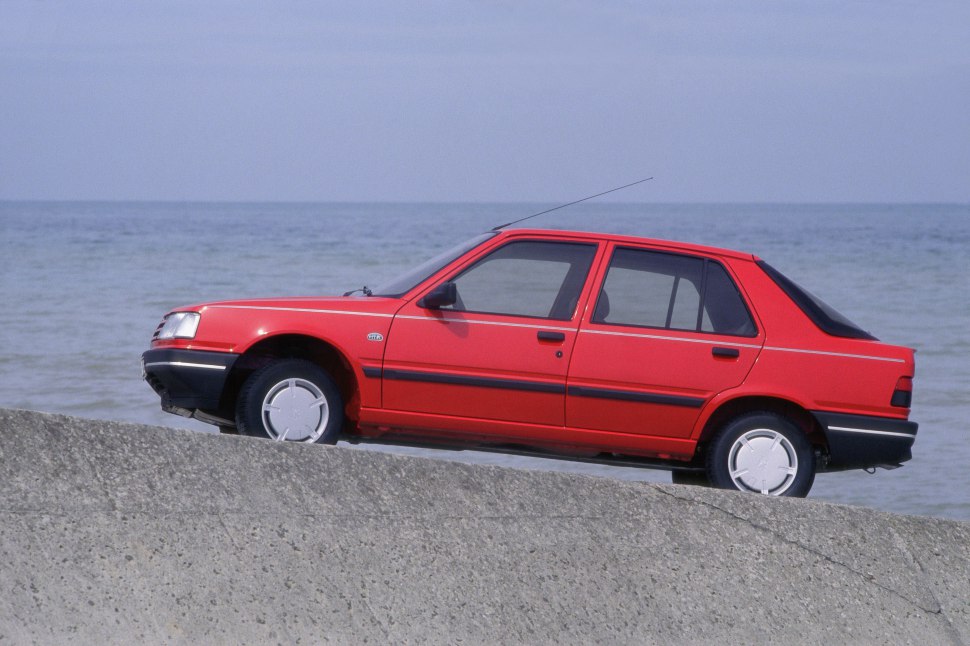
The Peugeot 309, particularly the 3C,3A facelift variant introduced in 1989, represented a significant chapter in the French automaker’s history, serving as a robust and practical compact family car primarily for the European market. While never officially imported to the United States, its design ethos and mechanical underpinnings were characteristic of Peugeot’s engineering prowess during the late 1980s and early 1990s. This particular iteration, the Peugeot 309 (3C,3A facelift 1989) 1.9i (98 Hp) Automatic, offered a blend of accessible performance and the convenience of an automatic transmission, catering to a broad spectrum of drivers seeking a reliable and economical daily driver. Positioned above the highly successful 205 but below the larger 405, the 309 filled a crucial gap in Peugeot’s lineup, inheriting some components from its siblings while establishing its own identity as a versatile hatchback.
Engine and Performance of the Peugeot 309 (3C,3A facelift 1989)
At the heart of this specific Peugeot 309 (3C,3A facelift 1989) model lies a 1.9-liter (1905 cm3 or 116.25 cu. in.) naturally aspirated inline-four petrol engine, designated by the code DFZ XU9J1. This engine, part of Peugeot’s renowned XU series, was a workhorse for the brand, known for its durability and relatively straightforward design. In this application, it delivered a respectable 98 horsepower at 6000 rpm, translating to a power-per-liter figure of 51.4 HP/l. The engine’s layout is front, transverse, driving the front wheels, a common and efficient architecture for compact cars of this era. With two valves per cylinder and a compression ratio of 9:1, the engine utilized a single-point fuel injection system, a step up from carbureted setups, offering improved fuel efficiency and emissions control for the time.
Mated to this engine was a 4-speed automatic transmission, a notable feature for a compact vehicle in its segment during this period. While a manual gearbox might have offered sharper engagement, the automatic provided a smooth and relaxed driving experience, particularly suited for urban commutes and longer journeys where ease of operation was prioritized. Despite the presence of an automatic transmission, the 309 1.9i still offered commendable performance for its class. It could accelerate from 0 to 60 mph in a calculated 9.4 seconds (0-100 km/h in 9.9 seconds) and reach a maximum speed of 119.3 mph (192 km/h). These figures placed it competitively against its European rivals, offering a spirited drive without being overly demanding on the driver.
Fuel economy for the 1.9i Automatic variant was also quite reasonable. The combined cycle consumption was rated at 7 liters per 100 km, which translates to approximately 33.6 US mpg. In urban driving, it consumed 9.3 l/100 km (25.3 US mpg), while on the extra-urban cycle, it achieved 5.5 l/100 km (42.8 US mpg). These numbers underscored its practicality as a family vehicle, balancing performance with everyday running costs. The engine’s oil capacity was 4.6 liters, and the cooling system held 7.5 liters of coolant, indicating robust specifications for its time.
Design and Features of the Peugeot 309 (3C,3A facelift 1989)
The Peugeot 309 (3C,3A facelift 1989) maintained the practical and unpretentious design language that characterized many European hatchbacks of the late 1980s. Its body type was a hatchback, available in both 3-door and 5-door configurations, offering versatility for different buyer needs. The facelift introduced in 1989 brought subtle but effective aesthetic updates, typically involving revised grille designs, updated lighting elements, and minor interior refinements, keeping the model fresh against evolving competition. Its dimensions were compact yet functional: a length of 159.45 inches (4050 mm), a width of 64.17 inches (1630 mm), and a height of 54.33 inches (1380 mm). The wheelbase measured 97.24 inches (2470 mm), contributing to a stable ride and adequate interior space for five occupants.
Inside, the 309 prioritized functionality and ergonomics. While not opulent, the cabin was designed to be comfortable and durable for daily family use. The seating capacity was for five individuals, typical for a compact hatchback. Practicality was further enhanced by its generous trunk space, which ranged from a minimum of 10.42 cu. ft. (295 liters) to a maximum of 21.72 cu. ft. (615 liters) with the rear seats folded, allowing for considerable cargo flexibility. The fuel tank capacity of 14.53 US gallons (55 liters) provided a decent cruising range, aligning with its role as a practical long-distance tourer or city commuter.
From a chassis and safety perspective, the 309 was engineered with a focus on reliable handling and occupant protection for its era. It featured a front-wheel-drive architecture, which was standard for its class, contributing to predictable handling characteristics. The suspension system comprised coil springs at the front and a torsion bar setup at the rear, a proven combination that offered a good balance between ride comfort and road holding. Braking was handled by disc brakes at the front and drum brakes at the rear, a common arrangement for vehicles in this segment. Crucially, the inclusion of an Anti-lock Braking System (ABS) as an assisting system was a significant safety feature for the time, enhancing control during emergency braking maneuvers. Steering was managed by a rack and pinion system, aided by hydraulic power steering, making parking and low-speed maneuvers considerably easier. The car rode on 13-inch wheels fitted with 165/70 TR13 tires, providing a comfortable ride and adequate grip.
With a kerb weight of 2006.21 lbs (910 kg), the 309 was a relatively light vehicle, which contributed to its nimble handling and efficient performance. Its maximum weight capacity was 2976.24 lbs (1350 kg), allowing for a maximum load of 970.03 lbs (440 kg), highlighting its capability to transport both passengers and luggage effectively. The 309’s blend of practical design, robust mechanicals, and considerate features ensured its enduring appeal in the European market during its production run from 1989 to 1993, cementing its place as a quintessential European family hatchback.
Technical Specifications
| Brand | Peugeot |
| Model | 309 |
| Generation | 309 (3C,3A facelift 1989) |
| Type (Engine) | 1.9i (98 Hp) Automatic |
| Start of production | 1989 year |
| End of production | 1993 year |
| Powertrain Architecture | Internal Combustion engine |
| Body type | Hatchback |
| Seats | 5 |
| Doors | 3-5 |
| Fuel consumption (economy) – urban | 9.3 l/100 km (25.3 US mpg) |
| Fuel consumption (economy) – extra urban | 5.5 l/100 km (42.8 US mpg) |
| Fuel consumption (economy) – combined | 7 l/100 km (33.6 US mpg) |
| Fuel Type | Petrol (Gasoline) |
| Acceleration 0 – 60 mph | 9.4 sec |
| Acceleration 0 – 100 km/h | 9.9 sec |
| Maximum speed | 119.3 mph (192 km/h) |
| Weight-to-power ratio | 9.3 kg/Hp (107.7 Hp/tonne) |
| Power | 98 Hp @ 6000 rpm. |
| Power per liter | 51.4 Hp/l |
| Engine layout | Front, Transverse |
| Engine Model/Code | DFZ XU9J1 |
| Engine displacement | 1905 cm3 (116.25 cu. in.) |
| Number of cylinders | 4 |
| Engine configuration | Inline |
| Cylinder Bore | 83 mm (3.27 in.) |
| Piston Stroke | 88 mm (3.46 in.) |
| Compression ratio | 9:1 |
| Number of valves per cylinder | 2 |
| Fuel injection system | Single-point injection |
| Engine aspiration | Naturally aspirated engine |
| Engine oil capacity | 4.6 l (4.86 US qt) |
| Coolant | 7.5 l (7.93 US qt) |
| Kerb Weight | 910 kg (2006.21 lbs.) |
| Max. weight | 1350 kg (2976.24 lbs.) |
| Max load | 440 kg (970.03 lbs.) |
| Trunk (boot) space – minimum | 295 l (10.42 cu. ft.) |
| Trunk (boot) space – maximum | 615 l (21.72 cu. ft.) |
| Fuel tank capacity | 55 l (14.53 US gal) |
| Length | 4050 mm (159.45 in.) |
| Width | 1630 mm (64.17 in.) |
| Height | 1380 mm (54.33 in.) |
| Wheelbase | 2470 mm (97.24 in.) |
| Front track | 1405 mm (55.31 in.) |
| Rear (Back) track | 1380 mm (54.33 in.) |
| Drivetrain Architecture | Internal combustion engine (ICE) drives the front wheels. |
| Drive wheel | Front wheel drive |
| Number of gears and type of gearbox | 4 gears, automatic transmission |
| Front suspension | Coil spring |
| Rear suspension | Torsion |
| Front brakes | Disc |
| Rear brakes | Drum |
| Assisting systems | ABS (Anti-lock braking system) |
| Steering type | Steering rack and pinion |
| Power steering | Hydraulic Steering |
| Tires size | 165/70 TR13 |
| Wheel rims size | 13 |