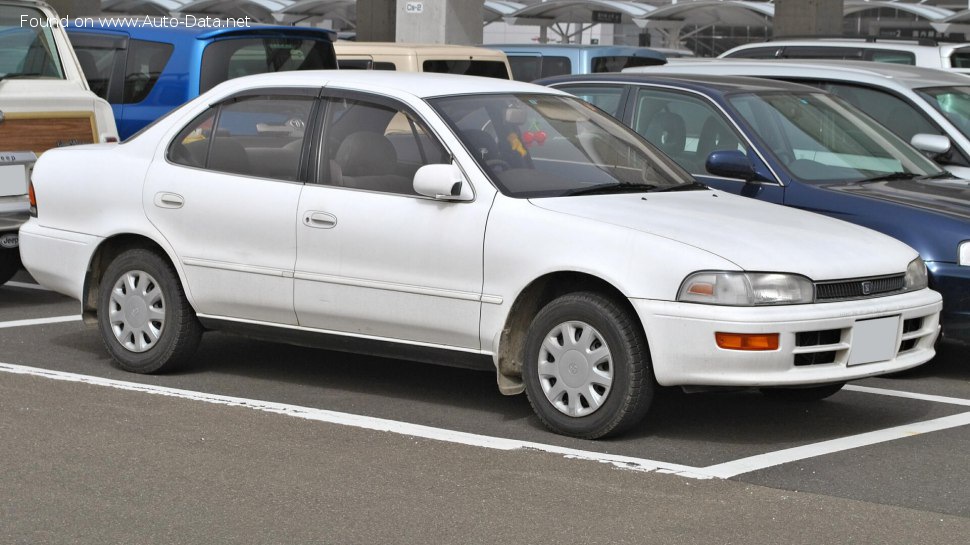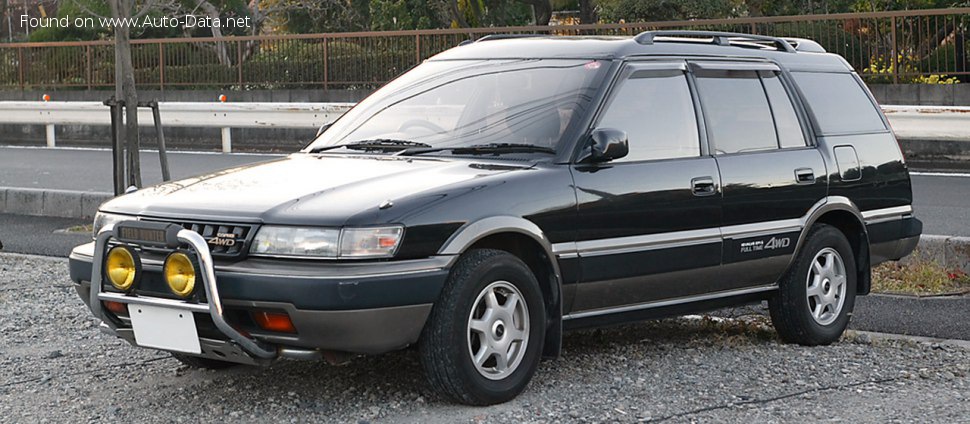
The Toyota Sprinter Trueno, specifically the 1.6 i (165 Hp) variant produced between 1995 and 2002, represents a significant chapter in Toyota’s history of creating engaging, compact sports coupes for the Japanese Domestic Market (JDM). As a direct descendant of the legendary AE86, this generation, often referred to as the AE111 chassis, continued the legacy of lightweight, front-wheel-drive performance. While never officially imported to the United States, the Sprinter Trueno cultivated a dedicated following globally, particularly among enthusiasts who appreciated its high-revving engine and agile handling characteristics. It occupied a niche within the compact coupe segment, offering a blend of daily usability with an undeniably sporting character, all powered by a meticulously engineered powertrain.
The Evolution of Performance: Toyota Sprinter Trueno 1.6 i (165 Hp)
The Sprinter Trueno, particularly its AE111 incarnation, was designed to be a spirited and accessible performance car. Launched in 1995, it followed a lineage that emphasized a balanced chassis and a responsive engine. The decision to retain a naturally aspirated, high-revving engine in an era when many competitors were turning to forced induction underscored Toyota’s commitment to a specific driving philosophy. This model was a direct competitor to other compact coupes in Japan, offering a compelling package for drivers seeking a blend of reliability, efficiency, and outright fun on winding roads.
Its role in the JDM scene was pivotal. While the AE86 gained global fame through motorsport and popular culture, the AE111 Sprinter Trueno aimed to modernize that formula. It adopted a front-wheel-drive (FWD) architecture, a departure from its rear-wheel-drive (RWD) predecessor, reflecting evolving market trends and manufacturing efficiencies. Despite this change, Toyota engineers worked diligently to preserve the “fun-to-drive” essence, focusing on low weight, a well-tuned suspension, and a potent engine to deliver a captivating driving experience.
Engine and Performance
At the heart of the Toyota Sprinter Trueno 1.6 i (165 Hp) lies the revered 4A-GE engine, specifically the “Black Top” variant, which represents the pinnacle of naturally aspirated 4A-GE development. This 1.6-liter (1578 cm3 or 96.3 cu. in.) inline-four engine is a masterpiece of compact engineering. Featuring a Double Overhead Camshaft (DOHC) valvetrain with four valves per cylinder, it was engineered for high efficiency and a broad powerband. The multi-port manifold injection system ensured precise fuel delivery, contributing to both its impressive power output and its relatively clean emissions for the era.
The engine’s most notable characteristic is its ability to produce a remarkable 165 horsepower at a screaming 7800 rpm. This high-revving nature is a hallmark of the 4A-GE, providing an exhilarating power delivery that rewards drivers who aren’t afraid to push the tachometer needle. Torque output stands at 162 Nm (119.49 lb.-ft.) peaking at 5600 rpm, indicating a strong mid-range pull that complements its top-end power. With a power-per-liter ratio of 104.6 Hp/l, the 4A-GE demonstrated exceptional specific output for a naturally aspirated engine of its time.
The Sprinter Trueno’s performance was further enhanced by its impressively low curb weight of just 1030 kg (2270.76 lbs.). This lightweight construction resulted in an excellent weight-to-power ratio of 6.2 kg/Hp (160.2 Hp/tonne) and a weight-to-torque ratio of 6.4 kg/Nm (157.3 Nm/tonne). These figures translate directly into agile acceleration and responsive handling, making the car feel much livelier than its displacement might suggest. The drivetrain architecture, featuring an internal combustion engine driving the front wheels, combined with its compact dimensions, contributed to a nimble and predictable driving dynamic, ideal for spirited driving on Japan’s intricate road networks.
Design and Features
The design of the Toyota Sprinter Trueno 1.6 i (165 Hp) reflects the prevailing aesthetic of mid-1990s Japanese compact coupes: clean lines, a relatively low stance, and a focus on aerodynamic efficiency. Its coupe body style, featuring two doors and seating for five, offered a practical yet sporty configuration. The exterior dimensions—a length of 4300 mm (169.29 in.), a width of 1695 mm (66.73 in.), and a height of 1305 mm (51.38 in.)—underscored its compact and maneuverable character. The wheelbase of 2465 mm (97.05 in.) provided a stable platform, while the relatively wide front track (1470 mm / 57.87 in.) and rear track (1460 mm / 57.48 in.) contributed to its cornering stability.
While specific interior features are not detailed in the provided data, for its era and market segment, the Sprinter Trueno would have offered a driver-focused cockpit with clear instrumentation, supportive seating, and ergonomic controls. Toyota’s reputation for reliability and build quality would have extended to the interior, ensuring durability for its intended lifespan. Safety features for a 1995 model would typically include standard seatbelts and potentially driver/passenger airbags, though these were not universally mandated or standard across all trim levels in Japan at the time. The car’s braking system, featuring ventilated discs at the front and solid discs at the rear, provided confident stopping power, a crucial aspect for a performance-oriented vehicle.
The fuel tank capacity of 50 liters (13.21 US gal) provided a reasonable range for a compact car, balancing performance needs with everyday practicality. The overall design philosophy of the Sprinter Trueno was to create a lightweight, well-balanced machine that was both enjoyable to drive and efficient to own, cementing its place as a desirable performance coupe in the Japanese market.
Technical Specifications
| Brand | Toyota |
| Model | Sprinter |
| Generation | Sprinter Trueno |
| Type (Engine) | 1.6 i (165 Hp) |
| Start of production | 1995 year |
| End of production | 2002 year |
| Powertrain Architecture | Internal Combustion engine |
| Body type | Coupe |
| Seats | 5 |
| Doors | 2 |
| Fuel Type | Petrol (Gasoline) |
| Weight-to-power ratio | 6.2 kg/Hp, 160.2 Hp/tonne |
| Weight-to-torque ratio | 6.4 kg/Nm, 157.3 Nm/tonne |
| Power | 165 Hp @ 7800 rpm. |
| Power per litre | 104.6 Hp/l |
| Torque | 162 Nm @ 5600 rpm. (119.49 lb.-ft.) |
| Engine Model/Code | 4A-GE |
| Engine displacement | 1578 cm3 (96.3 cu. in.) |
| Number of cylinders | 4 |
| Engine configuration | Inline |
| Number of valves per cylinder | 4 |
| Fuel injection system | Multi-port manifold injection |
| Engine aspiration | Naturally aspirated engine |
| Valvetrain | DOHC |
| Kerb Weight | 1030 kg (2270.76 lbs.) |
| Fuel tank capacity | 50 l (13.21 US gal) |
| Length | 4300 mm (169.29 in.) |
| Width | 1695 mm (66.73 in.) |
| Height | 1305 mm (51.38 in.) |
| Wheelbase | 2465 mm (97.05 in.) |
| Front track | 1470 mm (57.87 in.) |
| Rear (Back) track | 1460 mm (57.48 in.) |
| Drivetrain Architecture | The Internal combustion engine (ICE) drives the front wheels of the vehicle. |
| Drive wheel | Front wheel drive |
| Front brakes | Ventilated discs |
| Rear brakes | Disc |