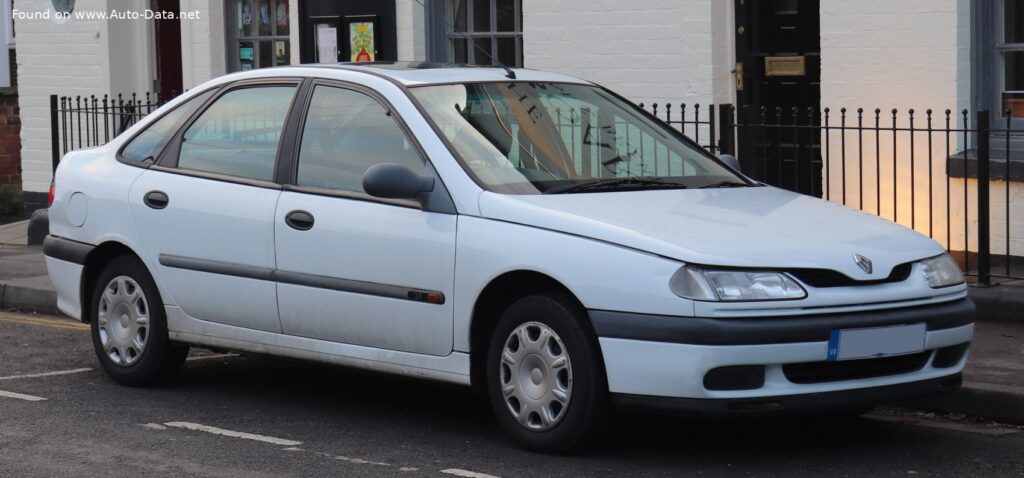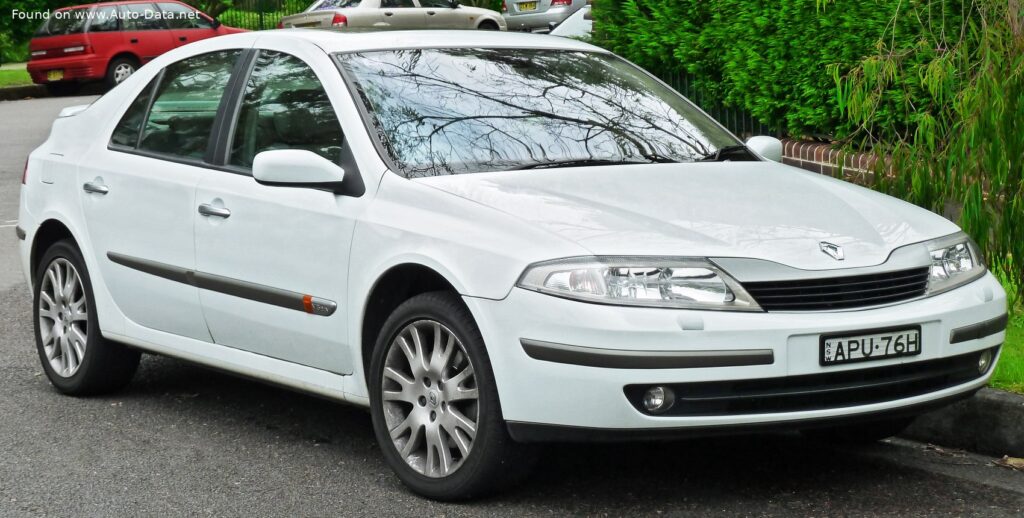
The Renault Laguna II 2.0i 16V Automatic, produced between 2002 and 2007, represents Renault’s offering in the mid-size family car segment. As a successor to the original Laguna, the II generation aimed to improve upon its predecessor’s shortcomings, focusing on build quality, refinement, and overall driving experience. While not officially sold in the United States, the Laguna II was a significant model in Europe, competing with vehicles like the Ford Mondeo, Vauxhall/Opel Vectra, and Peugeot 406. This version, equipped with a 2.0-liter inline-four engine and an automatic transmission, provided a balance of performance and convenience for European drivers.
Renault Laguna II: A European Family Sedan
The Laguna II marked a step forward for Renault in terms of perceived quality and design. It was available in both hatchback and estate (wagon) body styles, catering to a wider range of customer needs. The 2.0i 16V variant, producing 136 horsepower, was a popular choice, offering a reasonable level of performance for everyday driving and longer journeys. The automatic transmission provided ease of use, particularly in congested urban environments common throughout Europe.
Engine & Performance
At the heart of the Laguna II 2.0i 16V lies Renault’s F4R engine, a 1.998-liter (121.93 cubic inches) inline-four cylinder powerplant. This naturally aspirated engine utilizes multi-port fuel injection and a double overhead camshaft (DOHC) valvetrain with four valves per cylinder. It generates a peak power output of 136 horsepower at 5500 rpm and 191 Newton-meters (140.87 lb-ft) of torque at 3750 rpm. The engine’s power-to-liter ratio is 68.1 hp/l. Coupled with a four-speed automatic transmission, the Laguna II 2.0i 16V achieves a 0-100 km/h (0-62 mph) acceleration time of 12.1 seconds, and a 0-60 mph time of approximately 11.5 seconds. Its maximum speed is electronically limited to 200 km/h (124.27 mph). The weight-to-power ratio stands at 9.8 kg/Hp, and the weight-to-torque ratio is 7 kg/Nm.
Design & Features
The Renault Laguna II is a five-door hatchback, offering a practical and versatile body style. Its design, penned under the direction of Patrick le Quément, was a departure from the more angular styling of previous Renault models, adopting a smoother, more contemporary aesthetic. Inside, the Laguna II offered a comfortable cabin with seating for five passengers. Features included standard ABS (Anti-lock Braking System), hydraulic power steering, and a relatively spacious trunk with a minimum capacity of 430 liters (15.19 cubic feet), expandable to 1330 liters (46.97 cubic feet) with the rear seats folded down. Safety features were becoming increasingly important during this period, and the Laguna II incorporated features designed to protect occupants in the event of a collision. The car’s dimensions are 4576 mm (180.16 in) in length, 1772 mm (69.76 in) in width, and 1429 mm (56.26 in) in height, with a wheelbase of 2740 mm (107.87 in).
Technical Specifications
| Brand | Renault |
| Model | Laguna |
| Generation | Laguna II |
| Type (Engine) | 2.0i 16V (136 Hp) Automatic |
| Start of production | 2002 |
| End of production | 2007 |
| Powertrain Architecture | Internal Combustion engine |
| Body type | Hatchback |
| Seats | 5 |
| Doors | 5 |
| Fuel consumption (urban) | 12.1 l/100 km (19.4 US mpg, 23.3 UK mpg, 8.3 km/l) |
| Fuel consumption (extra urban) | 6.3 l/100 km (37.3 US mpg, 44.8 UK mpg, 15.9 km/l) |
| Fuel Type | Petrol (Gasoline) |
| Acceleration 0 – 100 km/h | 12.1 sec |
| Acceleration 0 – 62 mph | 12.1 sec |
| Acceleration 0 – 60 mph | 11.5 sec |
| Maximum speed | 200 km/h (124.27 mph) |
| Weight-to-power ratio | 9.8 kg/Hp |
| Weight-to-torque ratio | 7 kg/Nm |
| Power | 136 Hp @ 5500 rpm |
| Power per litre | 68.1 Hp/l |
| Torque | 191 Nm @ 3750 rpm (140.87 lb.-ft. @ 3750 rpm) |
| Engine layout | Front, Transverse |
| Engine Model/Code | F4R |
| Engine displacement | 1998 cm3 (121.93 cu. in.) |
| Number of cylinders | 4 |
| Engine configuration | Inline |
| Cylinder Bore | 82.7 mm (3.26 in.) |
| Piston Stroke | 93 mm (3.66 in.) |
| Compression ratio | 9.8:1 |
| Number of valves per cylinder | 4 |
| Fuel injection system | Multi-port manifold injection |
| Engine aspiration | Naturally aspirated engine |
| Valvetrain | DOHC |
| Engine oil capacity | 5.4 l (5.71 US qt | 4.75 UK qt) |
| Coolant | 6.5 l (6.87 US qt | 5.72 UK qt) |
| Kerb Weight | 1330 kg (2932.15 lbs.) |
| Max. weight | 1900 kg (4188.78 lbs.) |
| Max load | 570 kg (1256.63 lbs.) |
| Trunk (boot) space – minimum | 430 l (15.19 cu. ft.) |
| Trunk (boot) space – maximum | 1330 l (46.97 cu. ft.) |
| Fuel tank capacity | 70 l (18.49 US gal | 15.4 UK gal) |
| Length | 4576 mm (180.16 in.) |
| Width | 1772 mm (69.76 in.) |
| Height | 1429 mm (56.26 in.) |
| Wheelbase | 2740 mm (107.87 in.) |
| Front track | 1525 mm (60.04 in.) |
| Rear (Back) track | 1480 mm (58.27 in.) |
| Drivetrain Architecture | Front wheel drive |
| Number of gears and type of gearbox | 4 gears, automatic transmission |
| Front suspension | Spring Strut |
| Rear suspension | Coil spring |
| Front brakes | Ventilated discs |
| Rear brakes | Disc |
| Assisting systems | ABS (Anti-lock braking system) |
| Steering type | Steering rack and pinion |
| Power steering | Hydraulic Steering |
| Tires size | 205/55 R16 |
| Wheel rims size | 16 |
The Renault Laguna II 2.0i 16V Automatic, while not a performance car, offered a comfortable, practical, and reasonably efficient mode of transportation for European families. Its blend of features and affordability made it a popular choice in a competitive segment.