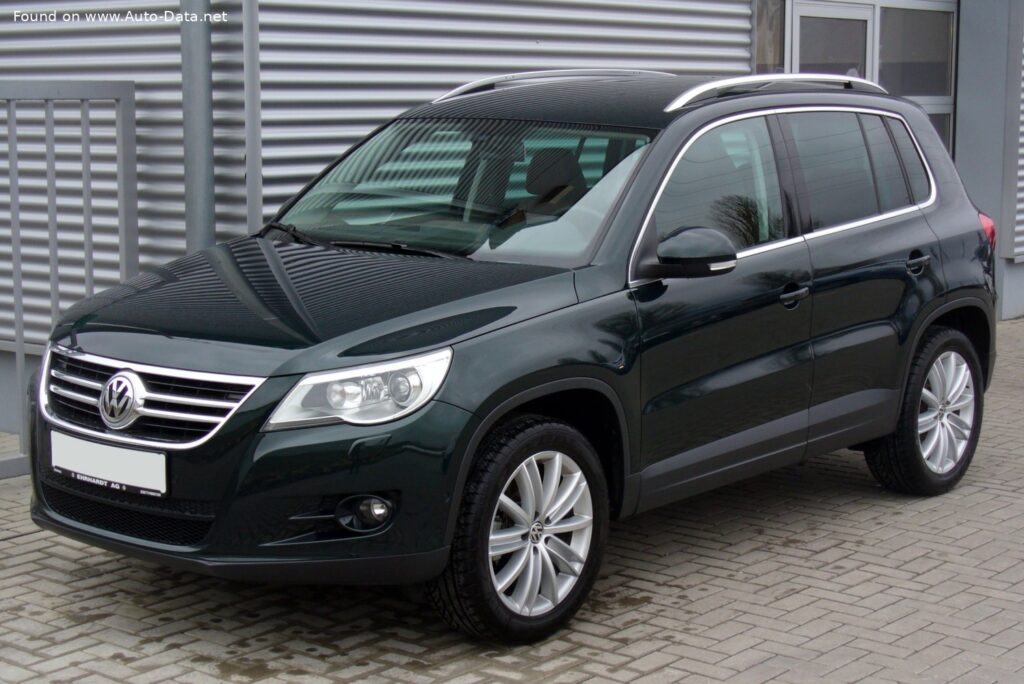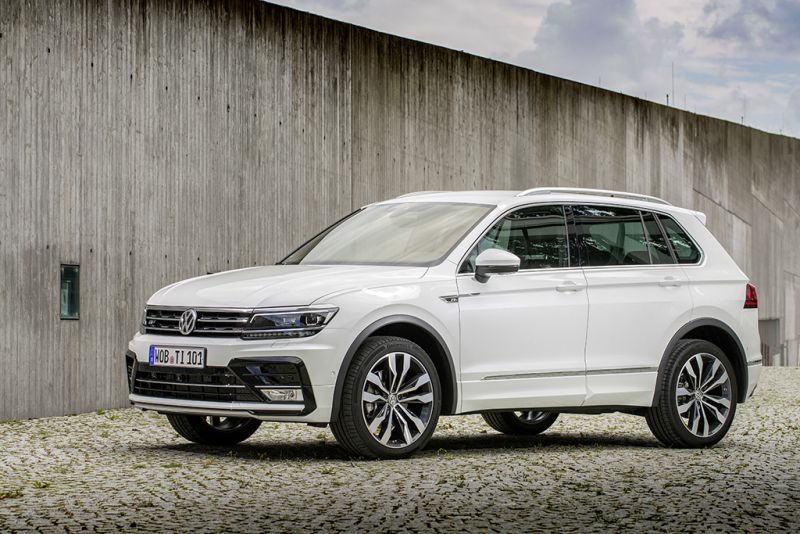
The Volkswagen Tiguan II 2.0 TDI (150 Hp) SCR DSG represents a significant iteration of Volkswagen’s popular compact SUV, specifically tailored for the European and other global markets where diesel powertrains maintain strong consumer appeal and regulatory support. Launched in 2019, this particular variant of the second-generation Tiguan stood out for its blend of robust performance, advanced diesel efficiency, and refined driving dynamics, characteristic of the Volkswagen brand. Positioned within the highly competitive compact SUV segment, it offered a compelling package for families and individuals seeking versatility, comfort, and economical long-distance travel. While diesel engines like this 2.0 TDI were not typically offered in the U.S. market for the Tiguan, its engineering prowess and focus on efficiency and emissions control were indicative of Volkswagen’s global automotive strategy.
Engine and Performance: The Heart of the Volkswagen Tiguan II 2.0 TDI (150 Hp) SCR DSG
At the core of the 2019 Volkswagen Tiguan II 2.0 TDI (150 Hp) SCR DSG lies a sophisticated 2.0-liter (1968 cm³, 120.09 cu. in.) inline four-cylinder turbodiesel engine. This powertrain, identified by engine codes such as DBGA, DBGC, DCYA, or DFGA, is a testament to modern diesel engineering, featuring a common rail fuel injection system and a turbocharger with an intercooler to optimize combustion and power delivery. It generates a respectable 150 horsepower, available across a broad rev range from 3500 to 4000 rpm, ensuring accessible power for various driving conditions. More impressively, the engine produces a substantial 250.77 lb.-ft. (340 Nm) of torque, peaking between 1750 and 3000 rpm. This wide torque band is crucial for an SUV, providing strong acceleration from a standstill and effortless overtaking capabilities on highways.
Power is efficiently managed by a 7-speed automatic DSG (Direct Shift Gearbox) transmission, a hallmark of Volkswagen’s advanced powertrain offerings. The DSG system, renowned for its rapid and seamless gear changes, contributes significantly to both the vehicle’s performance and its fuel efficiency. This front-wheel-drive configuration ensures direct power delivery to the road. The Tiguan II 2.0 TDI accelerates from 0 to 60 mph in a brisk 8.8 seconds (0-100 km/h in 9.3 seconds) and can reach a top speed of 125.52 mph (202 km/h). These figures underscore its capability as a confident performer on both urban streets and open highways. Furthermore, the engine is equipped with a Start & Stop System, which automatically shuts off the engine when the vehicle is stationary, reducing fuel consumption and emissions in city traffic, complementing the overall efficiency package.
Design and Features: A Practical and Refined SUV
The Volkswagen Tiguan II, introduced as a second-generation model, embraced a sharper, more assertive design language compared to its predecessor. As an SUV body type, it features five doors and comfortably seats five occupants, making it a highly practical choice for families. Its exterior dimensions – a length of 176.61 inches (4486 mm), a width of 72.4 inches (1839 mm), and a height of 65.12 inches (1654 mm) – place it firmly within the compact SUV segment, offering a good balance between maneuverability in urban environments and substantial interior space. The design is characterized by clean lines, a distinctive front grille, and well-proportioned body panels that convey a sense of robustness and understated elegance.
Beyond aesthetics, the Tiguan II 2.0 TDI (150 Hp) SCR DSG is engineered for comfort and utility. The cabin boasts an impressive minimum trunk space of 21.72 cu. ft. (615 liters), which expands to a generous 58.45 cu. ft. (1655 liters) with the rear seats folded down, providing ample room for luggage, groceries, or sports equipment. The vehicle’s architecture includes an independent multi-link front suspension and an independent coil spring rear suspension, designed to deliver a comfortable ride quality and stable handling. Braking performance is handled by ventilated discs at the front and disc brakes at the rear, augmented by an Anti-lock Braking System (ABS) for enhanced safety and control. The steering system features a rack and pinion setup with electric power steering, offering precise feedback and ease of maneuverability, particularly in parking situations. A variety of tire and wheel options, ranging from 215/65 R17 to 255/40 R20, allowed owners to tailor the vehicle’s stance and performance characteristics.
Efficiency and Environmental Impact
One of the most compelling aspects of the Volkswagen Tiguan II 2.0 TDI (150 Hp) SCR DSG is its exceptional fuel efficiency, a primary benefit of its advanced diesel engine. The combined fuel economy is rated at an impressive 47-48 US mpg (4.9-5.0 l/100 km), showcasing its ability to deliver economical long-distance travel. In urban driving conditions, the vehicle achieves 42.8-43.6 US mpg (5.4-5.5 l/100 km), while extra-urban (highway) figures are even more remarkable, ranging from 50-51.1 US mpg (4.6-4.7 l/100 km). These figures highlight the sophisticated engineering behind the TDI powertrain, designed to maximize mileage while minimizing environmental impact.
In terms of emissions, this Tiguan variant adheres to the stringent Euro 6 emission standard, with CO2 emissions ranging from 125-126 g/km. This compliance is largely due to the integration of Selective Catalytic Reduction (SCR) technology, which utilizes an AdBlue tank (with a capacity of 3.17 US gallons or 12 liters) to reduce nitrogen oxides (NOx) emissions, a common challenge for diesel engines. The presence of a particulate filter further contributes to cleaner exhaust, trapping soot particles. These technologies ensure that the 2.0 TDI engine not only delivers robust performance but also meets contemporary environmental regulations, making it a responsible choice for European drivers.
Chassis, Dimensions, and Practicality
The chassis of the Volkswagen Tiguan II 2.0 TDI (150 Hp) SCR DSG is engineered to provide a balanced combination of driving dynamics and utilitarian capability. With a kerb weight of 3461.26 lbs. (1570 kg) and a maximum permissible weight of 4960.4 lbs. (2250 kg), it offers a solid and planted feel on the road. The weight-to-power ratio of 10.5 kg/Hp (95.5 Hp/tonne) and a weight-to-torque ratio of 4.6 kg/Nm (216.6 Nm/tonne) indicate a well-matched powertrain for its size and segment.
Practicality extends to its towing capabilities, with a permitted trailer load of 4850.17 lbs. (2200 kg) with brakes (at 8% incline) and 4409.25 lbs. (2000 kg) (at 12% incline), alongside a 1653.47 lbs. (750 kg) capacity without brakes. A maximum roof load of 165.35 lbs. (75 kg) and a permitted towbar download of 220.46 lbs. (100 kg) further enhance its utility for active lifestyles. With a ground clearance of 7.52 inches (191 mm), the Tiguan II is capable of handling light off-road excursions or navigating challenging urban obstacles with ease. Its minimum turning circle of 37.73 ft. (11.5 meters) ensures good maneuverability in tight spaces, making it a versatile companion for various driving scenarios.
Technical Specifications
| Brand | Volkswagen |
| Model | Tiguan |
| Generation | Tiguan II |
| Type (Engine) | 2.0 TDI (150 Hp) SCR DSG |
| Start of production | 2019 year |
| End of production | 2019 year |
| Powertrain Architecture | Internal Combustion engine |
| Body type | SUV |
| Seats | 5 |
| Doors | 5 |
| Fuel consumption (economy) – urban | 5.4-5.5 l/100 km (43.6 – 42.8 US mpg) |
| Fuel consumption (economy) – extra urban | 4.6-4.7 l/100 km (51.1 – 50 US mpg) |
| Fuel consumption (economy) – combined | 4.9-5.0 l/100 km (48 – 47 US mpg) |
| CO2 emissions | 125-126 g/km |
| Fuel Type | Diesel |
| Acceleration 0 – 100 km/h | 9.3 sec |
| Acceleration 0 – 62 mph | 9.3 sec |
| Acceleration 0 – 60 mph (Calculated) | 8.8 sec |
| Maximum speed | 202 km/h (125.52 mph) |
| Emission standard | Euro 6 |
| Weight-to-power ratio | 10.5 kg/Hp (95.5 Hp/tonne) |
| Weight-to-torque ratio | 4.6 kg/Nm (216.6 Nm/tonne) |
| Power | 150 Hp @ 3500-4000 rpm |
| Power per litre | 76.2 Hp/l |
| Torque | 340 Nm @ 1750-3000 rpm (250.77 lb.-ft.) |
| Engine layout | Front, Transverse |
| Engine Model/Code | DBGA, DBGC, DCYA, DFGA |
| Engine displacement | 1968 cm³ (120.09 cu. in.) |
| Number of cylinders | 4 |
| Engine configuration | Inline |
| Number of valves per cylinder | 4 |
| Fuel injection system | Diesel Commonrail |
| Engine aspiration | Turbocharger, Intercooler |
| Engine oil capacity | 4.7 l (4.97 US qt) |
| Engine systems | Start & Stop System, Particulate filter |
| Kerb Weight | 1570 kg (3461.26 lbs.) |
| Max. weight | 2250 kg (4960.4 lbs.) |
| Max load | 680 kg (1499.14 lbs.) |
| Trunk (boot) space – minimum | 615 l (21.72 cu. ft.) |
| Trunk (boot) space – maximum | 1655 l (58.45 cu. ft.) |
| Fuel tank capacity | 58 l (15.32 US gal) |
| AdBlue tank | 12 l (3.17 US gal) |
| Max. roof load | 75 kg (165.35 lbs.) |
| Permitted trailer load with brakes (8%) | 2200 kg (4850.17 lbs.) |
| Permitted trailer load with brakes (12%) | 2000 kg (4409.25 lbs.) |
| Permitted trailer load without brakes | 750 kg (1653.47 lbs.) |
| Permitted towbar download | 100 kg (220.46 lbs.) |
| Length | 4486 mm (176.61 in.) |
| Width | 1839 mm (72.4 in.) |
| Width including mirrors | 2099 mm (82.64 in.) |
| Height | 1654 mm (65.12 in.) |
| Wheelbase | 2677 mm (105.39 in.) |
| Front track | 1579-1589 mm (62.17 – 62.56 in.) |
| Rear (Back) track | 1570-1580 mm (61.81 – 62.2 in.) |
| Ride height (ground clearance) | 191 mm (7.52 in.) |
| Minimum turning circle (turning diameter) | 11.5 m (37.73 ft.) |
| Drivetrain Architecture | Internal combustion engine (ICE) drives the front wheels |
| Drive wheel | Front wheel drive |
| Number of gears and type of gearbox | 7 gears, automatic transmission DSG |
| Front suspension | Independent multi-link suspension |
| Rear suspension | Independent coil spring |
| Front brakes | Ventilated discs |
| Rear brakes | Disc |
| Assisting systems | ABS (Anti-lock braking system) |
| Steering type | Steering rack and pinion |
| Power steering | Electric Steering |
| Tires size | 215/65 R17; 235/55 R18; 235/50 R19; 255/45 R19; 235/45 R20; 255/40 R20 |
| Wheel rims size | 7J x 17; 7J x 18; 7J x 19; 8J x 20 |