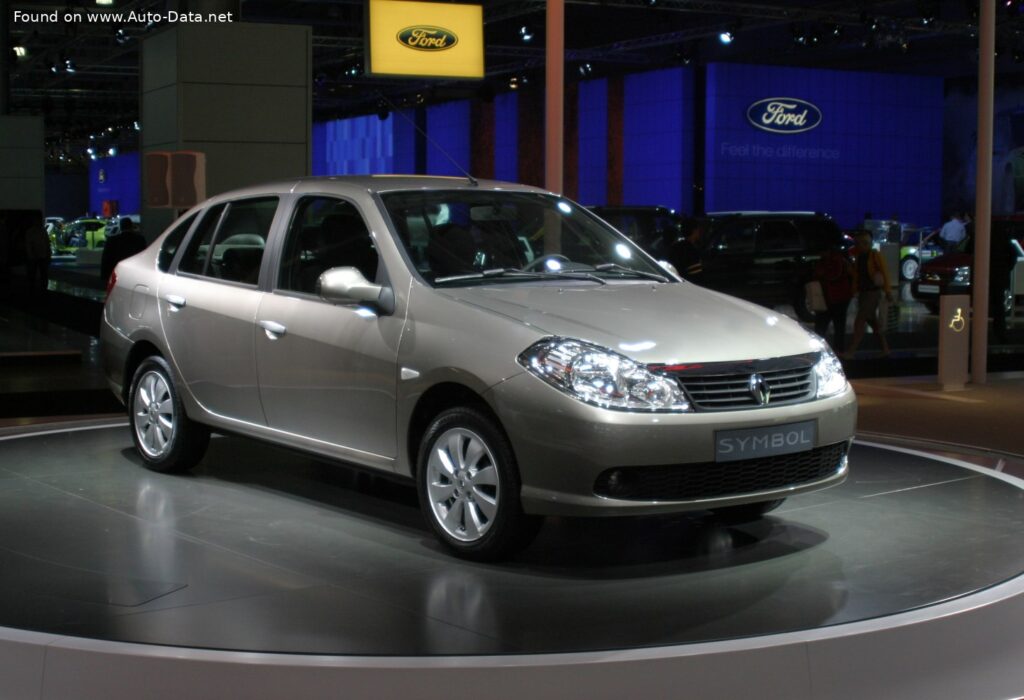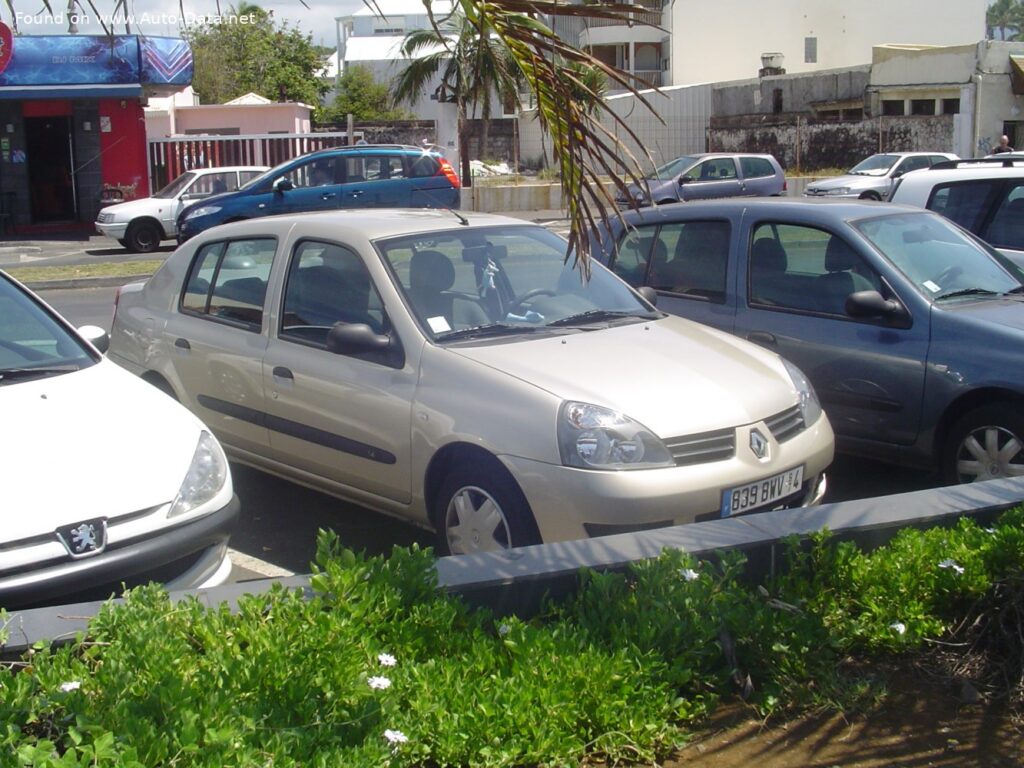
The Renault Symbol I, specifically the facelifted 2002 model equipped with the 1.5 dCi (65 Hp) engine, represents a strategic offering from the French automaker, primarily targeting emerging markets and value-conscious consumers across Europe, Latin America, and other global regions. Not sold in the United States, this compact sedan was conceived as a more spacious and practical alternative to its hatchback sibling, the Renault Clio II, upon which it was largely based. Known as the Thalia in some markets, the Symbol distinguished itself by offering a traditional three-box sedan body style, which was highly favored in many international markets for its perceived prestige and greater cargo capacity. The 2002 facelift introduced subtle yet effective aesthetic updates and refinements, aiming to keep the model competitive and align its appearance with Renault’s evolving design language of the early 2000s, while retaining its core values of affordability, robustness, and fuel efficiency.
The Renault Symbol I (facelift 2002) 1.5 dCi (65 Hp): A Practical Sedan for Global Markets
Market Positioning and Evolution
The Renault Symbol’s genesis can be traced back to the late 1990s when Renault identified a strong demand for compact sedans in various international markets where hatchbacks, despite their practicality, were often viewed as less premium or less family-oriented. By leveraging the proven platform and components of the popular Clio II, Renault was able to develop the Symbol (or Thalia) as a cost-effective solution, offering a conventional trunk and a more formal silhouette. This strategy allowed Renault to penetrate segments where a dedicated sedan platform might have been prohibitively expensive. The initial Symbol quickly gained traction due to its competitive pricing, solid construction, and economical operation, particularly with its diesel powertrain options.
The 2002 facelift was a crucial update that helped prolong the model’s market relevance. Externally, it brought a refreshed front fascia, including redesigned headlamps, grille, and bumper, giving it a more contemporary and sophisticated look that echoed other Renault models of the era. Interior enhancements, though subtle, focused on improving material quality and ergonomics, making the cabin a more pleasant place to be. Critically, the facelift also saw the integration of advanced diesel engines, such as the 1.5 dCi, which became a cornerstone of its appeal. This engine, known for its efficiency and reliability, perfectly aligned with the Symbol’s mission as a practical, economical family car, particularly in regions where fuel costs were a significant consideration for buyers.
The Symbol I’s success lay in its ability to offer a compelling package of space, economy, and traditional sedan styling at an accessible price point. It became a popular choice for first-time car buyers, small families, and fleet operators who prioritized low running costs and a generous trunk over outright performance or luxury. Its robust mechanicals and straightforward design also contributed to its reputation for durability and ease of maintenance, further cementing its position as a sensible and dependable vehicle in its target markets.
Powertrain and Performance: The 1.5 dCi (65 Hp) Engine
Efficient Diesel Dynamics
At the heart of the Renault Symbol I (facelift 2002) 1.5 dCi (65 Hp) lies Renault’s highly regarded K9K engine, a 1.5-liter (1461 cm3 or 89.16 cu. in.) common rail direct injection diesel unit. This engine was a significant technological advancement for its time, embodying Renault’s commitment to developing efficient and compact diesel powertrains. The K9K is an inline four-cylinder configuration, featuring an Overhead Camshaft (OHC) valvetrain with two valves per cylinder, a design choice that balanced efficiency with manufacturing simplicity and reliability. Its robust construction is further highlighted by a bore of 2.99 inches (76 mm) and a stroke of 3.17 inches (80.5 mm), coupled with a high compression ratio of 18.8:1, typical for diesel engines designed for optimal combustion efficiency.
The engine’s performance figures, while not designed for spirited driving, were perfectly adequate for the Symbol’s intended purpose. It produced 65 horsepower at 4000 rpm, translating to a power per liter output of 44.5 Hp/l. More importantly for a practical vehicle, the engine delivered a healthy 118.01 lb.-ft. (160 Nm) of torque at a low 2000 rpm. This low-end torque was crucial for effortless city driving, easier hill climbing, and reduced need for frequent gear changes, contributing to a relaxed driving experience and improved fuel economy. The engine benefited from a turbocharger and intercooler, which significantly boosted its output and efficiency compared to naturally aspirated diesel alternatives of the era, ensuring responsive acceleration despite its modest horsepower.
Power was transferred to the front wheels via a smooth-shifting 5-speed manual transmission, a common and reliable setup for vehicles in this segment. This drivetrain architecture, combined with the efficient diesel engine, resulted in impressive fuel economy figures: an urban consumption of 41.3 US mpg, an extra-urban (highway) consumption of 65.3 US mpg, and a combined average of 52.3 US mpg. These figures were exceptional for the early 2000s and represented a major selling point in markets sensitive to fuel costs. Performance-wise, the Symbol 1.5 dCi achieved 0-60 mph in a respectable 14.3 seconds, with a top speed of 100.66 mph (162 km/h), underscoring its role as a practical, rather than performance-oriented, commuter vehicle. The weight-to-power ratio stood at 15.1 kg/Hp, indicating a vehicle designed for economical operation rather than outright acceleration.
Design, Features, and Practicality
Functional Design and Interior Space
The design philosophy behind the Renault Symbol I (facelift 2002) was unequivocally focused on functionality and practicality. As a four-door, five-seat compact sedan, it offered a traditional silhouette that appealed to a broad demographic. Its dimensions were optimized for urban maneuverability while still providing ample interior space. With a length of 164.21 inches (4171 mm), a width of 64.53 inches (1639 mm), and a height of 56.57 inches (1437 mm), the Symbol was compact enough to navigate congested city streets and fit into tight parking spaces, a critical attribute in European and Asian markets. The wheelbase of 97.32 inches (2472 mm) contributed to a stable ride and a surprisingly roomy cabin for its class.
One of the Symbol’s most significant selling points was its generous trunk capacity. At 18.01 cu. ft. (510 liters), the trunk space was exceptional for a vehicle of its size, often rivaling that of larger, more expensive sedans. This made it an ideal choice for families requiring ample luggage space for vacations or for business users needing to transport goods. The interior, while not luxurious, was designed to be durable and user-friendly, with controls logically placed and materials chosen for their resilience to daily wear and tear. The facelift brought minor cosmetic improvements to the cabin, enhancing the overall aesthetic and tactile quality without compromising its robust nature.
In terms of chassis and handling, the Symbol I employed a straightforward and proven setup. The front suspension featured coil springs, providing a comfortable and compliant ride, while the rear also utilized coil springs, ensuring good load-carrying capability and stability. The steering system was a hydraulic rack and pinion setup, offering direct feedback and a relatively light feel, which further aided urban driving. The minimum turning circle of 32.81 ft (10 m) confirmed its agility in tight spots. Braking duties were handled by ventilated discs at the front and traditional drum brakes at the rear, a cost-effective yet effective combination for a vehicle of this performance level. For enhanced safety, the Symbol I (facelift 2002) was equipped with an Anti-lock Braking System (ABS), a crucial active safety feature for the early 2000s. The vehicle rode on 14-inch wheels fitted with 175/65 R14 tires, a common size that balanced grip, comfort, and replacement cost, reinforcing its economical character. Overall, the Renault Symbol I (facelift 2002) 1.5 dCi (65 Hp) stood out as a highly practical, efficient, and dependable compact sedan, perfectly tailored to the needs of its global audience.
Technical Specifications
| Brand | Renault |
| Model | Symbol |
| Generation | Symbol I (facelift 2002) |
| Type (Engine) | 1.5 dCi (65 Hp) |
| Start of production | 2002 year |
| End of production | 2006 year |
| Powertrain Architecture | Internal Combustion engine |
| Body type | Sedan |
| Seats | 5 |
| Doors | 4 |
| Fuel consumption (economy) – urban | 41.3 US mpg |
| Fuel consumption (economy) – extra urban | 65.3 US mpg |
| Fuel consumption (economy) – combined | 52.3 US mpg |
| Fuel Type | Diesel |
| Acceleration 0 – 60 mph | 14.3 sec |
| Maximum speed | 100.66 mph |
| Weight-to-power ratio | 15.1 kg/Hp |
| Weight-to-torque ratio | 6.1 kg/Nm |
| Power | 65 Hp @ 4000 rpm. |
| Power per liter | 44.5 Hp/l |
| Torque | 118.01 lb.-ft. @ 2000 rpm. |
| Engine layout | Front, Transverse |
| Engine Model/Code | K9K |
| Engine displacement | 89.16 cu. in. (1461 cm3) |
| Number of cylinders | 4 |
| Engine configuration | Inline |
| Cylinder Bore | 2.99 in. (76 mm) |
| Piston Stroke | 3.17 in. (80.5 mm) |
| Compression ratio | 18.8:1 |
| Number of valves per cylinder | 2 |
| Fuel injection system | Diesel Commonrail |
| Engine aspiration | Turbocharger, Intercooler |
| Valvetrain | OHC |
| Kerb Weight | 2160.53 lbs. (980 kg) |
| Max. weight | 3152.61 lbs. (1430 kg) |
| Max load | 992.08 lbs. (450 kg) |
| Trunk (boot) space – minimum | 18.01 cu. ft. (510 l) |
| Fuel tank capacity | 13.21 US gal (50 l) |
| Length | 164.21 in. (4171 mm) |
| Width | 64.53 in. (1639 mm) |
| Height | 56.57 in. (1437 mm) |
| Wheelbase | 97.32 in. (2472 mm) |
| Front track | 55.35 in. (1406 mm) |
| Rear (Back) track | 54.57 in. (1386 mm) |
| Minimum turning circle (turning diameter) | 32.81 ft. (10 m) |
| Drivetrain Architecture | Front wheel drive, Internal Combustion engine |
| Drive wheel | Front wheel drive |
| Number of gears and type of gearbox | 5 gears, manual transmission |
| Front suspension | Coil spring |
| Rear suspension | Coil spring |
| Front brakes | Ventilated discs |
| Rear brakes | Drum |
| Assisting systems | ABS (Anti-lock braking system) |
| Steering type | Steering rack and pinion |
| Power steering | Hydraulic Steering |
| Tires size | 175/65 R14 |
| Wheel rims size | 14 |