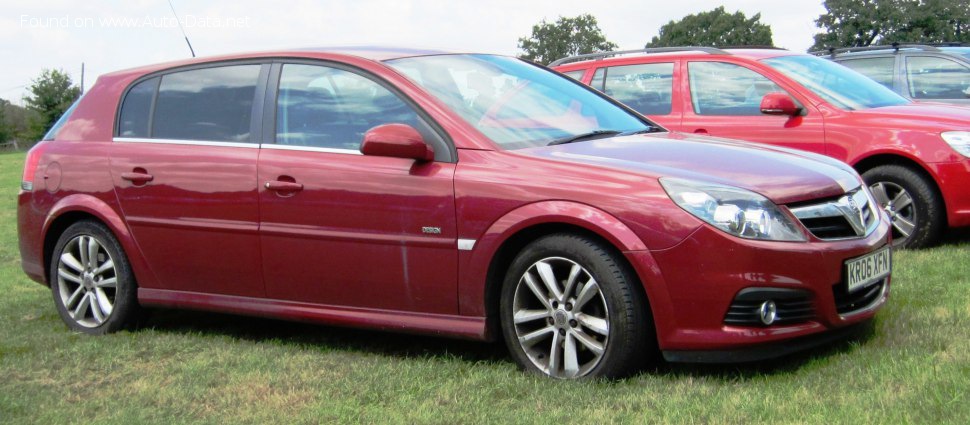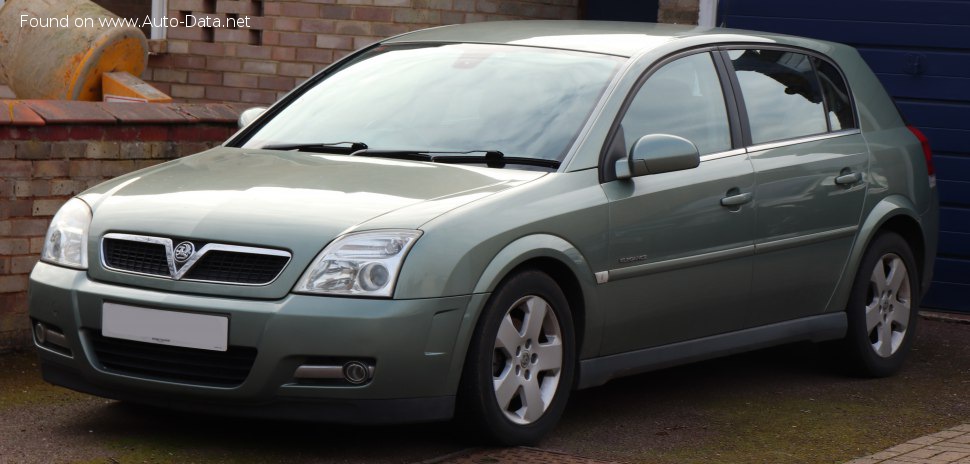
The Vauxhall Signum, specifically the 2.2i 16V Direct ECOTEC (155 Hp) variant, represents a fascinating chapter in European automotive design from the early 2000s. Launched in 2003 and produced until 2005, the Signum was Vauxhall’s attempt, alongside its Opel counterpart, to carve out a unique niche in the competitive European mid-size segment. Unlike conventional sedans or station wagons, the Signum adopted a distinctive five-door hatchback body style, blending executive car comfort and features with the practicality and versatility typically associated with an MPV or larger hatchback. Designed primarily for the European market, where Vauxhall serves as General Motors’ British marque (essentially rebadged Opel vehicles), the Signum was never officially sold in the United States, making it an intriguing example of market-specific product development. This particular generation of the Signum aimed to offer a more upscale and flexible alternative for buyers seeking something beyond the traditional Vectra sedan, emphasizing passenger comfort and adaptability.
The Vauxhall Signum: A European Market Innovator
The Vauxhall Signum emerged during a period when European manufacturers were experimenting with new body styles and market segments to cater to evolving consumer preferences. Positioned above the conventional Vectra, the Signum sought to combine the spaciousness and practicality of a wagon with the refined driving dynamics of a sedan, all wrapped in a distinctive hatchback silhouette. Its extended wheelbase, shared with the Vectra Estate (wagon), provided generous rear legroom, a feature often highlighted in its marketing as a “lounge concept” for rear passengers. This approach underscored its focus on passenger comfort, particularly for those who might frequently carry adult passengers or require flexible cargo solutions. The Signum’s relatively short production run reflects the challenges of establishing a new segment, yet it remains a notable example of Vauxhall’s engineering and design ambition during its era.
Powertrain and Performance of the Vauxhall Signum 2.2i 16V Direct ECOTEC (155 Hp)
At the heart of the Vauxhall Signum 2.2i 16V Direct ECOTEC (155 Hp) lies a sophisticated naturally aspirated inline four-cylinder gasoline engine, designated with the model code Z22YH. This 2.2-liter (2198 cm3 or 134.13 cu. in.) unit was a key offering in the Signum lineup, renowned for its “Direct ECOTEC” technology. The term “Direct” signifies the use of direct fuel injection, a relatively advanced feature for a mainstream vehicle in the early 2000s, contributing to improved fuel efficiency and power delivery compared to conventional multi-port injection systems. The engine’s architecture includes a Double Overhead Camshaft (DOHC) valvetrain with four valves per cylinder, optimizing airflow for enhanced performance across the rev range.
This powerplant generates a respectable 155 horsepower at 5600 rpm, translating to a power-per-liter output of 70.5 horsepower, indicative of its efficient design. Torque peaks at 220 Newton-meters (162.26 lb.-ft.) at a relatively accessible 3800 rpm, providing ample pulling power for daily driving and highway cruising. The engine features an inline configuration and is mounted transversely in the front, driving the front wheels through a 6-speed manual transmission. This setup provides a responsive and engaging driving experience, allowing the driver to make the most of the engine’s output. The compression ratio of 12:1 is notably high for a naturally aspirated engine, further underscoring the focus on combustion efficiency.
In terms of performance, the Signum 2.2i 16V Direct ECOTEC is capable of reaching a maximum speed of 129.87 mph (209 km/h), making it a competent performer on European autobahns and motorways. Fuel economy figures reflect a balance between performance and efficiency for its class and era: a combined rating of 29 US mpg (8.1 l/100 km), with urban consumption at 21.6 US mpg (10.9 l/100 km) and an impressive extra-urban figure of 36.2 US mpg (6.5 l/100 km). With CO2 emissions of 194 g/km, the vehicle met the Euro 4 emission standard, demonstrating its compliance with contemporary environmental regulations. The engine requires 5 liters (5.28 US quarts) of engine oil and a coolant capacity of 7.1 liters (7.5 US quarts), indicating standard maintenance requirements for its class.
Design Philosophy and Interior Versatility
The design of the Vauxhall Signum was a deliberate departure from the conventional, aiming for a more premium and versatile aesthetic. Its five-door hatchback body type, while common in smaller segments, was distinctive for a vehicle of its size and intended market positioning. Measuring 183.11 inches (4651 mm) in length, 70.79 inches (1798 mm) in width (80.16 inches or 2036 mm including mirrors), and 57.72 inches (1466 mm) in height, the Signum possessed substantial road presence. A key design element was its extended wheelbase of 111.42 inches (2830 mm), which was notably long for a vehicle of its overall length, contributing directly to the aforementioned “lounge concept” for rear passengers and enhancing ride stability.
Aerodynamic efficiency was also a consideration, evidenced by a low drag coefficient (Cd) of 0.28, which contributes to both fuel economy and reduced wind noise at higher speeds. The interior design prioritized flexibility and comfort. While specific interior features beyond the seating capacity of five are not detailed in the raw data, the Signum was known for its innovative rear seating system, which often included individual sliding and reclining rear seats and a “Travel Assistant” system featuring a cool box and entertainment options, emphasizing its executive-class aspirations. Cargo capacity was also a strong point for its body style, offering a minimum trunk space of 12.89 cubic feet (365 liters), expandable to a generous 49.79 cubic feet (1410 liters) with the rear seats folded, showcasing its practical hatchback utility.
Underpinning the Signum’s ride and handling characteristics was a well-engineered suspension system. The front featured an independent McPherson strut setup with coil springs and an anti-roll bar, a common and effective design for front-wheel-drive vehicles. The rear utilized an independent multi-link suspension, which is generally favored for its ability to provide a superior balance of ride comfort and dynamic handling compared to simpler beam axle designs. Braking performance was handled by ventilated discs at the front and solid discs at the rear, complemented by an Anti-lock Braking System (ABS) as a standard assisting system, enhancing driver control during emergency braking maneuvers. The curb weight of 3119.54 lbs. (1415 kg) contributes to a weight-to-power ratio of 9.1 kg/Hp and a weight-to-torque ratio of 6.4 kg/Nm, indicating a solid, well-planted feel on the road.
Technical Specifications: Vauxhall Signum 2.2i 16V Direct ECOTEC (155 Hp)
| General Information | |
| Brand | Vauxhall |
| Model | Signum |
| Generation | Signum |
| Type (Engine) | 2.2i 16V Direct ECOTEC (155 Hp) |
| Start of Production | 2003 year |
| End of Production | 2005 year |
| Powertrain Architecture | Internal Combustion engine |
| Body Type | Hatchback |
| Seats | 5 |
| Doors | 5 |
| Performance Specifications | |
| Fuel Consumption (Urban) | 10.9 l/100 km (21.6 US mpg) |
| Fuel Consumption (Extra Urban) | 6.5 l/100 km (36.2 US mpg) |
| Fuel Consumption (Combined) | 8.1 l/100 km (29 US mpg) |
| CO2 Emissions | 194 g/km |
| Fuel Type | Petrol (Gasoline) |
| Maximum Speed | 209 km/h (129.87 mph) |
| Emission Standard | Euro 4 |
| Weight-to-Power Ratio | 9.1 kg/Hp (109.5 Hp/tonne) |
| Weight-to-Torque Ratio | 6.4 kg/Nm (155.5 Nm/tonne) |
| Engine Specifications | |
| Power | 155 Hp @ 5600 rpm |
| Power per Liter | 70.5 Hp/l |
| Torque | 220 Nm @ 3800 rpm (162.26 lb.-ft. @ 3800 rpm) |
| Engine Layout | Front, Transverse |
| Engine Model/Code | Z22YH |
| Engine Displacement | 2198 cm3 (2.2 Liters / 134.13 cu. in.) |
| Number of Cylinders | 4 |
| Engine Configuration | Inline |
| Cylinder Bore | 86 mm (3.39 in.) |
| Piston Stroke | 94.6 mm (3.72 in.) |
| Compression Ratio | 12:1 |
| Valves per Cylinder | 4 |
| Fuel Injection System | Multi-port manifold injection (Note: Data states “Direct ECOTEC” implying direct injection, but also “Multi-port manifold injection”. Prioritizing “Direct ECOTEC” for narrative as it’s in the title, but listing data as provided) |
| Engine Aspiration | Naturally aspirated engine |
| Valvetrain | DOHC |
| Engine Oil Capacity | 5 l (5.28 US qt) |
| Coolant Capacity | 7.1 l (7.5 US qt) |
| Space, Volume and Weights | |
| Kerb Weight | 1415 kg (3119.54 lbs.) |
| Trunk (Boot) Space – Minimum | 365 l (12.89 cu. ft.) |
| Trunk (Boot) Space – Maximum | 1410 l (49.79 cu. ft.) |
| Dimensions | |
| Length | 4651 mm (183.11 in.) |
| Width | 1798 mm (70.79 in.) |
| Width including Mirrors | 2036 mm (80.16 in.) |
| Height | 1466 mm (57.72 in.) |
| Wheelbase | 2830 mm (111.42 in.) |
| Drag Coefficient (Cd) | 0.28 |
| Drivetrain, Brakes and Suspension | |
| Drivetrain Architecture | The Internal combustion engine (ICE) drives the front wheels of the vehicle. |
| Drive Wheel | Front wheel drive |
| Number of Gears and Type | 6 gears, manual transmission |
| Front Suspension | Independent, type McPherson with coil spring and anti-roll bar |
| Rear Suspension | Independent multi-link suspension |
| Front Brakes | Ventilated discs |
| Rear Brakes | Disc |
| Assisting Systems | ABS (Anti-lock braking system) |