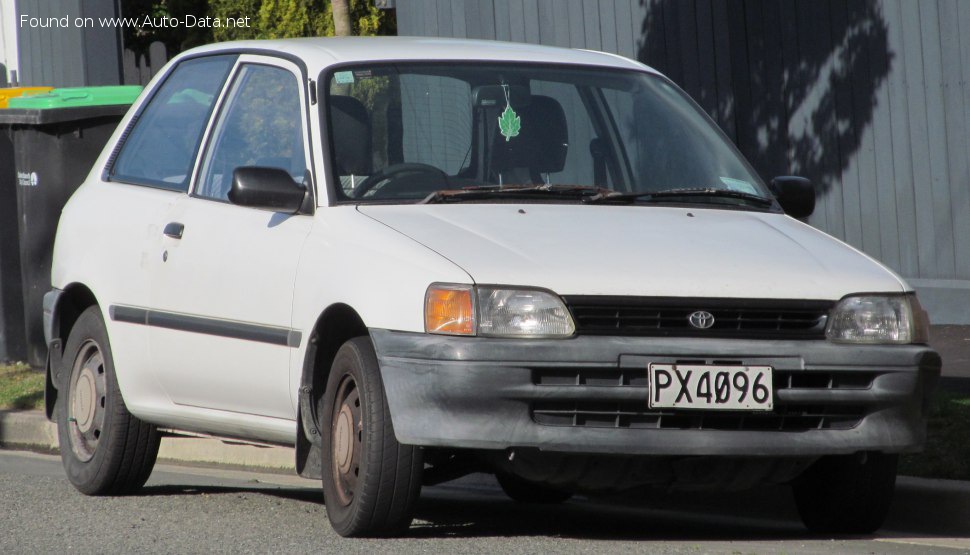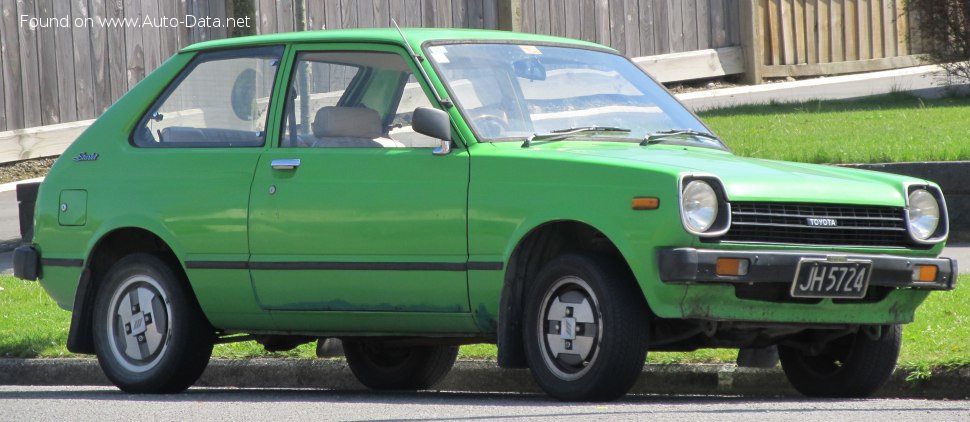
The Toyota Starlet II 1.2 (56 Hp), representing the P60 series, emerged as a pivotal model in Toyota’s global lineup during a transformative period for the automotive industry. Launched in 1978 and produced until 1982, this second-generation Starlet cemented its reputation as a highly reliable, economical, and practical compact car. Positioned as an entry-level vehicle, it catered to a broad market seeking efficient personal transportation in the wake of the 1970s energy crises. The Starlet II, particularly in its 1.2-liter hatchback configuration, was instrumental in establishing Toyota’s enduring image for quality and value across various international markets, including significant sales in Europe, Asia, and modest presence in North America as an affordable, no-frills option.
The Toyota Starlet II: A Global Compact of Its Era
The second-generation Toyota Starlet, known internally as the P60 series, marked a significant evolution from its KP40 predecessor. Introduced in 1978, it adopted a more modern, angular design language that was characteristic of late 1970s automotive styling, moving away from the more rounded forms of earlier compacts. The Starlet II was a direct response to the growing global demand for fuel-efficient and practical vehicles, a trend heavily influenced by the oil crises of the decade. Its primary role was to serve as an affordable, reliable, and economical car for urban commuters and small families, a segment in which Toyota excelled.
While not a high-performance vehicle, the Toyota Starlet II 1.2 (56 Hp) was engineered with Toyota’s renowned focus on durability and low running costs. It quickly gained a reputation for its mechanical robustness and ease of maintenance, qualities that were highly valued by consumers worldwide. In markets like Europe, where fuel prices were consistently higher than in the United States, its exceptional fuel economy was a major selling point. In the North American market, though overshadowed by larger sedans and trucks, the Starlet found its niche among buyers prioritizing affordability and efficiency above all else. Its compact dimensions made it particularly adept at navigating crowded city streets and tight parking spaces, further enhancing its appeal as a practical urban vehicle.
Engineering Philosophy and Market Impact
Toyota’s engineering philosophy for the Starlet II was rooted in simplicity and efficiency. The car was designed to be straightforward to manufacture, assemble, and repair, which contributed to its competitive pricing and low ownership costs. This approach resonated strongly with consumers in an era where economic prudence was paramount. The Starlet II’s success contributed significantly to Toyota’s global expansion, particularly in emerging markets where reliable and affordable transportation was in high demand. It demonstrated Toyota’s capability to produce vehicles that met diverse global needs without compromising on its core values of quality and dependability.
The Starlet II also played a crucial role in showcasing Toyota’s ability to adapt its product offerings to different regional preferences. While the basic platform remained consistent, variations in trim levels, engine options, and minor styling cues were introduced to cater to specific market tastes. The 1.2-liter variant, with its modest but adequate power output, became a staple in many regions, embodying the practical and economical spirit of the Starlet lineup. Its legacy is not found in groundbreaking innovation but in its steadfast performance as a dependable workhorse, helping to solidify Toyota’s position as a leading global automaker.
Powertrain and Driving Dynamics of the Toyota Starlet II 1.2 (56 Hp)
At the heart of the Toyota Starlet II 1.2 (56 Hp) was a conventional, naturally aspirated internal combustion engine designed for reliability and fuel economy rather than outright speed. This 1.2-liter (approximately 73 cubic inches) gasoline engine produced 56 horsepower, a modest figure by contemporary standards but entirely appropriate for the vehicle’s lightweight construction and intended purpose. The engine was characterized by its simplicity, featuring a carburetor fuel system and a robust, easy-to-maintain design that contributed to its legendary longevity. This powertrain architecture ensured predictable performance and minimal mechanical issues, a hallmark of Toyota engineering from that era.
The transmission options, typically a four-speed or five-speed manual, were designed to maximize the engine’s limited power band and optimize fuel efficiency. The gear ratios were carefully selected to provide adequate acceleration for urban driving while allowing for economical cruising on highways. The driving dynamics of the Starlet II were straightforward and predictable. Its compact size and relatively light curb weight contributed to nimble handling, making it easy to maneuver in tight city environments. The steering, while lacking the precision of modern power-assisted systems, was direct enough for its class, offering a responsive feel at lower speeds.
Performance in Context
When evaluating the performance of the Toyota Starlet II 1.2 (56 Hp), it is essential to consider the automotive landscape of the late 1970s and early 1980s. In an era dominated by concerns over fuel consumption and emissions, the Starlet’s emphasis on efficiency was a significant advantage. Its 56 horsepower engine, while not designed for spirited driving, provided sufficient power for daily commuting, grocery runs, and light highway travel. Acceleration was unhurried, but the engine proved remarkably durable and capable of sustained operation without complaint. This focus on reliability and economy over raw power was a deliberate choice by Toyota, aligning the Starlet perfectly with the practical needs of its target demographic.
The engine’s naturally aspirated design meant predictable power delivery without the complexities or additional maintenance requirements of turbocharging. This simplicity further enhanced the car’s reputation for trouble-free ownership. The Starlet II’s powertrain exemplified Toyota’s pragmatic approach to engineering for the mass market: provide a dependable, efficient, and affordable means of transportation that consistently meets the needs of its owners. This mechanical straightforwardness has also made the Starlet II a popular choice among classic car enthusiasts and restorers seeking an approachable and rewarding project.
Design Philosophy and Interior Utility
The design of the Toyota Starlet II 1.2 (56 Hp) was a testament to the functional aesthetic prevalent in the late 1970s. As a hatchback, its body type inherently prioritized practicality and versatility. The exterior featured clean, angular lines with minimal ornamentation, reflecting a design philosophy focused on efficiency and cost-effectiveness. The P60 series moved away from the slightly curvier lines of its predecessor, embracing a more contemporary, squared-off look that maximized interior volume within its compact footprint. Large glass areas provided excellent visibility, a crucial safety and convenience feature for urban driving.
Inside, the Starlet II was designed with a utilitarian approach. The cabin, while not luxurious, was remarkably spacious for a car of its class. The hatchback configuration offered a significant advantage in terms of cargo flexibility, with the rear seats typically folding down to create a larger, flat load area. This made the Starlet an ideal vehicle for everything from daily commutes to weekend errands, capable of accommodating a surprising amount of luggage or groceries. Materials used in the interior were chosen for their durability and ease of cleaning, standing up well to the rigors of daily use over many years.
Features and Ergonomics
Features in the Toyota Starlet II 1.2 (56 Hp) were modest by today’s standards but entirely competitive for its time and market segment. Standard equipment would typically include basic instrumentation, manual windows, and a simple heating and ventilation system. Optional extras might have included a radio and perhaps a rear wiper/washer, depending on the market. Ergonomics were straightforward, with controls logically placed and easy to operate. The driving position was comfortable for most drivers, and the compact dimensions made the car feel manageable and unintimidating.
Safety features, while basic compared to modern vehicles, were consistent with the norms of the era. These would have included three-point seatbelts for front occupants, a collapsible steering column, and energy-absorbing bumpers. The car’s inherent light weight and small size meant that passive safety relied heavily on structural integrity and occupant restraints. The Starlet II’s enduring popularity and presence on roads decades after its production ended speak volumes about its fundamental soundness and the quality of its construction, proving that a simple, well-engineered vehicle can stand the test of time.
Technical Specifications
| Brand | Toyota |
| Model | Starlet |
| Generation | Starlet II |
| Type (Engine) | 1.2 (56 Hp) |
| Start of production | 1978 year |
| End of production | 1982 year |
| Powertrain Architecture | Internal Combustion engine |
| Body type | Hatchback |
| Fuel Type | Petrol (Gasoline) |
| Power | 56 Hp |
| Engine aspiration | Naturally aspirated engine |