
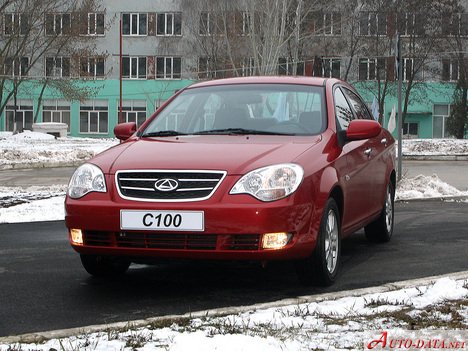
The TagAz Vega (C100) 1.6 (124 Hp) emerged onto the automotive landscape as a distinctive offering from the Taganrog Automobile Plant (TagAZ) in Russia. Produced for a brief period between 2009 and 2010, this model represented a crucial venture for the manufacturer into the competitive compact sedan segment. Positioned primarily for the domestic Russian and Commonwealth of Independent States (CIS) markets, the TagAz Vega (C100) aimed to provide an accessible, practical, and reliably engineered vehicle for a broad consumer base. It was a four-door sedan designed to accommodate five occupants comfortably, embodying the utilitarian and economical characteristics often prioritized in its primary sales regions. While not widely known in Western markets, the Vega’s specifications reveal a vehicle built with conventional, proven engineering principles, focused on delivering adequate performance and functionality for everyday use. Its relatively short production run underscores the dynamic nature of the automotive industry in emerging markets, where models can be introduced and phased out quickly in response to market demands and strategic shifts.
Engine and Performance of the TagAz Vega (C100)
At the heart of the TagAz Vega (C100) 1.6 (124 Hp) lies a robust and straightforward internal combustion engine, designated as the TAGAZ G16. This 1.6-liter (1597 cm3 or 97.45 cu. in.) inline-four cylinder engine is configured in a front, transverse layout, driving the front wheels, a common and efficient setup for compact sedans of its era. The engine is naturally aspirated, meaning it relies solely on atmospheric pressure to draw air into its cylinders, a design choice that often prioritizes reliability and lower manufacturing costs over peak performance figures. Fuel is delivered via a multi-port manifold injection system, a well-established technology known for its balance of fuel efficiency and consistent power delivery. The engine is designed to run on petrol, or gasoline, making it compatible with widely available fuel types.
Performance figures for the TAGAZ G16 engine are respectable for its class. It generates a maximum power output of 124 horsepower (Hp) at 5600 revolutions per minute (rpm). This power-to-liter ratio of 77.6 Hp/l indicates a reasonably efficient design for a naturally aspirated unit. Torque is equally important for real-world drivability, and the Vega delivers 173 Newton-meters (Nm) or 127.6 pound-feet (lb.-ft.) at a peak of 4400 rpm. This torque output, achieved at a mid-range engine speed, suggests good responsiveness in typical driving conditions, such as urban commuting and highway cruising, where accessible power is more beneficial than high-revving performance.
The powertrain architecture, with the internal combustion engine driving the front wheels, is paired with a 5-speed manual transmission. This combination offers drivers direct control over gear selection, which can be advantageous for maximizing fuel economy and tailoring performance to specific driving scenarios. A manual gearbox also tends to be more durable and less complex than automatic alternatives, aligning with the vehicle’s market positioning. The weight-to-power ratio of the TagAz Vega (C100) stands at 10.5 kg/Hp (95.4 Hp/tonne), while its weight-to-torque ratio is 7.5 kg/Nm (133.1 Nm/tonne). These figures suggest a vehicle that, while not overtly sporty, offers a competent and lively driving experience for its weight class. With a kerb weight of 1300 kg (2866.01 lbs.), the engine’s output provides sufficient motivation for daily tasks, making the Vega a practical choice for individuals and families seeking an economical and reliable mode of transport.
Design and Features of the TagAz Vega (C100) Sedan
The TagAz Vega (C100) presents itself as a classic four-door sedan, a body type that has consistently appealed to a wide range of consumers due to its balanced proportions, dedicated trunk space, and comfortable seating for up to five occupants. Its design language, while not groundbreaking, is functional and understated, reflecting the pragmatic needs of its target market. The dimensions of the Vega contribute to its road presence and interior volume: a length of 4514 mm (177.72 in.), a width of 1746 mm (68.74 in.), and a height of 1436 mm (56.54 in.). These measurements place it squarely within the compact to mid-size sedan category, offering a good compromise between maneuverability in urban environments and stability on open roads.
A significant aspect of the Vega’s design is its wheelbase, measuring 2610 mm (102.76 in.). A longer wheelbase generally translates to improved ride comfort and greater interior passenger space, particularly for rear-seat occupants. The front and rear tracks, both at 1490 mm (58.66 in.), indicate a stable stance, contributing to predictable handling characteristics. The vehicle’s overall architecture is designed to support a maximum gross weight of 1680 kg (3703.77 lbs.), allowing for a maximum load capacity of 380 kg (837.76 lbs.). This capacity underscores its utility as a family vehicle capable of carrying passengers and luggage without undue strain on its mechanical components.
In terms of chassis and dynamics, the TagAz Vega (C100) employs a well-proven suspension setup. The front suspension features an independent McPherson strut system with coil springs and an anti-roll bar, a common choice for its balance of ride comfort and handling precision. The rear suspension is also independent, utilizing coil springs, which further enhances ride quality and allows for better articulation over uneven surfaces compared to more basic torsion beam setups. Braking performance is handled by disc brakes on both the front and rear wheels, providing confident stopping power for a vehicle of this size and weight. Steering is managed by a rack and pinion system, supplemented by hydraulic power steering. Hydraulic power steering offers a more natural and communicative feel to the driver compared to electric systems, a characteristic often appreciated by enthusiasts and those who prefer a more traditional driving experience. While specific interior features or advanced safety systems beyond the basics are not detailed, the 2009-2010 production window suggests standard equipment for the segment, likely including essential safety features like airbags and anti-lock brakes, aiming for a competitive offering in its regional market.
Technical Specifications for the TagAz Vega (C100) 1.6 (124 Hp)
| Brand | TagAz |
| Model | Vega |
| Generation | Vega (C100) |
| Type (Engine) | 1.6 (124 Hp) |
| Start of production | 2009 year |
| End of production | 2010 year |
| Powertrain Architecture | Internal Combustion engine |
| Body type | Sedan |
| Seats | 5 |
| Doors | 4 |
| Fuel Type | Petrol (Gasoline) |
| Weight-to-power ratio | 10.5 kg/Hp, 95.4 Hp/tonne |
| Weight-to-torque ratio | 7.5 kg/Nm, 133.1 Nm/tonne |
| Power | 124 Hp @ 5600 rpm. |
| Power per litre | 77.6 Hp/l |
| Torque | 173 Nm @ 4400 rpm. (127.6 lb.-ft. @ 4400 rpm.) |
| Engine layout | Front, Transverse |
| Engine Model/Code | TAGAZ G16 |
| Engine displacement | 1597 cm3 (97.45 cu. in.) |
| Number of cylinders | 4 |
| Engine configuration | Inline |
| Fuel injection system | Multi-port manifold injection |
| Engine aspiration | Naturally aspirated engine |
| Kerb Weight | 1300 kg (2866.01 lbs.) |
| Max. weight | 1680 kg (3703.77 lbs.) |
| Max load | 380 kg (837.76 lbs.) |
| Length | 4514 mm (177.72 in.) |
| Width | 1746 mm (68.74 in.) |
| Height | 1436 mm (56.54 in.) |
| Wheelbase | 2610 mm (102.76 in.) |
| Front track | 1490 mm (58.66 in.) |
| Rear (Back) track | 1490 mm (58.66 in.) |
| Drivetrain Architecture | The Internal combustion engine (ICE) drives the front wheels of the vehicle. |
| Drive wheel | Front wheel drive |
| Number of gears and type of gearbox | 5 gears, manual transmission |
| Front suspension | Independent, type McPherson with coil spring and anti-roll bar |
| Rear suspension | Independent coil spring |
| Front brakes | Disc |
| Rear brakes | Disc |
| Steering type | Steering rack and pinion |
| Power steering | Hydraulic Steering |
