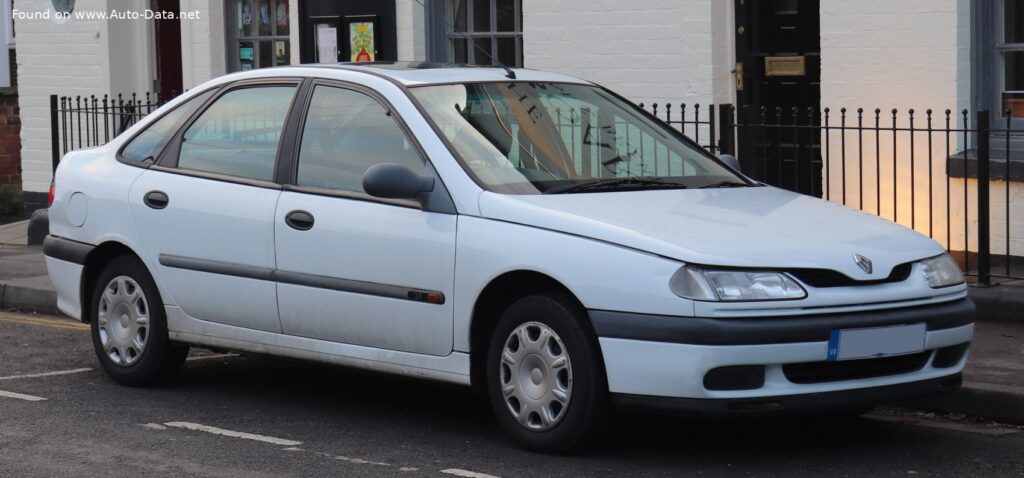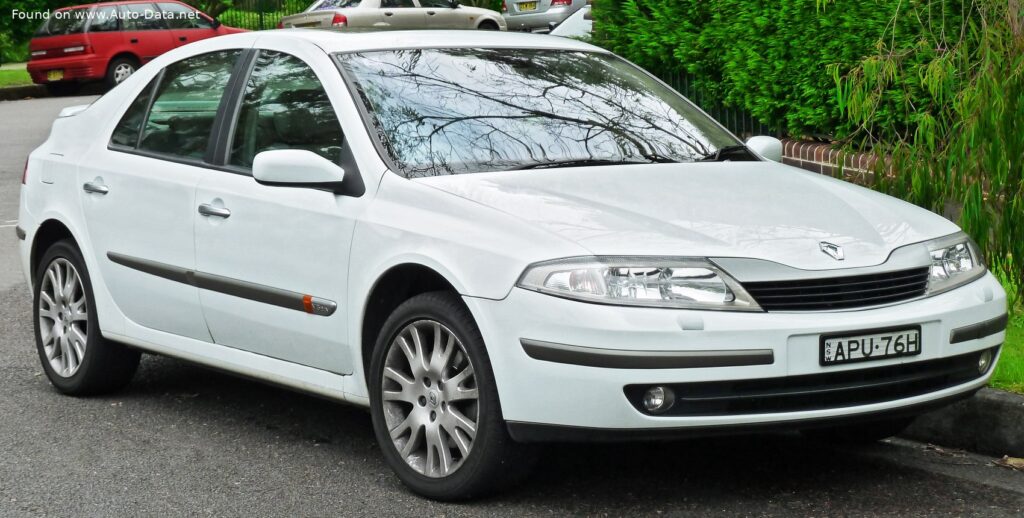
The Renault Laguna II, specifically the 2.0i 16V Turbo (170 Hp) Automatic variant, represents a significant chapter in the history of European mid-size family cars. Launched in 2005 as part of the second generation of the Laguna series, this model aimed to blend sophisticated design with practical functionality and a focus on advanced technology for its era. While never officially sold in the United States, the Laguna II was a prominent contender in Europe’s highly competitive D-segment, offering a compelling alternative to domestic and other imported sedans and hatchbacks. This particular iteration, produced between 2005 and 2007, showcased Renault’s commitment to delivering a comfortable, well-equipped, and dynamically capable vehicle for the discerning European driver, emphasizing both performance and fuel efficiency through its turbocharged powertrain and automatic transmission.
The Renault Laguna II: A European Mid-Size Contender
The second generation of the Renault Laguna, introduced in 2001, marked a pivotal moment for the French automaker, aiming to rectify some of the perceived shortcomings of its predecessor and elevate its standing in the fiercely contested European market. The Laguna II was notable for being one of the first production cars to achieve a five-star Euro NCAP safety rating, a testament to Renault’s pioneering efforts in automotive safety. The 2005-2007 model year for the 2.0i 16V Turbo (170 Hp) Automatic variant specifically highlights a period of refinement and powertrain diversification within the Laguna II’s lifecycle. Positioned as a versatile family car, it offered a blend of executive comfort and everyday usability, appealing to a broad spectrum of buyers from private individuals to fleet operators across Europe. Its design was a departure from the more angular lines of the 1990s, embracing a smoother, more aerodynamic aesthetic that was both contemporary and elegant.
The strategic decision to offer a turbocharged gasoline engine, paired with an automatic transmission, underscored Renault’s understanding of market trends towards more refined and less strenuous driving experiences, particularly in urban and congested European environments. This specific configuration of the Renault Laguna II sought to provide a balance between spirited performance and the convenience of automatic shifting, making it an attractive option for those who desired more power than naturally aspirated variants without sacrificing comfort. The Laguna II generation, in general, was characterized by its innovative features, comfortable ride, and a strong emphasis on passive and active safety systems, setting a benchmark for its class at the time.
Powertrain and Performance of the Laguna II 2.0i 16V Turbo (170 Hp) Automatic
At the heart of the 2005-2007 Renault Laguna II 2.0i 16V Turbo (170 Hp) Automatic lies a robust F4R engine, a 1,998 cubic centimeter (121.93 cubic inch) inline four-cylinder unit. This engine, featuring a DOHC valvetrain with 4 valves per cylinder and multi-port manifold injection, was enhanced by a turbocharger and intercooler, allowing it to produce a respectable 170 horsepower at 5,000 rpm. This power output, combined with 199.14 lb.-ft. of torque available at a relatively low 3,250 rpm, provided the Laguna II with a flexible and responsive driving character. The turbocharger ensured that peak torque was accessible across a broad rpm range, making for effortless acceleration and strong passing power on European motorways.
Paired with a 5-speed automatic transmission, this powertrain delivered a smooth and refined driving experience. The automatic gearbox was designed to optimize comfort and ease of use, particularly in the stop-and-go traffic often encountered in European cities. Performance figures for this variant were competitive for its class: acceleration from 0 to 60 mph was achieved in a swift 11.7 seconds, with a top speed reaching 125.52 mph. While not a performance car by modern standards, these figures were more than adequate for a family-oriented hatchback, providing confidence for both daily commutes and longer journeys. The weight-to-power ratio stood at 7.5 kg per horsepower (132.8 Hp per tonne), indicating a well-balanced power delivery for its kerb weight of 2,821.92 lbs.
Fuel economy was also a key consideration for European buyers, and the Laguna II 2.0i 16V Turbo aimed to strike a balance between performance and efficiency. It achieved an urban fuel consumption of 19.6 US mpg and an impressive 35.6 US mpg on the extra-urban cycle. These figures, while not groundbreaking by today’s standards, were commendable for a turbocharged gasoline engine of its size and power output during its production years, especially when considering the convenience of an automatic transmission. The 18.49 US gallon fuel tank capacity ensured a decent cruising range, reducing the frequency of fuel stops on long trips.
Design, Features, and Ergonomics of the Renault Laguna II
The Renault Laguna II adopted a sleek and aerodynamic hatchback body type, a popular choice in Europe for its blend of style and practicality. With five doors and seating for five occupants, it offered considerable versatility for families. Its exterior dimensions – a length of 180.16 inches, a width of 69.76 inches, and a height of 56.26 inches – contributed to a substantial road presence while maintaining maneuverability in urban settings. The 107.87-inch wheelbase further enhanced ride comfort and interior space, ensuring ample legroom for both front and rear passengers.
Inside, the Laguna II was designed with comfort and ergonomics in mind. Renault was known for its comfortable seating and user-friendly cabin layouts, and the Laguna II was no exception. The trunk space was particularly generous for a hatchback, offering a minimum of 15.19 cubic feet, which could expand to a capacious 46.97 cubic feet with the rear seats folded down. This flexibility made it highly suitable for transporting luggage, groceries, or larger items, catering to the diverse needs of European families. The kerb weight of 2,821.92 lbs and a maximum gross weight of 4,287.99 lbs indicated a robust build quality and a substantial payload capacity of 1,466.07 lbs.
Safety features were a hallmark of the Laguna II. Beyond its pioneering Euro NCAP rating, the vehicle was equipped with standard assisting systems like ABS (Anti-lock Braking System), enhancing braking performance and control in critical situations. The braking system itself comprised ventilated discs at the front and solid discs at the rear, providing strong and consistent stopping power. The suspension setup, featuring spring struts at the front and coil springs at the rear, was tuned to deliver a comfortable ride characteristic of French cars, soaking up road imperfections while maintaining stable handling. Steering was managed by a hydraulic rack and pinion system, offering direct feedback and ease of maneuverability. The 205/55 R16 tire size on 16-inch wheel rims provided a good balance of grip, ride comfort, and aesthetic appeal, complementing the vehicle’s overall design and performance characteristics.
Technical Specifications: Renault Laguna II 2.0i 16V Turbo (170 Hp) Automatic
| Brand | Renault |
| Model | Laguna |
| Generation | Laguna II |
| Type (Engine) | 2.0i 16V Turbo (170 Hp) Automatic |
| Start of production | 2005 year |
| End of production | 2007 year |
| Powertrain Architecture | Internal Combustion engine |
| Body type | Hatchback |
| Seats | 5 |
| Doors | 5 |
| Fuel consumption (economy) – urban | 19.6 US mpg |
| Fuel consumption (economy) – extra urban | 35.6 US mpg |
| Fuel Type | Petrol (Gasoline) |
| Acceleration 0 – 60 mph | 11.7 sec |
| Maximum speed | 125.52 mph |
| Weight-to-power ratio | 7.5 kg/Hp |
| Weight-to-torque ratio | 4.7 kg/Nm |
| Power | 170 Hp @ 5000 rpm |
| Power per liter | 85.1 Hp/l |
| Torque | 199.14 lb.-ft. @ 3250 rpm |
| Engine layout | Front, Transverse |
| Engine Model/Code | F4R |
| Engine displacement | 121.93 cu. in. |
| Number of cylinders | 4 |
| Engine configuration | Inline |
| Cylinder Bore | 3.26 in. |
| Piston Stroke | 3.66 in. |
| Compression ratio | 9.5:1 |
| Number of valves per cylinder | 4 |
| Fuel injection system | Multi-port manifold injection |
| Engine aspiration | Turbocharger, Intercooler |
| Valvetrain | DOHC |
| Engine oil capacity | 5.6 US qt |
| Coolant | 6.87 US qt |
| Kerb Weight | 2821.92 lbs. |
| Max. weight | 4287.99 lbs. |
| Max load | 1466.07 lbs. |
| Trunk (boot) space – minimum | 15.19 cu. ft. |
| Trunk (boot) space – maximum | 46.97 cu. ft. |
| Fuel tank capacity | 18.49 US gal |
| Length | 180.16 in. |
| Width | 69.76 in. |
| Height | 56.26 in. |
| Wheelbase | 107.87 in. |
| Front track | 60.04 in. |
| Rear (Back) track | 58.27 in. |
| Drivetrain Architecture | Front wheel drive. Internal Combustion engine. |
| Drive wheel | Front wheel drive |
| Number of gears and type of gearbox | 5 gears, automatic transmission |
| Front suspension | Spring Strut |
| Rear suspension | Coil spring |
| Front brakes | Ventilated discs |
| Rear brakes | Disc |
| Assisting systems | ABS (Anti-lock braking system) |
| Steering type | Steering rack and pinion |
| Power steering | Hydraulic Steering |
| Tires size | 205/55 R16 |
| Wheel rims size | 16 |