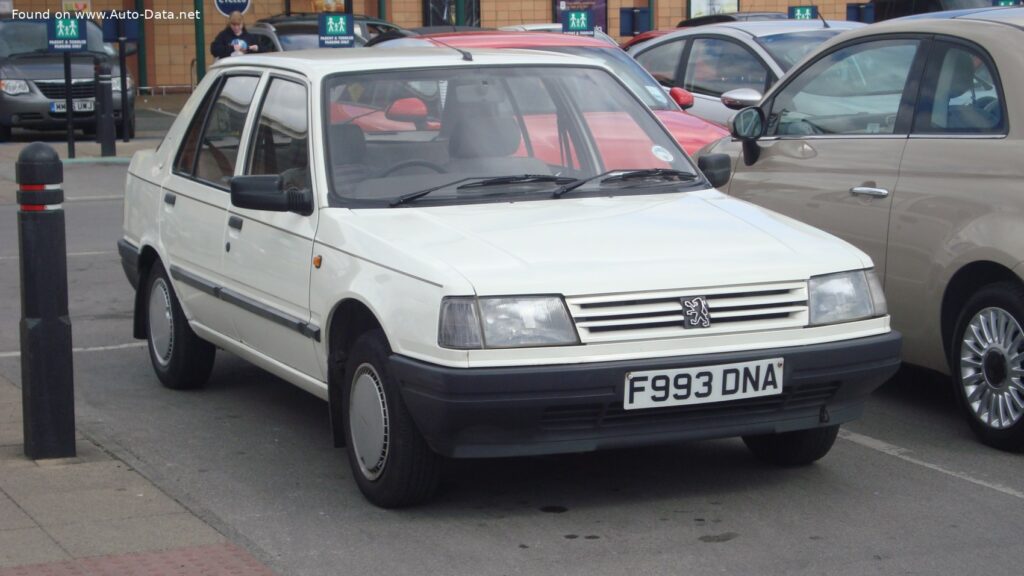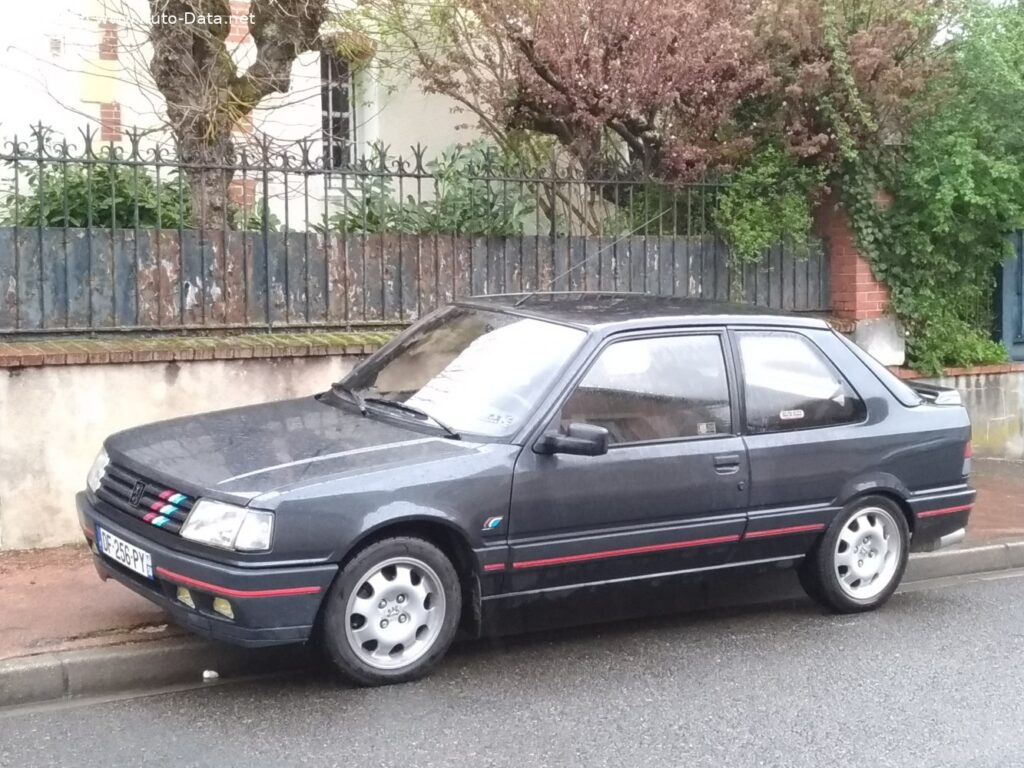
The Peugeot 309, specifically the 3C,3A facelift model from 1989 with the 3-door 1.6-liter (92 Hp) Automatic powertrain, represents a significant chapter in the history of European compact family cars. Originating from the venerable French automaker Peugeot, the 309 was a crucial model designed primarily for the European market, serving as a robust and practical offering in the highly competitive hatchback segment. Unlike many of its contemporaries, the 309 was never officially imported or sold in the United States, making it a distinctive piece of automotive history for enthusiasts familiar with European marques. This particular iteration, produced from 1989 to 1993, showcases the mechanical and design philosophies prevalent during a transitional period in automotive engineering, blending traditional carbureted powerplants with emerging safety features like ABS.
The Peugeot 309 (3C,3A facelift 1989): A European Classic
The Peugeot 309 carved out a unique niche within Peugeot’s lineup, originally conceived as a Talbot model before being rebadged as a Peugeot. Its introduction in 1985 marked a strategic move for the brand, slotting between the smaller 205 and the larger 405. The 1989 facelift brought subtle yet effective updates, enhancing its appeal and refining its aesthetics and mechanicals for the turn of the decade. The 3-door hatchback body style, combined with its compact dimensions, made it an agile and practical choice for urban driving and longer journeys across European landscapes. This particular 1.6-liter automatic variant was designed to offer ease of driving and comfortable performance, catering to a broad spectrum of drivers seeking reliability and efficiency from their daily vehicle.
Its market positioning was one of affordability and practicality, offering a compelling alternative to rivals from Volkswagen, Ford, and Renault. The 309 quickly gained a reputation for its engaging chassis dynamics, a hallmark of Peugeot engineering, providing a comfortable ride quality coupled with predictable handling. Even with the automatic transmission, the car retained a sense of driver involvement that was appreciated by its owners. The model’s longevity and prevalence on European roads for many years after its production ceased are testaments to its robust construction and enduring design, cementing its status as a quintessential European compact car of its era.
Engine & Performance
Under the hood of the 1989 Peugeot 309 (3C,3A facelift 1989) 3-door 1.6 (92 Hp) Automatic lay the XU52C engine, a naturally aspirated 1.6-liter (1580 cm3 or 96.42 cu. in.) inline four-cylinder powerplant. This engine featured a single overhead camshaft (OHC) valvetrain with two valves per cylinder, a common and reliable configuration for its time. Fuel delivery was managed by a carburetion system, a technology that was gradually being phased out in favor of electronic fuel injection in more advanced models, but still offered simplicity and cost-effectiveness in vehicles like the 309. The engine produced a respectable 92 horsepower at 6250 rpm, providing a lively character for a car of its size and segment. Torque output stood at 94.41 lb.-ft. (128 Nm) at a relatively low 3250 rpm, which contributed to its tractable and forgiving nature in everyday driving conditions.
Power was channeled to the front wheels via a 4-speed automatic transmission, a convenience feature that was gaining popularity in the late 1980s, particularly for urban commuters and those prioritizing ease of use over outright performance. While automatic transmissions of this era often entailed a slight compromise in acceleration compared to manual counterparts, the 309’s automatic setup delivered smooth shifts and adequate performance. The vehicle could accelerate from 0 to 60 mph in approximately 14 seconds (0-100 km/h in 14.7 seconds), reaching a maximum speed of 102.53 mph (165 km/h). These figures, while not blistering by modern standards, were competitive for a compact automatic hatchback of its time, ensuring it could comfortably keep pace with traffic on highways and provide sufficient responsiveness in city environments.
Fuel economy figures for the 1.6-liter automatic were also quite reasonable for its era. In urban driving, it consumed approximately 9.6 liters per 100 kilometers (24.5 US mpg), while on the open road, it achieved a more efficient 5.9 liters per 100 kilometers (39.9 US mpg). The 55-liter (14.53 US gallon) fuel tank provided a decent cruising range, making it suitable for both short commutes and longer journeys. The car’s kerb weight of 1984.16 lbs (900 kg) contributed to a favorable weight-to-power ratio of 9.8 kg/Hp, indicating an efficient use of its 92 horsepower.
Design & Features
The design of the Peugeot 309 (3C,3A facelift 1989) 3-door hatchback embodied the functional yet stylish aesthetic characteristic of Peugeot in the late 1980s. Its compact dimensions, with a length of 159.49 inches (4051 mm), a width of 64.09 inches (1628 mm), and a height of 54.33 inches (1380 mm), made it nimble and easy to maneuver in congested European cities. The 3-door configuration emphasized a sportier profile compared to its 5-door sibling, appealing to younger buyers or those without regular rear-seat passengers. Despite its compact exterior, the 309 was surprisingly practical, offering seating for five occupants.
Interior space was well-optimized, and the hatchback design provided excellent cargo versatility. The trunk (boot) space ranged from a generous 14.02 cubic feet (397 liters) with the rear seats in place, expanding significantly to 45.17 cubic feet (1279 liters) when the rear seats were folded down. This flexibility made the 309 a highly practical vehicle for everything from weekly shopping trips to weekend getaways. The car’s unpretentious yet functional cabin was designed for durability and ease of use, with controls laid out logically for the driver.
In terms of driver assistance and safety, the 1989 309 featured front disc brakes and rear drum brakes, a standard setup for many vehicles in its class. A notable inclusion for its time was the Anti-lock Braking System (ABS), which was an advanced safety feature in the late 1980s, offering improved stopping power and control under emergency braking conditions. The steering system utilized a rack and pinion setup, providing direct and responsive feedback to the driver, enhancing the car’s dynamic feel. The suspension system, comprising an independent McPherson strut setup with coil springs and an anti-roll bar at the front, and a torsion bar at the rear, contributed to the 309’s renowned comfortable ride and competent handling characteristics. The vehicle rode on 165/70 R13 tires mounted on 13-inch wheel rims, a common size for compact cars of that era, balancing ride comfort with adequate grip. Its drag coefficient (Cd) of 0.33 was also respectable, aiding in fuel efficiency and reducing wind noise at higher speeds.
Technical Specifications
| Brand | Peugeot |
| Model | 309 |
| Generation | 309 (3C,3A facelift 1989) 3-door |
| Type (Engine) | 1.6 (92 Hp) Automatic |
| Start of production | 1989 year |
| End of production | 1993 year |
| Powertrain Architecture | Internal Combustion engine |
| Body type | Hatchback |
| Seats | 5 |
| Doors | 3 |
| Fuel consumption (economy) – urban | 9.6 l/100 km (24.5 US mpg) |
| Fuel consumption (economy) – extra urban | 5.9 l/100 km (39.9 US mpg) |
| Fuel Type | Petrol (Gasoline) |
| Acceleration 0 – 60 mph | 14 sec |
| Acceleration 0 – 100 km/h | 14.7 sec |
| Maximum speed | 102.53 mph (165 km/h) |
| Weight-to-power ratio | 9.8 kg/Hp, 102.2 Hp/tonne |
| Weight-to-torque ratio | 7 kg/Nm, 142.2 Nm/tonne |
| Power | 92 Hp @ 6250 rpm |
| Power per liter | 58.2 Hp/l |
| Torque | 94.41 lb.-ft. (128 Nm) @ 3250 rpm |
| Engine layout | Front, Transverse |
| Engine Model/Code | XU52C |
| Engine displacement | 1.6 l (1580 cm3, 96.42 cu. in.) |
| Number of cylinders | 4 |
| Engine configuration | Inline |
| Cylinder Bore | 3.27 in. (83 mm) |
| Piston Stroke | 2.87 in. (73 mm) |
| Compression ratio | 8.95:1 |
| Number of valves per cylinder | 2 |
| Fuel injection system | Carburettor |
| Engine aspiration | Naturally aspirated engine |
| Valvetrain | OHC |
| Engine oil capacity | 4 l (4.23 US qt) |
| Coolant | 8 l (8.45 US qt) |
| Kerb Weight | 1984.16 lbs (900 kg) |
| Max. weight | 2976.24 lbs (1350 kg) |
| Max load | 992.08 lbs (450 kg) |
| Trunk (boot) space – minimum | 14.02 cu. ft. (397 l) |
| Trunk (boot) space – maximum | 45.17 cu. ft. (1279 l) |
| Fuel tank capacity | 14.53 US gal (55 l) |
| Permitted trailer load with brakes (12%) | 1763.7 lbs (800 kg) |
| Length | 159.49 in. (4051 mm) |
| Width | 64.09 in. (1628 mm) |
| Height | 54.33 in. (1380 mm) |
| Wheelbase | 97.2 in. (2469 mm) |
| Front track | 55.31 in. (1405 mm) |
| Rear (Back) track | 54.33 in. (1380 mm) |
| Front overhang | 29.65 in. (753 mm) |
| Rear overhang | 32.64 in. (829 mm) |
| Drag coefficient (Cd) | 0.33 |
| Drivetrain Architecture | The Internal combustion engine (ICE) drives the front wheels of the vehicle. |
| Drive wheel | Front wheel drive |
| Number of gears and type of gearbox | 4 gears, automatic transmission |
| Front suspension | Independent, type McPherson with coil spring and anti-roll bar |
| Rear suspension | Torsion |
| Front brakes | Disc |
| Rear brakes | Drum |
| Assisting systems | ABS (Anti-lock braking system) |
| Steering type | Steering rack and pinion |
| Tires size | 165/70 R13 |
| Wheel rims size | 13 |