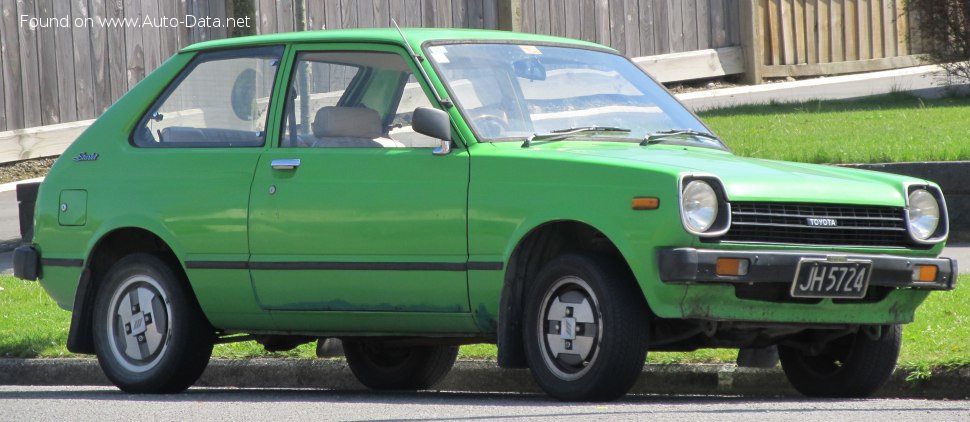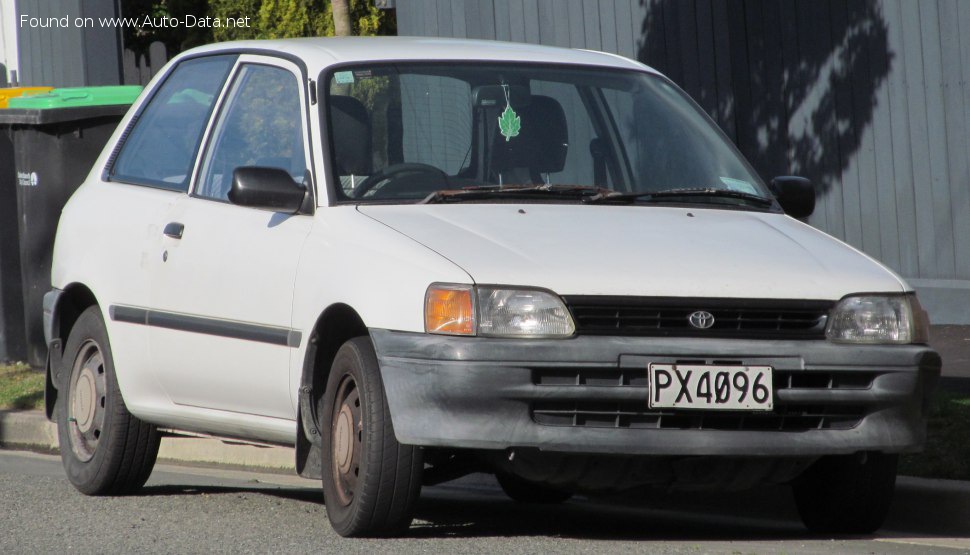
The Toyota Starlet IV 1.3 16V (82 Hp) represents a significant chapter in the history of compact automobiles, particularly within the subcompact segment where it carved out a formidable reputation for reliability, economy, and practicality. Produced by the venerable Japanese automaker Toyota between 1989 and 1996, the fourth generation Starlet, internally designated as the P80 series, was a quintessential example of efficient engineering tailored for urban environments and cost-conscious consumers. While not widely available in the United States market, the Starlet IV was a dominant force in its primary markets across Europe, Asia, and other global regions, serving as a versatile and accessible entry point into the Toyota brand. Its design philosophy centered on maximizing interior space within a compact footprint, offering robust mechanicals, and delivering commendable fuel efficiency, making it an ideal choice for first-time buyers, small families, and city dwellers alike. This particular variant, equipped with the 1.3-liter 16-valve engine, stood out as a well-balanced offering, providing a spirited driving experience without compromising on its core principles of affordability and low running costs.
The Toyota Starlet IV 1.3 16V (82 Hp): Engineering and Performance
At the heart of the Toyota Starlet IV 1.3 16V (82 Hp) lies a meticulously engineered powertrain designed for optimal performance and efficiency within its class. The vehicle is propelled by a front, transverse-mounted 1.3-liter (1331 cubic centimeters or 81.22 cubic inches) inline four-cylinder engine. This naturally aspirated unit features a 16-valve configuration, a notable technological advancement for a subcompact car of its era, allowing for improved breathing and combustion efficiency compared to more common 8-valve designs. The engine delivers a respectable 82 horsepower at a relatively high 6400 revolutions per minute, indicating a free-revving character typical of Japanese small engines. Torque output stands at 81.13 pound-feet (110 Newton-meters) at 3600 rpm, providing adequate low-to-mid range pull for city driving and highway cruising.
Despite its modest output by modern standards, the Starlet IV 1.3 16V offered a lively driving experience, thanks in part to its exceptionally light curb weight of just 1565.28 pounds (710 kg). This results in a favorable weight-to-power ratio of 8.7 kg per horsepower and a weight-to-torque ratio of 6.5 kg per Newton-meter, contributing to its agile feel. The vehicle’s top speed is rated at 108.74 miles per hour (175 km/h), a more than adequate figure for its intended use. Fuel delivery for this particular variant was managed by a carburetor system, a common setup for economy cars in the late 1980s and early 1990s, offering simplicity and reliability. This system, combined with a compression ratio of 9.6:1, ensured efficient combustion of regular gasoline.
Power is channeled to the front wheels via a robust and engaging 5-speed manual transmission, a choice that underscored the car’s driver-focused, yet practical, appeal. The front-wheel-drive architecture, a standard for subcompacts, provided predictable handling characteristics and maximized interior space. Fuel economy was a significant strong suit for the Starlet IV. It achieved an impressive 47 US miles per gallon (5 liters per 100 km) in extra-urban driving conditions, and a still-respectable 26.1 US mpg (9 liters per 100 km) in urban cycles. These figures made the Starlet an incredibly economical choice, aligning perfectly with its mission as a cost-effective daily driver. The 10.57 US gallon (40-liter) fuel tank provided a decent cruising range, further enhancing its practicality for longer journeys.
Design and Features of the Starlet IV
The Toyota Starlet IV was a masterclass in functional design, embodying the no-nonsense approach often associated with reliable Japanese engineering. It was primarily offered as a hatchback, available in both 3-door and 5-door configurations, catering to different consumer needs for access and utility. The design was clean, understated, and aerodynamic for its time, eschewing flamboyant styling in favor of practicality and ease of manufacturing. Its compact dimensions were a key attribute, with an overall length of 146.46 inches (3720 mm), a width of 62.99 inches (1600 mm), and a height of 54.33 inches (1380 mm). These figures, combined with a tight minimum turning circle of 32.15 feet (9.8 meters), made the Starlet exceptionally maneuverable in congested city streets and tight parking spaces, a crucial advantage in European and Asian urban centers.
Inside, the Starlet IV was designed to accommodate five occupants comfortably for its class. The emphasis was on durability and ergonomic simplicity, with controls logically placed and materials chosen for their hard-wearing properties. Despite its compact exterior, Toyota engineers managed to carve out a respectable amount of cargo space. The trunk offered a minimum volume of 7.95 cubic feet (225 liters), which could be expanded significantly to 17.3 cubic feet (490 liters) by folding down the rear seats, demonstrating its versatility for hauling groceries, luggage, or other items. This flexibility was a major selling point for individuals and small families requiring a practical daily driver.
Underneath its unassuming exterior, the Starlet IV featured a conventional yet robust suspension and braking setup. The front suspension utilized a wishbone design, providing a good balance of ride comfort and handling precision. The rear suspension employed coil springs, a reliable and space-efficient solution. Braking duties were handled by disc brakes at the front, offering strong stopping power, complemented by drum brakes at the rear, a common and cost-effective arrangement for vehicles of this segment and era. A significant safety feature for its time was the availability of ABS (Anti-lock Braking System), which was an advanced option for a subcompact in the late 1980s, enhancing vehicle control during emergency braking maneuvers. Steering was managed by a rack and pinion system, assisted by hydraulic power steering, ensuring light and responsive feedback to the driver, particularly beneficial during low-speed maneuvers. The car rode on 13-inch wheels fitted with 165/70 R13 tires, providing a comfortable ride and adequate grip for its performance envelope.
Overall, the Toyota Starlet IV 1.3 16V (82 Hp) embodied Toyota’s commitment to building dependable, efficient, and user-friendly vehicles. Its long production run and widespread adoption in key global markets attest to its successful formula, cementing its legacy as a beloved and highly practical subcompact car that delivered on its promises of reliability and economy.
Technical Specifications: Toyota Starlet IV 1.3 16V (82 Hp)
| Brand | Toyota |
| Model | Starlet |
| Generation | Starlet IV |
| Type (Engine) | 1.3 16V (82 Hp) |
| Start of production | 1989 year |
| End of production | 1996 year |
| Powertrain Architecture | Internal Combustion engine |
| Body type | Hatchback |
| Seats | 5 |
| Doors | 3/5 |
| Fuel consumption (economy) – urban | 9 l/100 km (26.1 US mpg) |
| Fuel consumption (economy) – extra urban | 5 l/100 km (47 US mpg) |
| Fuel Type | Petrol (Gasoline) |
| Maximum speed | 175 km/h (108.74 mph) |
| Weight-to-power ratio | 8.7 kg/Hp (115.5 Hp/tonne) |
| Weight-to-torque ratio | 6.5 kg/Nm (154.9 Nm/tonne) |
| Power | 82 Hp @ 6400 rpm |
| Power per litre | 61.6 Hp/l |
| Torque | 110 Nm @ 3600 rpm (81.13 lb.-ft. @ 3600 rpm) |
| Engine layout | Front, Transverse |
| Engine displacement | 1331 cm3 (81.22 cu. in.) |
| Number of cylinders | 4 |
| Engine configuration | Inline |
| Cylinder Bore | 74 mm (2.91 in.) |
| Piston Stroke | 77.4 mm (3.05 in.) |
| Compression ratio | 9.6:1 |
| Number of valves per cylinder | 4 |
| Fuel injection system | Carburettor |
| Engine aspiration | Naturally aspirated engine |
| Kerb Weight | 710 kg (1565.28 lbs.) |
| Trunk (boot) space – minimum | 225 l (7.95 cu. ft.) |
| Trunk (boot) space – maximum | 490 l (17.3 cu. ft.) |
| Fuel tank capacity | 40 l (10.57 US gal) |
| Length | 3720 mm (146.46 in.) |
| Width | 1600 mm (62.99 in.) |
| Height | 1380 mm (54.33 in.) |
| Wheelbase | 2300 mm (90.55 in.) |
| Front track | 1390 mm (54.72 in.) |
| Rear (Back) track | 1370 mm (53.94 in.) |
| Minimum turning circle (turning diameter) | 9.8 m (32.15 ft.) |
| Drivetrain Architecture | Front wheel drive |
| Drive wheel | Front wheel drive |
| Number of gears and type of gearbox | 5 gears, manual transmission |
| Front suspension | Wishbone |
| Rear suspension | Coil spring |
| Front brakes | Disc |
| Rear brakes | Drum |
| Assisting systems | ABS (Anti-lock braking system) |
| Steering type | Steering rack and pinion |
| Power steering | Hydraulic Steering |
| Tires size | 165/70 R13 |
| Wheel rims size | 13 |