
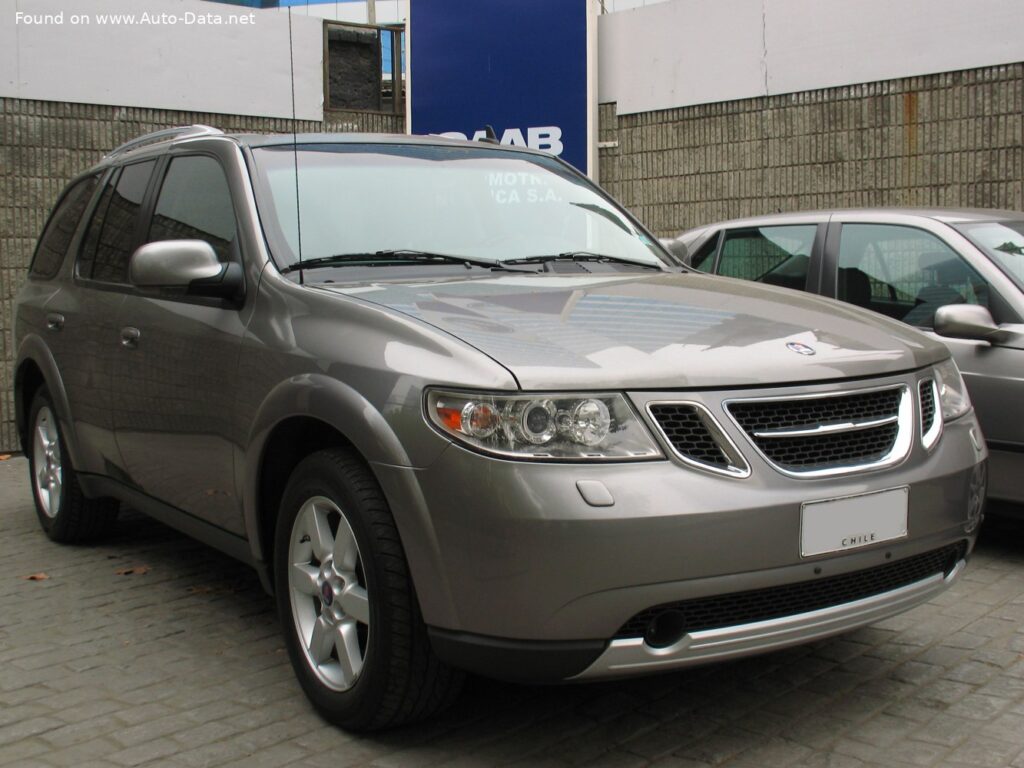
The Saab 9-7X 4.2 i 24V (279 Hp) represents a distinctive, albeit controversial, chapter in the history of the Swedish automaker, Saab. Introduced for the 2005 model year, this mid-size luxury SUV was a direct response to the burgeoning demand for sport utility vehicles in the North American market, a segment where Saab had no prior offering. Developed during General Motors’ ownership of Saab, the 9-7X was built on GM’s GMT360 platform, sharing its underpinnings with popular vehicles like the Chevrolet TrailBlazer, GMC Envoy, Oldsmobile Bravada, Isuzu Ascender, and Buick Rainier. This strategic move allowed Saab to quickly enter a competitive market without the prohibitive costs of developing an entirely new platform. However, it also presented a significant challenge: integrating Saab’s unique design philosophy, safety ethos, and driving dynamics into a platform designed for a different brand identity. The 9-7X aimed to blend Swedish sophistication with American robustness, offering a more upscale and refined alternative within its platform siblings. Its production ran from 2004 to 2008, with the model serving as Saab’s sole SUV offering before the brand’s eventual demise.
Engine and Performance of the Saab 9-7X 4.2 i 24V (279 Hp)
At the heart of the Saab 9-7X 4.2 i 24V (279 Hp) lies a robust and proven powertrain, specifically the 4.2-liter Vortec 4200 LL8 inline-six engine. This naturally aspirated, multi-port manifold injected gasoline engine was a cornerstone of GM’s mid-size truck and SUV lineup, renowned for its smoothness, durability, and respectable power output for its era. With an engine displacement of 4157 cubic centimeters (253.68 cubic inches), this inline-six configuration featured a DOHC (Double Overhead Camshaft) valvetrain with 24 valves, or four valves per cylinder, optimizing airflow and combustion efficiency. The engine delivered a healthy 279 horsepower at 6000 rpm, providing ample thrust for both daily commuting and highway cruising. Torque figures were equally impressive, peaking at 275.11 lb.-ft. (373 Nm) at a relatively accessible 3600 rpm, contributing to the vehicle’s strong pulling power and responsive acceleration.
Mated to this potent engine was a 4-speed automatic transmission, a common choice for SUVs of this period, prioritizing smooth shifts and reliability over the multi-gear setups seen in more modern vehicles. Power was delivered to all four wheels through an all-wheel-drive (4×4) system, ensuring confident traction in various driving conditions, from inclement weather to light off-road excursions. The performance metrics for the 9-7X 4.2 i 24V were competitive for its class: it could accelerate from 0 to 60 mph in a swift 8.2 seconds (0-100 km/h in 8.6 seconds), making it surprisingly agile for an SUV weighing 4717.89 lbs (2140 kg). Its maximum speed was rated at 118.68 mph (191 km/h), a practical limit for a vehicle of its stature. Fuel economy, while not a primary selling point for large SUVs of this generation, was rated at approximately 15 US mpg (15.7 l/100 km) in urban driving and 19.9 US mpg (11.8 l/100 km) on the highway, reflecting the engine’s displacement and the vehicle’s substantial curb weight.
The engine’s layout was front, longitudinal, which is typical for rear-wheel-drive or all-wheel-drive platforms, allowing for better weight distribution and packaging. With a compression ratio of 10:1, the engine balanced power output with reasonable fuel requirements. The weight-to-power ratio stood at 7.7 kg/Hp (130.4 Hp/tonne), indicating a solid performance capability relative to its mass. The engine oil capacity was 6.6 liters (6.97 US quarts), and the cooling system held 10.2 liters (10.78 US quarts) of coolant, ensuring optimal operating temperatures under various loads. Despite its GM origins, the integration into the Saab 9-7X was carefully calibrated to meet Saab’s standards for refinement, resulting in a powertrain that was both capable and relatively smooth for its application.
Design and Features
The design of the Saab 9-7X was a deliberate effort to imbue the robust GMT360 platform with Saab’s distinctive design language. As a 5-door, 5-seat SUV, it aimed to combine the practicality and versatility expected of the segment with Saab’s unique aesthetic and ergonomic principles. While the underlying structure was shared, Saab designers made significant changes to the exterior to differentiate it. These included a signature Saab grille, unique headlights and taillights, and body-colored bumpers and side cladding, giving it a more premium and understated appearance compared to its GM siblings. The overall length of 193.78 inches (4922 mm), width of 75.39 inches (1915 mm), and height of 70.51 inches (1791 mm) provided a commanding road presence, while the 112.99-inch (2870 mm) wheelbase contributed to a stable ride and generous interior space.
Inside, Saab applied its characteristic design philosophy, focusing on driver-centric ergonomics and high-quality materials. While some interior elements were recognizable from other GM vehicles, Saab introduced its own distinct touches, such as the ignition switch placed between the front seats (a traditional Saab trait), unique instrumentation with green backlighting, and more upscale trim materials. The seating was designed for comfort and support, reflecting Saab’s commitment to long-distance driving enjoyment. The SUV configuration offered considerable practicality, with a minimum trunk (cargo) space of 39.8 cubic feet (1127 liters) which could expand to a cavernous 80.09 cubic feet (2268 liters) with the rear seats folded, making it highly versatile for carrying luggage, sports equipment, or larger cargo.
In terms of safety and chassis dynamics, the 9-7X was equipped with features typical of its class and era. It featured an Anti-lock Braking System (ABS) as standard, enhancing control during emergency braking. The braking system utilized ventilated discs at the front and solid discs at the rear, providing strong and consistent stopping power. The suspension system comprised a spring strut design at the front and coil springs at the rear, tuned to provide a balance of ride comfort and handling stability. The vehicle rode on 18-inch wheels fitted with 255/55 R18 tires, a size that offered a good compromise between on-road grip and ride quality. The all-wheel-drive system, coupled with the robust chassis, provided a secure and confident driving experience, particularly in adverse weather conditions. The 9-7X also came with a substantial fuel tank capacity of 21.93 US gallons (83 liters), offering a decent cruising range between fill-ups.
Despite its brief production run and the challenges of integrating a distinct brand identity onto a shared platform, the Saab 9-7X represented an interesting attempt by Saab to broaden its appeal and enter a crucial market segment. It offered a unique blend of American utility and Saab’s distinctive design and safety focus, appealing to buyers looking for something different from the mainstream luxury SUVs of its time. The vehicle’s gross weight of 5749.66 lbs (2608 kg) and a maximum load capacity of 1031.76 lbs (468 kg) further underscored its capability as a practical and robust utility vehicle.
Technical Specifications
| Brand | Saab |
| Model | 9-7X |
| Generation | 9-7X |
| Type (Engine) | 4.2 i 24V (279 Hp) |
| Start of production | 2004 year |
| End of production | 2008 year |
| Powertrain Architecture | Internal Combustion engine |
| Body type | SUV |
| Seats | 5 |
| Doors | 5 |
| Fuel consumption (economy) – urban | 15.7 l/100 km (15 US mpg) |
| Fuel consumption (economy) – extra urban | 11.8 l/100 km (19.9 US mpg) |
| Fuel Type | Petrol (Gasoline) |
| Acceleration 0 – 60 mph | 8.2 sec |
| Acceleration 0 – 100 km/h | 8.6 sec |
| Maximum speed | 191 km/h (118.68 mph) |
| Weight-to-power ratio | 7.7 kg/Hp, 130.4 Hp/tonne |
| Weight-to-torque ratio | 5.7 kg/Nm, 174.3 Nm/tonne |
| Power | 279 Hp @ 6000 rpm |
| Power per liter | 67.1 Hp/l |
| Torque | 373 Nm @ 3600 rpm (275.11 lb.-ft. @ 3600 rpm) |
| Engine layout | Front, Longitudinal |
| Engine Model/Code | Vortec |
| Engine displacement | 4157 cm3 (253.68 cu. in.) |
| Number of cylinders | 6 |
| Engine configuration | Inline |
| Cylinder Bore | 93 mm (3.66 in.) |
| Piston Stroke | 102 mm (4.02 in.) |
| Compression ratio | 10:1 |
| Number of valves per cylinder | 4 |
| Fuel injection system | Multi-port manifold injection |
| Engine aspiration | Naturally aspirated engine |
| Valvetrain | DOHC |
| Engine oil capacity | 6.6 l (6.97 US qt) |
| Coolant capacity | 10.2 l (10.78 US qt) |
| Kerb Weight | 2140 kg (4717.89 lbs) |
| Max. weight | 2608 kg (5749.66 lbs) |
| Max load | 468 kg (1031.76 lbs) |
| Trunk (boot) space – minimum | 1127 l (39.8 cu. ft.) |
| Trunk (boot) space – maximum | 2268 l (80.09 cu. ft.) |
| Fuel tank capacity | 83 l (21.93 US gal) |
| Length | 4922 mm (193.78 in.) |
| Width | 1915 mm (75.39 in.) |
| Height | 1791 mm (70.51 in.) |
| Wheelbase | 2870 mm (112.99 in.) |
| Front track | 1603 mm (63.11 in.) |
| Rear (Back) track | 1577 mm (62.09 in.) |
| Drive wheel | All wheel drive (4×4) |
| Number of gears and type of gearbox | 4 gears, automatic transmission |
| Front suspension | Spring Strut |
